by Rowan Report | Feb 12, 2026 | M&A, Partner News, Recruitment & Retention
Viventium acquires Apploi to create a leading nationally scaled, healthcare-exclusive human capital management platform
Acquisition supports the full employee lifecycle, ensuring a better experience for caregivers and more stability for the organizations they serve
BERKELEY HEIGHTS, N.J., Feb. 4, 2026. Viventium today announced the strategic acquisition of Apploi, creating a category-leading human capital management (HCM) provider purpose-built for the post-acute market. This move establishes a new industry standard: a unified system of record that combines recruiting, credentialing, onboarding, payroll, and workforce management, including scheduling and time and attendance, with a foundation in healthcare compliance.
Tackling the Labor Shortage
Post-acute and long-term care providers currently face persistent labor shortages and a complex regulatory environment. Until now, the industry has relied on a fragmented mix of generalist software and disconnected point solutions that create data silos and administrative friction. The combination of Viventium and Apploi solves these challenges by providing a single, verticalized platform that manages the entire care staff journey across all 50 states.
“Healthcare leaders are tired of fighting with fractured systems that weren’t built for their specific needs. By acquiring Apploi, we are creating the only scaled, healthcare-native platform that unifies everything from the first job application to the final paycheck. We are providing thousands of providers with the visibility and operational speed they need to manage their entire workforce, from clinical staff in the field to administrative teams in the office.”
CEO, Viventium
Adam Lewis, CEO of Apploi, added, “Our mission has always been to solve the staffing crisis in healthcare. Joining Viventium allows us to take that mission further than ever before. We are moving beyond just hiring to support the full employee lifecycle, ensuring a better experience for caregivers and more stability for the organizations they serve.”
The unified platform touches thousands of healthcare providers and hundreds of thousands of employees nationwide. By integrating Apploi’s recruiting and credentialing tools with Viventium’s premier payroll, HR, and workforce management engine, the company offers an unparalleled level of verticalized scale and compliance.
The acquisition officially closed on January 30, 2026. Goodwin Proctor LLP represented Viventium in connection with the transaction, while Houlihan Lokey served as financial advisor and Dentons served as legal advisor for Apploi. Financial terms of the deal are not being disclosed.
Viventium is the category-leading human capital management provider for the post-acute market. Built exclusively for healthcare, Viventium’s unified platform combines payroll, HR, recruiting, onboarding, and workforce management—including scheduling and time and attendance—into a single system of record. Serving clients in all 50 states and supporting nearly 800,000 healthcare employees, Viventium enables healthcare organizations to focus on what matters most: providing compassionate care.
Apploi helps healthcare facilities stabilize their workforce and increase occupancy in the midst of a labor shortage with an all-in-one platform built to hire, onboard, and schedule top healthcare talent.
Working with over 9,000 healthcare organizations across the United States, the NYC-based tech company helps leaders solve the industry’s most pressing problem: how to provide superb care with few workers and more turnover. With the Apploi platform, facilities can manage the staff experience from job post through shift fulfillment—empowering teams to fill roles quicker, lessen agency dependence, and increase occupancy rates.
by Kristin Rowan | Oct 9, 2025 | Admin, Artificial Intelligence, Clinical, Product Review
Product Review: It's Payroll...and so Much More
Evolution into Health Care
I’m sure many of you remember the days before automated processes. Hand-written notes, paper forms, and paychecks that were filled in on a typewriter. Those days are behind us (mostly) in care at home with the alphabet soup of technology we have today: EMR, EVV, EHR, PECOS, API, EDI, UB-04, ADP
Technology evolves in unpredictable paths and patterns. And the best developers adjust to that evolution. That is the story of a software provider that we recently interviewed. What started as a general payroll and HR software evolved and steered the developers toward health care. Now, that payroll company is built for care at home and includes so much more than standard payroll. Introducing…Viventium
Home Health and Home Care Enhancements
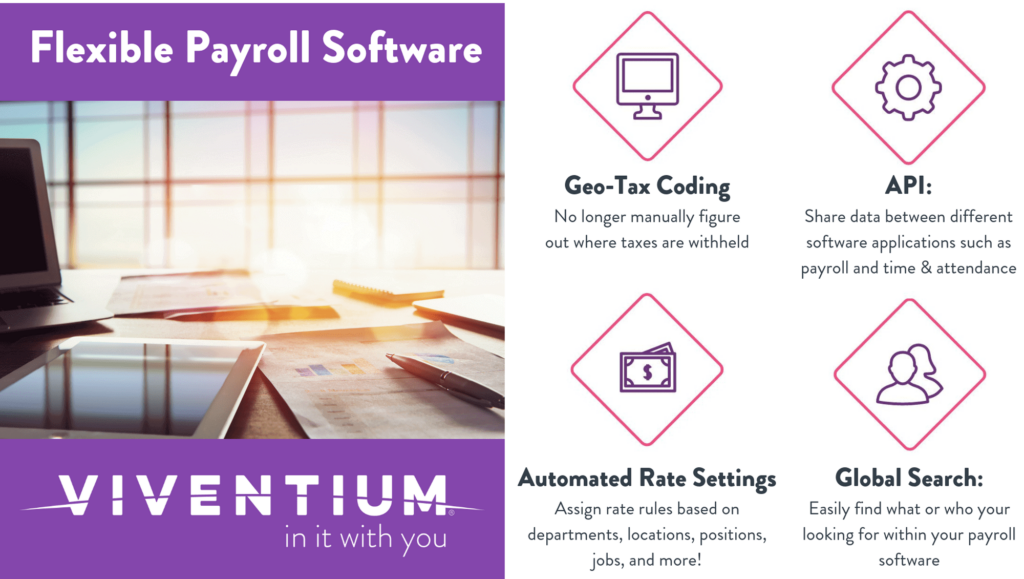
When the Viventium team started their software, it was not industry specific. But some key clients put home care on their radar six years ago and the software development shifted to meet the unique needs of care at home agencies. Today, Viventium is a workforce management system that is built for care at home and includes features not found in general payroll software. Some of Viventium’s capabilities include:
Applicant tracking
Job board integration
Hiring data and talent recognition
Recruitment insights and analysis
Onboarding
Tax filing
Employee self-help section
Integration with Tapcheck
Time and Attendance approval
Time off requests
Scheduling and Open Shift management
Continuing education tracking
Benefits management
ACA compliance tracking and reporting
Automated blended rate payroll
Integrations and Automations
Viventium is already working with a handful of EMRs for direct integration. The system is also integrated with TapCheck for on-demand pay and with Nevvon for CEUs. For EMRs that are not fully integrated, they offer pre-built exports that can handle different export formats. Viventium can import information from virtually any patient record system.
Once the payroll system is set up for your agency, or agencies, many of the workflows are automated, relieving time and stress on your staff and saving you money on recruitment, retention, FTEs and missed visits. The staff responsible for new hires will experience such automations as pre-filling demographic information everywhere once it is entered once, customizable CEU requirement task assignment and reminders, tax preparation and filing, sharing job listings across multiple job boards, and payroll generation from EVV import.
Standard payroll companies and software are perfectly capable of running weekly time cards and calculating state and federal taxes. Most of them automate direct deposit. Very few have the built-in capability to change hourly rates during a shift. Viventium allows agencies to customize visit types, names, and rates, allowing an employee to clock in at the start of a shift and adjust their job code as needed throughout the day. Even fewer calculate overtime, benefits eligibility, sick leave accrual, and daily overtime for per visit employees automatically. And Viventium is the first payroll software I’ve come across that is piece-rate compliant, calculating rest pay and non-productive time.
HHAs are not “one size fits all” and neither is Viventium. The list of available customizations keeps growing. Agencies can apply custom parameters to:
- CEU requirements based on license type, expertise, PiPs, etc.
- Benefit information
- Reminders for expirations and deadlines on performance reviews, licenses, certifications, and CEUs
- Workflows for digital onboarding documents, progress tracking, and completion
- Re-hire eligibility
- Payroll and overtime calculations for one employee working across agency locations
- Reporting, analytics, data, in addition to the static analytics dashboard
As a small business with very little need for robust HR systems, payroll software is not really on my “must have” list. Still, I’d be remiss if I didn’t consider using a system with this many “extras”. But, don’t take my word for it. Here is what Viventium customers have to say:
“I enjoy the software and it beats most if not all payroll systems out there for attractiveness to use and navigate through. Very user friendly. When they update the product they always have a training associated with it. It easy to use for our employees as well.”
“Viventium has really helped my company by providing payroll services. As a new and small business owner, the “V” team has been patient, helpful and always a pleasure to work with. In our first 2 years, the service has been very helpful and timely. I am very happy I decided to go with the “V” team. Highly recommend for payroll services.”
∼ Carlos, SYNERGY HomeCare in Palm Bay.
“It’s not just another payroll or HR tool, it feels thoughtfully built for real people, especially those of us in healthcare….
Plus, having everything from benefits administration to compliance tracking in one place has saved me countless hours. It’s helped our team stay organized and focused on what really matters: supporting our staff and growing our business.”
In the care at home industry, Viventium is relatively new in comparison with other systems. Outside of care at home, Viventium is trusted by more than 3,000 companies and has the experience and expertise to support more than just payroll, but all workforce management.
The user interface is pleasant and visually pleasing enhancing its very user-friendly, easy to use platform. 3rd party tools are fully integrated, keeping every feature under a single sign-on. Also included is an Android and iOS app for your staff to track and view hours, pay rates, benefits, and education all in one place.
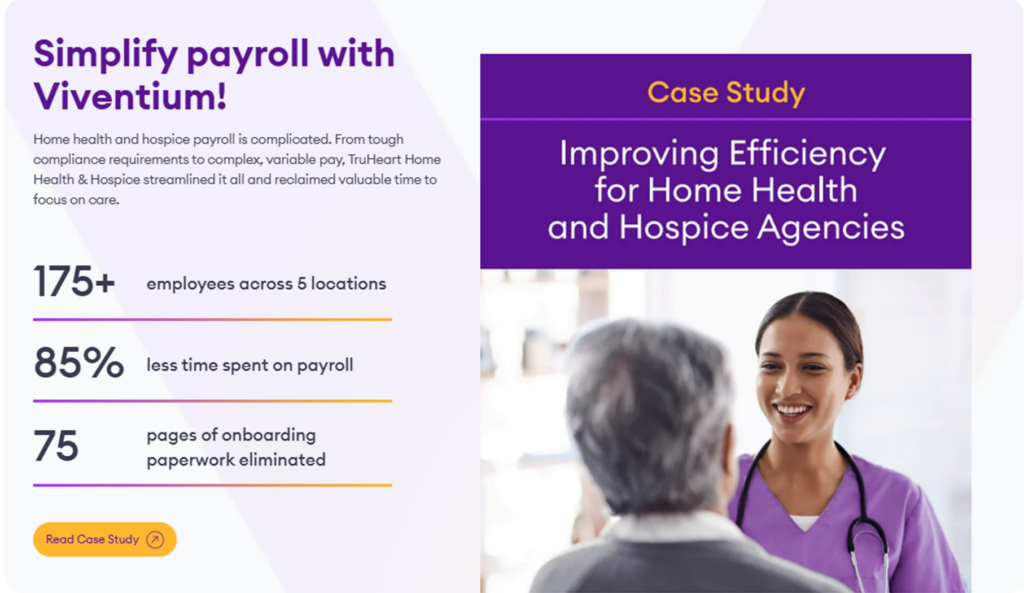
The automation and customization reduces payroll prep time, improves compliance and accuracy, strengthens retention and recruitment, eliminates physical paperwork for onboarding, and much more. This part is not my opinion, but is based on this efficiency study.
If you’re not using Viventium, it is worth exploring. The potential to eliminate multiple software systems and logins is real. The savings in time, retention, and reduced errors are measurable. Viventium is the best kept secret in care at home and based on my conversations with their team, we haven’t heard the last of Viventium’s innovation and industry-specific features.
Kristin Rowan has been working at The Rowan Report since 2008. She is the owner and Editor-in-chief of The Rowan Report, the industry’s most trusted source for care at home news, and speaker on Artificial Intelligence and Lone Worker Safety and state and national conferences.
She also runs Girard Marketing Group, a multi-faceted boutique marketing firm specializing in content creation, social media management, and event marketing. Connect with Kristin directly kristin@girardmarketinggroup.com or www.girardmarketinggroup.com
©2025 by The Rowan Report, Peoria, AZ. All rights reserved. This article originally appeared in The Rowan Report. One copy may be printed for personal use: further reproduction by permission only. editor@therowanreport.com
**Vendors never pay for product reviews nor does a vendor’s sponsor status influence the content of the review.
by Rowan Report | Sep 25, 2025 | Artificial Intelligence, Caring for the Caregiver
AI in Hospice and Palliative Care
Eases Clinician Burnout and Drives Retention
In hospice and palliative care, clinicians are your most valuable and most vulnerable resource. They’re the heart of care delivery, and often the largest expense line item on your budget. But today, many are walking a tightrope between compassion fatigue and after-hours documentation burnout. Hospice organizations can’t afford to lose them. And with AI-powered tools, you don’t have to.
Clinician burnout Is a crisis and a cost center
Hospice nurses and interdisciplinary team members are burning out at unsustainable rates. The emotional weight of their work is immense, but it’s the after-hours charting, documentation delays, and system inefficiencies that often push them over the edge. The cost of clinician turnover is staggering. Onboarding and training a new hospice nurse takes time, money, and trust, and patients feel the impact, too.
AI bridges the gap without replacing the human touch
Curantis Solutions is leading the way with AI that lightens the load. Our embedded AI assistant, EVA, supports clinicians in real-time, reducing documentation friction and eliminating the need to chart late into the evening.
- Voice-to-text documentation
- captures patient-specific details naturally, as they happen
- Smart prompts and reminders
- prevent missed data points and reduce rework
- Less screen time after shifts
- improves work-life balance and job satisfaction
- Clinicians feel more supported and less likely to leave
Retain the staff you've worked so hard to hire
When your staff hears that another organization doesn’t have modern tech or AI tools? They stay. Providing intuitive, hospice-specific tools isn’t just about efficiency. It’s about creating a culture that respects their time, honors their energy, and values their expertise.
AI as a strategic investment in care and culture
Hospice leaders are being called to solve two problems at once:
- Deliver exceptional, person-centered care
- Do it with fewer resources and higher costs
AI-powered software like Curantis helps close this gap. By streamlining documentation and workflow, we help you preserve the well-being of your clinicians, which, in turn, protects your operations and your outcomes.
- No more nurses charting late into the night
- Fewer resignations and higher morale
- Patients receiving care from clinicians who aren’t drained, but present and energized
Let's make clinician burnout a thing of the past
Explore how Curantis Solutions empowers your team and strengthens your bottom line. Contact us today to schedule a demo and see how we are making your software experience refreshingly simple with ChartBoost AI.
Contact us today to see a demo and learn how we are making your software experience refreshingly simple.
© 2025 This blog article originally appeared on the Curantis Solutions website and is reprinted with permission. For more information, please contact Curantis Solutions directly.
by Tim Rowan | Feb 27, 2025 | Admin, Clinical, Recruitment & Retention
by Tim Rowan, Editor Emeritus
Solve Nagging Problems; Raise Revenue
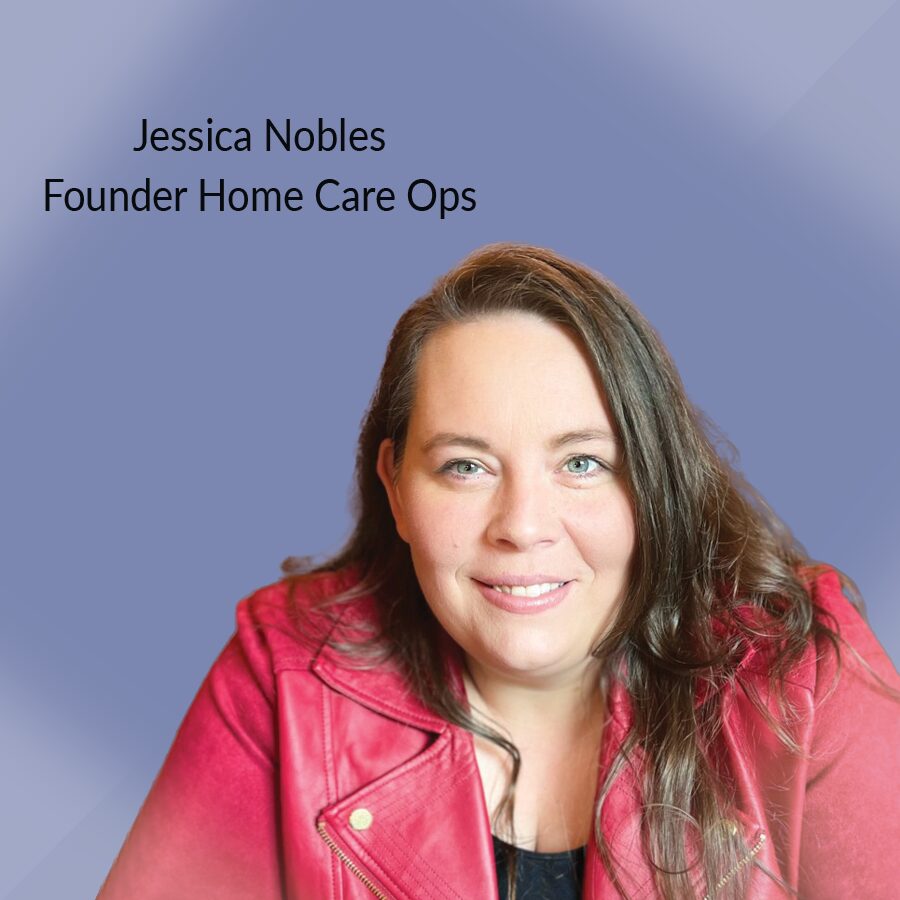
Along with the rest of the Private Pay sector, Jessica Nobles’ Eastern Tennessee agency was struggling with caregiver recruitment and retention. Finding good people is less than half the battle. To keep them, you have to pay a competitive wage and provide enough hours to ensure that wage translates into an attractive and predictable monthly income. We spoke with Jennifer, Founder of Home Care Ops, last week to learn one of her solutions.
What Nobles calls “Fractional Home Care” is providing services in a senior living community with one or more caregivers stationed on site. Residents pay a membership fee or pre-purchase a package of hours. The agency is thus guaranteed a small revenue base and clients are free to request services for a few minutes or a few hours on an as-needed basis.
“Our caregivers love this arrangement because it virtually guarantees them full-time pay. They remain on site at the facility for a contracted shift, which can be their choice of daytime or night hours. If demand warrants it, we will assign more than one caregiver at a time.”
Founder, Home Care Ops
She added that the advantage to the agency is that nearly all of a caregiver’s day is paid hours. There are no mileage reimbursements and no paying for travel time or idle time. “Think of it as a co-op,” she continued. Ten clients can share one caregiver. They get all the care they need and our caregivers are earning for their entire day.”
The benefit accrues to independent living communities as well. Their arrangement with an outside Home Care agency means they no longer have the burden of hiring and retaining a caregiving staff of their own and their residents get better care. The residents pay for the services, not the facility, and they have the option of using the on-site caregivers as needed or through the pre-purchase plan of a block of ten or twenty 15-minute units.
Jessica offered an example of how Fractional Home Care often works. An Assisted Living Facility resident lives independently but occasionally needs help with showers, or help getting to and from the community center, etc. In a typical home care setting, that person would have to bring in a caregiver for four, six, or eight hours, though less than an hour is needed. The family speaks with the onsite agency to arrange for the specific help needed, whether it is a few minutes
every other day or an hour every day. The agency offers a membership at flat fee and both parties get exactly what they need. The caregiver is available to add other residents to his or her schedule, making it possible to achieve a 40-hour work week.
“Some patients might need traditional daily care as they might get from any other agency,” Jessica explained. “They can contract for that for around $1,600 per month. Our caregiver can come multiple times a day since there are no drive time concerns.” She said that not every client needs a membership program. Some prefer pre-sold units, perhaps buying five 15-minute visits in advance. “They never have to pay for down time. Our caregivers never sit idle should their work be done before their shift is up.”
Fractional Home Care Improves Agency Reputation
Jessica has found that her agencies have earned a reputation for such excellent care that they have occasionally replaced franchise home care organizations locally that have national contracts with national ALFs. Some of these facilities have been dissatisfied with the care they were getting with their national organization’s contracted agency. When this happens, they seek a local agency to replace them. Jessica has seen this several times when the franchise was not staying on site.
“We explain our fractional model, with someone on site at specified times when at least three residents have signed on, and one caregiver per 10 clients. The more clients who sign up, the more caregivers we station at the facility. This leads to an additional benefit for the ALF. This level of service delays the day the family decides to move Mom from their community to a nursing facility.”
Fractional Home Care has been so successful, the word spread to other residential communities. Nobles’ company had had to turn some away. When that happened, she and her partner and husband began to teach the system to other agencies.
There was one obstacle, she admits. There were no Agency Management Software systems that could be adapted to the fractional way of providing care. She and her team finally created their own…right before she found one on the market that met their needs. Jessica introduced us to Tim and Gina Murray, co-founders of Cinch CCM. Jessica recommends Cinch CCM to fractional home care agencies. We have scheduled a demo and will have a review in the near future.
With over a decade of Private Duty Home Care leadership and knowledge, Jessica Nobles worked her way up through every position from Caregiver, Operations Coordinator, Franchise Developer, and Independent Agency Owner. As the founder and operator of Nobility Care Solutions, she grew her revenue to six figures within the first year of business through grassroots marketing, creative community engagements, and referral partnerships. She is also the Executive Administrator for Home Care Ops where she coaches, consults, and empowers other home care owners and operators to create operational systems and strategies that build lasting business success and consistently increases revenue.
Tim Rowan is a 30-year home care technology consultant who co-founded and served as Editor and principal writer of this publication for 25 years. He continues to occasionally contribute news and analysis articles under The Rowan Report’s new ownership. He also continues to work part-time as a Home Care recruiting and retention consultant. More information: RowanResources.com
Tim@RowanResources.com
©2024 by The Rowan Report, Peoria, AZ. All rights reserved. This article originally appeared in Healthcare at Home: The Rowan Report. One copy may be printed for personal use: further reproduction by permission only. editor@therowanreport.com
by Kristin Rowan | Dec 19, 2024 | Admin, Caring for the Caregiver, Clinical, Editorial
Medical and non-medical caregivers in home health, hospice, palliative, and home care are the life-blood of the industry, without whom Care at Home would not exist.
Agency owners are limited in their capacity to compensate caregivers, working with CMS reimbursement rates, PDGM, and VBPM. However, Agency owners also know that caregivers are selfless, caring, empathetic, and dedicated. They also spend hours upon hours on documentation, drive billions of miles per year (literally), and adapt to changing industry regulations regularly.
So, how do you, as an agency owner, executive, or manager, care for your caregivers in a meaningful way to express your appreciation for all that they do? How can you impact the high turnover rate? Pay raises are limited by CMS and insurance companies. Benefits are expensive for an already low-margin industry. Extended vacations limit the care you can provide your clients.
The Advantages of Employee Recognition
When your employees are engaged and feel appreciated, they are more loyal. Loyal employees are less likely to leave for another job, even if the pay rate is slightly higher. Employee recognition helps retain your best employees, increases their engagement, encourages best practices, and can be used as a recruitment tool when you need more staff.
A 2023 study highlights the importance of employee recognition. Employees who are likely to be recognized are more than twice as likely to go above and beyond their regular duties. Hearing a sincere “thank you” from the boss yields a 69% increase in extra effort. Personal recognition would encourage 37% of respondents to do better work more often.
Employee recognition programs don’t have to overhaul your organization, take a lot of time, or cost a lot of money. Start simple and see where it takes you.
Celebrate Major Achievements and Small Wins
It’s important to recognize major achievements like gaining a new licensure, getting a referral for a new client, a positive online review, or a great star rating. How long an employee is with the company is an easy milestone to celebrate. Accolades for 30, 60, & 90 days, one year, five years, 10 years go a long way.
Equally important is celebrating smaller victories like completing a training, submitting accurate documentation, picking up an open visit, and birthdays.
Giving your employees the opportunity to recognize and celebrate each other creates a culture of appreciation within your agency, even when your employees are rarely together. Picking up a shift, trading a day off, helping answer a question, or simply encouraging a new employee during training are things you might not see, but your employees will. Give them an outlet to celebrate each other.
Peer-to-peer recognition can be done with group text messages or an internal IM system like Slack or Microsoft Teams. For employees who are in the office, you can create a message board for notes, encouragement, and thanks. Create a monthly gift and let employees nominate someone for an act of kindness or helpfulness.
Once you’ve established a Culture of Caring, ask your employees what they want and need. If recognition isn’t meaningful, it may not have the desired effect.
A study out of the Leonard Davis Institute of Health Economics, 30% of registered nurses and 25% of licensed practical nurses left their positions in a home care agency in the course of one year. Part of the reason for the high turnover rate is schedule volatility. Another study concluded that high schedule variability in just 30 days increased the risk of turnover by 20%.
No change will eliminate client cancellations or immediate starts-of-care under the acceptance-to-service policy. But, that doesn’t mean you can’t minimize the volatility of a schedule.
Automating the scheduling process using existing technology now allows home care agencies to offer open appointments in a “gig economy” style. Caregivers are notified by AI of a visit that needs to be covered, giving them the option to change their schedule. That autonomy reduces the feeling of stress caregivers have over schedule changes.
Stand-alone software options for automated scheduling and reduced schedule changes include Axle Health and Caring on Demand for home health and CareSmartz360 for non-medical supportive care. AI powered scheduling inside EMRs and agency management software include AlayaCare, HomeCare Homebase, CareVoyant, Axxess, Careswitch, and AxisCare, among others.
Some sources suggest that home health workers spend up to three hours per shift at home finishing documentation. Visit times increase when employees are documenting on paper or on a device during the visit.
One of the latest innovations in care at home software is AI powered talk-to-text scribe tools. Mobile applications using artificial intelligence record visits and transcribe conversations. The documentation tool scans the transcript as well as all patient data from the EMR and creates the needed documentation. Once a visit is over, the AI tool can finish documentation sometimes within minutes, requiring just a quick review by the visiting caregiver before submitting for QA.
Talk-to-text scribe tools are both stand-alone voice capture and integrated documentation tools. Some of the best talk-to-text scribe tools we’ve found are Athelas Scribe, Ybot, Andy, and Nvoq. OASIS and documentation automation reduces the burden on caregivers even more, almost eliminating the additional time spent at home reviewing charts and documentation. Some of the best OASIS and documentation automated software we’ve reviewed are Andy, Enzo, and Brellium. The Rowan Report will have reviews of these products in 2025.
Communication and Connection
Care at home workers are a disparate group, rarely being in the same place at the same time, missing out on company culture, office parties, trading stories around the water cooler, and engaging with fellow employees, managers, and executives. Access to colleagues and management is an integral part of employee engagement and satisfaction.
Before you share the personal cell phone numbers of your entire agency, remember that all communication between employees, management, and clients should be secure and HIPAA compliant. Agencies have already seen the consequences both to their bottom line and with government agencies for failure to comply with secure messaging requirements.
Luckily, there are plenty of secure messaging platforms available for agencies to use. Employing messaging technology not only increases employee engagement, but also provides a level of security between caregivers and their patients and families. If you’ve now realized that you’ve been communicating on insecure platforms, check out Buzz, Qliqsoft, and Zingage.
Whether you start with a simple calendar to remind yourself which employees have been with you the longest, or invest in every AI tool available, the key here is to recognize that your caregivers are giving their all every day for their primary purpose of excellent patient-centered care.
No matter how you decide to do it, make 2025 the Year of the Caregiver and show your appreciation for all that they do for you. We couldn’t do what we do without them.
Kristin Rowan has been working at Healthcare at Home: The Rowan Report since 2008. She has a master’s degree in business administration and marketing and runs Girard Marketing Group, a multi-faceted boutique marketing firm specializing in event planning, sales, and marketing strategy. She has recently taken on the role of Editor of The Rowan Report and will add her voice to current Home Care topics as well as marketing tips for home care agencies. Connect with Kristin directly kristin@girardmarketinggroup.com or www.girardmarketinggroup.com
©2024 by The Rowan Report, Peoria, AZ. All rights reserved. This article originally appeared in Healthcare at Home: The Rowan Report. One copy may be printed for personal use: further reproduction by permission only. editor@therowanreport.com
by Rowan Report | Jul 12, 2024 | Partner News
by Bud Meadows, CEO, Activated Insight
I am thrilled to announce that we are now consolidating our growth under one unified name: Activated Insights. This new name clearly reflects our dedication to serving the long-term and post-acute care market, and it better represents our diverse range of unique capabilities.
As we transition to Activated Insights over the coming months, you’ll benefit from our integrated capabilities designed to empower employees to deliver the very best care, and make clients feel like they’re receiving just that. And we’re committed to doing our part by:
-
Providing you with the data to help recruit and retain employees.
-
Educating and supporting your clinical and care staff.
-
Enabling you to improve the experience of the people in your care through our unique analytics, workflow, and benchmarking.
-
Informing and enhancing internal processes so you can demonstrate your commitment to those you hire and serve.
Although we are adopting a new name, the heart and mission of who we are remains the same. We are dedicated to helping you make the most of every interaction for your employees, clients, and beyond.
Our goal is to keep you well-informed and ensure your experience with us remains seamless throughout this transition. You can expect to see updated branded materials in the coming months.
Bud Meadows
Chief Executive Officer, Activated Insights, Formerly HCP
by Kristin Rowan | Jun 27, 2024 | Admin, Caring for the Caregiver, Clinical, Recruitment & Retention, Vendor Watch
Recruitment and Retention amidst the national workforce shortage is not a new topic for The Rowan Report. We have feature articles dating back months, even years, talking about how you can recruit the top talent in the industry and keep the best employees you have. A lot of companies look at wages as the driving force for retention of great employees. While there is some merit to that idea, wages are not always the strongest indicator of employee satisfaction. In fact, happy employees say it would take a substantial (more than 30%) raise to get them to leave a great workplace.
The reality for many home health agencies (HHAs) is that higher wages are not always possible with the rising costs of everything else and the lower reimbursement rates from CMS. HHAs have to be creative in their recruitment and retention strategies and find new ways to engage their staff. Incentivizing staff outside of wage increases is becoming a standard part of recruitment and retention strategies and we’ve seen several of these companies popping up recently. And we’re not the only ones who have noticed.
The Rowan Report met with the team at Ava and will have a product review for you next week. In the meantime, you can read the press release from Wellsky here.
Wellsky, a leading home health technology company, has been focusing on patient-centered coordinated care. The software for home health includes intake, scheduling, care delivery, claims management, analytics, and more. Recently, Wellsky has included caregiver retention as part of their platform, in a partnership with Ava.
Ava is a home-care-focused employee management solution that personalizes your employee incentives and sends automated reminders to your staff. Together, Wellsky and Ava created “TeamEngage”, using Ava’s platform connected directly to your workflows. WellSky Team Engage promises to improve retention, incentivize productivity, capture engagement insights, and allow you to hire more efficiently.
Kristin Rowan has been working at Healthcare at Home: The Rowan Report since 2008. She has a master’s degree in business administration and marketing and runs Girard Marketing Group, a multi-faceted boutique marketing firm specializing in event planning, sales, and marketing strategy. She has recently taken on the role of Editor of The Rowan Report and will add her voice to current Home Care topics as well as marketing tips for home care agencies. Connect with Kristin directly kristin@girardmarketinggroup.com or www.girardmarketinggroup.com
©2024 by The Rowan Report, Peoria, AZ. All rights reserved. This article originally appeared in Healthcare at Home: The Rowan Report. One copy may be printed for personal use: further reproduction by permission only. editor@therowanreport.com
by Rowan Report | Jun 27, 2024 | Partner News
WellSky® and Ava Launch Groundbreaking Solution to Combat Staffing Crisis for Home-Based Care Agencies
The new innovation helps improve healthcare employee retention and engagement through incentive-based rewards
OVERLAND PARK, Kan. & NEW YORK, NY. – May 30, 2024 – WellSky, a leading health and community care technology company, today announced the release of WellSky TeamEngage powered by
Ava, a new innovation for home-based care providers aimed at increasing employee retention, reliability, and recruitment through gamification. The solution incentivizes and rewards caregivers for completing targeted activities and achieving performance goals, fostering a culture of appreciation while improving staff retention rates and agency differentiation.
WellSky TeamEngage comes at a time when home-based care providers face a growing workforce shortage crisis. The turnover rate for home care providers is 77%, challenging agencies to meet a growing demand for services with a shrinking supply of caregivers. This can result in higher rates of referral and client case rejection. With WellSky TeamEngage, agencies can implement customizable, data-driven incentives to attract and retain talent at scale, while shifting focus toward other operational priorities and providing exceptional care.
Using WellSky and Ava’s integrated technology, Griswold, one of the country’s largest home care franchises with more than 170 locations in 32 states and over 9,000 caregivers, reduced turnover rate in its eight company-owned offices by 13% in just seven months and helped a large majority of caregivers reach key goals, such as clocking in and out on time and meeting minimum weekly hour requirements. The company has since rolled out the technology to its franchise network and expects significant adoption.
“We have seen tremendous benefit from using WellSky TeamEngage powered by Ava, both in the retainment of talented staff members and in the differentiation of our agency,” said Caitlin Griffith, Director of People & Culture at Griswold. “Our organization believes that care professionals are the foundation of our success, with innovation being key to improving the lives of those we serve. We have been pleased with the adoption and staff satisfaction with the solution, and we look forward to further benefiting from a comprehensive set of insights to guide our approach to workforce engagement strategies.”
Ava acts as an AI-powered Chief Engagement Officer for healthcare providers, with its average customer improving employee retention rates by 45% in six months. Ava improves employee engagement so healthcare providers and administrators can redirect attention to scaling their businesses. Now in partnership with WellSky, the organizations will extend this technology to providers across the U.S., with the Ava platform integrated within WellSky electronic health records (EHR) technologies and the WellSky TeamInsights solution. TeamEngage will provide a comprehensive flow of data between systems and a seamless end-user experience.
“Ava works to remove the burden of administrative work and reconnect caregivers and home care administrators with why they chose a healthcare career in the first place,” said Victor Hunt, chief executive officer and co-founder of Ava. “We are excited to lend Ava’s Enterprise AI technologies to TeamEngage and, in doing so, tackle one of the greatest crises facing healthcare.”
By leveraging data directly from WellSky Personal Care, WellSky TeamEngage incorporates specific caregiver actions, such as taking open shifts and performing timely clock-ins, into the agency’s defined incentive model, which stores all actions and awards points that caregivers can redeem for monetary or other agency-defined rewards. These day-to-day behaviors combined with pulse survey results, gamified referrals, and other engagement metrics are all tracked within WellSky TeamInsights for Personal Care, where powerful algorithms help predict caregiver turnover risk to proactively guide retention strategies.
“The staffing crisis facing our clients and the industry at large is a major concern, both for people seeking care in the home and for agencies trying to meet that need,” said Wes Little, chief analytics officer at WellSky. “We are thrilled to bring WellSky TeamEngage to our clients to not only provide them a tool to incentivize and reward caregivers, but to also gain the insights needed to run their operations at scale in today’s challenging environment.”
To learn more about how WellSky is powering agency staff retention and engagement, visit WellSky.com.
WellSky is one of America’s largest and most innovative healthcare technology companies leading the movement for intelligent, coordinated care. Our proven software, analytics, and services power better outcomes and lower costs for stakeholders across the health and community care continuum. In today’s value-based care environment, WellSky helps providers, payers, health systems, and community organizations scale processes, improve collaboration for growth, harness the power of data analytics, and achieve better outcomes by further connecting clinical and social care. WellSky serves more than 20,000 client sites — including the largest hospital systems, blood banks, cell therapy labs, home health and hospice franchises, post-acute providers, government agencies, and human services organizations. Informed by more than 40 years of providing software and expertise, WellSky anticipates clients’ needs and innovates relentlessly to build healthy, thriving communities. For more information, visit wellsky.com.
Ava is an enterprise AI platform helping healthcare providers streamline administrative busywork so that they can get back to care. In an industry where employee engagement and retention are crucial yet increasingly challenging to maintain, Ava provides an effective AI-driven solution that’s beneficial for clients, caregivers, and providers. Integrating seamlessly with Electronic Health Records (EHRs), Ava offers an engaging experience for caregivers and clinicians while providing administrators with a robust suite of tools for business intelligence, employee management, and gamified incentives. For more information, visit joinava.com.
©2024 Wellsky. All rights reserved. This press release was published by Wellsky and appears on The Rowan Report courtesy of Wellsky.
by Elizabeth E. Hogue, Esq. | Mar 6, 2024 | Admin, CMS, Regulatory
by Elizabeth E. Hogue, Esq.,
CMS recently issued guidance about how to build and maintain worker registries, i.e., management platforms, that make qualified health workers easy to find so that more individuals who receive Medicaid-covered home and community-based services (HCBS) can receive care in settings of their choice. Worker registries are designed to answer these questions: Who is qualified to provide HCBS in each state and how can Medicaid recipients find them?
On February 27, 2024, CMS announced several new initiatives and Resources from the Administration for Community Living’s (ACL) Direct Care Workforce (DCW) Strategies Center to address the shortage of workers who provide direct care to elderly and disabled clients. New initiatives include several types of assistance that are intended to help states strengthen their systems for recruiting, retaining, and developing direct care workers; and a national hub to connect states, stakeholders, and communities to best practices and other resources related to the direct care workforce.
Specifically, DCW Intensive Technical Assistance will facilitate collaboration among state agencies and with stakeholders to improve recruitment, retention, training, and professional development of direct care workers. The DCW Strategies Center will provide up to two hundred fifty hours of individualized technical assistance on a variety of issues for up to six teams involving multi-agency state teams.
A coach will be assigned to each team and have access to subject matter experts to support them in addressing states’ unique needs. Support provided through this initiative will be coordinated by a consortium led by ADvancing States in partnership with the National Association of State Directors of Developmental Disability Services and the National Association of State Medicaid Directors.
The DCW Peer-Learning Collaborative will bring representatives of four to six states into working groups focused on a particular topic. The DCW Strategies Center will host monthly virtual meetings focused on group learning to facilitate information sharing on best practices, innovative strategies, and demonstrated models for growing the direct care workforce. In addition, each participating state will receive up to seventy hours of individual technical assistance on a topic or issue important to each state. Each participating state is expected to accomplish at least one policy or program-related milestone as a result of participation in this initiative.
CMS also announced the official launch of the DCW Strategies Center website at https://acl.gov/dcwcenter. This website is intended to serve as the national hub for resources about best practices, promising strategies, upcoming events, webinars, and technical assistance opportunities to strengthen and expand local direct care workforces.
CMS acknowledges in the announcement that low wages, lack of benefits, limited opportunities for career growth, and other factors have resulted in a continuing shortage of critical workers. The shortage reached crisis levels, says CMS, during the COVID-19 pandemic and currently continues, with more than three-fourths of service providers that decline new clients and more than half of providers cutting services.
According to CMS, the problem described above must be addressed in order to help ensure that people who need assistance have options other than moving to a nursing home or other institutional setting.
Now is the time for providers of private duty or home care services and the associations that represent them to work intensively with state programs, especially Medicaid Programs, to maximize available assistance as described above.
©2024 Elizabeth E. Hogue, Esq. All rights reserved.
No portion of this material may be reproduced in any form without the advance written permission of the author.
by Kristin Rowan | Feb 21, 2024 | Admin, Clinical
By Kristin Rowan, Editor
The workforce shortage across the country both in and out of home care is creating increasing demand on workers and added stress on organizations. Added to this is the increasing number of older adults living past retirement age. As more and more “boomers” reach that age, more of them are considering aging in place rather than moving to a facility. High turnover rates among care providers also contributes to the workforce shortage for care at home agencies.
One agency has a plan to increase its workforce by 50% by the end of the year. Right at Home, based in Omaha, Nebraska, has more than 700 franchise locations and employs more than 45,000 caregivers. They intend to add 26,000 additional caregivers to address the growing needs of our aging population.
Recruitment and retention issues are not specific to care at home, but the compounding factors of a larger aging population and higher turnover rates make it a pressing issue. It may seem like a lofty goal to increase an already large workforce by another 50% when many businesses are struggling to hire at all. Right at Home has implemented several strategies to reach this goal:
- Preferred partnerships with job boards
- Collaborations with local and national job platforms working directly with franchise owners
- Technology solutions
- Increased efficiencies in the office gives staff more time and energy for hiring and onboarding
- Electronic onboarding resources and automated communication within applicant tracking systems to simplify hiring process
- Engagement platforms to reward and recognize caregivers to lower turnover rates
- Cultivating an appealing culture
- Becoming the employer of choice in each demographic area
- Breaking down the caregiver experience into micro elements for a better experience for caregivers
Creating partnerships with job boards and using automated processes for hiring are the simplest of these tasks to implement right away. Larger job boards like Indeed and Monster may not be willing to collaborate, but local colleges may be an easier route. They typically have job boards with smaller pools of applicants who are already partitioned into fields of study. No matter the size of your agency, there are technology solutions to reduce the time spent with onboarding and applicant tracking that are cost effective and increase efficiency. If you’re looking for one, we’ve reviewed several over the years.
Cultivating an appealing culture may be more difficult. An appealing culture is subjective and vague. Right at Home mentions breaking down the caregiver experience into micro elements. Even if you know what those micro elements are, improving the experience is the goal but not a plan. In a recent conversation with home care agency owner Bob Roth, he mentioned the difficulties of establishing leadership and creating culture in a dispersed workforce. This topic bears additional scrutiny and we will have some upcoming articles on creating culture in the next few weeks.
# # #
Kristin Rowan has been working at Healthcare at Home: The Rowan Report since 2008. She has a master’s degree in business administration and marketing and runs Girard Marketing Group, a multi-faceted boutique marketing firm specializing in event planning, sales, and marketing strategy. She has recently taken on the role of Editor of The Rowan Report and will add her voice to current Home Care topics as well as marketing tips for home care agencies. Connect with Kristin directly kristin@girardmarketinggroup.com or www.girardmarketinggroup.com
©2024 by The Rowan Report, Peoria, AZ. All rights reserved. This article originally appeared in Healthcare at Home: The Rowan Report.homecaretechreport.com One copy may be printed for personal use: further reproduction by permission only. editor@homecaretechreport.com