GUIDE Model Expanding

Clinical

by Kristin Rowan, Editor

GUIDE Launched with 390 Participants

On July 1, 204, CMS launched the GUIDE Model and announced that 390 organizations had signed on to participate. The Guiding an Improved Dementia Experience (GUIDE) Model is a voluntary model test amied at supporting people with dementia and their unpaid caregivers (family members).

Overview

The GUIDE Model focuses on comprehensive, coordinated dementia care to improve the quality of life for people with dementia. It also hopes to reduce the strain on family caregivers and keep patients in their homes and communities longer. Medicare payments cover the package of care coordination, care management, caregiver education and support, and respite care.

Poor-Quality Dementia Care

The GUIDE Model aims to address the key drivers of poor-quality dementia care in five ways:

    • Defining a standardized approach to dementia care delivery for model participants – this includes staffing considerations, services for people with dementia and their unpaid caregivers, and quality standards.
    • Providing an alternative payment methodology to model participants – CMS provides a monthly per-beneficiary payment to support a team-based collaborative care approach.
    • Addressing unpaid caregiver needs – the model aims to address the burden experienced by unpaid caregivers by requiring model participants to provide caregiver training and support services, including 24/7 access to a support line, as well as connections to community-based providers.
    • Respite services – CMS pays model participants for respite services, which are temporary services provided to a beneficiary in their home, at an adult day center, or at a facility that can provide 24-hour care for the purpose of giving the unpaid caregiver  temporary breaks from their caregiving responsibilities.
    • Screening for Health-Related Social Needs – model participants are required to screen beneficiaries for psychosocial needs and health-related social needs (HRSNs) and help navigate them to local, community-based organizations to address these needs.

Health Equity

Aspects of GUIDE designed to improve health equity include:

    • Requiring participating providers to implement HRSN screenings and referrals.
    • Offering financial and technical support for development of new dementia care programs targeted to underserved areas with less access to specialty dementia care.
    • Annual reporting by participants on progress towards health equity objectives, strategies, and targets.
    • Using data from the model to identify disparities and target improvement activities.
    • A health equity adjustment to the model’s monthly care management payment to provide additional resources to care for underserved beneficiaries.

Exclusive Inside Scoop

PocketRN gives patients, families, and caregivers a “nurse for life,” closing the gap between healthcare and care at home. This whole-person support allows patients and their caregivers to have access to medical care through their virtual nurse, who establishes a relationship with the patients and families.

On January 13, 2025, PocketRN announced a Strategic Partnership with Nevvon to pilot the GUIDE Model.

Nevvon is a global home and health care training tech company that certifies caregivers for continuing education. The app-based learning allows caregivers to go at their own pace, simplifying compliance, and empowering agencies to deliver exceptional care.

On January 15, 2025, PocketRN announced a Strategic Partnership with Right at Home to provide support to eligible Medicare beneficiaries with dementia.

Right at Home is a nationwide provider of in-home care and will provide care and safety assessments for eligible beneficiaries to evaluate the safety of the home environment, the ability of the patient to manage and function at home, and report back to PocketRN any other factors that might impact the patient and their family caregiver.

Later today, PocketRN will announce a National Strategic Partnership with with Assisting Hands® Home Care to test the care model. 

Assisting Hands provides in-home care to seniors, individuals with disabilities, and people recovering from illness or injury. The agency has a significant portion of their client base with a dementia diagnosis. Their franchise system has locations across the United States.


“We couldn’t be more thrilled to bring our revolutionary nurse-led care model to the millions of dementia patients and families who need it most. With PocketRN, patients and families get unwavering support from a ‘virtual nurse for life’ as they navigate the complexities of managing dementia at NO cost to them. Nurses are hands-down the best clinicians to be the ‘glue’ for patients and their families throughout their dementia journey–they’ve been doing so forever, and it’s high-time their work is valued by our system.”

Jenna Morgenstern-Gaines

CEO, PocketRN

In Their Own Words

The Rowan Report spoke with Nancy Gillette, Chief Growth Officer at PocketRN for this exclusive scoop. Nancy explained that with this program, PocketRN will be able to provide a nurse to dementia patients, provide a clinical overlay to care at home, work with care at home partners for respite benefits, and become a referral source when a home care agency has an eligible patient.

GUIDE Model PocketRN

Existing models and studies using PocketRN have shown up to a 30% reduction in urgent care visits, ER visits, and hospitalizations. The company is focusing on finding new strategic partners for a greater understanding of patient engagement from a home care agency standpoint.

Nancy gave us this inside information: 

The three recent announcements are just the beginning. Expect more announcements in the next 30-60 days and then continuing throughout the year.

PocketRN will eventually be applying the GUIDE Model in agencies, patients already using PocketRN, and direct referrals across all 50 states.

# # #

Kristin Rowan, Editor

Kristin Rowan has been working at The Rowan Report since 2008. She is the owner and Editor-in-chief of The Rowan Report, the industry’s most trusted source for care at home news .She also has a master’s degree in business administration and marketing and runs Girard Marketing Group, a multi-faceted boutique marketing firm specializing in content creation, social media management, and event marketing.  Connect with Kristin directly kristin@girardmarketinggroup.com or www.girardmarketinggroup.com

©2025 by The Rowan Report, Peoria, AZ. All rights reserved. This article originally appeared in The Rowan Report. One copy may be printed for personal use: further reproduction by permission only. editor@therowanreport.com

 

Year of the Caregiver

Admin

by Kristin Rowan, Editor

Year of the Caregiver

Medical and non-medical caregivers in home health, hospice, palliative, and home care are the life-blood of the industry, without whom Care at Home would not exist. 

Agency owners are limited in their capacity to compensate caregivers, working with CMS reimbursement rates, PDGM, and VBPM. However, Agency owners also know that caregivers are selfless, caring, empathetic, and dedicated. They also spend hours upon hours on documentation, drive billions of miles per year (literally), and adapt to changing industry regulations regularly. 

So, how do you, as an agency owner, executive, or manager, care for your caregivers in a meaningful way to express your appreciation for all that they do? How can you impact the high turnover rate? Pay raises are limited by CMS and insurance companies. Benefits are expensive for an already low-margin industry. Extended vacations limit the care you can provide your clients.

The Advantages of Employee Recognition

When your employees are engaged and feel appreciated, they are more loyal. Loyal employees are less likely to leave for another job, even if the pay rate is slightly higher. Employee recognition helps retain your best employees, increases their engagement, encourages best practices, and can be used as a recruitment tool when you need more staff.

A 2023 study highlights the importance of employee recognition. Employees who are likely to be recognized are more than twice as likely to go above and beyond their regular duties. Hearing a sincere “thank you” from the boss yields a 69% increase in extra effort. Personal recognition would encourage 37% of respondents to do better work more often.

Year of the Caregiver

Simple Start

Employee recognition programs don’t have to overhaul your organization, take a lot of time, or cost a lot of money. Start simple and see where it takes you. 

Celebrate Major Achievements and Small Wins

It’s important to recognize major achievements like gaining a new licensure, getting a referral for a new client, a positive online review, or a great star rating. How long an employee is with the company is an easy milestone to celebrate. Accolades for 30, 60, & 90 days, one year, five years, 10 years go a long way.

Equally important is celebrating smaller victories like completing a training, submitting accurate documentation, picking up an open visit, and birthdays.

Peer-to-Peer Recognition

Giving your employees the opportunity to recognize and celebrate each other creates a culture of appreciation within your agency, even when your employees are rarely together. Picking up a shift, trading a day off, helping answer a question, or simply encouraging a new employee during training are things you might not see, but your employees will. Give them an outlet to celebrate each other. 

Peer-to-peer recognition can be done with group text messages or an internal IM system like Slack or Microsoft Teams. For employees who are in the office, you can create a message board for notes, encouragement, and thanks. Create a monthly gift and let employees nominate someone for an act of kindness or helpfulness.

Year of the Caregiver

Organizational Change

Once you’ve established a Culture of Caring, ask your employees what they want and need. If recognition isn’t meaningful, it may not have the desired effect. 

Scheduling

A study out of the Leonard Davis Institute of Health Economics, 30% of registered nurses and 25% of licensed practical nurses left their positions in a home care agency in the course of one year. Part of the reason for the high turnover rate is schedule volatility. Another study concluded that high schedule variability in just 30 days increased the risk of turnover by 20%.

No change will eliminate client cancellations or immediate starts-of-care under the acceptance-to-service policy. But, that doesn’t mean you can’t minimize the volatility of a schedule. 

Automating the scheduling process using existing technology now allows home care agencies to offer open appointments in a “gig economy” style. Caregivers are notified by AI of a visit that needs to be covered, giving them the option to change their schedule. That autonomy reduces the feeling of stress caregivers have over schedule changes.

Stand-alone software options for automated scheduling and reduced schedule changes include Axle Health and Caring on Demand for home health and CareSmartz360 for non-medical supportive care. AI powered scheduling inside EMRs and agency management software include AlayaCare, HomeCare Homebase, CareVoyant, Axxess, Careswitch, and AxisCare, among others.

Documentation

Some sources suggest that home health workers spend up to three hours per shift at home finishing documentation. Visit times increase when employees are documenting on paper or on a device during the visit. 

One of the latest innovations in care at home software is AI powered talk-to-text scribe tools. Mobile applications using artificial intelligence record visits and transcribe conversations. The documentation tool scans the transcript as well as all patient data from the EMR and creates the needed documentation. Once a visit is over, the AI tool can finish documentation sometimes within minutes, requiring just a quick review by the visiting caregiver before submitting for QA.

Year of the Caregiver

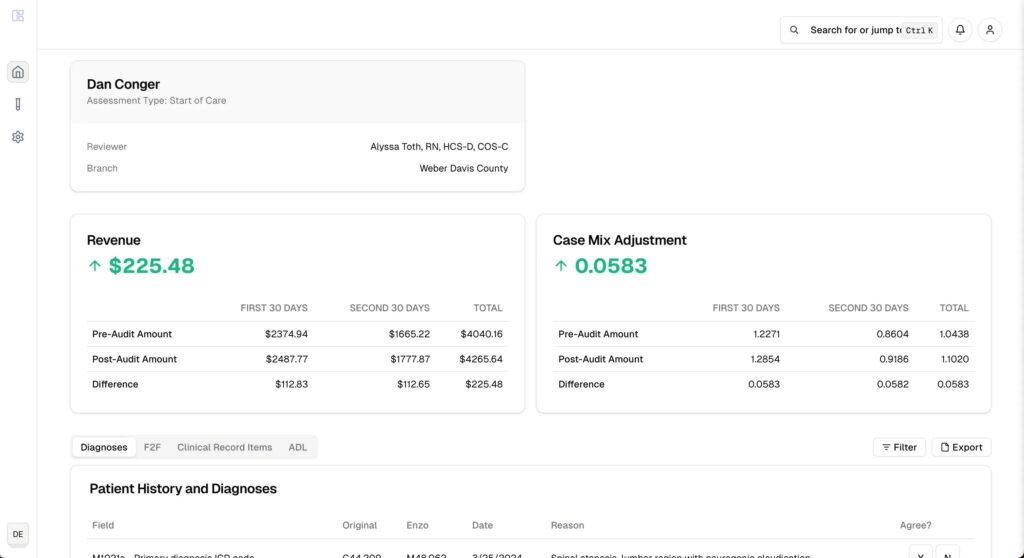
Talk-to-text scribe tools are both stand-alone voice capture and integrated documentation tools. Some of the best talk-to-text scribe tools we’ve found are Athelas Scribe, Ybot, Andy, and Nvoq. OASIS and documentation automation reduces the burden on caregivers even more, almost eliminating the additional time spent at home reviewing charts and documentation. Some of the best OASIS and documentation automated software we’ve reviewed are Andy, Enzo, and Brellium. The Rowan Report will have reviews of these products in 2025. 

Communication and Connection

Care at home workers are a disparate group, rarely being in the same place at the same time, missing out on company culture, office parties, trading stories around the water cooler, and engaging with fellow employees, managers, and executives. Access to colleagues and management is an integral part of employee engagement and satisfaction.

Before you share the personal cell phone numbers of your entire agency, remember that all communication between employees, management, and clients should be secure and HIPAA compliant. Agencies have already seen the consequences both to their bottom line and with government agencies for failure to comply with secure messaging requirements.

Luckily, there are plenty of secure messaging platforms available for agencies to use. Employing messaging technology not only increases employee engagement, but also provides a level of security between caregivers and their patients and families. If you’ve now realized that you’ve been communicating on insecure platforms, check out Buzz, Qliqsoft, and Zingage.

Final Thoughts

Whether you start with a simple calendar to remind yourself which employees have been with you the longest, or invest in every AI tool available, the key here is to recognize that your caregivers are giving their all every day for their primary purpose of excellent patient-centered care.

No matter how you decide to do it, make 2025 the Year of the Caregiver and show your appreciation for all that they do for you. We couldn’t do what we do without them.

# # #

Kristin Rowan, Editor

Kristin Rowan has been working at Healthcare at Home: The Rowan Report since 2008. She has a master’s degree in business administration and marketing and runs Girard Marketing Group, a multi-faceted boutique marketing firm specializing in event planning, sales, and marketing strategy. She has recently taken on the role of Editor of The Rowan Report and will add her voice to current Home Care topics as well as marketing tips for home care agencies. Connect with Kristin directly kristin@girardmarketinggroup.com or www.girardmarketinggroup.com

©2024 by The Rowan Report, Peoria, AZ. All rights reserved. This article originally appeared in Healthcare at Home: The Rowan Report. One copy may be printed for personal use: further reproduction by permission only. editor@therowanreport.com

The 4 M Framework for Age-Friendly Care

Admin

by Kristin Rowan, Editor

Pitfalls of Care at Home

Patient assessment has largely used the same formula for years. Patient care is more successful and less expensive in the home, but it is not without its frustrations. Agency owners and managers know that patients won’t always follow recommendations. Some patients leave an acute-care setting without understanding their own diagnosis or after care. Disruption from depression, dementia, or delirium impacts recovery. There are a reported 36 million falls among older adults in the U.S. And the list goes on.

Age-Friendly Health Systems

The care provided to older adults both in acute and post-acute settings is not always designed around the patient. Age-Friendly Health Systems is a joint initiative of The John A. Hartford Foundation and the Institute for Healthcare Improvement (IHI) in partnership with the American Hospital Association (AHA) and the Catholic Health Association of the United States (CHA).

Age-Friendly Health Systems, according to the John A. Hartford Foundation, is a movement helping hospitals, medical practices, retail pharmacy clinics, nursing homes, home-care providers, and others deliver age-friendly care. 

Components of an Age-Friendly Health System:

    • Follow an essential set of evidence-based practices in the 4Ms Framework
    • Cause no harm
    • Align with What Matters to older adults and their family caregivers

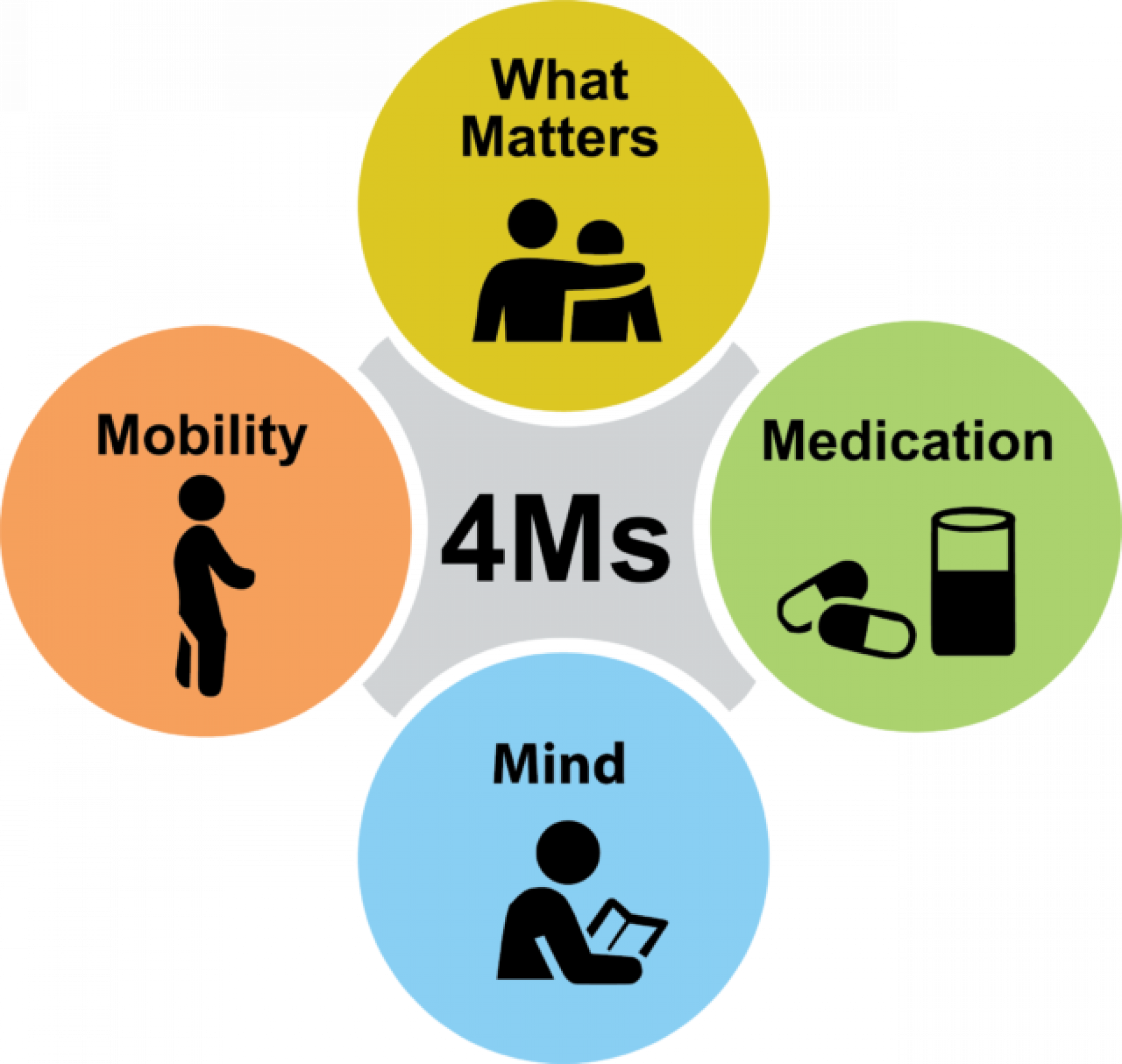
The 4Ms Framework

What Matters

Know and align care with each older adult’s specific health outcome goals and care preferences including, but not limited to, end-of-life care, and across settings of care.

Medication

If medication is necessary, use Age-Friendly medication that does not interfere with What Matters to the older adult, Mobility, or Mentation across settings of care.

Mentation

Prevent, identify, treat, and manage dementia, depression, and delirium across settings of care.

Mobility

Ensure that older adults move safely every day in order to maintain function and do What Matters.

4Ms Framework CHAP Age-Friendly

CHAP Certification for Age-Friendly Care

The Rowan Report spoke with Teresa Harbour, COO of CHAP, about the 4M Framework. CHAP has developed a standardized form that agencies can use to educate patients and families and find out what matters most to them. The 4Ms Framework changes the perspective on patient care by looking at the 4Ms as a set, rather than as separate assessments. Resources, standards, and learning modules for your agency are also included and can be downloaded. The Age-Friendly Care at Home Certification is included at no charge with your CHAP Accreditation.

First Age-Friendly Certification Awarded

On December 2, 2024, St. Croix Hospice announced its achievement of Age-Friendly Care certification across all 70+ locations. Harbour said in a statement, “This effort not only raises the bar for compassionate, patient-centered care but also underscores St. Croix Hospice’s role as a leader in the hospice field.”

St. Croix Hospice is dedicated to providing compassionate, individualized care tailored to the unique needs of older adults. It’s especially important to us that this certification is recognized across our entire organization, reflecting the unified efforts of our teams to ensure every patient receives the highest quality care they deserve.

Heath Bartness

Founder & CEO, St. Croix Hospice

# # #

Kristin Rowan, Editor

Kristin Rowan has been working at Healthcare at Home: The Rowan Report since 2008. She has a master’s degree in business administration and marketing and runs Girard Marketing Group, a multi-faceted boutique marketing firm specializing in event planning, sales, and marketing strategy. She has recently taken on the role of Editor of The Rowan Report and will add her voice to current Home Care topics as well as marketing tips for home care agencies. Connect with Kristin directly kristin@girardmarketinggroup.com or www.girardmarketinggroup.com

©2024 by The Rowan Report, Peoria, AZ. All rights reserved. This article originally appeared in Healthcare at Home: The Rowan Report. One copy may be printed for personal use: further reproduction by permission only. editor@therowanreport.com
New Way to Approach Care at Home

Caring for the Caregiver

by Kristin Rowan, Editor

Care For Lives: Empowered Homecare with a Holistic Approach

It’s a familiar story that you’ve heard countless times. A licensed practical nurse (LPN) takes a job in a healthcare setting and continues her education to become a registered nurse (RN). She works tirelessly for two years both at her job and in school with no days off. Moves into the hospital setting, then the clinic setting and suffers from burnout. She sees how much there is to do in healthcare that isn’t being done in the hospitals and clinics. Frustrated with the lack of care, too many patients, and too much stress, she tries her hand at home health. And she falls in love…

The Start of Something New

This is the story of Vanessa Chambers, CEO of Care For Lives PLLC. Her first reaction to home health was “Where has this been all my life?” Although she loved home health care, she felt she didn’t get to spend enough time with her patients. So much of her day was spent on paperwork and running from case to case. Sound familiar? 

Vanessa also found herself unable to recommend treatments that she believed could help her patients. Bound by the script her agency created, she felt as though her opinions were unwanted and her critical thinking skills as an experienced nurse were disregarded. And so the all too familiar tale continues. Vanessa started treating patients on her own and created a business based on how she wanted to treat patients.

In addition to standard patient care, Vanessa implemented patient education. Her patients weren’t taught what they needed to know and it terrified them. Their fear, as much as their illness, was a threat to their recovery. Their mistrust of the healthcare system and hospitals left them without care. When Vanessa realized how much work there was to be done, she started to build an army of caregivers. This was the beginning of Care For Lives.

Care For Lives Vanessa Chambers

Building the Care For Lives Army

“Let’s cultivate something!” This was the siren call Vanessa sent out to people she knew and trusted. She wanted to foster a community where nurses felt valued and could bring that energy to the people in New York. With the help of a business consultant, Vanessa began cultivating her army. At first, she reached out to nurses that she had worked with or for in the past. Those nurses recruited other nurses that they new and trusted. 

A new realization came to Vanessa when she saw how much help her patients needed in areas outside of nursing. Mental and physical well-being and a holistic approach offers better results than treating a condition in a vacuum. As she did more research on treating other areas of a patient’s life, she was introduced to Cognitive Behavioral Therapy.

CBT

Cognitive Behavioral Therapy (CBT) is talk therapy that looks into a patient’s trauma to see how it correlates both physically and mentally and how they connect to each other. Vanessa traveled to England to experience CBT first hand. “I’ve had therapy before,” explains Vanessa, “But, with him I solved problems I didn’t even know were there.” Mark Semple, CBT, Traumatologist, was next to join her army, followed by Sharon Semple, CBT, Traumatologist, and Hanna Commodore, CBT. Along with the therapy, her team will recommend psychiatry and/or medication if needed.

Nutrition

As part of the holistic approach, Vanessa contacted Shawn M. Nisbet, Holistic Group Nutritionist. With a different approach than traditional nutritionist who focus on getting a patient to a desired weight and moving on, Nisbet delves into each portion of a patient’s lifestyle. She assesses the need for supplements like Vitamin D, skin care regiments, as well as issues with a patient’s relationship with food. She offers individual and group therapy for nutrition and wellness.

An Unlikely Addition

The last addition to Vanessa’s Army is not one you would likely think of as a matter of course. But, Vanessa recognized that when patients feel good about the way they look, they are more optimistic about their health. So Vanessa found a hair care therapist. Danni Antenor is a licensed cosmetologist who is more than just a hairdresser. Hair can become matted and tangled after surgery or a hospital stay. Antenor works with all types of hair and comes to the home to clean out any matting or residue from the hospital. She will also find a look that is simple for the patient to maintain, flattering to the patient, and one that prevents hair loss. More than this, Antenor prevents the loss of dignity.

Chambers Army Care For Lives

Armed and Ready

With her team in place, and feeling confident that she could provide not only health and healing, but education to keep patients home and out of facilities, Vanessa official launched Care For Lives PLLC on October 19th. She is still wading through the noise in New York to get word of her business out to the community. She is planning a pop-up clinic event before the end of the year. Care For Lives nurses will provide education to patients and to their families and caregivers.

Operations

Care For Lives is currently a private pay agency. They are looking to start accepting insurance by Q2 of 2025, starting with private payers. They will consider Medicare and Medicaid patients when they feel equipped to do so. 

Care For Lives operates under a concierge service model, with patients paying a monthly flat rate for different tiers of service. Depending on the level of membership, patients get a nursing visit and cosultation, CBT, hair therapy, direct or group nutrition counseling, and weekly or bi-weekly virtual visits. They plan to at physical therapy and additional services over time. 

Longer term goals for Vanessa include hiring a medical director, having a 24/7 call center that is fully staffed, setting up a messaging system to provide patients with access to their care team, and to expand Care For Lives with new locations. 

About Care For Lives

Care for Lives provides empowered homecare. We provide patients, and their support system, with the education needed to ensure patients may enjoy the freedom and peace of mind that comes only from living in the comfort of your own home. We are dedicated to increasing quality care knowledge, and support services, for treatment, prevention, and total wellness where you feel most comfortable. Our services are available in homes, communities, and places of work.

# # #

Kristin Rowan, Editor

Kristin Rowan has been working at Healthcare at Home: The Rowan Report since 2008. She has a master’s degree in business administration and marketing and runs Girard Marketing Group, a multi-faceted boutique marketing firm specializing in event planning, sales, and marketing strategy. She has recently taken on the role of Editor of The Rowan Report and will add her voice to current Home Care topics as well as marketing tips for home care agencies. Connect with Kristin directly kristin@girardmarketinggroup.com or www.girardmarketinggroup.com

©2024 by The Rowan Report, Peoria, AZ. All rights reserved. This article originally appeared in Healthcare at Home: The Rowan Report. One copy may be printed for personal use: further reproduction by permission only. editor@therowanreport.com

Case Management and Discharge Planning

Admin

by Elizabeth E. Hogue, Esq.

Case Management & Discharge Planning to Reduce Length of Stay

By the Numbers

Many hospitals are laser-focused on reducing length of stay in order to enhance patient experiences and boost financial performance. A recent study by KFF shows that the average adjusted expense per patient day at hospitals in 2022 was $3,025. 

Kenneth Kaufman, managing director of Kaufman Hall, observed in a blog post earlier this year that reductions in length of stay can produce dramatic increases in savings. Mr. Kaufman pointed out that if a hospital with 425 beds that has an average length of stay of six days achieved a reduction in length of stay of one day, the hospital would save at least $20 million in operating expenses per year.

Step Up to the Plate

An increasing number of healthcare leaders are now advocating for discharge planners/case managers to play a key role in care coordination, including reductions in length of stay.

Perhaps healthcare managers have lost sight of the fact that discharge planners/case managers have been required to fulfill this role for quite some time based on Conditions of Participation (CoPs) of the Medicare Program for discharge planning. According to 42 CFR 482.43 Condition of participation: Discharge planning, discharge planners/case managers are required to:

    • Identify patients who need discharge planning early in their inpatient stays
    • Evaluate patients in need of discharge planning to identify the need for post-hospital services, including the availability and accessibility of these services
    • Regularly re-evaluate patients’ conditions to make needed changes in discharge plans
    • Provide necessary medical information to implement discharge plans

The use of discharge planners/case managers to manage length of stay is not new and isn’t based on potential reductions in length of stay with resulting savings and increased revenue. Rather, case management is a discipline that is well-defined by standards of care published and periodically revised by the Case Management Society of America (CMSA). 

They Were Already on Base

Hospital leaders may marvel at their discovery of discharge planning/case management as a tool to assist patients and manage revenue, but the fact is that case management/ discharge planning has been required for some time in order to maintain certification by the Medicare Program.

While newfound support is welcome, the role and contributions of case managers/discharge planners is long-standing and well known, especially among patients and post-acute providers. Perhaps now hospital leaders will share appreciation of the value of case management/discharge planning more often.

Case Management Discharge Planning

# # #

Elizabeth E. Hogue, Esq.

Elizabeth Hogue is an attorney in private practice with extensive experience in health care. She represents clients across the U.S., including professional associations, managed care providers, hospitals, long-term care facilities, home health agencies, durable medical equipment companies, and hospices.

©2024 by The Rowan Report, Peoria, AZ. All rights reserved. This article originally appeared in Healthcare at Home: The Rowan Report. One copy may be printed for personal use: further reproduction by permission only. editor@therowanreport.com

©2024 Elizabeth E. Hogue, Esq. All rights reserved.

No portion of this material may be reproduced in any form without the advance written permission of the author.

Survive Medicare Advantage

Admin

by Alexandria Nelson, Communications Specialist, Axxess

How to Survive Medicare Advantage in Home Health

Navigating the complexities of Medicare Advantage continues to be a sticking point for organizations trying to scale their business. In an education session at the 2024 Axxess Growth, Innovation and Leadership Experience (AGILE), Brent Korte, CEO of Frontpoint Health, and Wendy Conlon, MSPT, Senior Vice President of Client Experience at Axxesss, discussed the ways organization can adapt to the changing reimbursement landscape and ensure their survival.

The Evolution of Care

Conlon and Korte began the session by examining how care is delivered under Medicare Advantage, highlighting the differences in care rates among beneficiaries. They emphasized the importance of organizations being aware of these variations in care.

“I think it’s important that we recognize our role as providers of the target population while also considering the various factors that influence the care we provide,” Conlon said.

Conlon also encouraged organizations to understand the margin of care they provide, highlighting that the care at home industry, and healthcare in general, continues to be an undervalued space.

Korte added that organizations should focus on what Medicare Advantage is looking for in terms of providing care, and set expectations for beneficiaries.

Strategies for Success

Conlon noted that organizations providing care for Medicare Advantage beneficiaries need to have a plan in place to see success in their business.

“It’s about strategy,” Conlon said. “It’s truly about disciplined commitment to excellence when caring for patients and a plan to do so appropriately with appropriate measures in place to get to that success and to watch those margins.”


Survive Medicare Advantage
Surviving Medicare Advantage

Operations and Structures

Conlon stressed the importance of organizations finding operational efficiencies and strategizing their approach to patient care. She encouraged them to embrace the financial and administrative aspects of home care, treating it as a business to ensure sustainability and growth.

Conlon and Korte also encouraged organizations to look at their staffing models and clinician structures when strategizing their business.

“Do we have all of our clinicians seeing all of our patients, or have we strategized and almost stratified our clinicians to understand how to see different subsets of patients very specifically and understand those payer models behind them?” Conlon asked.

Korte advised leaders to continue to advocate for an episodic payment model for Medicare Advantage to improve the quality of care patients receive.

“That really, really matters because not only do we get paid more so we can provide better care and get to that 24.9% margin or maybe 14.9% margin, but it doesn’t disrupt our model of episodic care which is very much, ‘give the patient what they need,’” Korte said.

Use Technology to Survive Medicare Advantage

Leaders were also encouraged to use technology to help streamline operations and keep their organizations accountable and their records accurate.

“How nimble is the technology and intuitive for setting up those payers to allow us to make those changes that we need to make when we need to make them, but also to ensure that we’ve got accuracy?” Conlon asked.

Survive Medicare Advantage

The pair concluded the session by emphasizing the importance of not only examining and refining internal organizational processes but also looking outward. They advised leaders to leverage community resources and collaborate with payers.

“Externally, understanding our community and our community resources and then also understanding how we can speak to the payers and negotiate with the payers [is essential],” Conlon said. “We may think, when there’s a group of folks that are advocating for that, that tends to bring about a lot of positive change, but that doesn’t mean that one person [or] one organization cannot be the catalyst for that change to happen.”

# # #

This article orginally appeared on the Axxess blog and is reprinted with permission. For more information or to request print permission, please contact Axxess.

Medicare Advantage Stock Prices After Trump Elected

Clinical

by Kristin Rowan, Editor

Will the Change in Leadership Usher in a Change in Reimbursement Rates?

As in any election year, we have been bombarded with promises, predictions, and pandering from senate and house hopefuls as well as presidential candidates from every party. Each of them found platform issues that resonated with their followers. In turn, they have accused their opponents of all manner of sin. 

Now that the election has passed and the lame duck session of congress has begun, analysts have started looking to January and how election results may impact different industries. Analysts believe Trump, along with congressional Republicans, will aggressively push Medicare Advantage. One researcher predicts that traditional Medicare will “wither on the vine.” 

Privatization

Opposition to our current health care and insurance system often advocate for a single-payer system that is seen in places like England and Canada. Naysayers refer to this as the “socialization” of medicine, referring to socialist and communist governments. Privatization, on the other hand, moves healthcare out of the hands of the government and into the hands of privately held, usually for-profit, health insurance companies. Medicare Advantage has quietly moved more than 50% of all Medicare eligible patients to a privatized system. Senior policy analyst at Paragon Health Institute, Joe Alabanese believes that the Trump administration and a republican Congress would be “more friendly” to the idea of privatized health care. 

Insurer Stock Prices

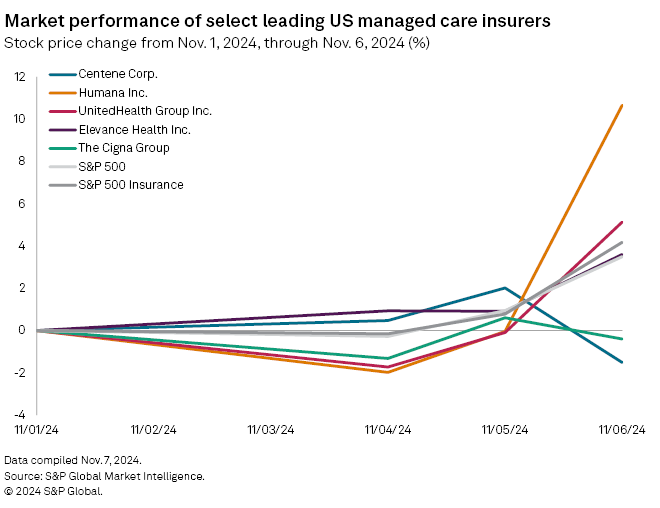
Whether the stock prices just before and after election day are predictive of things to come remains to be seen. For now, the information before us is this:

    • Between Nov 1 and Nov 7, Humana Inc. had the largest increase in stock prices at 10.7%
    • UnitedHealth Group Inc. rose 5.1% in the same time period
    • Both companies had greater stock increases than the average across S&P
    • Elevance Health was in keeping with the rest of the S&P with an increase of 3.6%
    • Molina Healthcare, Inc. and The Cigna Group dropped 0.2% and 0.4%, respectively
Medicare Advantage Stock Trump

Analysts say the jumps are in keeping with expectations that Republican control in Congress and in the White House will be beneficial for Medicare Advantage

Medicare Advantage Stock Trump<br />

Final Thoughts

It’s no secret that The Rowan Report is not a fan of Medicare Advantage. Specifically, the sales tactics used on the elderly and infirmed are predatory and the denial rate is criminal. The more eligible patients sign up for Medicare Advantage the less they will receive the care they need. Further, the more Medicaid has to supplement the cost of Medicare Advantage, the more home care agencies will suffer. Nationally, the more CMS regulates payment rates, pre-authorizations, and denial rates by privatizing Medicaid, the worse off our entire healthcare system will be.

With the state and national associations, we will continue to advocate on behalf of care at home agencies and their patients. And we hope you will too, regardless of who is in office. We have support at the federal level and we will continue to fight the good fight.

# # #

Kristin Rowan, Editor

Kristin Rowan has been working at Healthcare at Home: The Rowan Report since 2008. She has a master’s degree in business administration and marketing and runs Girard Marketing Group, a multi-faceted boutique marketing firm specializing in event planning, sales, and marketing strategy. She has recently taken on the role of Editor of The Rowan Report and will add her voice to current Home Care topics as well as marketing tips for home care agencies. Connect with Kristin directly kristin@girardmarketinggroup.com or www.girardmarketinggroup.com

©2024 by The Rowan Report, Peoria, AZ. All rights reserved. This article originally appeared in Healthcare at Home: The Rowan Report. One copy may be printed for personal use: further reproduction by permission only. editor@therowanreport.com

Product Review: Startup Reimagines the EMR

Admin

by Tim Rowan, Editor Emeritus

Catherine Zhang was thriving in product engineering while Mayur Pandya held a similar leadership role for Silicon Valley’s Workday. Their futures were predictable and bright until Catherine’s close friend unexpectedly passed away, changing her career goals as profoundly as her heart.

Over a cup of coffee, Zhang and Pandya learned they both had close family working in health care. The conversation turned to how they might apply their product development expertise to, as they put it today, “improve patient outcomes, empower care teams, and reduce the cost of care in the U.S.”

Their first task was to identify which healthcare sector had a pain point that needed their talents most. Naturally, they found their way to the $129 billion Home Health sector. Ms. Zhang told us they were taken aback by the severity of the harm done to Home Health by Medicare Advantage plans.

Catherine Zhang Narrable

“We learned that over 600 HHAs had closed their doors in the previous five years. MA reimbursement ranges from 60% to 70% of what Medicare pays, and the administrative burden imposed by MA plans is seven to eight times what it is for traditional Medicare. Making matters worse, or perhaps because of these pressures, we found the turnover rate among HHA nurses to be 31%.”

Mayur Pandya Narrable

Fast Forward Two Years

Working together, the pair attracted investors, additional coders, and, most importantly, experienced Home Health advisors and product designers. What began as an idea to ease the workload on the nurse in the field grew into a full-fledged electronic medical record system, complete with AI-enabled intake, scheduling, revenue management, physician signatures, and quality control. Naturally, created in the 2020’s, the new system is built around Artificial Intelligence tools. They dubbed it “Narrable.”

“What we wanted to do,” Ms. Zhang continued, “was to harness the power of AI to eliminate the inefficiencies we were learning from owners and nurses within HHAs. Some spend hours completing assessments and visit notes in the evening because ‘it is too hard to document in the patient’s home.’ Many told us that intake, scheduling, chasing physician signatures, and productivity tracking are too unpredictable or too complex for their existing EMR and they resort to multiple spreadsheets.” One HHA owner told Zhang that he “spent $500,000 last year on double data entry.”

Narrable Features We Saw

Narrable’s roots are in the field nurse’s experience. Ms. Zhang explained that the system’s clinician-centric design can eliminate tens of thousands of “invisible” clinician work. In the product demonstration she walked us through, we were able to understand how an AI engine might save work by eliminating both steps and errors.

    • Scheduler analyzes each clinician’s capacity, ability to accept an additional patient, and geographic location, automatically recommending the best person to take a new case. Still, a human makes the final decision.
    • OASIS assessment answers are automatically checked against referral documents and internal logic quality checks are performd.
    • Clinical notes benefit from AI pre-filling demographic data, reminding the clinician of OASIS determinations and goals stated on the Plan of Care.
    • Eligibility is checked against payer data and prior Home Health admissions
    • Physician PECOS integration auto-fills fields, eliminating repetitive data entry
    • Claims management includes:
      • alerts to find uncompleted tasks that may delay billing
      • automated claims submission
      • automatic monitored and posted remittances

Lastly, Narrable offers a suite of configurable management reports that check for maximum allowable PDGM revenue, HHVBP outcomes that may affect adjustments, and real-time financials. A configurable financial report displays paid vs expected revenue, A/R, adjustments, and denials.

Our Narrable Recommendation

At last month’s inaugural conference of the new National Alliance for Care at Home, we witnessed a virtual AI explosion. Every established tech company and a plethora of startups are diligently experimenting to identify the appropriate role for artificial intelligence in Home Health and Hospice. As with all breakthrough technologies, there will be a race to the finish line, with the large, established companies enjoying a head start and others scrappily inventing and innovating with no legacy products acting as a ball and chain.

In this writer’s opinion, Zhang and Pandya have come up with something different. Any HHA thinking about launching an EMR search and evaluation project would not regret the time invested in giving Narrable a look.

# # #

Tim Rowan, Editor Emeritus

Tim Rowan is a 30-year home care technology consultant who co-founded and served as Editor and principal writer of this publication for 25 years. He continues to occasionally contribute news and analysis articles under The Rowan Report’s new ownership. He also continues to work part-time as a Home Care recruiting and retention consultant. More information: RowanResources.com
Tim@RowanResources.com

©2024 by The Rowan Report, Peoria, AZ. All rights reserved. This article originally appeared in Healthcare at Home: The Rowan Report. One copy may be printed for personal use: further reproduction by permission only. editor@therowanreport.com

Safeguarding Home Care Heroes Part 2

Clinical

by Marcylle Combs, BS, MS, RN, CHCE

This article is part 2 of 2-part series. Read part 1 here

Protecting our Care at Home Heroes

Preventive Measures and Safety Protocols

To deal with these dangers, several preventive steps have been recommended.

Personal Protection

Personal Protective Equipment (PPE) and hand hygiene are basic but important ways to prevent disease spread. Making sure workers are up to date on vaccinations, following cleaning protocols, and safely handling sharp objects and hazardous materials can also significantly reduce risks.

Beyond PPE

Safety policies personal protective equipment

But safety isn’t just about using PPE. There’s also a need for ergonomic tools to prevent injuries, regular safety checks of patient homes, and ensuring safe driving practices for workers who spend a lot of time on the road. Just as important are communication and conflict de-escalation strategies to help healthcare workers manage tense situations with patients or their families.

Safety policies de-escalation

Training

Training home health workers to spot signs of potential violence or aggression, whether from patients or their families, is vital. They should also have strategies to defuse conflicts and a clear plan to exit safely if a situation turns dangerous. Since hazardous chemicals in the home can be a real threat, agencies should train workers to recognize unsafe conditions and take the necessary steps, like reporting the problem or moving the patient to a safer environment.

Emotional Resilience

A Must-Have for Care at Home Workers

Physical safety is important, but emotional well-being is just as crucial. Feeling emotionally secure—valued, supported, and heard at work—is key to keeping employees engaged and satisfied with their jobs. It helps reduce burnout, absenteeism, and turnover.

Creating a culture of psychological safety starts with good leadership. Managers need to actively listen to their employees’ concerns and encourage open communication. When workers feel that their voices are heard and their opinions matter, they’re more likely to stay proactive and engaged.

Real-Life Examples and the Importance of Strong Policies

The dangers faced by home health workers aren’t just theoretical—they’re very real. I’ve seen this firsthand. As both an owner, administrator, and nurse, there were times we felt unsafe.

One instance that sticks out happened a few years ago

A nurse on a routine visit encountered the patient’s grandson breaking into the house, clearly high on some kind of drug. She and the patient managed to block the bedroom door while she called 911, and thankfully, the police arrived before the grandson could get to them. He was carrying a gun, though she didn’t know that at the time.

Safety policies awareness

Putting Comprehensive Policies in Place

A solid safety program that meets the unique needs of home health workers is a must. This includes having zero-tolerance policies for workplace violence, infection control measures, and clear guidelines for handling dangerous materials. Ongoing education and training are essential to make sure staff follow these protocols.

In addition, there should be regular assessments to gauge how effective safety policies are. Gathering feedback from workers on the ground is crucial to making sure these policies address real-world challenges.

Final Thoughts: Safety is a Mindset

Workplace safety isn’t just about following rules or checking boxes. It’s something that should be part of the culture of every organization. By putting in place measures that protect both the physical and emotional well-being of home health workers, we can ensure that these “home care heroes” continue to provide the critical care that so many people rely on. As Eleanor Everet wisely said, “Safety is not a gadget, but a state of mind.”

# # #

Marcylle Combs Care at Home Worker Safety

Marcylle has faithfully served and advocated on behalf of home health and hospice patients for over 30 years. She started her career as a nurse, worked diligently to strengthen her leadership skills and ultimately became the owner/president of a successful home health and hospice company. She has served the home care industry in Texas and nationally throughout her years on multiple committees, boards, associations and dedicated lobbying efforts. Currently, Marcylle serves on the board of directors for The National Association for Home Care & Hospice (NAHC), the Home Care and Hospice Financial Managers Association (HHFMA) and the Industry Advisory Board. Additionally, she serves on NAHC’s Governance and Nominating Committee, the HHFMA workgroup, Innovations Committee and chairs the Women in Leadership Committee for HHFMA.

As a wife, mother of 5 adult children and as a female in the workplace she aspires to grow and lead others until her last breath on this earth. She continues this quest through three new business ventures she has founded: MAC Legacy, MAC Legacy Investments and The Marcylle Combs Company.     

©2024 by The Rowan Report, Peoria, AZ. All rights reserved. This article originally appeared in Healthcare at Home: The Rowan Report. One copy may be printed for personal use: further reproduction by permission only. editor@therowanreport.com
Here We Go Again

Clinical

by Tim Rowan, Editor Emeritus

OIG Accuses Medicare Advantage Providers of Padding Patient Assessments...Again

“Hello, this is your Medicare Advantage company calling. I am one of their clinicians and it is time for us to update your health assessment. If you will agree to a home visit, we will send you a $50 gift card to CVS.”

This phone call my brother received is typical, increasingly common, and not necessarily on the up-and-up, according to a new report to CMS from the Department of Health and Human Services Office of the Inspector General (OIG). OIG found that these home visits, known in the insurance industry as “Health Risk Assessments,” (HRA) when coupled with HRA-related claims data, increased Medicare Trust Fund payments to MA companies $7.5 billion in 2022 and twice that in 2023. Most of it went to the top 20 companies.

Concerned woman on a telephone call

The October 2024 report, “Medicare Advantage: Questionable Use of Health Risk Assessments Continues to Drive Up Payments to Plans by Billions,” accuses the industry as a whole of improperly padding payments by “finding” new health conditions during these HRA’s that may indicate the need for additional care at additional cost to the company. It questions the use of MA plan employees doing these assessments instead of relying on the customer’s primary care physician’s reports.

OIG references CMS’s own report, Part C Improper Payment Measure (Part C IPM) Fiscal Year 2023 (FY 2023) Payment Error Rate Results,” to determine that gross overpayments to Medicare Part C plans in 2023 amounted to just over six percent of total payments, or $14.6 billion. The net increase to MA plans, after adjusting for underpayments, brought the percentage to 4.62. Total 2023 payments to MA plans came to $275,605,962,817.

The report also points out that identifying additional customer need during an HRA does not necessarily translate into the insurance company paying for additional care.

OIG Recommendations

In addition to implementing prior OIG recommendations, the new report asks CMS to:

    • Impose additional restrictions on the use of diagnoses reported only on in-home HRAs or chart reviews that are linked to in-home HRAs for risk-adjusted payments,
    • Conduct audits to validate diagnoses reported only on in-home HRAs and HRA-linked chart reviews, and
    • Determine whether select health conditions that drove payments from in-home HRAs and HRA-linked chart reviews may be more susceptible to misuse among MA companies.

CMS concurred with OIG’s third recommendation but rejected the other two.

While the entire 38-page report is well-worth reading, OIG has also published a one-page summary.

At this year’s annual conference of The National Alliance for Care at Home, the new merger of NAHC and NHPCO, a number of education sessions were devoted to teaching Home Health agency owners how to negotiate with Medicare Advantage plans in order to minimize losses and better care for patients who chose those plans. Comments included the high rate of care denial, unreasonable prior authorization policies, and slow payments as compared to traditional Medicare. Other healthcare entities have chosen a potentially more effective response: Just Say No. 

Hospital systems have had enough

According to a roundup of recent decisions by large and small healthcare systems in Becker’s Hospital CFO Report (10/25/24), no fewer than 30 healthcare providers are severing their relationships with one or more MA plans, with another 60 who told Beckers they are seriously considering the same move.

Doctor tears up contract

States Have as Well

A sister publication, Becker’s Payer Issues, reported in its October 23 edition that more and more states are issuing fines against MA plans for violations ranging from excessive denied claims to collection of co-pays when none was required.

How Much Longer?

All of this demands a serious question. How much longer will Home Health continue to tolerate abuse by these giant, for-profit payers now that a different path forward has been paved by hospital systems and state regulatory arms? The loudest voice for Home Health to join the “Just Say No” movement over the last few years has been that of Bruce Greenstein, CTO of LHC Group. Following his company’s acquisition by UnitedHealth’s Medicare Advantage division, Optum, his less loud message is to work with MA plans to teach them what Home Health is and what it can do for them.

Statement from Dr. Landers

In his inaugural address to The Alliance last month, new CEO Dr. Steven Landers called for our entire industry and everyone taking a paycheck from it to join him in advocacy. We fully support that call to action, recognizing that no national association can influence lawmakers and CMS regulators without member support, but he was referring to Medicare rules and payment structures. As we know, that includes less than half of Medicare beneficiaries today. Thanks to deceptive TV ads during open enrollment every year, that number will continue to shrink.

Widespread Advocacy

We need to turn at least part of our advocacy focus to the dominant payers, the MA divisions of insurance companies. Read the Beckers report on the 30 healthcare systems that have torn up their MA contracts. Read the companion report about the epidemic of care denials. Yes, it is a David vs. Goliath story, with even the largest organizations in Home Health dwarfed by the size of the payers. As so many hospital systems have shown, however, it is possible to switch from begging for a few more cents per visit to forcing a plan to beg you to take their patients.

It will only work though if everyone does it. We have already lost LHC Group, and Optum is in the final stages of adding Amedisys to their stable. Out of 11,000 HHAs, there is still a chance we have a united voice loud enough to be heard and taken seriously.

Final Thoughts

One of their improper cost-cutting tactics is routine care denial. For example, the Labor Department alleged that UnitedHealth subsidiary UMR denied all urine drug screen claims from August 2015 to August 2018 without determining whether a claim was medically necessary. In my brother’s case, following his wife’s HRA by her MA company, with no additional care offered, he made the tough choice to put her on in-home hospice care. The assessing nurse immediately detected she had a UTI and ordered the appropriate antibiotics. She responded quickly and may be discharged from hospice soon. Hospice care, of course, is paid by traditional Medicare, not Medicare Advantage.

Tim Rowan, Editor Emeritus

Tim Rowan is a 30-year home care technology consultant who co-founded and served as Editor and principal writer of this publication for 25 years. He continues to occasionally contribute news and analysis articles under The Rowan Report’s new ownership. He also continues to work part-time as a Home Care recruiting and retention consultant. More information: RowanResources.com or contact Tim at Tim@RowanResources.com

©2024 by The Rowan Report, Peoria, AZ. All rights reserved. This article originally appeared in Healthcare at Home: The Rowan Report.homecaretechreport.com One copy may be printed for personal use: further reproduction by permission only. editor@homecaretechreport.com

Fraud Soup

Clinical

by Elizabeth E. Hogue, Esq.

Everyone in the "Fraud Soup" Together

Fraud Soup

Perhaps you remember the CEO of a hospice in the Dallas area, Novus Health Care Services, who texted staff members urging them to administer drugs to patients to avoid exceeding per patient spending caps. He then sent texts praising them when patients passed away from the drugs he had urged them to administer: “Good job!” There were also accusations of recruiting ineligible patients and falsifying documentation. Ever wonder what happened to him and other staff members?

Well...Here's the Scoop!

  • Sixteen individuals from the hospice were indicted and at least eleven of them pled guilty.
  • Thirteen individuals involved in these activities were sentenced to a combined eighty-four years in prison.
  • The most recent sentence of four years in prison was imposed on the hospice’s marketing director.
  • The CEO of the Hospice was sentenced to thirteen years in prison.
  • Two Medical Directors decided to go to trial instead of pleading guilty. They were sentenced to thirteen years and ten years in prison.
  • A nurse involved in these activities was sentenced to eight and a half years in prison.
  • An LVN who received a text from the CEO saying “good job” after she administered drugs to a patient who then passed away was sentenced to eight years in prison.
Fraud Soup Elizabeth Hogue
  • A triage nurse was sentenced to seven years in prison.
  • The Director of Operations was sentenced to five and a half years in prison.
  • A Medical Director who pleaded guilty received a sentence of four years and nine months.
  • The VP of Patient Services was sentenced to three years in prison.
  • The VP of Marketing was sentenced to two years and nine months in jail.
  • A nurse was also sentenced to two years and nine months in prison.
  • An owner of a lab and home health agency was also sent to jail for eighteen months because she allowed the CEO to access potential patients’ confidential medical information in exchange for using services provided by her companies.

Far-Reaching Effects

Can you imagine the effect on professionals who surely also lost their licenses and their families?  Not to mention patients and their families!

The lesson in this heartbreaking story is that fraud enforcement is not limited to owners and upper management. Enforcers will dump everyone who engaged in inappropriate conduct into the “fraud soup.” Therefore, when providers refuse to engage in fraudulent conduct, they are not only protecting themselves, but everyone else involved.

# # #

Elizabeth E. Hogue, Esq.

Elizabeth Hogue is an attorney in private practice with extensive experience in health care. She represents clients across the U.S., including professional associations, managed care providers, hospitals, long-term care facilities, home health agencies, durable medical equipment companies, and hospices.

©2024 by The Rowan Report, Peoria, AZ. All rights reserved. This article originally appeared in Healthcare at Home: The Rowan Report. One copy may be printed for personal use: further reproduction by permission only. editor@therowanreport.com

©2024 Elizabeth E. Hogue, Esq. All rights reserved.

No portion of this material may be reproduced in any form without the advance written permission of the author.

Safeguarding Home Care Heroes

Admin

by Marcylle Combs, BS, MS, RN, CHCE

This article is part 1 of a 2-part series. Check back for part 2 on November 7th.

Protecting our Care at Home Heroes

Building Emotional Strength & Ensuring Workplace Safety

In the fast-paced, ever-changing world of home health and hospice care, paying attention to care at home worker safety—both physically and emotionally—is critical. These “care at home heroes” offer life-saving care to people in need. The environments they work in, including patients’ homes and their surrounding neighborhoods, can be unpredictable and uniquely risky.

Agencies must put more focus on their caregivers’s emotional well-being and physical safety to help them provide the best care possible. Developing strong safety policies and creating a supportive work atmosphere are key strategies to ensure they can focus on what matters most: caring for their patients.

Care at Home Worker Safety Hidden Dangers

Understanding the Risks

Care at home workers face a wide range of hazards, many of which are heightened by the fact that they’re working in spaces they can’t fully control. These dangers range from exposure to bloodborne pathogens and other biological risks to dealing with physical strains, like lifting patients in cramped spaces. There’s also the issue of unclean home conditions, aggressive pets, crime-ridden neighborhoods, and the risks involved in driving between homes.

By the Numbers

Statistics show that care at home workers are five times more likely to experience nonfatal workplace violence compared to people in other industries. More than 60% of these workers have reported experiencing at least one incident of violence in the past year. Registered nurses (RNs) specifically have reported high levels of verbal abuse (up to 65%), physical assault (44%), and sexual harassment (41%) on the job. In addition, these caregivers often deal with musculoskeletal injuries, with injury rates being 50% higher than those in hospitals due to patient handling tasks.

Common Incidents and the Problem of Underreporting

Many of these incidents go unreported, which only adds to the dangers care at home workers face. Since they’re constantly on the move, it’s tough to track these events. Still, reports clearly show that violence, harassment, and injuries occur more frequently and are more severe in care at home than in many other fields.

Care at Home Safety

Threats Aren't Always From the Patient

On top of dealing with violent patients, care at home workers may also face threats from family members. Tensions and emotional stress in the home—often tied to a patient’s declining health—can sometimes escalate into verbal or physical threats toward caregivers. These situations can make workers feel unsafe, even if no direct threat is made.

Real-World Relevance

For example, I once had a patient’s family member follow me to my car while talking about his pet venomous snakes. He didn’t threaten me directly. I definitely felt uneasy, though, but I didn’t report it. As I look back on this encounter, I believe I truly should have reported this and recorded it for future review.  It just highlights what we should teach our employees on how and when to report incidents.

Hidden Threats

Chemical exposure is another issue. Care at home workers often encounter dangerous cleaning or other chemicals that aren’t stored or used properly. Sadly, there was a tragic case where a home health nurse in Los Angeles died after being exposed to hazardous chemicals stored incorrectly in a patient’s home. Other in-home hazards include fall risks, aggressive animals, weapons hidden in the home, and illegal substances. These hidden risks make it crucial for workers to follow safety protocols when entering patient homes.

Care at Home Safety

# # #

Marcylle Combs Care at Home Worker Safety

Marcylle has faithfully served and advocated on behalf of home health and hospice patients for over 30 years. She started her career as a nurse, worked diligently to strengthen her leadership skills and ultimately became the owner/president of a successful home health and hospice company. She has served the home care industry in Texas and nationally throughout her years on multiple committees, boards, associations and dedicated lobbying efforts. Currently, Marcylle serves on the board of directors for The National Association for Home Care & Hospice (NAHC), the Home Care and Hospice Financial Managers Association (HHFMA) and the Industry Advisory Board. Additionally, she serves on NAHC’s Governance and Nominating Committee, the HHFMA workgroup, Innovations Committee and chairs the Women in Leadership Committee for HHFMA.

As a wife, mother of 5 adult children and as a female in the workplace she aspires to grow and lead others until her last breath on this earth. She continues this quest through three new business ventures she has founded: MAC Legacy, MAC Legacy Investments and The Marcylle Combs Company.     

©2024 by The Rowan Report, Peoria, AZ. All rights reserved. This article originally appeared in Healthcare at Home: The Rowan Report. One copy may be printed for personal use: further reproduction by permission only. editor@therowanreport.com

Situational Awareness Training

Admin

by Lauren Rogers and Bobby McLain

Enhancing Safety Through Situational Awareness

For home-health, hospice, and social workers, maintaining safety in unpredictable environments is crucial. Situational awareness is a key tool in ensuring personal safety and effective response to potential threats. It involves four main characteristics: observation, orientation, decision, and action. Here’s a brief guide on how to apply these principles in your daily work.

Observation

For home-health, hospice, and social workers, maintaining safety in unpredictable environments is crucial. Situational awareness is a key tool in ensuring personal safety and effective response to potential threats. It involves four main characteristics: observation, orientation, decision, and action. Here’s a brief guide on how to apply these principles in your daily work.

Situational Awareness

Orientation

Orientation involves understanding and processing the information you’ve observed based on your own experience and knowledge. Think about what is around you—consider the layout of the environment and how it affects your safety. If you find yourself in a difficult situation, where will you seek help? Familiarize yourself with exit routes and safe locations within the home or area.

Decision

Once you’ve gathered and processed information, it’s time to make decisions. Weigh your options carefully to determine the best course of action. Consider what you can do within your capabilities to mitigate any risks. Your decisions should aim to ensure your safety while also maintaining the well-being of those you serve.

Situational Awareness

Action

Action is the final step, where you use all the information and decisions you’ve made to execute a plan for safety. If you’ve identified a potential danger, act quickly and decisively. This might involve leaving the situation, calling for help, or using safety tools and protocols designed for emergencies.

Situational Awareness Final Thoughts

Applying situational awareness can significantly enhance your safety and effectiveness as a home-health, hospice, or social worker. By mastering observation, orientation, decision, and action, you’ll be better equipped to navigate challenging situations and ensure a safer work environment. Stay alert, make informed decisions, and take proactive steps to protect yourself and those you serve.

# # #

Lauren Rogers

Lauren Rogers serves as the Director of Healthcare at Katana Safety, where she leverages her experience to enhance workplace safety in healthcare environments. She focuses  on post-acute care providers and is dedicated to integrating innovative safety solutions that protect healthcare professionals.

She is passionate about creating safer environments, reducing risks for healthcare workers, and driving positive industry change. At Katana Safety, Lauren is committed to developing strategies that prioritize the well-being and safety of healthcare teams.

Bobby McLain

Bobby McLain is Chief Experience Officer for KATANA Safety, the Premier Provider of Lone and Workforce Safety Solutions.  McLain’s previous roles include interim marketing leadership for multiple companies and executive positions at ScanSource, Inc., working in the company’s global marketing and strategic expansion efforts. McLain’s career began in event management and marketing, supported by a Bachelor of Arts in Journalism with a focus on Advertising/PR from the University of South Carolina. He can be reached at bobby@katanasafety.com or 864-630-9016   KATANA Safety: Never A Lone Worker

©2024 by The Rowan Report, Peoria, AZ. All rights reserved. This article originally appeared in Healthcare at Home: The Rowan Report. One copy may be printed for personal use: further reproduction by permission only. editor@therowanreport.com

Patient Preference by Race or Nationality

Admin

This article provides updated information about a discrimination case filed against a home care agency by the EEOC. The Rowan Report published the initial press release and article last year.

by Elizabeth E. Hogue, Esq.

What to do When Patients Don't Want Caregivers of Certain Races or Nationalities

The Equal Employment Opportunity Commission (EEOC) sued ACARE HHC, Inc.; doing business as Four Seasons Licensed Home Health Care Agency in Brooklyn, New York. The EEOC claimed that the Agency removed home health aides from work assignments based on their race and national origin to accommodate clients’ preferences in violation of the Civil Rights Act of 1964 [EEOC v. ACARE HHC d/b/a/ Four Seasons Licensed Home Health Care, 23-cv-5760 (U.S. District Court for the Eastern District of New York)]. 

This case recently settled, and Four Seasons will pay a whopping $400,000 in monetary relief to affected home health aides! The Agency must also update its internal policies and training processes related to requirements of the Civil Rights Act, stop assigning home health aides based on clients’ racial or nationality preferences, and provide semi-annual reports to the EEOC about any reports or complaints received about discrimination.

Aides Removed from Assignments

According to the EEOC, Four Seasons routinely responded to patients’ preferences by removing African American and Latino home health aides based on clients’ preferences regarding race and national origin. Aides removed from their assignments would be transferred to new assignments, if available, or, if no other assignments were available, would lose their employment altogether. The lawsuit asked for both compensatory and punitive damages, and for an injunction to prevent future discrimination based on race and national origin. The EEOC says that “Making work assignment decisions based on an employee’s race or national origin is against the law, including when these decisions are grounded in preferences of the employer’s clients.”

Patient Preference Race Nationality

As many providers know, patients’ preferences for certain types of caregivers are common. Experienced managers have been asked by patients not to provide caregivers who are, for example, “foreign.” Such requests should generally be rejected, especially when they involve discrimination based upon race, national origin, religion, or any other basis commonly used to treat groups of people differently. Legally and ethically, providers should not engage in such practices.

Exception to the Rule

There is one exception to this general rule that occurs when patients ask for caregivers of the same sex as the patient based upon concerns about bodily privacy. It is then acceptable to assign only same-sex caregivers to patients who have made such requests.

Risk Management

In addition to concerns about discrimination, providers must also be concerned about risk management when they honor such requests. Especially in view of increasing staff shortages, limitations on available caregivers may mean that patients’ needs cannot be met by staff members who are acceptable to patients. In view of staffing shortages, the fewer caregivers who are permitted to care for certain patients, the more likely it is that patients’ needs will go unmet. Unmet patient needs are, in turn, likely to significantly enhance the risk associated with providing care to patients.

Preferences at Home

Perhaps the pressure to honor patients’ requests is at its greatest when patients receive services at home. Patients who will accept any caregiver assigned to them in institutional settings somehow feel that they have the right to decide who may provide services in their homes. On the contrary, with the exception noted above, staff assignments should be made without regard to client preferences for services rendered at home, just as assignments are made in institutional settings.

Agency Response

How should managers respond when patients tell them not to assign any “foreign” nurses to them? First, they should explain that the organization does not discriminate and that to avoid assignments based on cultural or racial background may constitute unlawful discrimination. Then staff should explain that if limitations on caregivers were acceptable, the provider may be unable to render services to the patient at all because they may not have enough staff. The bottom line is that staff will be assigned without regard to patient preferences in order to prevent discrimination and to help ensure quality of care.  

Patients’ requests and managers’ responses must be specifically documented in patients’ charts. Documentation that says patients expressed preferences for certain caregivers or rejected certain types of caregivers is too general. Specific requests and responses of management must be documented. 

Monitoring the Patient

After patients have expressed what may amount to prejudice against certain groups of caregivers, managers must follow up and monitor for inappropriate behavior by patients directed at caregivers who are not preferred. Managers should be alert to the potential for this problem and should follow up with patients and caregivers to help ensure that caregivers are receiving the respect they deserve. Follow-up activities and on-going monitoring should also be specifically documented.

From the EEOC

“Employers cannot make job assignment decisions based on a client’s preference for a worker of a particular race or national origin. It is imperative for employers to have policies, training and other safeguards in place that help prevent a client’s prejudices from influencing their employment decisions.”

-EEOC Representative

Final Thoughts

Caregivers are a scarce commodity. Providers cannot afford to lose or alienate a single caregiver based upon discrimination or inappropriate behavior by patients.


# # #

Elizabeth E. Hogue, Esq.

Elizabeth Hogue is an attorney in private practice with extensive experience in health care. She represents clients across the U.S., including professional associations, managed care providers, hospitals, long-term care facilities, home health agencies, durable medical equipment companies, and hospices.

©2024 by The Rowan Report, Peoria, AZ. All rights reserved. This article originally appeared in Healthcare at Home: The Rowan Report. One copy may be printed for personal use: further reproduction by permission only. editor@therowanreport.com

©2024 Elizabeth E. Hogue, Esq. All rights reserved.

No portion of this material may be reproduced in any form without the advance written permission of the author.

Home Care Patient Dies in Care: Aide Arrested

Clinical

by Kristin Rowan, Editor

Elderly Patient Needs 24-hour Care

In Polk County, FL, an 86-year old man, identified only as Mr. Anderson, was hopsitalized and diagnosed with congestive heart failure. In addition to receiving care from Good Shepherd Hospice, his family hired round-the-clock care through Assisting Hands. The home health aides were caring for Mr. Anderson in 12-hour shifts. 

Night Shift

Beatrice Taylor arrived for her night shift at 9 p.m. She noted that Mr. Anderson and his wife were already in bed, but not sleeping. Shortly after the day aide left, Taylor fell asleep on the couch in the living room of the patient’s home. Company policy states she was responsible for the patient’s care and should not have been sleeping.

An Avoidable Tragedy

Taylor was awakened by a “thump” coming from the bedroom. She entered the bedroom to investigate and found Mr. Anderson lying on his side, on the floor, with his head wedged between the nightstand and the bed. Taylor told investigators that she tried to help him back into the bed. He told her not to touch him, so she left him there and went back to sleep on the couch. She did not call 911, as was the policy of Assisting Hands in the event of an emergency. Nor did she call her agency or anyone else to assist. 

Four Hours Later

Taylor woke up somewhere between 3:45 a.m. and 4:53 a.m. that morning. At some point, she called her parents and had a 36 minute conversation. During that conversation, she decided to check on the patient and found him still on the floor, but now unresponsive. It was her parents who suggested she call 911.

Contrary to both her parents’ urging and her employer’s policy, Taylor still did not call 911. Instead, she called Assisting Hands and left a message through the company portal. Taylor finally called 911 at 5:37 a.m., more than four and a half hours after Mr. Anderson fell.

The implanted pacemaker found during autopsy showed that Mr. Anderson was still allive at 1:oo a.m. when Taylor initially found him. The autopsy also concluded that he would have survived if Taylor had called 911 right away. His official cause of death was positional asphyxia with pre-existing health conditions listed as contributory causes.

Home Health Aide Arrested

Not actual image from story

Company Policies Broken

During the course of their investigation, detectives reviewed the Assisting Hands employee policies. That investigation uncovered several policies that Taylor violated:

  • If a patient falls, home aides are required to seek help which may entail calling 9-1-1. Home aides must notify the company as soon as the patient is safe
  • Home aides are not permitted to sleep during their assigned shift unless it is a “live in” shift
  • Home aides are required to submit care notes using the company portal throughout their shift to ensure assigned services are being followed appropriately.

The 911 call that Taylor placed at 5:37 a.m. should have been placed at 1:00 a.m.
Assisting Hands confirmed to detectives that this was not a “live in” shift
No information was provided as to whether Taylor submitted care notes during the shift.

Arrested Development

Taylor worked for Assisting Hands for eight months, but did not show up for her shift following the incident with Mr. Anderson. Assisting Hands has since terminated her employment. She was a licensed home health aide, but does not have a medical license, nor is she a nurse. 

Taylor was arrested by detectives and made several statements about her innocence. She insisted she had done nothing wrong saying she, “didn’t kill that man.” A paramedic who responded to her 911 call overheard Taylor on the phone say, “he was old anyway so what does it matter.” Taylor remains in custody at the Polk County Jail and is being held without bond.

Polk County Sheriff

The complete disregard for Mr. Anderson’s life by the person who was employed by his family is completely outrageous, and egregious. I believe someone who was not even being paid to look after this elderly man would have immediately dialed 9-1-1 under these circumstances. Her behavior and attitude are simply deplorable. Mr. Anderson’s family members are in our prayers.”

Grady Judd

Sheriff, Polk County Sheriff's Office

Risk Fall

In 2021, more than 38,000 older adults died from falls. This is the leading cause of injury death for adults aged 65 and older. The death rate increased 41% between 2012 and 2021. You can read more about the risk of falling and what one company is doing to help prevent falls in our accompanying article this week, an interview with Dr. Ann Wells of InnovAge.

# # #

Kristin Rowan, Editor

Kristin Rowan has been working at Healthcare at Home: The Rowan Report since 2008. She has a master’s degree in business administration and marketing and runs Girard Marketing Group, a multi-faceted boutique marketing firm specializing in event planning, sales, and marketing strategy. She has recently taken on the role of Editor of The Rowan Report and will add her voice to current Home Care topics as well as marketing tips for home care agencies. Connect with Kristin directly kristin@girardmarketinggroup.com or www.girardmarketinggroup.com
©2024 by The Rowan Report, Peoria, AZ. All rights reserved. This article originally appeared in Healthcare at Home: The Rowan Report. One copy may be printed for personal use: further reproduction by permission only. editor@therowanreport.com