Poor Joe is Out of A Job

CMS

by Tim Rowan, Editor Emeritus

We have been keeping an eye on the Medicare Advantage business as the number of beneficiaries who switch exceeds fifty percent. In past reports, we have described the federal lawsuits that accuse MA insurance companies of illicitly padding revenues while illegally denying treatments that straight Medicare would have covered. (See MedPAC Exposes More Medicare Advantage Crimes – 3/20/24)

Until now, we haven’t gone into detail about those independent brokers with the continuous TV commercials every November. It turns out, they may be even more dishonest than the insurance companies themselves.

Poor Joe

Perhaps the most famous of these brokers is the one that put Broadway Joe Namath in our living rooms a hundred times a day. The company started life as Health Insurance Innovations, owned by Chicago-based private equity firm Madison Dearborn Partners. After accusations of fraud, the company folded and re-emerged as Benefytt. When the same accusations returned, the owners shut that company down and came back as Blue Lantern Health.

According to Healthcare Uncovered, the firm filed for a state-level bankruptcy equivalent in Delaware last April, called “assignment for the benefit of creditors.” Blue Lantern’s website is down, as are MedicareCoverageHelpline.com and HealthInsurance.com, their signature assets. Nobody answers the 800 number Namath hocked for years.

A History of Fraud

The bankruptcy litigation revealed a database of 7 million seniors who had been bombarded by 17 million phone calls. The bankruptcy was apparently precipitated by the Federal Trade Commission, which forced Benefytt to pay $100 million to the people it had scammed by selling sham Obamacare plans, with checks distributed to victims in March. The Securities and Exchange Commission forced Health Insurance Innovations and the company’s co-founder Gavin Southwell to pay a $12 million settlement. Another close associate of the company, Steven Dorfman, was convicted of wire fraud in February.

Deceptive Practices

Tolerance for the firm’s deceptive advertising scheme ended with changes to the Medicare Advantage rule in 2023 that took effect in 2024. Blue Lantern stated after the fines were imposed that the new rule was critical to the company’s downfall,

Previously, former HHS Security Alex Azar characterized the Namath ads as “real savings, real options” in Medicare Advantage, ignoring the studies showing that the MA program costs the Trust Fund not less but $140 billion more than original Medicare.

Healthcare Uncovered concluded with this observation, “Further rules imposed since then by the Biden administration are putting even more pressure on Medicare Advantage lead generators, also called ‘third-party marketing organizations.’ (TPMOs) Beginning October 1 of this year, CMS will require that TPMOs get express consent from individuals before selling contact information to other marketers and brokers — a key loophole that enabled the growth of Blue Lantern and its predecessors.”


Don’t worry about Joe Namath’s retirement income though.
He has already landed a gig hawking hearing aids.

Joe Namath TV ad

# # #

Tim Rowan, Editor Emeritus

Tim Rowan is a 30-year home care technology consultant who co-founded and served as Editor and principal writer of this publication for 25 years. He continues to occasionally contribute news and analysis articles under The Rowan Report’s new ownership. He also continues to work part-time as a Home Care recruiting and retention consultant. More information: RowanResources.com
Tim@RowanResources.com

©2024 by The Rowan Report, Peoria, AZ. All rights reserved. This article originally appeared in Healthcare at Home: The Rowan Report. One copy may be printed for personal use: further reproduction by permission only. editor@therowanreport.com

The Wrong Way to Use AI in Healthcare

Admin

by Tim Rowan, Editor Emeritus

Lawsuits are beginning to pile up against insurance companies participating in the Medicare Advantage program. The complaint? The wrong way to use AI in healthcare is with faulty algorithms to approve or deny claims. While AI can be extremely helpful in streamlining administrative tasks — comparing physician notes with Home Health assessments and nursing notes or reading hospital discharge documents — it seems not to be any good at deciding whether to approve or deny care.

The Wrong Way to Use AI in Healthcare Example 1

The Minnesota case, November, 2023, UnitedHealth Group:

    • An elderly couple’s doctor deemed extended care medically necessary
    • UnitedHealth’s MA arm denied that care
    • Following their deaths, the couple’s family sued UnitedHealth, alleging:
      • Straight Medicare would have approved the extended care
      • United uses an AI model developed by NaviHealth called nH Predict to make coverage decisions
      • UnitedHealth Group acquired NaviHealth in 2020 and assigned it to its Optum division
      • nH Predict is known to be so inaccurate, 90% of its denials are overturned when appealed to the ALJ level
      • UnitedHealth Group announced in October, 2023 that its division that deploys nH Predict will longer use the NaviHealth brand name but will refer to that Optum division as “Home & Community Care.”

The family’s complaint stated, “The elderly are prematurely kicked out of care facilities nationwide or forced to deplete family savings to continue receiving necessary medical care, all because [UnitedHealth’s] AI model ‘disagrees’ with their real live doctors’ determinations.”

The Wrong Way to Use AI in Healthcare Example 2

The Class-Action case, December 2023, Humana:

    • A lawsuit was filed on December 12, 2023 in the U.S, District Court for the Western District of Kentucky
    • It was filed by the same Los Angeles law firm that filed the Minnesota case the previous month, Clarkson
    • The suit notes that Louisville-based Humana also uses nH Predict from NaviHealth
    • The plaintiffs claim, “Humana knows that the nH Predict AI Model predictions are highly inaccurate and are not based on patients’ medical needs but continues to use this system to deny patients’ coverage.”
    • The suit says Medicare Advantage patients who are hospitalized for three days usually are eligible to spend as many as 100 days getting follow-up care in a nursing home, but that Humana customers are rarely allowed to stay as long as 14 days.
    • A Humana representative said Humana their own employed physicians see AI recommendations but make final coverage decisions.

What Makes This Possible

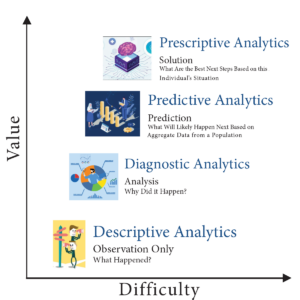
According to experts we speak with, there are many ways to use data analytics. The insurance companies named in the lawsuits use predictive decision making. This way of analyzing data compares a patient to millions of others and deduces what treatment plan might be suitable for one patient, based on what was effective for most previous patients. Opponents of this method have called it “data supported guessing.”

A superior analysis method experts are coming to understand  is prescriptive decision making. This is taking all of the available historical and current data surrounding a patient and making a clinical decision specifically designed to that patient’s age, gender, co-morbidities, doctor recommendations, and treatment records.The Power of AI with SmartCare

Until recently, predictive analysis was the preferred method because of its resource efficiency. Examining the data of every individual patient used to be prohibitively labor-intensive, requiring hours of reading hospital records, physician notes, and claims. Today, however, AI tools are able to do that work in seconds, making prescriptive analytics and customized plans of care possible.

Fix May Be in the Works

In a February 6, 2024 memo to all Medicare Advantage Organizations and Medicare-Medicaid Plans, CMS explained the difference between predictive and prescriptive analytics. The memo said these plans may not make coverage determinations based on aggregated data but must look at each individual:

“For Medicare basic benefits, MA organizations must make medical necessity determinations in accordance with all medical necessity determination requirements, outlined at § 422.101(c)1 ; based on the circumstances of each specific individual, including the patient’s medical history, physician recommendations, and clinical notes; and in line with all fully established Traditional Medicare coverage criteria.”

In response to a request for clarification, the CMS memo laid out its rule in specific language:Wrong AI in Healthcare Prescriptive Analytics

An algorithm or software tool can be used to assist MA plans in making coverage determinations, but it is the responsibility of the MA organization to ensure that the algorithm or artificial intelligence complies with all applicable rules for how coverage determinations by MA organizations are made. For example, compliance is required with all of the rules at § 422.101(c) for making a determination of medical necessity, including that the MA organization base the decision on the individual patient’s circumstances, so an algorithm that determines coverage based on a larger data set instead of the individual patient’s medical history, the physician’s recommendations, or clinical notes would not be compliant with § 422.101(c).
(emphasis added)

“Therefore, the algorithm or software tool should only be used to ensure fidelity with the posted internal coverage criteria which has been made public under § 422.101(b)(6)(ii).”

In further responses to questions in the same memo, CMS made it clear MA plans must make the same coverage decision original Medicare would make. The only allowable exception is that plans may use their own criteria when Medicare Parts A and B coverage criteria “are not fully established.”

Knowledge of this CMS directive may give Home Health agencies one more arrow in their quiver when going to battle with powerful, profit-oriented insurance companies over harmful, illogical AI algorithm decisions.

For information on the right way to use AI in healthcare, see our complimentary article in this week’s issue.


Tim Rowan, Editor EmeritusTim Rowan is a 30-year home care technology consultant who co-founded and served as Editor and principal writer of this publication for 25 years. He continues to occasionally contribute news and analysis articles under The Rowan Report’s new ownership. He also continues to work part-time as a Home Care recruiting and retention consultant. More information: RowanResources.com
Tim@RowanResources.com

 ©2024 by The Rowan Report, Peoria, AZ. All rights reserved. This article originally appeared in Healthcare at Home: The Rowan Report.homecaretechreport.com One copy may be printed for personal use: further reproduction by permission only. editor@homecaretechreport.com

HOPE is on the Way: Part 3

CMS

By Beth Noyce, RN, BSJMC, BCHH-C, COQS
CHAP-certified home health & hospice consultant

This is part 3 of the 3 in the series, outlining the discussions and implications in adopting new outcome and process measures for Hospice care. The final segment addresses future process and outcome measures that the board discussed, but did not yet implement. Read Part 1 on Outcome Measures and Part 2 on Process Measures.

The TEP discussed potential future process and outcome measure concepts that Abt Associates presented to the panel as well.

The process measures included:

  • Education for Medication Management
  • Wound Management Addressed in Plan of Care
  • Transfer of Health Information to Subsequent Provider
  • Transfer of Health Information to Patient/Family Caregiver

Hope-based outcome measures were:

  • Patient Preferences Followed throughout Hospice Stay
  • Hospitalization of Persons with Do-Not-Hospitalize Order

Developing education for medication management as a process measure was a popular concept, and the top priority of the recommended measures with the TEP as they “broadly agreed that CMS should develop this measure,” the report says, citing “a significant need for training in medication management for patients and their caregivers.” They recommended that the measure weigh more heavily when care is provided in a home setting than in a facility setting because hospices are unable to control facility training and hiring practices. One panelist commented that including the phrase “during today’s visit” in the measure is important.

Whether CMS should further develop the process measure addressing wound management in the plan of care was less straight-forward, as panelists provided varied feedback. They generally agreed that this measure is important, as having a record of wound management addressed in the plan of care can hold the staff accountable for treating the wounds. But some members recommended measuring wound management with outcome measures rather than process measures. One panelist cited potential problems from patients’ deterioration over time and another noted that the time frame of this measure is important, and encouraged recording the process of getting care in place once a wound is identified.  The panel agreed CMS should carefully define the measure’s specifications.

Because standard practice for most agencies is, when a patient is discharged live, to transfer health information to the subsequent provider and to the patient and family or caregiver, TEP members expressed that the two measures were likely to “top out,” meaning they would almost always be marked “Yes,” making them of no value in differentiating between hospice providers. The group generally discouraged developing these process measures.

The group strongly rejected any merit in developing two outcome measures concerning Patient Preferences Followed Throughout Hospice Stay and Hospitalization of Persons with Do-Not-

Hospitalize Order. The report says “Multiple TEP members described situations in which patients who had preferred not to be hospitalized changed their minds when a crisis occurred. Patients’ preferences and unexpected crises are usually out of the hospice’s control. Although it is still important for hospices to ask patients about their preferences as part of patient-centered care, the TEP did not believe these two items would be practical measures of a hospice’s care quality.”

Dr. McNally expects that Abt. Associates will apply the HQEP TEP’s suggestions to the HOPE tool.

“Oh yeah, they did it,” he says. “Abt would come to a specific meeting with information, data, suggestions, and specific information about how these things would be measured. We’d give feedback. Then they’d come back to the next meeting having incorporated our suggestions,” he explains. “All of us felt very much heard and responded to. It didn’t feel in the least bit perfunctory.”

Whatever specific measures are eventually included in the HOPE tool, Lund Person sees value in its implementation. “Hospice providers have had a woeful lack of outcome measures for hospice patients, which has made the evaluation of quality hospice care based only on process measures and the family’s evaluation of hospice care in the CAHPS® Hospice Survey, she explains. “Implementing HOPE will begin to identify outcome measures that can be compared between providers.”

Lund Person warns of potential challenges as well. “The selection of risk adjustment and stratification must be carefully done to minimize bias and maximize effectiveness of measures,” she says. “In addition, hospice providers have been awaiting the release of the HOPE tool with significant anxiety about content and administrative burden.”

Dr. McNally is confident the HOPE tool will be a healthy change for hospices.

“A lot of my role as a medical director and hospice physician is supporting our nurses,” he says. “They do 95% of the work. I really would like to see this not be burdensome for our hospice nurses. I’m looking forward to seeing what the [HOPE tool] beta testing translates to in our own hospice world.” He added “What I would hope to see is that the tool feels user-friendly to the hospice team, the people who have to use it, and that it also provides useful information to patients and families.”

NAHC’s Wehri says that standardizing processes through the HOPE tool is the key foundational element for the hospice industry. “High quality care is driven by reducing variance through standardized processes, Wehri writes. “Also, CMS will have a better idea of how the type of population a hospice serves impacts some of the clinical care.” This small glimpse into hospice variances that CMS does not currently have could be very helpful in future policy and payment decisions, according to Wehri. “What CMS finds in terms of differences between hospices and their care for patients may be a bit of a surprise to CMS,” she says.  “I hope they are pleasantly surprised with the overall quality of care that is revealed.”

# # #

Beth Noyce provides education, consulting, mentoring, compliance assessments and auditing services to home health and hospice agencies and their clinicians in several states. She also now provides patient and family guidance concerning hospice and home health services. Beth loves teaching and helping others succeed. She also makes available recordings of much of her education for her clients’ convenience.

©2024 by The Rowan Report, Peoria, AZ. All rights reserved. This article originally appeared in Healthcare at Home: The Rowan Report. One copy may be printed for personal use: further reproduction by permission only. editor@therowanreport.com

CMS News

CMS

NOW AVAILABLE IN iQIES – Preview Reports and Star Rating Preview Reports for the January 2024 Refresh

CMS just published updated measure for Home Health Outcome Information Set (Oasis) and all HH QRP claims-based measures. These updated measures are no based on the standard number of quarter.

For additional information, please see the HH Quality Reporting Training webpage and the Home Health Data Submission Deadlines webpage


©2023 by Rowan Consulting Associates, Inc., Colorado Springs, CO. This article originally appeared in Home Care Technology: The Rowan Report. Click here to subscribe. It may be freely reproduced provided this copyright statement remains intact. editor@homecaretechreport.com

CMS News: New Rule Cracks Down on Medicare Advantage Upcoding

CMS

by Tim Rowan, Editor

CMS Rule to Protect Medicare

The U.S. Department of Health and Human Services, through the Centers for Medicare & Medicaid Services, finalized the policies for the Medicare Advantage “Risk Adjustment Data Validation” program, which is CMS’s primary audit and oversight tool of MA program payments.

Under this program, CMS identifies improper risk adjustment payments made to Medicare Advantage Organizations in instances where medical diagnoses submitted for payment were not supported in the beneficiary’s medical record. The commonsense policies finalized in the RADV final rule (CMS-4185-F) will help CMS ensure that people with Medicare are able to access the benefits and services they need, including in Medicare Advantage, while responsibly protecting the fiscal sustainability of Medicare and aligning CMS’s oversight of both Traditional Medicare and MA programs.

In Other Words, Fraud

As required by law, CMS’s payments to MAOs are adjusted based on the health status of enrollees, as determined through medical diagnoses reported by MAOs. Studies and audits done separately by CMS and the HHS Office of Inspector General have shown that Medicare Advantage enrollees’ medical records do not always support the diagnoses reported by MAOs, which leads to billions of dollars in overpayments to plans and increased costs to the Medicare program as well as taxpayers.

No Overpayments Collected Since 2007

“Protecting Medicare is one of my highest responsibilities as Secretary, and this commonsense rule is a critical accountability measure that strengthens the Medicare Advantage program. CMS has a responsibility to recover overpayments across all of its programs, and improper payments made to Medicare Advantage plans are no exception. For years, federal watchdogs and outside experts have identified the Medicare Advantage program as one of the top management and performance challenges facing HHS, and today we are taking long overdue steps to conduct audits and recoup funds. These steps will make Medicare and the Medicare Advantage program stronger.”

Xavier Becerra

Secretary, Department of Health and Human Services

“CMS is committed to protecting people with Medicare and being a responsible steward of taxpayer dollars,” said CMS Administrator Chiquita Brooks-LaSure. “By establishing our approach to RADV audits through this regulation, we are protecting access to Medicare both now and for future generations. We have considered significant stakeholder feedback and developed a balanced approach to ensure appropriate oversight of the Medicare Advantage program that aligns with our oversight of Traditional Medicare.”

The RADV final rule reflects CMS’s consideration of extensive public comments and robust stakeholder engagement after the release of the 2018 Notice of Proposed Rulemaking. The finalized policies will also allow CMS to continue to focus its audits on those MAOs identified as being at the highest risk for improper payments. The RADV final rule can be accessed at the Federal Register.

Pre-Implementation Performance Report

The January 2023 Pre-Implementation Performance Report is now available to download from the Internet Quality Improvement Evaluation System (iQIES).

Instructions on how to access the PIPR are available below and on the Expanded HHVBP Model webpage under “Model Reports.”

Background

To support home health agencies during this first performance year, CMS issued PIPRs in November 2022 and January 2023 to all active HHAs. The PIPR provides HHAs with data on their quality measure performance used in the expanded HHVBP Model, in comparison to HHAs nationally within peer cohorts, in advance of the first Interim Performance Reports (IPRs) in July 2023. The PIPRs do not contain calendar year (CY) 2023 data. The January 2023 PIPR includes a new tab containing preliminary achievement thresholds and benchmarks by volume-based cohort.

Need Help Understanding Your PIPR?

To assist HHAs in understanding the purpose, content, and use of the PIPRs, the HHVBP Technical Assistance Team created an on-demand video and downloadable resource, “Introduction to the Pre-Implementation Performance Report,” available on the Expanded HHVBP Model webpage. The video is also available on the Expanded HHVBP Model YouTube channel.

Additionally, the December 2022 edition of the “Expanded HHVBP Model Frequently Asked Questions” includes questions regarding the PIPR. If you do not see an answer to your specific question, please email the HHVBP Model Help Desk at HHVBPquestions@lewin.com.

If you experience an issue with accessing resources on the Expanded HHVBP Model webpage, first try refreshing the webpage. If that does not work, please try closing and reopening the browser. If you continue to experience issues, please try clearing the cache/cookies—links to instructions are below.

Locating the PIPR in iQIES

  1. Log into iQIES at iqies.cms.gov.
  2. Select the My Reports option from the Reports
  3. From the My Reports page, select the HHA Provider Preview Reports
  4. Select the HHVBP file to view the desired report. To quickly locate the most recently published report, select the down arrow adjacent to the Created Date label at the top of the table. This will order the reports in the folder from newest to oldest.
  5. Select the file name link and the contents of the file will display.

Help Desk Information

Should you experience difficulty locating the HHVBP file or with downloading, please contact the iQIES Help desk staff by email at iQIES@cms.hhs.gov or by phone at (800) 339-9313.

For questions about the content of the expanded HHVBP Model reports, please contact the HHVBP Help Desk staff by email at HHVBPquestions@lewin.com.

*Please include your name, agency name, and the CCN when contacting the help desks.

# # #

Tim Rowan The Rowan Report

Tim Rowan is a 30-year home care technology consultant who co-founded and served as Editor and principal writer of this publication for 25 years. He continues to occasionally contribute news and analysis articles under The Rowan Report’s new ownership. He also continues to work part-time as a Home Care recruiting and retention consultant. More information: RowanResources.com
Tim@RowanResources.com

©2023 by The Rowan Report, Peoria, AZ. All rights reserved. This article originally appeared in The Rowan Report. One copy may be printed for personal use: further reproduction by permission only. editor@therowanreport.com