Hospice Hope

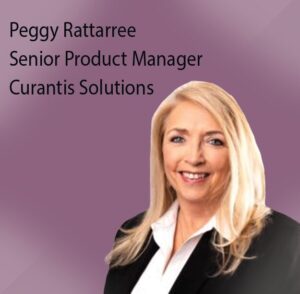
by Peggy Rattarree, Principle Product Manager, Curantis Solutions

Hospice HOPE

The importance of documenting symptom impact for patient-centered care

In hospice care, the focus isn’t just on treating symptoms; it’s on improving the quality of life for patients and their families. This is where Hospice HOPE takes center stage, emphasizing the importance of documenting symptom impact to deliver truly patient-centered care. By understanding how symptoms affect each patient’s physical, emotional, and psychosocial well-being, hospice teams can provide care that aligns with their unique needs and goals.

What is hospice HOPE?

Hospice HOPE stands for Hospice Outcomes and Patient Evaluation. It’s a philosophy that places the patient’s comfort, dignity, and goals at the forefront of care delivery. Documenting symptom impact is a critical part of this approach because it provides a detailed understanding of how symptoms affect the patient’s overall quality of life.

In hospice care, every patient’s journey is unique. By actively tracking and documenting symptom impact, care providers can move beyond generic treatments and embrace a truly individualized approach that prioritizes what matters most to the patient.

Why documenting symptom impact matters?

Moves us to patient-centered care

Documenting symptom impact allows hospice teams to focus on what truly matters to the patient. Instead of simply addressing symptoms like pain, nausea, or fatigue in isolation, it provides a holistic view of how these symptoms affect the patient’s daily life. For example:

  • Pain
    • How does it limit mobility or the ability to participate in meaningful activities?
  • Fatigue
    • Is it preventing patients from spending time with loved ones?
  • Nausea
    • Is it reducing their ability to eat or enjoy meals?
Curantis Solutions Hospice HOPE

By asking these questions and recording the answers, hospice providers can better tailor interventions to manage not just symptom management but the overall patient experience.

Improves communication across the care team

In hospice care, communication is everything. Documenting symptom impact ensures that every member of the interdisciplinary team (IDT), from nurses and physicians to social workers and chaplains, has access to the same comprehensive information.

This documentation:

  • Creates a shared understanding of the patient’s condition
  • Helps align the team’s goals with the patient’s priorities
  • Reduces duplication of efforts and enhances care coordination

When everyone is on the same page, patients and families receive more seamless, cohesive care.

Hospice HOPE Communication

Supports compliance and quality standards

Regulatory bodies like CMS (Centers for Medicare & Medicaid Services) require hospices to document and monitor patient symptoms to ensure care quality. But beyond compliance, tracking symptom impact demonstrates a commitment to continuous improvement.

Documenting symptom impact allows hospices to:

  • Identify trends and gaps in care
  • Measure the effectiveness of interventions
  • Use data to advocate for better resources or innovations in care delivery

Empowers families and caregivers

When symptom impact is documented, families and caregivers gain a clearer understanding of their loved one’s condition. This transparency fosters trust and collaboration between the hospice team and the family, ensuring everyone is working toward the same goals.

For example, a caregiver might better understand why a loved one sleeps more during the day or avoids certain foods. These insights can help families feel more prepared and supported during a challenging time.

Final Thoughts

With CMS rolling out Hospice HOPE, documenting symptom impact is no longer optional. It’s the standard for compassionate, high-quality care. This shift helps hospice organizations go beyond symptom control and into whole-person care that honors each patient’s life journey.

This is part one in a two-part series on Hospice HOPE. Check back next week for part two.

# # #
Peggy Rattarree Curantis Solutions Hospice HOPE

Peggy is an IT professional with over 30 years’ experience. She has defined and developed software products in industries such as grocery management, financial services, and reporting and analytics. In her 2.5 years with Curantis, Peggy has helped to shape the definition and delivery of the application. She brings a passion for agility and has been integral in transitioning Curantis to an environment of delivery on cadence, release on demand.

Peggy has a Bachelor of Music degree from University of North Texas.

©2025 by The Rowan Report, Peoria, AZ. All rights reserved. This article originally appeared in the Curantis Solutions blog and is reprinted here with permission. For more information or to request permission to print, please contact Curantis Solutions.

Monthly Stipends Not Allowed

by Elizabeth E. Hogue, Esq.

Medical Directors:

Monthly Stipends Not Allowed

Monthly stipends to Medical Directors for referrals of patients could cost you. Earlier this month, a hospice provider in Georgia settled claims of violation of the federal Anti-Kickback statute (AKS) and the federal False Claims Act (FCA) by agreeing to pay $9.2 million. The allegations include payments of kickbacks, including monthly stipends, to Medical Directors in exchange for referrals of patients. These practices resulted in three whistleblower lawsuits against the hospice by former employees. They will receive $1.5 million.

Marketing, not Monthly Stipends

In the meanwhile, marketing strategies utilized by post-acute providers are generating fierce competition for referrals, especially Medicare beneficiaries who need home health services! As a result, providers are appropriately committing more and more resources to marketing activities. Providers are, for example, entering into agreements with referring physicians to provide consulting services to their organizations. These legitimate relationships may easily be misunderstood by enforcers.

Consulting Physicians

First, it is important to acknowledge that providers of services in patients’ residences need consulting physicians’ services. Examples of services that are genuinely needed, from a business perspective, may include the following:

  • Consultation regarding clinically complex cases
  • Assistance with the development and maintenance of specialty programs
  • Communication with physicians who provide inappropriate orders for care, do not return signed orders on time, or are unresponsive to staff members who are seeking modifications to treatment plans

As providers know, however, these types of arrangements raise important legal issues related to potential violations of the AKS, the federal so-called Stark laws, the FCA, and state statutes that are probably similar to these federal statutes. 

Monthly Stipend Physician Consultation

Avoid Trouble with Specific Contracts

Providers are likely to avoid violations if they meet the requirements of the personal services “safe harbor” under the AKS and the contractual exception under the Stark laws. The safe harbor and exception generally require providers to pay consulting physicians who also make referrals to them based upon written agreements that require payments at fair market value for services actually rendered without regard to the volume or value of referrals received.

Practically, Providers Should:

  • Pay physicians who also make referrals
    • on an hourly basis
    • not a set monthly amount of stipends
  • Develop standardized agreements and use them consistently with all referring physicians who receive consulting fees
    • Providers cannot afford to use a variety of different agreements that may not meet applicable requirements
    • Staff must understand that they can use only the standard approved agreement and cannot modify it without advance written approval from a designated, knowledgeable individual
  • Document services rendered and the amount of time spent on these activities.
    • Documentation is crucial
    • Providers should develop and implement policies and procedures that permit payments to physicians only after appropriate documentation to support payments has been received and reviewed

  • Avoid agreements for consulting services with physicians whose services they do not actually use
    • even if they make no payments to them
    • terminate these agreements if they do not need the services covered by them or it may appear that the only purpose for the agreements is to induce referrals as opposed to a documented need for services
  • Avoid having numerous consulting physicians/medical directors
    • Although there are usually no limits on the number of consulting physicians/medical directors that providers can have at any given time, a very large number is likely to invite scrutiny by regulators and should be avoided
    • How many is too many? The number should certainly bear some relationship to the size of the provider organization and the geographic area served.
    • Beyond this general guideline, common sense must prevail. The bottom line is: does the provider have legitimate work for every consulting physician?
  • Avoid asking consulting physicians to perform commercially reasonable services that are related to the volume and value of referrals made
    • Providers cannot, for example, ask referring physicians to assist with quality assurance activities that
      • Entail their review of charts of patients whom they referred to the provider
      • Ensure the more referrals made, the more money consulting physicians make

Final Thoughts

Providers are more likely to avoid enforcement activities when they follow these practical guidelines. Violations hurt providers and referral sources alike. In view of the possible adverse consequences, expenditures of financial and other resources are certainly justified to get it right.

# # #

Elizabeth E. Hogue, Esq.

Elizabeth Hogue is an attorney in private practice with extensive experience in health care. She represents clients across the U.S., including professional associations, managed care providers, hospitals, long-term care facilities, home health agencies, durable medical equipment companies, and hospices.

©2025 Elizabeth E. Hogue, Esq. All rights reserved.

No portion of this material may be reproduced in any form without the advance written permission of the author.

Workplace Violence in Home Health

by Kristin Rowan, Editor

Workplace Violence and Policy Impact

Study of home health workers

A group of researchers from the University of Cincinnati, Ohio published a recent study¹ on the frequency and reporting procedures of workplace violence (WPV) in home healthcare. The study specifically addressed WPV in home healthcare, stating limited understanding of WPV in the home care setting. Most existing studies on WPV were hospital-based.

Frequency of Workplace Violence

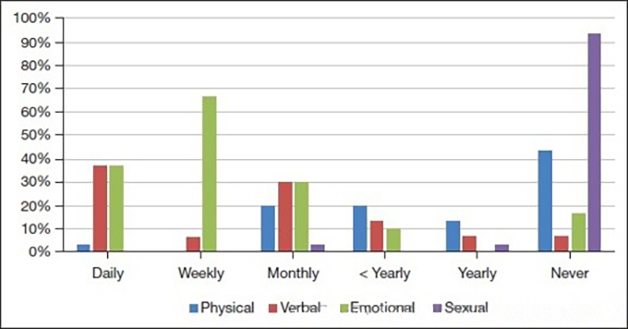
Of the home health care workers (HHCW) surveyed, almost 37% responded that they experience both verbal and emotional violence in the workplace daily. More than 80% reported experiencing verbal aggression at some point. Physical violence is less prominent. 20% of respondants said they experience physical violence monthly. However, 56.6% said they have experienced physical violence at some point in their current agency. 76.6% of the time, the perpetrators of the violence are the patients of the HHCW.

Workplace Violence

Fig. 1 Frequency of occurrence of physical, verbal, emotional, and sexual abuse as a function of time: daily, weekly, monthly, <yearly, yearly, and never.

Reporting Workplace Violence

All of the study participants indicated they had knowledge of workplace violence reporting procedures in their agencies, but 26.7% were unsure if the policies are contained in the employee handbook. 46.7% were uncertain as to whether the agency offered WPV or de-escalation training and 66% said prevention and de-escalation training was not mandatory. Unfortunately, 40% said their management did not encourage reporting and 33% said they were not comfortable approaching management about WPV. Despite the frequency of WPV among the respondents, none of the participants reported these incidents to management

Thoughts

According to this, and other research studies on workplace violence in home healthcare, the problem is prevalent and persistent. Most HHCWs have experienced some sort of aggression, violence, or abuse in the course of performing their jobs. Of those who have, most do not report the incidents to management. Most HHCWs have not been trained in prevention or de-escalation. Even with training, HHCWs need a way to get immediate help. Unfortunately, most do not have an emergency alert system on their person during home visits.

    Solution

    Care at Home agencies, including non-medical supportive care, home health, hospice, and any other lone workers who are visiting patients in their homes, need safety policies and procedures. Agencies must include the same in the employee handbook, explain during orientation, and make available to HHCWs digitally. 

      Policies and procedures should include:

      • A safety committee comprised of management, back office staff, and field workers
      • A clearly written policy regarding physical, emotional, verbal, and sexual abuse
        • Against a patient or their family/friends by a HHCW
        • Against a HHCW by a patient or their family/friends
        • Against a HHCW by a colleague or manager
        • Against a HHCW by the environment in which they work (i.e. aggressive pets, weapons, cigarette smoking indoors, etc.)
      • A digital reporting system that employees can use without having to approach management individually
      • A clearly written policy on the management response to violence reporting
      • A clearly written policy forbidding any retaliation or discrimination against a reporting employee
      • Required research about new patients including
        • Background/History of violence and/or mental instability
        • Neighborhood safety rating
        • Family members likely to be in the home and their history of violence and/or mental instability

      Additional Tools for HHCWs

      • Training in
        • Violence prevention
        • De-escalation
        • Situational Awareness
        • Self-defense
      • A mandatory, GPS-enabled, multi-function safety device and platform to proactively manage caregiver safety and respond to incidents
      • Optional escort service for new patients
      • Mandatory escort service for new patients with a history of violence, mental issues, or incarceration

      Workplace violence against HHCWs is not “if,” but “when.” It is the responsibility of the agencies to lower the risk, lower the percentage of “whens,” and encourage reporting. If you’re not sure how to begin, hire a consultant to help you build your safety committee and write your policies. It doesn’t matter how you start implementing safety protocols, as long as you follow through and protect your employees.

      # # #

      Kristin Rowan, Editor, The Rowan Report
      Kristin Rowan, Editor

      Kristin Rowan has been working at The Rowan Report since 2008. She is the owner and Editor-in-chief of The Rowan Report, the industry’s most trusted source for care at home news, and speaker on Artificial Intelligence and Lone Worker Safety and state and national conferences.

      She also runs Girard Marketing Group, a multi-faceted boutique marketing firm specializing in content creation, social media management, and event marketing.  Connect with Kristin directly kristin@girardmarketinggroup.com or www.girardmarketinggroup.com

      ©2025 by The Rowan Report, Peoria, AZ. All rights reserved. This article originally appeared in The Rowan Report. One copy may be printed for personal use: further reproduction by permission only. editor@therowanreport.com


      1. Obariase, E.; Bellacov, R.; Gillespie, G.; Davis, K. (2025). Assessing Workplace Violence and Policy Impact: A Cross-sectional Study of Home Healthcare Workers. Home Healthcare Now, 43(3), 150-156. doi: 10.1097/NHH.0000000000001345

      Painting Pictures

      by Elizabeth E. Hogue, Esq.

      "Painting Pictures" of Patients

      Painting Pictures in clinical documentation to achieve positive audit results. As the fight against “fraud, abuse and waste” continues, responding to audits has become an ongoing burden for many providers. Providers have repeatedly been urged to “paint a picture” of patients in clinical documentation in order to help achieve positive results. “Painting a picture” of the patient, however, may have become more difficult as the use of electronic health records (EHRs) has increased. That is, it’s difficult to adequately describe patients’ conditions when there are so many boxes to check and blanks to fill in.

      Copy, Paste, Repeat

      When it comes to narrative descriptions of patients’ conditions, it is extremely tempting to “copy and paste,” “cut and paste” and/or “copy forward” previous documentation in the EHR. The copy and paste feature allows users to use the content of another entry and to select information from an original or previous source to reproduce in another location. The copy forward capability replicates all or some information from a previous note to a current note, while the cut and paste feature removes documentation from the original location and places it in another location. In addition to the obvious potential problems for quality of care related to the use of these functions, auditors are understandably skeptical of documentation that repeats itself throughout patients’ medical records.

      Painting Pictures of Fraud

      Auditors are especially likely to deny claims that include documentation that was obviously copied using the above functions, when the information copied “sticks out like a sore thumb.” If hospice staff document, for example, that “the patient eats a lot of Mexican food” over and over in clinicians’ visit notes, auditors are understandably skeptical about whether services were necessary for a hospice patient who seems to have a continuous robust appetite or whether services were, in fact, rendered.

      How to Paint the Picture

      What does it mean to “paint a picture?” If a home health patient needs wound care or injections of medications, for example, the “picture” must account for why patients or their caregivers are not performing these activities themselves. Clinicians need to describe the following in a “picture” of the patient:

      • Does the patient live alone or have caregivers?
      • Why can’t patients do wound care or self-inject medications
      • Why can’t caregivers perform these activities?
      • What attempts did clinicians make to assist patients and caregivers to provide wound care and injections?
      • Why were these attempts unsuccessful?
      • What attempts were made to find other caregivers – either paid or voluntary – who might provide these types of care?
      • What were the results of these attempts to find other caregivers?
      • Despite the initial inability of patients and caregivers to render this care themselves, what efforts did clinicians make to help ensure that they became able to do so?
      Painting Pictures

      Get the Picture?

      It’s difficult, if not impossible, to paint the above picture using only the boxes and blanks of forms in EHRs. More is needed if providers are serious about positive audit results.

      # # #

      Elizabeth E. Hogue, Esq.
      Elizabeth E. Hogue, Esq.

      Elizabeth Hogue is an attorney in private practice with extensive experience in health care. She represents clients across the U.S., including professional associations, managed care providers, hospitals, long-term care facilities, home health agencies, durable medical equipment companies, and hospices.

      ©2025 Elizabeth E. Hogue, Esq. All rights reserved.

      No portion of this material may be reproduced in any form without the advance written permission of the author.

      ©2025 by The Rowan Report, Peoria, AZ. All rights reserved. This article originally appeared in The Rowan Report. One copy may be printed for personal use: further reproduction by permission only. editor@therowanreport.com

      AI in Home Care

      by Laurie Orlov, Founder, Aging and Health Technology Watch

      The Future of AI in Home Care

      New Research Report

      Wed, 06/04/2025

      PORT SAINT LUCIE, FL, UNITED STATES, June 4, 2025 /EINPresswire.com/ — The home care industry is facing a crisis. Driven by demographic shifts, longer life expectancy, and rising rates of chronic illness and cognitive decline, the demand for in-home personal care and home health care is surging. This will accelerate as the baby boomers age into their later years – in January, the oldest of the 76 million baby boomers will turn 80. At the same time, the care industries will face a critical shortage of all categories of care delivery, with millions of additional workers needed over the next decade. Against this backdrop, AI technology has emerged to help older adults in multiple ways. In a 2023 report, The Future of AI and Older Adults, AI was already able to produce insights about a person’s health needs and offer a chatbot to help with post-hospital care. In a subsequent 2023 report, AI and the Future of Care Work, it was apparent that AI could help generate an appropriate care plan and that an ‘AI Caregiver’ role was emerging to supplement in-person care delivery. In the 2024 report, The Future of AI in Senior Living and Care, AI was being used to analyze hospital discharge information to compare patient needs to nursing home capacity. 

      Today there are many more initiatives and new possibilities for addressing multiple aspects of both private duty home care and home health operations, including assistance with recruiting and onboarding workers, using data to create and update care-related documents, and introducing AI agents that can be assigned to complete specific tasks. As current industry leaders note, AI tech is playing a role in care oversight and enabling the creating of hybrid models – an increasingly likely combination of in-person care supplemented with AI.

      This report draws insights from experts across home care, home health care, plus software and device providers, and healthcare sectors to examine how AI is currently being used and suggest what lies ahead within the next five years.

      The report can be found at this link: https://www.ageinplacetech.com/page/future-ai-home-care

      # # #

      Laurie Orlov The Future of AI in Home Care
      Laurie Orlov The Future of AI in Home Care

      Laurie M. Orlov, a tech industry veteran, writer, speaker, elder care advocate, is the founder of Aging and Health Technology Watch  market research, trends, blogs and reports that provide thought leadership, analysis and guidance about health and aging-related technologies and services that enable boomers and seniors to sustain and improve their quality of life. In her previous career, Laurie spent many years in the technology industry, including 9 years at analyst firm Forrester Research. She has spoken regularly and delivered keynote speeches at forums, industry consortia, conferences, and symposia, most recently on the business of technology for boomers and seniors. She advises large organizations as well as non-profits and entrepreneurs about trends and opportunities in the age-related technology market.  Her perspectives have been quoted in the Wall Street Journal, the New York Times, Vox, Senior Housing News, CNN Health, AARP Bulletin and Consumer Reports. She has a graduate certification in Geriatric Care Management from the University of Florida and a BA in Music from the University of Rochester. Laurie has provided testimony about technology at a Senate Aging Committee hearing and has consulted to AARP.  Advisory clients have included AARP, AOL, Argentum, Bose, Calix, CDW, Microsoft, Novartis, and Philips. Her reports include: The Market Overview Technology for Aging 2025The Future of AI in Senior Living and CareThe User Experience Needs An Upgrade 2024The Future of AI and Older and Older Adults 2023The Future of Care Work and Older Adults 2023The Future of Sensors and Older Adults 2022Beyond DIY: The Future of Smart Homes and Older Adults 2021, and The Future of Wearables and Older Adults 2021. Laurie has been named one of the Women Leaders in VoiceTop 50 Influencers in Aging by Next Avenue and one of the Women leading global innovation on AgeTech. 

      ©2025 by Aging and Health Technology Watch. All rights reserved. This introduction and link are printed with permission from the author. For more information or to request usage rights, please contact Laurie Orlov

      Fraudsters Arrested, Oz Issues Warning

      by Kristin Rowan, Editor

      Fraudsters Arrested, Oz Issues Warning

      Fraud in California

      Fraudsters arrested in West Covina, CA this week were allegedly running a Medicare scheme. Authorities arrested hospice owner-operator Normita Sierra. They charged her with nine counts of health care fraud, one count of conspiracy, and four counts illegal remuneration (kick-backs) for health care referrals. The U.S. Attorney’s Office named co-conspirator Rowena Elegado. They also arrested her and charged her with one count of conspiracy and four counts of illegal remuneration for health care referrals.

      Kickbacks

      Sierra and Elegado worked together to pay marketers to recruit patients who did not have a hospice referral from their PCP and who were not terminally ill. Some of the kickbacks paid to marketers were as high as $1,300 per patient per month. After six months, the patients were referred out to Sierra’s home health company.

      Medicare Claims

      According to the U.S. Attorney’s Office, from 2018 to 2022, Sierra’s hospice agences submitted $4.8 million in fraudulent claims. Of those claims, Medicare paid approximately $3.8 million.

      Dr. Oz Issues Warning

      In a video statement, Dr. Oz explained how Medicare recipients are falling victim to scams. Sales people call, email, and even knock on your door, offering advice, free samples, and referrals. These marketers have one goal: get you sign a piece of paper. That paper signs you up for hospice care and agrees to allow a specific hospice agency to provide that care. The hospice agency then bills Medicare for services they never provide. Watch the video statement here.

      HHS OIG Issues Consumer Alert

      In a similar statement, HHS issued a consumer alert regarding DME companies. The alert warns that some DME companies are contacting Medicare beneficiaries. They claim to work for or on behalf of Medicare. Once they receive the patient’s Medicare number, they bill Medicare for unnecessary medical items. These items include urinary catheters, knee and back braces, orthotic braces, and prescription drugs, which may or may not ever be sent to the patient. HHS urges enrollees not to give their Medicare number to anyone. Further, they suggest regulary reviewing items charged to insurance, and refusing delivery of any medical supply not ordered by a physician.

      Oz Issues Warning
      Fraudsters Arrested

      Combating Waste, Fraud, and Abuse

      Dr. Oz and CMS have spoken numerous times about combatting the waste, fraud, and abuse withing the Medicare and Medicaid systems. Originally a strong proponent for Medicare Advantage, Oz has promised to audit MA after discovering the government pays more for MA than traditional Medicare. Oz also promised to reduce the amount of prior authorization requests needed before a patient gets services. Oz responded to the Republican-backed House bill requiring more oversight on Medicaid eligibility. Oz indicated that some Medicaid patients are enrolled in more than one state and that Medicaid is paying for able-bodied patients. The waste, fraud and abuse across Medicare and Medicaid is costing the government between $1 and $10 billion and Dr. Oz plans to find it and make significant changes to the management of the system.

      A Cautionary Tale for Hospice Providers

      You may be thinking, “What does this have to do with me?” Unfortunately, even the most scrupulous hospice agencies can fall prey to marketers running schemes. There are legitimate referral resources in the market who can help your agency get more referrals and more clients. There are also underhanded marketers who know how the system works. These predators will promise new referrals (for a fee) and then enroll uneligible patients without your knowledge. If you are working with or looking for a referral partner for your hospice agency, use one that is referred by someone you trust, and/or do a lot of research on the company history before working with anyone. Be especially wary of the ones who promise much more than what most referral companies offer.

      # # #

      Kristin Rowan, Editor
      Kristin Rowan, Editor

      Kristin Rowan has been working at The Rowan Report since 2008. She is the owner and Editor-in-chief of The Rowan Report, the industry’s most trusted source for care at home news, and speaker on Artificial Intelligence and Lone Worker Safety and state and national conferences.

      She also runs Girard Marketing Group, a multi-faceted boutique marketing firm specializing in content creation, social media management, and event marketing.  Connect with Kristin directly kristin@girardmarketinggroup.com or www.girardmarketinggroup.com

      ©2025 by The Rowan Report, Peoria, AZ. All rights reserved. This article originally appeared in The Rowan Report. One copy may be printed for personal use: further reproduction by permission only. editor@therowanreport.com


      Delay HOPE Tool

      by Kristin Rowan, Editor

      Advocacy Groups to CMS:

      Delay HOPE Tool Implementation

      “Delay HOPE Tool Implementation,” say multiple hospice advocacy groups. LeadingAge, the National Alliance for Care at Home (The Alliance), and the National Partnership for Healthcare and Hospice Innovation (NPHI) are urging CMS to delay the transition from HIS to HOPE. The three groups sent a joint letter to Dr. Mehmet Oz, CMS Administrator, earlier this week.

      “Our associations remain fully committed to the [Hospice Quality Reporting Program (HQRP)], including the payment penalties for non-compliance, and recognize the critical importance of accurate, timely data submission to inform the delivery of high-quality hospice care. However, we have serious concerns about the potential for successful implementation of the HOPE tool.”

      LeadingAge, The Alliance, NPHI

      Hospice Advocacy

      The concerns over agency readiness to implement the new tool center on the new reporting platform. Hospice agencies state they don’t have all the necessary information to develop a workable tool for submission. Therefore, the agencies have asked CMS to delay the implementation of the HOPE tool. They have called on CMS to wait until six months after agencies have access to education, training, and final validation specifications.

      Hospice Rule Penalty

      The hospice program through CMS requires substantial reporting for payment. Hospices that do not submit the required 90% of records, they receive an annual payment penalty of 4%. Combined with lower than sustainable payment increases, the 4% penalty results in a lower reimbursement rate over prior years. The associations worry that the lack of information and education will lead to lower reporting. In turn, the lower reporting lowers reimbursement rates. For hospices that are already struggling to survive, the penalty is devastating. The letter to CMS asked to waive the timeliness requirement for two quarters after implementation.

      HOPE Tool Lacks Validation

      CMS will have a Validation Utility Tool that agencies will need to use in order to ensure their software can successfully submit their data. CMS has not released the tool and indicates they may not until sometime in September. The HOPE tool is scheduled for implementation in October. There is not enough time between release of the validity tool and implementation of the HOPE tool for proper testing.

      Hospice Agencies Lack Validation

      In addition to validating data submission, hospice agencies have to enroll in the new submission portal, iQUIES. Enrollment requires a privacy security official and other staff. Additionally, it requires an application to access the system, background checks, and other actions. Thus far, hospice agencies do not have access to begin this process and there is no indication of how long it will take. The associations are concerned that the process may also involve significant financial cost to hospice agencies.

      Resources

      CMS released the Hospice Outcomes and Patient Evaluation (HOPE) Guidance Manual v1.01, a 138 page PDF, available here. The manual includes links to other resources for hospice agencies. Namely, a webpage with information on HOPE Data Submission Specifications has a “final” version of data specs available for download. Additionally, there are links to the Main Page here and technical information and updates here. The document urges vendors to register to get updates and important announcements.

      Final Thoughts

      There is no information yet as to a response to the letter from CMS. Thus far, CMS is still planning on keeping the October 1, 2025 HOPE implementation date. We will continue to report on updates from CMS and the advocacy groups.

      # # #

      Kristin Rowan, Editor
      Kristin Rowan, Editor

      Kristin Rowan has been working at The Rowan Report since 2008. She is the owner and Editor-in-chief of The Rowan Report, the industry’s most trusted source for care at home news, and speaker on Artificial Intelligence and Lone Worker Safety and state and national conferences.

      She also runs Girard Marketing Group, a multi-faceted boutique marketing firm specializing in content creation, social media management, and event marketing.  Connect with Kristin directly kristin@girardmarketinggroup.com or www.girardmarketinggroup.com

      ©2025 by The Rowan Report, Peoria, AZ. All rights reserved. This article originally appeared in The Rowan Report. One copy may be printed for personal use: further reproduction by permission only. editor@therowanreport.com


      Interoperability

      by Ben Rosen, Sr. Client Success Manager, Netsmart

      Interoperability

      What you need to know and how it affects you

      For over two decades, tech companies and government agencies have been moving toward the goal of interoperability in healthcare technology. At long last, standards and protocols are in place — and continually being improved — to support open data exchange networks. As a result, healthcare providers, including human services, post-acute providers, and specialty practices, have more opportunities to participate in alternative payment models and adapt more readily to the evolving payment landscape.

      Interoperability in Healthcare

      What's driving the need for change?

      Government regulatory agencies, together with payers and healthcare organizations, have long recognized the need to improve care coordination among healthcare providers. Making it easier to share information via a nationwide data sharing network is a critical component of this effort.

      End Game

      The ultimate goal of providing access to complete, accurate patient information is to help drive down costs to providers and electronic health record (EHR) users. Through exhaustive work and years of innovation, we’re seeing the tangible outcome of this effort. Information now flows seamlessly across multiple healthcare networks. Using a concise view of the data, we can focus on broader population health initiatives that improve outcomes for chronic conditions, reduce emergency department (ED) visits, and prevent hospitalizations. The interoperability market is moving ahead at blazing speeds. Therefore, we must understand the players who are the driving forces behind the movement.

      Interoperability

      The Interoperability Highway

      Who are the players and how do they work together?

      Healthcare technology is complex. It’s not surprising, then, that getting the disparate systems to share information seamlessly and securely is a complicated process. In the last decade an increasing number of vendors, organizations, and healthcare players started working together to advance a useful interoperability market.

      Some of the larger players in this space include government and regulatory agencies. To understand the role these entities play and how they coordinate with other organizations and efforts, let’s compare the process to building a national highway system.

      Building an open data exchange network

      • Assistant Secretary for Technology Policy and Office of the National Coordinator for Health (ASTP/ONC): This federal agency sets the vision, rules and regulations for health information technology policy. Compare it to the Federal Highway Administration (FHWA), the federal agency that provides stewardship over the construction, maintenance, and preservation for all interstate highways.
      • Trusted Exchange Framework and Common Agreement (TEFCA): Established by the ASTP/ONC, TEFCA sets the rules for health data exchange over the network. This is similar to plans or blueprints for highway construction. This would also include engineering, construction and safety standards for the highway.
      • The Sequoia Project (RCE): The Sequoia Project is the Recognized Co-ordinating Entity (RCE) for TEFCA and is appointed by the ASTP/ONC. The Sequoia Project is a non-profit, public-private collaborative that leads the implementation project for nationwide data exchange. They approve and help regulate the TEFCA exchange, via QHINs. The Sequoia Project can be compared to a construction manager that approves contractors and oversees quality control measures to ensure standards are met.
      • Qualified Health Information Networks (QHIN)s: QHINs are data sharing networks built to operate the exchange network as outlined by TEFCA. In our analogy, QHINs are the highways, and the companies that build QHINs can be compared to the construction companies that physically build and maintain the roadways themselves.

      Now that you’re familiar with the entities involved in developing the standards for interoperability and building the data exchange networks that make it a reality, we will next look at how these enhanced capabilities can impact your organization.

      This is part one of a four-part series covering the forces that are driving interoperability, as well as the future vision of open networks, and what it all could mean to your organization. Check back for part 2, “How TEFCA affects your technology and what the heck is a QHIN?” coming soon.

      # # #

      Interoperability Ben Rosen Netsmart
      Interoperability Ben Rosen Netsmart

      Ben Rosen is a senior client success manager and business unit owner for the interoperability solution suite at Netsmart. With more than a decade of healthcare experience, Ben has led numerous initiatives to integrate healthcare systems and enhance data sharing across the care continuum. His dedication to advancing healthcare interoperability drives his active involvement in industry initiatives and standards organizations, where he provides insight for frameworks such as HL7 FHIR, USCDI and others. Ben holds a Bachelor of Science in kinesiology from Kansas State University and a Bachelor of Science in nursing degree from the University of Nebraska Medical Center.

      ©2025 by The Rowan Report, Peoria, AZ. All rights reserved. This article originally appeared in the Netsmart blog and is reprinted here with permission. For more information or to request permission to print, please contact Netsmart.

      A New Path for Hospice Care

      FOR IMMEDIATE RELEASE

      Contact:        press@empathhealth.org
      EmpathHealth.org

      Empath Health Introduces One Hospice Model, Bringing Together Florida's Established Not-for-Profit Hospices Under One Mission

      CLearwater, FL, May 5, 2025. Empath Health, one of the nation’s largest 501(c)(3) integrated care networks, today unveiled its One Hospice Model—a first-of-its-kind framework that preserves community-based hospice while adding the scale, innovation and accountability of a statewide system. “Families deserve hospice that puts mission before margin,” said Jonathan D. Fleece, President & CEO of Empath Health. “By uniting Florida’s most trusted not-for-profit hospices under one model, we keep local relationships intact and ensure every person facing serious illness receives Full Life Care—supported by the strength and expertise of an entire network.”

      The model integrates seven locally known hospice brands—Empath Hospice, Hospice of Marion County, Suncoast Hospice, Suncoast Hospice of Hillsborough, Tidewell Hospice and Trustbridge (Hospice by the Sea and Hospice of Palm Beach County)—which collectively care for one in five hospice patients statewide. Five of these affiliates have served their communities for more than 40 years, delivering generations of compassionate, not-for-profit care.

      Regional hubs in Tampa Bay, Sarasota, Palm Beach and Ocala keep decision-making local while enterprise teams provide centralized quality, technology and research support. Regional presidents Travis Fogle (Tampa Bay), Brad Perkins (Sarasota) and Tony Maxwell, PA (Ocala/Palm Beach) oversee clinical operations and community partnerships.

      “By uniting Florida’s most trusted not-for-profit hospices under one model, we keep local relationships intact and ensure every person facing serious illness receives Full Life Care – supported by the strength and expertise of an entire network.”

      While all Empath Health services are available through direct community access, families who begin care with an Empath-affiliated hospice gain direct referral into the wider Empath network of services—available regionally, when needed. This integrated approach allows patients to easily access Empath Home Health for skilled nursing at home; Empath Palliative Care for earlier symptom relief; Empath LIFE / PACE for comprehensive elder day-center support; Empath GUIDE for dementia education and caregiver coaching; EPIC HIV/AIDS Services for prevention, case management and housing; and Empath Grief Care, including Empath Blue Butterfly programs for children. The result is a coordinated Full Life Care journey—from the first serious illness conversations through loss and healing—thoughtfully adapted to each community’s resources and needs.

      As policymakers and the public scrutinize hospice ownership, Empath offers a scalable not-for-profit alternative. The organization reinvests much of its revenue into care, workforce development and community programs, and publicly reports quality metrics that exceed national benchmarks. By pairing local leadership with statewide strength, the One Hospice Model offers a blueprint for mission-driven innovation at scale.

      # # #

      About Empath Health

      Empath Health is a pioneering not-for-profit health network redefining healthcare through Full Life Care—supporting chronic, post-acute, end-of-life, and grief care needs across Florida. Its full spectrum of services includes home health, palliative care, all-inclusive elder care (PACE), HIV/STI prevention, grief support, and compassionate hospice care through seven programs: Empath Hospice, Hospice of Marion County, Suncoast Hospice, Suncoast Hospice of Hillsborough, Tidewell Hospice and Trustbridge (Hospice by the Sea and Hospice of Palm Beach County). With decades of trusted service and deep community roots, Empath Health reaches more than 81,000 people each year and serves one in five hospice patients statewide.

      © 2025 This press release orginally appeared on Business Wire and is reprinted with permission. For more information or to request permission to print, please use the media contact above.

      New Deal to Sell HH & Hospice Agencies

      by Kristin Rowan, Editor

      UnitedHealth, Amedisys to Divest Home Health & Hospice...Again

      History

      UnitedHealth, Amedisys to divest home health and hospice properties to satisfy DOJ. Almost two years ago, the health services division of UnitedHealth Group, Optum, announced plans to by Amedisys. The purchase announcement came after Optum outbid Option Care Health with an unsolicited offer. The Department of Justice launched an anti-trust probe shortly after the announcement. To satisfy the DOJ, UnitedHealth and Amedisys plan to divest some of its businesses as part of the acquisition agreement.

      Anti Anti-Trust

      We previously reported that Amedisys entered into an agreement with VitalCaring to divest some of its home health and hospice locations. This agreement was meant to satisfy the DOJ concerns raised in its anti-trust lawsuit against Amedisys and UnitedHealth. 

      In January of 2025, VitalCaring lost a lawsuit filed by Encompass Health and Enhabit and were ordered to pay 43% of all future profits to the two companies. In the wake of that court decision, VitalCaring pulled the agreement and signed a mutual release with UnitedHealth, with all parties walking away from the deal.

      BrightSpring

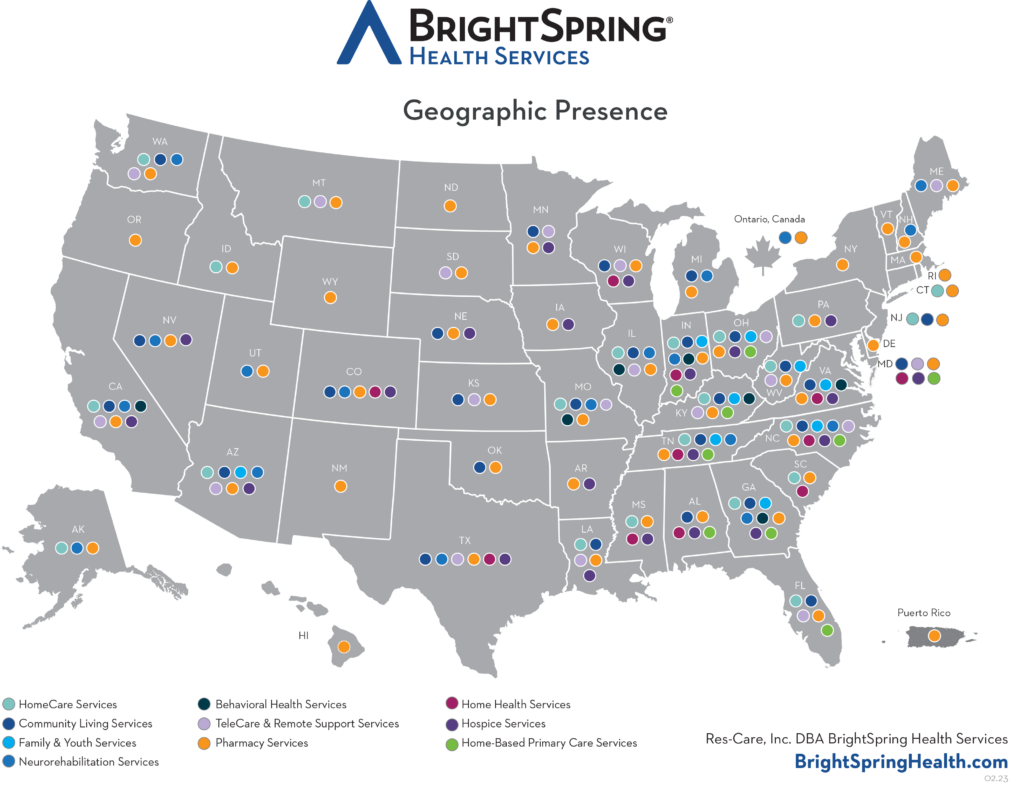
      BrightSpring Health Services is an $11.5B company with locations across the United States and employing more than 37,000 people. In January of this year, BrightSpring sold is Community Living Business to Sevita. BrightSprings intends to acquire additional properties, focusing on its home- and community-based businesses. According to the BrightSpring President and CEO Jon Rousseau, BrightSpring is “focused on getting to 3x leverage within the next two years.”

      Amedisys operates in 38 states with more than 500 locations. The document Amedisys submitted to the SEC does not indicate how many of its properties and those of UnitedHealth will be divested. A UnitedHealth statement said the company plans to divest at least 128 home health and hospice facilities.

      One has to wonder whether we are trading one monopoly for another.

      BrightSpring Health Services

      New Deal

      As the DOJ lawsuit enters mediation this August, UnitedHealth and Amedisys search for another way to divest its properties. Enter the New Deal. BrightSpring Health Services, parent company to Adoration Home Health Acquisition LLC, Adoration Hospice Care Acquisitions LLC and Senescence LLC, DBA All Saints Hospice will purchase some of the properties from both Amedisys and UnitedHealth. The Pennant Group, parent company to Cornerstone Healthcare, Inc. and Tensaw River Healthcare, LLC, will purchase additional properties from bother companies.

      According to documents submitted to the Securities and Exchange Commission (SEC), both agreements have mulitple contingencies, including the finalization of the UnitedHealth/Amedisys merger. Financial information on the two deals was not included in the Amedisys SEC filing. In a separate filing, Pennant valued their part of the agreement at nearly $102.5 million.

      No Deal Yet

      The sale of properties to BrightSpring and Pennant Group relies on the finalization of the merger between Amedisys and UnitedHealth. A magistrate will oversee mediation between the two companies and the DOJ beginning this August.

      The SEC and the DOJ have not yet responded to the intent to divest to BrightSpring and Pennant Group.

      Final Thoughts

      The proposed merger between UnitedHealth and Amedisys has been ongoing for two years. The two companies, who previously stated their competition helped keep them honest and keep costs low, now state that the merger will lower costs even more. The DOJ disagrees. To alleviate concerns, the merger includes the release of properties anywhere the merger would create an unfair advantage. Mediation in August will reveal more on the position of the DOJ, the response from UnitedHealth and Amedisys, and the specifics of the divestment of home health and hospice agencies. The merger proposal expires December 31, 2025. We will continue to follow the story as the parties enter mediation.

      # # #

      Kristin Rowan, Editor
      Kristin Rowan, Editor

      Kristin Rowan has been working at The Rowan Report since 2008. She is the owner and Editor-in-chief of The Rowan Report, the industry’s most trusted source for care at home news, and speaker on Artificial Intelligence and Lone Worker Safety and state and national conferences.

      She also runs Girard Marketing Group, a multi-faceted boutique marketing firm specializing in content creation, social media management, and event marketing.  Connect with Kristin directly kristin@girardmarketinggroup.com or www.girardmarketinggroup.com

      ©2025 by The Rowan Report, Peoria, AZ. All rights reserved. This article originally appeared in The Rowan Report. One copy may be printed for personal use: further reproduction by permission only. editor@therowanreport.com