Medicare Advantage Excess Payments

by Kristin Rowan, Editor

Medicare Advantage Excess Payments

Investigational Study

Researchers from the Department of Health Services, Policy and Practice at Brown Universchool of Public Health and the Department of Geriatrics and Palliative Medicine at Icahn School of Medicine published an original investigative study on spending versus payments in Medicare Advantage under the hospice carve-out model.

Carve-out to VBID to Carve-out

In 2021, CMS started a Value-Based Insurance Design (VBID) to test the impact of adding hospice services to Medicare Advantage benefits. By December of 2024, CMS ended the program due to widespread upset. CMS returned to the hospice carve-out model. Under this model, when an MA beneficiary chooses hospice, any health care expenses related to the terminal illness is paid on a fee-for-service (FFS) basis. MA no longer receives inpatient and outpatient payments, but continues to receive premiu, and rebate payments.

Carve-out Hospice Benefit

Once an MA enrollee enrolls in hospice, MA is no longer responsible for payments. Under the carve-out model, hospice services are paid by Medicare. MA plans are still responsible for paying for services that are not related to hospice care. These services can include inpatient, outpatient, physician, skilled nursing facility, home health care, and prescription drug expenses. 

Medicare Advantage Spending and Payments

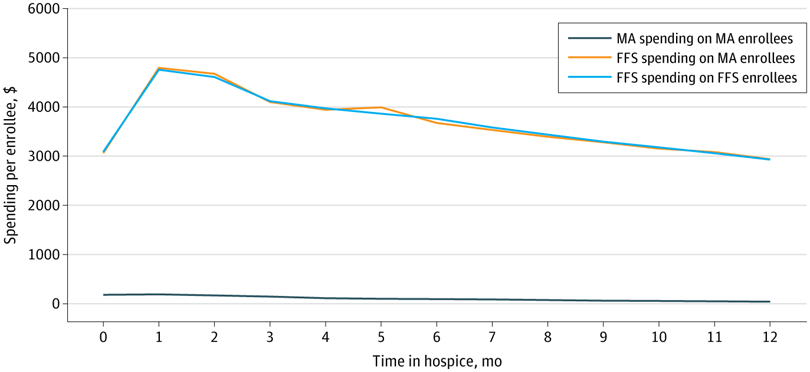
The study spanned 12 months and looked at 314,087 MA beneficiaries. In that period, 80.5% of enrollees had no spneding unrelated to their terminal illness. MA was not responsible for any healthcare related payments, but continued to receive $120 per enrollee per month. Estimated spending from MA on hospice enrollees was $57-70 per month. 

Medicare Advantage Excess Payments

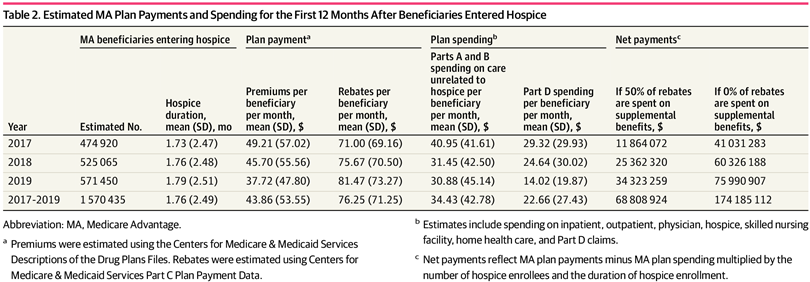
In the 12 months following an enrollee electing hospice, MA plans netted $50-60 per month per enrollee. If half of the rebate payments received pay for supplemental benefits, MA receives excess payments to the tune of $68,808,924 over three years. If no rebate payments go toward supplemental benefits, MA receives $174,185,112 in excess payments over three years. The care a hospice enrollee receives uses the fee-for-service model. Medicare Advantage providers are seemingly paid on a fee-for-no-service model. 

Medicare Advantage plans do not currently report the actual amount of rebate payments used to pay supplemental benefits.

Study Conclusion

The researchers conclude that MA receives excess payments under the hospice carve-0ut model. They also note that there is no accountability for spending after hospice election from MA plans to CMS. The researchers suggest that CMS could require MA plans to report actual spending on supplemental services after hospice election and pay premiums and rebates only to cover the amount spent. 

I have a different recommendation….MA plans should not receive any additional premium payments or rebates following hospice election. MA plans should be required to report total payments and spending from enrollment date to election date. The balance, less the same 8% average margin of home and health and hospice agencies, should be used to pay for hospice services from election to passing. Any remaining balance after the patient’s passing should be returned to the beneficiary’s family.

# # #

Kristin Rowan, Editor

Kristin Rowan has been working at The Rowan Report since 2008. She is the owner and Editor-in-chief of The Rowan Report, the industry’s most trusted source for care at home news, and speaker on Artificial Intelligence and Lone Worker Safety and state and national conferences.

She also runs Girard Marketing Group, a multi-faceted boutique marketing firm specializing in content creation, social media management, and event marketing.  Connect with Kristin directly kristin@girardmarketinggroup.com or www.girardmarketinggroup.com

©2025 by The Rowan Report, Peoria, AZ. All rights reserved. This article originally appeared in The Rowan Report. One copy may be printed for personal use: further reproduction by permission only. editor@therowanreport.com


BREAKING NEWS: CMS Changes AHEAD

From cms.gov

CMS Changes AHEAD

CMS Announces Changes to Achieving Healthcare Efficiency through Accountable Design (AHEAD) Model to Improve Quality, Promote Transparency, and Decrease Costs

September 2, 2025

What's New

The CMS Innovation Center announced new policy and operational changes, as well as a new end date, to the Achieving Healthcare Efficiency through Accountable Design (AHEAD) Model to help states achieve their total cost of care (TCOC) targets, while advancing the Center’s commitment to promote choice and competition, increase prevention, empower patients, and protect taxpayer dollars.

Why it Matters

Participating states now have more tools to manage Medicare costs (designed to support sustainable growth) and improve quality of care and population health outcomes

What to Expect

Changes will be implemented across all cohorts beginning in January 2026. AHEAD’s end date for all cohorts is now December 31, 2035.

The Big Picture

Changes made to the model will help to advance the CMS Innovation Center’s strategic pillars of: 1) choice and competition, with states implementing at least two policies focused on promoting choice and competition in their health care markets and 2) prevention, with a new Population Health Accountability Plan focused on preventive care, including chronic disease prevention.

CMS Change AHEAD

Additional Details

CMS is also introducing payment reforms through AHEAD for patients with Original Medicare and establishing new transparency requirements around TCOC and primary care investment targets. For the first time ever, AHEAD will bring total cost of care accountability to all Original Medicare beneficiaries in AHEAD regions through geographic attribution of beneficiaries not attributed to other CMS accountable care organization programs. This novel framework will offer risk-bearing Geographic Entities additional tools and enhanced flexibilities to improve health outcomes and lower spending for their patients while receiving shared payments (or losses) through two-sided risk arrangements. In return, patients may receive additional beneficiary incentives while enjoying existing protections under the Original Medicare program.

Total Cost of Care Model

The AHEAD Model is a state total cost of care (TCOC) model that seeks to drive state and regional health care transformation and multi-payer alignment, with the goal of improving the total health of a state population and lowering costs. Under a TCOC approach, a participating state uses its authority to assume responsibility for managing health care quality and costs across all payers, including Medicare, Medicaid, and private coverage. States also assume responsibility for ensuring health providers in their state deliver high-quality care, improve population health, offer greater care coordination, and promote healthier living for all people participating in the model. The AHEAD Model provides participating states with funding and other tools to address rising health care costs and improve health outcomes.

More Information

# # #

©2025 Centers for Medicare & Medicaid Services. This announcement originally appeared on the CMS website here. For more information, please contact the CMS Innovation Center.

Eleos Navigates Eligibility Risk

Eleos Navigates Eligibility Risk

FOR IMMEDIATE RELEASE

Contact:                  Amanda Wells

awells@sloanepr.com

Eleos Launches AI Scanner to Navigate Medicaid Eligibility Risk in Real Time

The new OBBBA AI scanner uses Eleos’ ambient AI technology to alert providers of patient eligibility changes, preserving revenue and ensuring care continuity amid sweeping Medicaid policy changes

BOSTON, MA, Aug. 20, 2025 — Eleos, the leading AI platform in post-acute care, today announced the launch of the OBBBA (One Big Beautiful Bill Act) AI scanner, the first real-time tool to proactively detect potential changes to Medicaid eligibility during client sessions. The OBBBA AI scanner uses Eleos’ purpose-built ambient AI scribing technology to inform providers about changes that may impact coverage, giving them time to act before Medicaid coverage lapses. The tool was launched in response to sweeping Medicaid funding cuts and eligibility rule changes.

Eligibility Check

Providers can select Medicaid-related “themes” to track such as housing status, diagnosis updates, or life events like marriage or aging out of eligibility. The OBBBA scanner captures contextual clues that could trigger changes in coverage. Providers use this information to take action to prevent eligibility loss, reduce care disruption and maintain treatment continuity. For care organizations, this means fewer denials and greater revenue stability, as well as better client support.

The OBBBA AI scanner arrives at a critical moment: new Medicaid rules introduce shorter retroactive coverage windows, semi-annual (versus annual) redeterminations and narrowed eligibility criteria — all of which lead to a higher risk of churn, especially for vulnerable groups such as people with serious mental illness and those experiencing housing instability.

Eleos Navigates Eligibility Risk

“We’re hearing from leaders across the country that Medicaid redetermination changes are already causing confusion and fear among clients and providers alike. The OBBBA AI scanner gives providers the earliest possible warning via real-time insights so they can protect coverage and avoid treatment disruptions, ensuring clients continue to receive necessary and life-saving care. This kind of provider-first technology is at the core of Eleos.”

Alon Joffe

Co-founder and CEO, Eleos

Embedded seamlessly within the Eleos Documentation experience, the tracker works in tandem with providers’ existing workflows, requiring no additional software or manual data entry.

Industry leader sees Eleos scanner as critical tool

“OBBBA has created significant uncertainty for the behavioral health sector, and organizations need every possible advantage to navigate it. Properly deployed, purpose-built AI tools help organizations navigate an ever-changing landscape while also promoting the health and well-being of clients and communities.”

Chuck Ingoglia

President and CEO, National Council for Mental Wellbeing

Rationale

The OBBBA AI scanner builds on Eleos’ mission to free care providers from administrative burdens and enable better, more data-informed care. Deployed in over 200 organizations in 30-plus states, Eleos is the most-used AI solution in behavioral health, substance use disorder (SUD) treatment and post-acute care. Its suite of AI-powered documentation and compliance solutions has been proven to reduce documentation time by more than 70%, double client engagement and drive 3-4x better treatment outcomes. 

For more information about the OBBBA AI scanner or to request a demo, visit www.eleos.health.

# # #

About Eleos

Eleos is the leading AI platform for behavioral health, substance use disorder, home health and hospice. At Eleos, we believe the path to better care is paved with provider-focused technology. Our purpose-built AI platform streamlines documentation, simplifies revenue cycle management and surfaces deep care insights to drive better client outcomes. Created using the industry’s largest database of real-world sessions and fine-tuned by our in-house clinical experts, our AI tools are scientifically proven to reduce documentation time by more than 70%, boost client engagement by 2x and improve symptom reduction by 3-4x. With Eleos, post-acute care providers are free to focus less on administrative tasks and more on what got them into this field in the first place: caring for their clients.

DOJ Settles with UnitedHealth and Amedisys

by Kristin Rowan, Editor

DOJ Settles with UnitedHealth and Amedisys

Judge to Weigh In

DOJ settles with UnitedHealth and Amedisys after almost nine months of negotiations. The Department of Justice (DOJ) initially blocked the proposed merger between UnitedHealth and Amedisys, citing concerns over eliminating competition in home health and hospice services in some areas of the U.S. After the most recent settlement hearing, the merger seems to be back on track.

Public Comment Period and Judicial Review

Now that the DOJ hurdle has been passed, there is a public comment period. Following the public comment period, the U.S. District Court for the District of Maryland will enter final judgement. From the Justice Department website:

As required by the Tunney Act, the proposed settlement, along with a competitive impact statement, will be published in the Federal Register. Any interested person should submit written comments concerning the proposed settlement within 60 days following the publication to Jill Maguire, Acting Chief, Healthcare and Consumer Products Section, Antitrust Division, U.S. Department of Justice, 450 Fifth Street NW, Suite 4100, Washington, DC 20530. 

Antitrust Division Statement

“In no sector of our economy is competition more important to Americans’ well-being than healthcare. This settlement protects quality and price competition for hundreds of thousands of vulnerable patients and wage competition for thousands of nurses. I commend the Antitrust Division’s Staff for doggedly investigating and prosecuting this case on behalf of seniors, hospice patients, nurses, and their families.”

Abigail Slater

Assistant Attorney General, Justice Department Antitrust Division

Divestiture Agreement

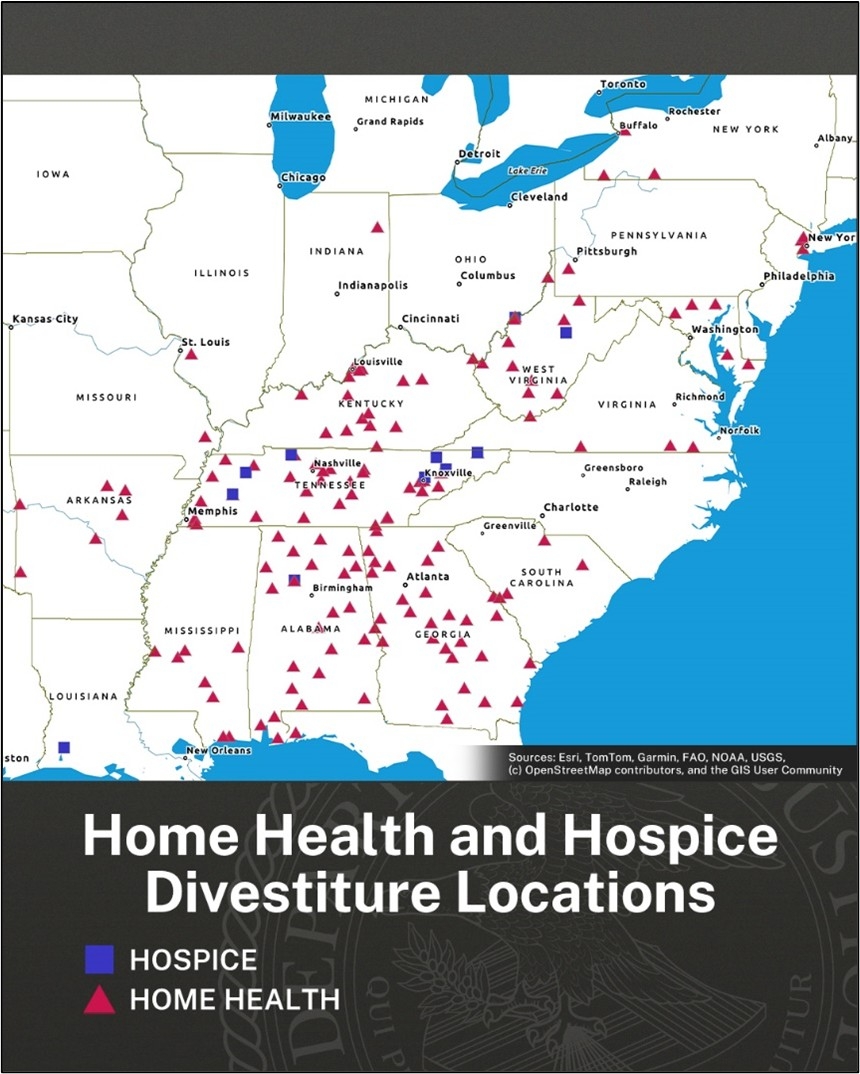
According to the new agreement, UnitedHealth will sell 164 home health and hospice locations across 19 states. In addition to the sale, the agreement provides the buyers of these locations with assets, personnel, and relationships to help them compete with remaining UnitedHealth locations. Also included are protections to deter UnitedHealth from interfering with the new owners’ ability to compete.

BrightSpring Health Services and Pennant Group will acquire the 164 locations. Slater said the settlement, which includes the largest ever divestiture of outpatient healthcare, protects quality and price competition patients as well as wage competition for nurses. However, antitrust specialist Robin Crauthers, a partner with McCarter & English, says it doesn’t go far enough. According to Crauthers, the settlement agreement does not address all of the markets that would have less competition and that the DOJ accepted less than they wanted in the agreement.

Additionally, critics argue the divestiture moves 164 home health and hospice agencies from one large player to two other large players in the space. Arguably, rather than preserve competition, this divestiture agreement will only serve to strengthen the largest players in the market, giving them a substantial advantage over smaller agencies in these areas.

UnitedHealth Amedisys divestiture locations

Not the Only Concern

Vertical Integration

Joe Widmar, Director of M&A at West Monroe consulting firm, says that the number of home health and hospice agencies is not the tipping factor in competition. Rather, it is UnitedHealth’s vertical integration. A health insurance company that also owns nearly 2,700 subsidiaries, including pharmacies, home health and hospice, behavioral health, consulting for healthcare organizations, surgery centers, hospitals, mental health, managed care for Medicaid and Medicare, and specialty care. Virtually any referral from a PCP to any other health professional puts more money into the health care giant’s pockets. The lack of competition is across all forms of healthcare, leaving patients no choice buy to support UnitedHealth Group in areas where all local healthcare providers are subsidiaries. I 2024, UnitedHealth insurance paid $150.9 million to its subsidiaries for care. These provider companies are not counted in the profit caps placed on insurance companies.

Upcoding

In addition to side-stepping profit caps, vertical integration aids in upcoding. Upcoding is the practice of digging into a patient’s life to find (or create) additional patient needs. Insurers add as many codes as possible for the greatest reimbursement rates. According to a recent study, UnitedHealthcare overbilled Medicare Advantage by $14 billion through upcoding. 

In-home health risk assessments and patient reviews, often offered to beneficiaries as a free service, result in an average risk score 7% higher than in patients seen in medical practices and hospitals. UnitedHealth generates more income from patient review diagnoses than any other MA insurer. The Department of Justice is currently investigating UnitedHealth’s Medicare billing practices.

Final Thoughts

If you own a home health, hospice, or palliative care agency in any of the states shown in the graphic above, write to Jill Maguire with comments and concerns. Our primary objective is providing quality care to patients in their homes. We know that home care is less expensive for the patient and government-funded insurance. But not when all the home care agencies in an area are owned by only a few of the largest home health agencies in the country. And not when the insurer is adding diagnostic codes to pad their bill. 

# # #

Kristin Rowan, Editor

Kristin Rowan has been working at The Rowan Report since 2008. She is the owner and Editor-in-chief of The Rowan Report, the industry’s most trusted source for care at home news, and speaker on Artificial Intelligence and Lone Worker Safety and state and national conferences.

She also runs Girard Marketing Group, a multi-faceted boutique marketing firm specializing in content creation, social media management, and event marketing.  Connect with Kristin directly kristin@girardmarketinggroup.com or www.girardmarketinggroup.com

©2025 by The Rowan Report, Peoria, AZ. All rights reserved. This article originally appeared in The Rowan Report. One copy may be printed for personal use: further reproduction by permission only. editor@therowanreport.com


Medicaid Enrollees Sent to ICE

by Kristin Rowan, Editor

UPDATE

The Rowan Report originally published this article on August 7, 2025. This update is as of August 15, 2025.

After HHS began providing access to personal data on Mediciad enrollees to the Department of Homeland Security (DHS), 20 states filed to sue the department for violating privacy laws. Shortly thereafter, CMS entered into a new agreement to give DHS daily access to view the same data.

Federal Judge Vince Chhabria of California ordered HHS to stop giving DHS access to personal information. The ruling grants a preliminary injunction, stopping HHS from sharing Medicaid data with ICE in the 20 states that participated in the lawsuit. The injunction will last until 14 days after the two agencies complete and submit a reason for the decision to share information. The reasoning must comply with the Administrative Procedure Act. The injunction can also end if litigation is concluded (a formal hearing and decision).

Chhabria noted that there is no formal law preventing government agencies from sharing information, he cited agency policy as his reasoning for the injunction. ICE has a well-publicized policy against using Medicaid data for immigration enforcement. Judge Chhabria wrote in his ruling:

“Given these policies, and given that the various players in the Medicaid system have relied on them, it was incumbent upon the agencies to carry out a reasoned decisionmaking process before changing them. The record in this case strongly suggests that no such process occurred.”

August 7, 2025

Associated Press Confirms

Enrollee Information Given to ICE

In a surprise announcement on July 17, 2025, investigative reporter Kimberly Kindy and reporter Amanda Seitz filed a report. They uncovered information confirming Medicaid enrollee information given to ICE from CMS. ICE will use this to find “aliens” across the country. The health and personal information disclosed includes home addresses, birth dates, Social Security numbers, and ethnicities.

Department of Homeland Security Responds

DHS Assistant Secretary Tricia McLauglin said, “…CMS and DHS are exploring an intitiative to ensure that illegal aliens are not receiving Medicaid benefits….”

DHS Spokesperson Andrew Nixon said, “With respect to the recent data sharing between CMS and DHS, HHS acted entirely within its legal authority—and in full compliance with all applicable laws….”

Opposing Viewpoints

Senator Adam Schiff (D-CA) said, “The massive transfer of the personal data of millions of Medicaid recipients should alarm every American. This massive violation of our privacy laws must be halted immediately. It will harm families across the nation and only cause more citizens to forego lifesaving access to health care.”

Similarly, CA Governor Gavin Newsom said, “This potential data transfer brought to our attention by the AP is extremely concerning, and if true, potentially unlawful….”

HHS and DHS Sued

State Attorneys General from 20 states, led by California Attorney General Rob Bonta have filed suit. They are suing the Department of Health and Human Services (HHS), the Department of Homeland Security (DHS), HHS Secretary Robert F. Kennedy Jr., and DHS Secretary Kristi Noem.

The Associated Press found a Medicaid internal memo and emails. Subsequently, the AP reported that Medicaid officials tried to stop the data transfer due to legal and ethical concerns. The objection was unsuccessful. CMS had 54 minutes to comply with an order coming from two advisors within Secretary Kennedy Jr’s camp.

Disclosure Focuses on Violation of Laws

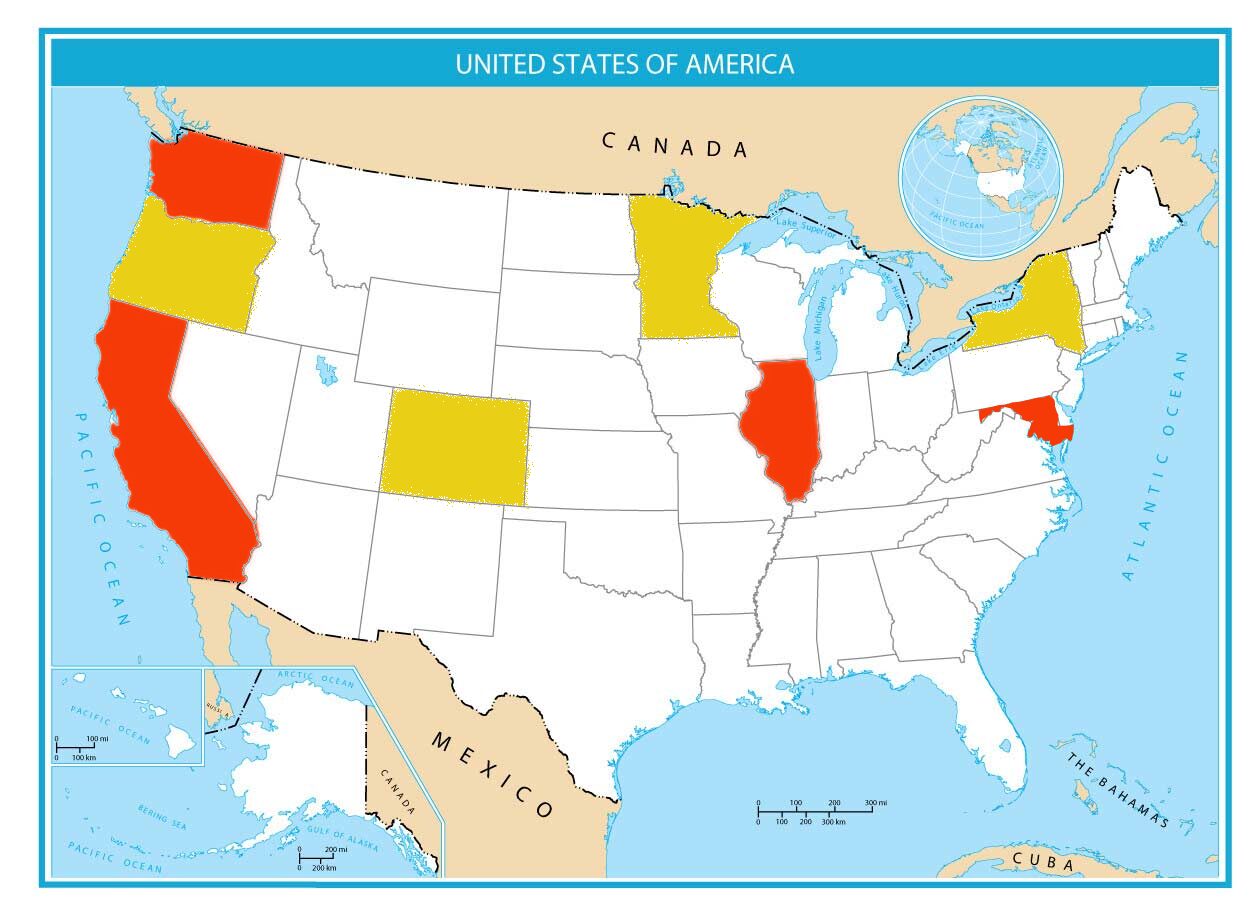
Current laws provide that states can create their own health plans, eligibility standards, and coverage, as long as the plan follows federal criteria. Medicaid laws also provide for emergency coverage for non-citizens. Seven states and D.C. started programs that offer full Medicaid coverage to non-citizens.

Four of the seven states, New York, Oregon, Minnesota, and Colorado, never submitted identifiable information about Medicaid recipients to CMS. The data shared with ICE came from the remaining three states; California, Illinois, & Washington State; and Washington D.C.

Map of U.S. States Compromised by CMS and DHS

The Allegation

The lawsuit was filed in the U.S. District Court for the Northern District of California. It alleges that the federal government is allowing the personal data of Medicaid recipients to be used for purposes unrelated to the Medicaid program.

Further, the coalition of states alleges that the disclosures violate several federal data privacy laws. These  include Health Insurance Portability and Accountability Act (HIPAA), Federal Information Security Modernization Act (FISMA), and the Privacy Act. 

Additionally, the Attorneys General state that the disclosures are contrary to the Social Security Act and a violation of the Spending Clause.

The lawsuit calls upon the court to bar CMS from sending additional PII to DHS and to bar DHS from using any of the information it has already received.

“In the seven decades since Congress enacted the Medicaid Act to provide medical assistance to vulnerable populations, federal law, policy, and practice has been clear: the personal healthcare data collected about beneficiaries of the program is confidential, to be shared only in certain narrow circumstances that benefit public health and the integrity of the Medicaid program itself.”

Attorneys General

Coalition of States

Final Thoughts

This lawsuit is the latest of many against the current administration. The Rowan Report will continue to update this and other stories impacting care at home as the lawsuits continue.

# # #

Kristin Rowan, Editor

Kristin Rowan has been working at The Rowan Report since 2008. She is the owner and Editor-in-chief of The Rowan Report, the industry’s most trusted source for care at home news, and speaker on Artificial Intelligence and Lone Worker Safety and state and national conferences.

She also runs Girard Marketing Group, a multi-faceted boutique marketing firm specializing in content creation, social media management, and event marketing.  Connect with Kristin directly kristin@girardmarketinggroup.com or www.girardmarketinggroup.com

©2025 by The Rowan Report, Peoria, AZ. All rights reserved. This article originally appeared in The Rowan Report. One copy may be printed for personal use: further reproduction by permission only. editor@therowanreport.com


Patients’ Right to Freedom of Choice

by Elizabeth E. Hogue, Esq.

Patient's Right to Freedom of Choice of Providers

U.S. Supreme Court Weighs In

Patient’s rights to freedom of choice of providers who will render care to them is currently based on four key sources:

  • Court decisions that establish the right of all patients, regardless of payor source and the setting in which services are rendered, to control treatment, including who provides it
  • Federal statutes for both the Medicare and Medicaid Programs that establish the right of patients whose care is paid for by these programs to choose providers to render care – Specifically, Section 1802 (42 U.S. C. 1395a) states as follows: “(a) Basic freedom of choice.- Any individual entitled to insurance benefits under this title may obtain health services from any institution, agency, or person qualified to participate under this title if such institution, agency or person undertakes to provide him such services.”
  • The Balanced Budget Act of 1997 (BBA), which currently requires hospitals to provide a list of home health agencies and hospices to patients. According to the BBA, the list must meet the following criteria: (a) Providers that render services in the geographic area in which patients reside, are Medicare-certified, and request to be included must appear on the list given to patients. (b) If hospitals have a financial interest in any provider that appears on the list, this interest must be disclosed on the list.
  • Conditions of Participation (COP’s) of the Medicare Program that are the same as the provisions of the BBA described above

Supreme Court Decision

The U.S Supreme Court has now issued a decision about the federal statute for the Medicaid Program described above in Medina v. Planned Parenthood South Atlantic, et al. [No, 23-1276 (June 26, 2025)]. This case involves the any-qualified-provider provision in the statute above that requires states to ensure that any individual eligible for medical assistance may obtain it from any provider qualified to perform the service who undertakes to provide it. The question is whether individual Medicaid beneficiaries may sue state officials under the above statute for failing to comply with the any-qualified-provider provision. 

Exclusions on "any-qualified-provider" provision

The State of South Carolina excluded Planned Parenthood from the Medicaid Program. An enrollee in the Medicaid Program sued the State based on the above statute because she said that she wanted to receive Medicaid services from Planned Parenthood.

Federal enforcement; not private

The Court said that spending power statutes, such as Medicaid Programs, are especially unlikely to create the right for individuals to sue the states. The typical remedy for state noncompliance is federal funding termination. Private enforcement, such as suits by individuals, requires states to voluntarily and knowingly consent to private suits based on clear and unambiguous alerts from Congress to the states that private enforcement is a funding condition.

The Court concluded that the above statute does not permit individuals to sue the States for violation of their right to freedom of choice of providers.

# # #

Elizabeth E. Hogue, Esq.

Elizabeth Hogue is an attorney in private practice with extensive experience in health care. She represents clients across the U.S., including professional associations, managed care providers, hospitals, long-term care facilities, home health agencies, durable medical equipment companies, and hospices.

©2025 Elizabeth E. Hogue, Esq. All rights reserved.

No portion of this material may be reproduced in any form without the advance written permission of the author.

©2025 by The Rowan Report, Peoria, AZ. All rights reserved. 

Impact of H.R. 1: The Homebound and Overlooked

Analysis by Tim Rowan, Editor Emeritus

The Impact of H.R. 1

Homebound and Overlooked

In early 2025, the Republican-led Congress introduced its proposed budget for FY2026 and beyond, a sweeping legislative effort aimed at curbing federal expenditures and restructuring entitlement programs. Medicaid, one of the largest healthcare safety nets in the United States, faces major revisions under this bill. Central to the proposed changes is the shift toward block grants or per-capita caps on federal funding. The legislation also rolls back incentives enacted into law by the Affordable Care act, including those that supported Medicaid expansion. The reconciliation bill, signed into law on July 4, also eliminates financial support for optional services such as home and community-based services (HCBS). A new set of work requirements in the new law will expand the paperwork burden for beneficiaries.

Risks for Home- and Community-Based Care

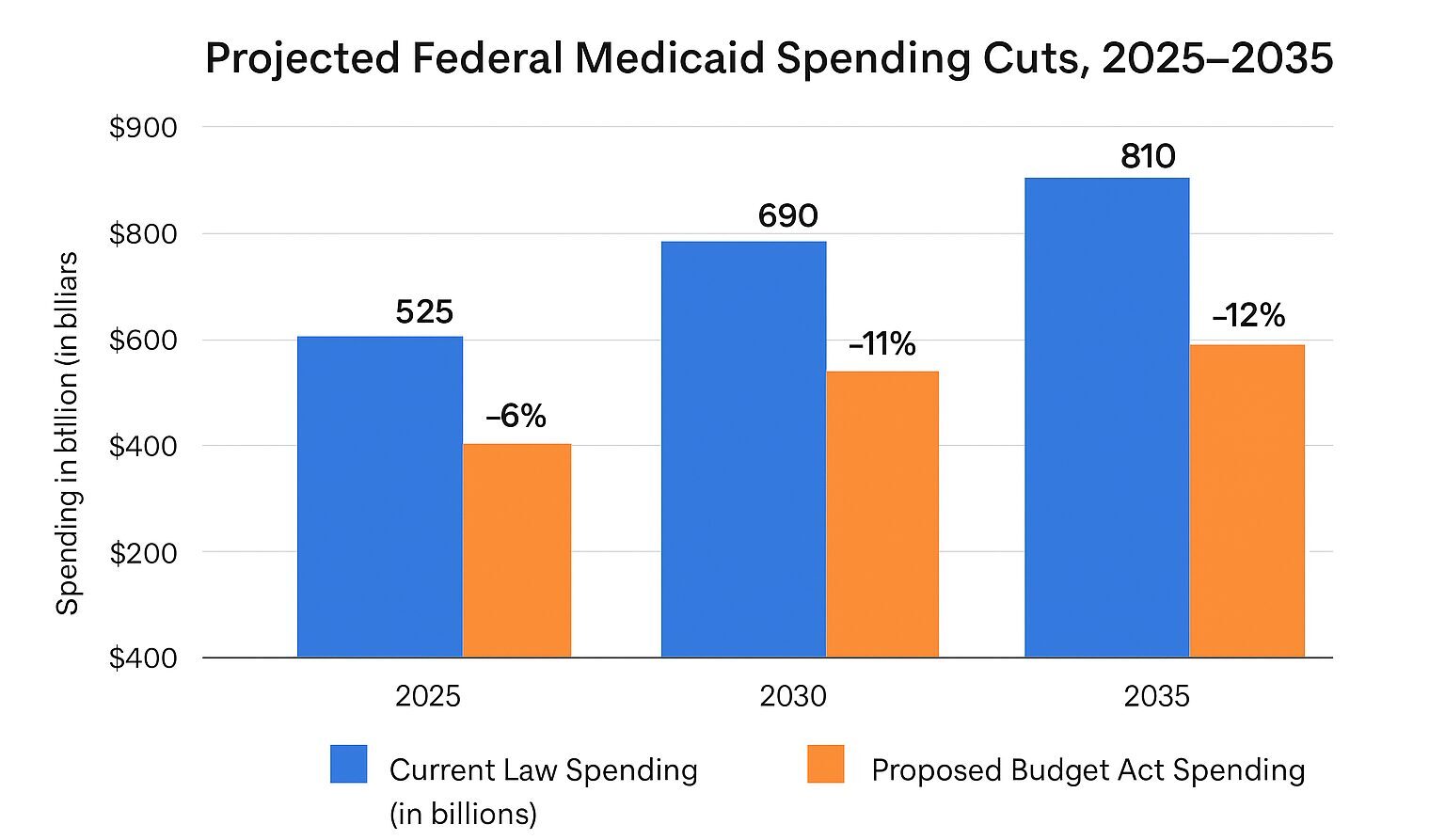
The figure below presents a visual from the Commonwealth Fund showing their projection of over $100 billion in cumulative federal Medicaid cuts by 2035. These reductions are expected to disproportionately affect non-mandated programs like HCBS, which are many times more economical than residential care. With diminished federal support, states will face pressure to reallocate limited resources, often at the expense of these optional, yet critical, programs. ¹

For nearly eight million elderly Americans, Medicaid-funded HCBS has helped reduce hospital admissions, extend independence, and relieve stress on long-term care facilities. However, the new budget cuts destabilize these programs. Barbara Merrill, CEO of ANCOR, expressed concern, stating, “When you cut federal Medicaid dollars, even for optional services, states have to make tough decisions about who gets care and when.”² Experts anticipate that approval delays, extended waitlists, and even termination of services could follow as states struggle to maintain existing infrastructure.

Bar chart of Medicaid spending.

Comparing the 2005 Budget Bill to the Affordable Care Act

Compared to the Affordable Care Act (ACA), the Republican budget bill marks a significant policy reversal. The ACA expanded Medicaid eligibility and incentivized states to develop non-institutional care models. It emphasized preventive care and home-based treatment options, helping shift care away from costly institutional settings. By contrast, the new bill eliminates such incentives and introduces fiscal and operational barriers. According to data from Medicaid.gov and the Kaiser Family Foundation, Medicaid enrollment, which rose steadily during the ACA years, is projected to drop by 10% nationwide once the budget bill is implemented³. This decline reflects both tightening eligibility and retreat from HCBS programs.

Healthcare providers will need to brace for substantial ripple effects. With fewer patients accessing home care, hospitals and emergency departments may see an uptick in acute episodes related to unmanaged chronic conditions. Providers may also encounter staffing shortages and reduced reimbursements, undermining service quality and sustainability. Richard Edwards, policy director at Amivie Home Health, warned, “If states cut home care services, many patients have no other choice but to enter a skilled nursing facility. That’s not just a shift in care—it’s often a worse outcome at a higher cost.” ⁴ These operational challenges could exacerbate pressure on an already strained healthcare workforce.

Scope and Severity of Coming Changes

Today, over eight million seniors rely on Medicaid-funded HCBS, with an average annual cost per recipient of $29,000. Thirty-three states use HCBS waivers to administer these services, yet the average state waitlist already exceeds 3,000 applicants. Institutional care costs remain 57% higher than home care, making HCBS not only more humane but more fiscally prudent. Despite that, projected federal cuts of $100 billion by 2035 threaten to replace HCBS with nursing home care. Meanwhile, a national enrollment drop of 10% would leave millions at risk of losing coverage and care.

Richard Edwards, policy director at Amivie Home Health, explains, “If states cut home care services, many patients have no other choice but to enter a skilled nursing facility. That’s not just a shift in care—it’s often a worse healthcare and social outcome at a higher cost.” ⁴

  • 8 million elderly rely on Medicaid HCBS
  • $29,000/year average cost per Medicaid home care recipient
  • 33 states use HCBS waivers
  • Average state waitlist for HCBS exceeds 3,000 applicants
  • Institutional care costs 57% more than home care
  • Estimated federal Medicaid cuts by 2035: $100 billion
  • Projected national enrollment drop: 10%

Implications for Care at Home: Next Steps

To mitigate these risks, policy experts are advocating for pragmatic alternatives, knowing that implementation depends entirely on the direction in which political winds blow. Federal stabilization grants could offer targeted relief to states with high HCBS enrollment, preserving continuity of care. Streamlining waiver approvals would reduce bureaucratic delays and ease access for both providers and patients. Retaining key ACA incentives could help maintain momentum in home-based care innovation. States would also benefit from flexible financing rules, including reformed provider tax policies, to better manage Medicaid funds under new constraints. 

Final Thoughts

Ultimately, the new budget, passed with no Democratic votes, may reshape eldercare delivery for years to come. With states facing hard choices, the healthcare community must prepare for transitions that could disrupt care and deepen inequities. Advocacy for vulnerable populations, investment in alternatives, and ongoing engagement in policy reform will be essential to ensure seniors receive the care they deserve in the setting they prefer.

# # #

____________________________________________

¹ Congressional Budget Office, Federal Healthcare Outlook 2025–2035
² Barbara Merrill, ANCOR Policy Brief, March 2025
³ Kaiser Family Foundation, Medicaid Enrollment Tracker, April 2025
⁴ Amivie Health, Testimony to House Budget Committee, June 2025

Tim Rowan The Rowan Report

Tim Rowan is a 30-year home care technology consultant who co-founded and served as Editor and principal writer of this publication for 25 years. He continues to occasionally contribute news and analysis articles under The Rowan Report’s new ownership. He also continues to work part-time as a Home Care recruiting and retention consultant. More information: RowanResources.com
Tim@RowanResources.com

©2025 by The Rowan Report, Peoria, AZ. All rights reserved. This article originally appeared in The Rowan Report. One copy may be printed for personal use: further reproduction by permission only. editor@therowanreport.com

OBBB Care at Home Adjustments

by Kristin Rowan, Editor

Care at Home Through Medicare and Medicaid

Adjustments from OBBB

Despite the passing and subsequent signing of the reconciliation bill, numerous lawsuits have paused its implementation in some areas. We will continue to report on those court decisions as they arise. In the meantime, the care at home industry can look at the few adjustments that will positively impact the industry.

Medicaid Waivers

Prior to this, the HHS Secretary could only approve Medicaid waivers to cover home and community-based services for beneficiaries who already met institutional level-of-care criteria. This bill provides additional flexibility to define waiver eligibility without the institutional level-of-care criteria.

For FY 2026, CMS has an additional $50 million to oversee the new waivers. There is an additional $100 million earmarked for FY 2027 to deliver HCBS under new and existing waivers. Although the expanded waivers and additional budget will not satisfy the more 700,000 on waiting lists for HCBS, it is a start.

Rural Health Transformation Program

For five years, beginning in 2026, states can apply for a portion of a $10 billion annual fund for rural health providers. To qualify, providers must submit a rural health care plan that includes technology adoption, local partnerships, using data-driven methods, and setting strategies for financial stability. This could provide an opportunity for care at home agencies to partner with rural hospitals to help provide care in rural settings.

Health Savings Accounts

Health Savings Accounts (HSAs) allow insurance beneficiaries to save money to pay for deductibles, copays, and other services not covered by insurance (such as non-medical supportive care and home health). Currently, people can only use HSAs if they have a high deductible health plan (HDHP). The bill allows for a plan to be considered an HDHP even if it covers telehealth and remote health services prior to meeting the deductible. Insurance companies can design new HDHPs that can be used with HSAs.

Telehealth Reconciliation Bill<br />

Another change to HSAs involves the type of plan that qualifies. Currently, bronze and catastrophic plans cannot be considered HDHPs because their out-of-pocket limits exceed IRS limits for HDHPs. The bill allows bronze and catastrophic plans to qualify as HDHPs and have access to HSAs.

Additionally, current regulations prohibit anyone with a Direct Primary Care (DPC) arrangement from contributing to our using HSAs. DPC is an arrangement with a flat monthly fee for services rather than using insurance for routine care. The bill removes the limitations, allowing people with DPC arrangements to contriute to HSAs and use them for DPC arrangements.

Adding telehealth/remote plans, bronze plans, and catastrophic plans to HSA eligibility could provide opportunities for care at home agencies to connect with beneficiaries of these plans who did not have expendable funds for non-covered services before, but can now use HSAs. Allowing patients with DPCs to use HSAs could provide yet another path to increasing patients by partnering with DPC offices.

Final Thoughts

As a whole, we are anticipating great disruption to Medicare and Medicaid stemming from the budget reconciliation bill. While we await the final word on legality from the U.S. Supreme Court on many of the provisions, we can look to the ones that may help brace the industry in the meantime.

 # # #

Kristin Rowan, Editor

Kristin Rowan has been working at The Rowan Report since 2008. She is the owner and Editor-in-chief of The Rowan Report, the industry’s most trusted source for care at home news, and speaker on Artificial Intelligence and Lone Worker Safety and state and national conferences.

She also runs Girard Marketing Group, a multi-faceted boutique marketing firm specializing in content creation, social media management, and event marketing.  Connect with Kristin directly kristin@girardmarketinggroup.com or www.girardmarketinggroup.com

©2025 by The Rowan Report, Peoria, AZ. All rights reserved. This article originally appeared in The Rowan Report. One copy may be printed for personal use: further reproduction by permission only. editor@therowanreport.com
 

Planned Parenthood Cut Halted

by Kristin Rowan, Editor

Part of Big Beautiful Bill Halted

Medicaid Cuts to Planned Parenthood Blocked

The tax and immigration bill, dubbed “One Big Beautiful Bill,” signed by President Trump on July 4th, included removing all Medicaid payments to any nonprofit organization that provides medical services, received more than $800,000 in federal funding in 2023, and also provides abortions.

On Monday, July 7th, the first business day after the bill was signed into law, U.S. District Judge Indira Talwani granted a temporary halt to Medicaid funding cuts to Planned Parenthood.

Planned Parenthood Claims Unfavorable Treatment

The portion of the bill in question does not specifically name Planned Parenthood. The bill cuts Medicaid funding to groups “primarily engaged in family planning services, reproductive health, and related medical care” that also provide abortions and abortion education. According to the lawsuit, however, because of the federal funding threshold of $800,000, Planned Parentood locations comprise almost all of the impact. 

[It’s a] “naked attempt to leverage the government’s spending power to attack and penalize Planned Parenthood and impermissibly single it out for unfavorable treatment.”

Planned Parenthood

Immediate Decision

The decision came before the federal government responded. Judge Talwani ruled within hours and provided no explanation other than a brief note stating that Planned Parenthood showed good cause for immediate intervention.

Decision Unlikely to Stand

  • The decision came within hours of the lawsuit filing
  • Congress is generally lawfully allowed to make determinations on spending
  • This was an egregious judicial usurpation of legislative power
  • This makes her court look like a fast food drive-through
  • The House could initiate impeachment proceedings against the judge for this decision

These are just a few of the statements made in opposition to the injunction, mostly claiming that the judge did not have the authority to make the decision. Talwani set a hearing for July 21 to hear from both Planned Parenthood and the agencies named in the lawsuit, HHS, and CMS.

Precedent

A previous ruling from the Supreme Court in June of this year provides that any state can remove any provider from the list of “Qualified Providers” using its own Medicaid criteria. The court further ruled that, although patients have the right to choose their own provider, patients do not have the right to sue based on who those qualified providers are.

This lawsuit is the first against the tax and immigration bill, but it is most likely not the last. We will continue to report on this and other lawsuits as they arise.

# # #

Kristin Rowan, Editor

Kristin Rowan has been working at The Rowan Report since 2008. She is the owner and Editor-in-chief of The Rowan Report, the industry’s most trusted source for care at home news, and speaker on Artificial Intelligence and Lone Worker Safety and state and national conferences.

She also runs Girard Marketing Group, a multi-faceted boutique marketing firm specializing in content creation, social media management, and event marketing.  Connect with Kristin directly kristin@girardmarketinggroup.com or www.girardmarketinggroup.com

©2025 by The Rowan Report, Peoria, AZ. All rights reserved. This article originally appeared in The Rowan Report. One copy may be printed for personal use: further reproduction by permission only. editor@therowanreport.com
 

Bill Cuts Medicaid Directly, Medicare Indirectly

by Tim Rowan, Editor Emeritus

Bill Cuts Medicaid Directly, Medicare Indirectly

This is what online publishers call a “living article.” With the House and Senate passing different bills, progress toward the President’s desk changes by the hour. What follows is everything we knew to be true on Tuesday evening, July 1. However, this bill will impact Home Health, Home Care, and Hospice. To keep readers informed, we will continuously update this article as need through the weekend. We will not send our usual emails to subscribers with every update, so we urge you to return here from time to time for updates to this breaking news item. We will add the date and time to each update.

July 3: Bill Passes, The Alliance Responds

Nearly as soon as House Republicans began their celebration, Alliance President Dr. Steve Landers issued a response from the National Alliance for Care at Home. We reprinted the complete statement from The Alliance here.

“As these Medicaid provisions become law, the Alliance will work tirelessly to monitor their implementation and advocate for the protection of Medicaid enrollees, families, and providers nationwide. We will continue to champion the delivery of HCBS – proven services that are preferred by beneficiaries and save the system money.” 

Dr. Steve Landers

CEO, The National Alliance for Care at Home

Final House Vote: July 3

In spite of a couple of Republican holdouts, H.R. 1 passed the House on a 2018-2014 vote on Thursday afternoon. All of the Senate’s changes were approved, meaning the bill does not have to go back to Senate for re-approval. Now begin final assessments of the impact on Medicaid and SNAP. Changes made in the Senate, approved by the House, increased the size of spending cuts for those two programs. As analysts inside and away from our home care community weigh in, we will post them here.

As of the end of the day, July 1

It appears as though the stalemate, if there is to be one, will center around Medicaid and SNAP cuts. There are some House Republicans who are upset that the Senate increased their H.R. 1 proposed cuts to nearly $1 Trillion. Contrarily, other House Republicans threaten to vote no because cuts are not deep enough. They point to the predicted $3.3 trillion addition to the national debt over ten years. As of the evening of July 1, the House Rules Committee continues the debate. We will update this page as often as possible for you.

As of the morning of July 1

Early Tuesday morning, the Senate passed its version of Donald Trump’s bill. Among its changes are increased cuts to Medicaid. The Congressional Budget Office calculated that the House version would have resulted in $700 billion in spending reductions. It would also have removed health insurance from 10.9 million people over 10 years. The version the Senate sent back to the House Tuesday, according to the CBO, increases those cuts to $930 billion and 11.8 million people.

Senate passes bill

June 29th

The Senate reconciliation bill would cut gross federal Medicaid and Children’s Health Insurance Program (CHIP) spending by $1.02 trillion over the next ten years.  These cuts are $156.1 billion (18%) larger than even the House-passed bill’s draconian cuts of $863.4 billion over ten years.

  • These larger gross Medicaid and CHIP cuts are driven by changes to the House-passed bill that would:

    • further restrict state use of provider taxes to finance Medicaid
    • eliminate eligibility for many lawfully present immigrants
    • cut federal funding for payments to hospitals furnishing emergency Medicaid services
    • further reduce certain supplemental payments to hospitals and other providers (known as state-directed payments)
  • The spending effect of these additional cuts is modestly offset by increased Medicaid and CHIP spending from provisions not in the House-passed bill

    • a rural health transformation program
    • increased federal Medicaid funding for Alaska and Hawaii (Already ruled out by the parliamentarian)
    • expanded waiver authority for home- and community-based services
  • Overall, the Senate Republican reconciliation bill’s Medicaid, CHIP, Affordable Care Act marketplace, and Medicare provisions would increase the number of uninsured by 11.8 million in 2034, relative to current law

    • In comparison, the House-passed bill would increase the number of uninsured by 10.9 million in 2034.
    • More detailed CBO estimates of the specific Medicaid health coverage effects under the Senate Republican reconciliation bill are not yet available
    • CBO estimates the House-passed bill’s Medicaid and CHIP provisions would cut Medicaid enrollment by 10.5 million by 2034 and by themselves, increase the number of uninsured by 7.8 million by 2034

How the Senate Pushed the Bill Through

Majority leader Thune could only afford to lose three Republican votes. With GOP Senators Thom Tillis (N.C.), Rand Paul (Ky.) and Susan Collins (Maine) voting against the measure, along with every Democrat, centrist Lisa Murkowski of Alaska became the sole target of Republican pressure. The tactic used to get the vote close enough for VP Vance to cast the deciding vote is disturbing. 

First, leadership wrote an amendment that would have exempted Alaska from Medicaid and SNAP cuts. The parliamentarian killed that idea, saying it violated the Senate’s “Byrd Rule.” Next, marathon negotiations brought Murkowski and Parliamentarian MacDonough together to appease both. The compromise became exceptions to Medicaid and SNAP cuts that had less of an appearance of a bribe. They devised a formula that delayed cuts to states with a history of high error rates in calculating who is entitled to benefits. The CBO said that would cover as many as 10 states. The parliamentarian decided this did not violate Senate rules because it did not specifically benefit one state. They also increased the federal subsidy for rural hospitals that will be harmed by the bill from $25 billion to $50 billion.

In agreeing to vote ‘yes,’ Murkowski essentially declared that she knows the cuts will be bad for most states but will be good for her state. With the Alaska Senator’s vote secured, the final count was 50-50, leaving the final decision up to the vice president.

# # #

Tim Rowan The Rowan Report

Tim Rowan is a 30-year home care technology consultant who co-founded and served as Editor and principal writer of this publication for 25 years. He continues to occasionally contribute news and analysis articles under The Rowan Report’s new ownership. He also continues to work part-time as a Home Care recruiting and retention consultant. More information: RowanResources.com
Tim@RowanResources.com

©2025 by The Rowan Report, Peoria, AZ. All rights reserved. This article originally appeared in The Rowan Report. One copy may be printed for personal use: further reproduction by permission only. editor@therowanreport.com