Safeguarding Home Care Heroes

by Marcylle Combs, BS, MS, RN, CHCE

This article is part 1 of a 2-part series. Check back for part 2 on November 7th.

Protecting our Care at Home Heroes

Building Emotional Strength & Ensuring Workplace Safety

In the fast-paced, ever-changing world of home health and hospice care, paying attention to care at home worker safety—both physically and emotionally—is critical. These “care at home heroes” offer life-saving care to people in need. The environments they work in, including patients’ homes and their surrounding neighborhoods, can be unpredictable and uniquely risky.

Agencies must put more focus on their caregivers’s emotional well-being and physical safety to help them provide the best care possible. Developing strong safety policies and creating a supportive work atmosphere are key strategies to ensure they can focus on what matters most: caring for their patients.

Care at Home Worker Safety Hidden Dangers

Understanding the Risks

Care at home workers face a wide range of hazards, many of which are heightened by the fact that they’re working in spaces they can’t fully control. These dangers range from exposure to bloodborne pathogens and other biological risks to dealing with physical strains, like lifting patients in cramped spaces. There’s also the issue of unclean home conditions, aggressive pets, crime-ridden neighborhoods, and the risks involved in driving between homes.

By the Numbers

Statistics show that care at home workers are five times more likely to experience nonfatal workplace violence compared to people in other industries. More than 60% of these workers have reported experiencing at least one incident of violence in the past year. Registered nurses (RNs) specifically have reported high levels of verbal abuse (up to 65%), physical assault (44%), and sexual harassment (41%) on the job. In addition, these caregivers often deal with musculoskeletal injuries, with injury rates being 50% higher than those in hospitals due to patient handling tasks.

Common Incidents and the Problem of Underreporting

Many of these incidents go unreported, which only adds to the dangers care at home workers face. Since they’re constantly on the move, it’s tough to track these events. Still, reports clearly show that violence, harassment, and injuries occur more frequently and are more severe in care at home than in many other fields.

Care at Home Safety

Threats Aren't Always From the Patient

On top of dealing with violent patients, care at home workers may also face threats from family members. Tensions and emotional stress in the home—often tied to a patient’s declining health—can sometimes escalate into verbal or physical threats toward caregivers. These situations can make workers feel unsafe, even if no direct threat is made.

Real-World Relevance

For example, I once had a patient’s family member follow me to my car while talking about his pet venomous snakes. He didn’t threaten me directly. I definitely felt uneasy, though, but I didn’t report it. As I look back on this encounter, I believe I truly should have reported this and recorded it for future review.  It just highlights what we should teach our employees on how and when to report incidents.

Hidden Threats

Chemical exposure is another issue. Care at home workers often encounter dangerous cleaning or other chemicals that aren’t stored or used properly. Sadly, there was a tragic case where a home health nurse in Los Angeles died after being exposed to hazardous chemicals stored incorrectly in a patient’s home. Other in-home hazards include fall risks, aggressive animals, weapons hidden in the home, and illegal substances. These hidden risks make it crucial for workers to follow safety protocols when entering patient homes.

Care at Home Safety

# # #

Marcylle Combs Care at Home Worker Safety

Marcylle has faithfully served and advocated on behalf of home health and hospice patients for over 30 years. She started her career as a nurse, worked diligently to strengthen her leadership skills and ultimately became the owner/president of a successful home health and hospice company. She has served the home care industry in Texas and nationally throughout her years on multiple committees, boards, associations and dedicated lobbying efforts. Currently, Marcylle serves on the board of directors for The National Association for Home Care & Hospice (NAHC), the Home Care and Hospice Financial Managers Association (HHFMA) and the Industry Advisory Board. Additionally, she serves on NAHC’s Governance and Nominating Committee, the HHFMA workgroup, Innovations Committee and chairs the Women in Leadership Committee for HHFMA.

As a wife, mother of 5 adult children and as a female in the workplace she aspires to grow and lead others until her last breath on this earth. She continues this quest through three new business ventures she has founded: MAC Legacy, MAC Legacy Investments and The Marcylle Combs Company.     

©2024 by The Rowan Report, Peoria, AZ. All rights reserved. This article originally appeared in Healthcare at Home: The Rowan Report. One copy may be printed for personal use: further reproduction by permission only. editor@therowanreport.com


National Alliance for Care at Home: An Interview with Dr. Steve Landers Part 1

by Kristin Rowan, Editor

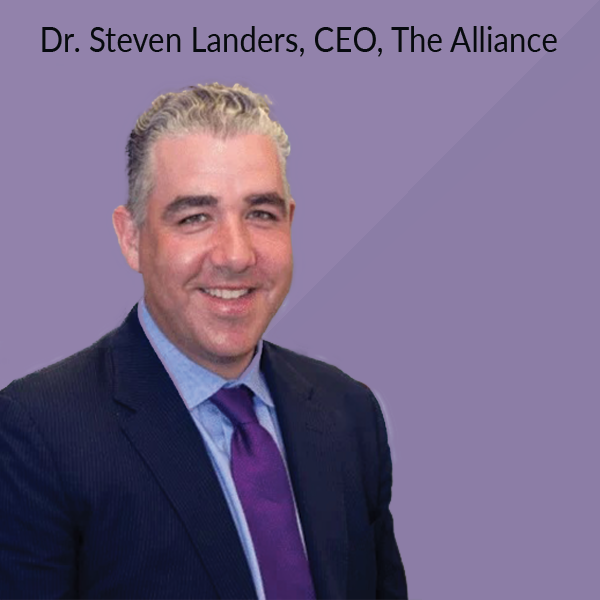
Alliance CEO Landers

For more than a year now, The Rowan Report has been providing updates on the merger between the National Hospice and Palliative Care Organization (NHPCO) and the National Association for Home Care & Hospice (NAHC). This week, we attended the first National Alliance for Care at Home (The Alliance) Annual Home Care and Hospice Conference and Expo. We had the opportunity to sit down with Dr. Steve Landers, inaugural Chief Executive Officer of The Alliance.

Dr. Steven "Steve" Landers

Dr. Steven Landers brings his almost 20 years of experience to The Alliance as its first CEO. Dr. Landers is a board-certified physician in family medicine, geriatric medicine, and hospice and palliative medicine. He has dedicated his career to seeking home- and community-based solution to traditional healthcare. His focus is on providing compassionate, dignified, and cost-effective care to patients.

Dr. Landers graduated from Case Western Reserve University School of Medicine, where he completed a geriatric medicine fellowship at the Cleveland Clinic.

Dr. Landers is no stranger to NAHC and NHPCO, having previously served on the board of directors for NAHC.  He has met with Congress, state legislatures, CMS, and PAC officials, providing testimonies, discussing home care policy and regulation, and advocating for care at home.

Steve lives in Little Silver, New Jersey, with his wife, Allison, and their three sons. His hobbies include golfing, fishing, hiking, traveling, enjoying good food and watching horse racing. When he is not taking part in these activities, you can find him cheering on his sports teams — the Browns, Cavaliers, Guardians and Indiana Hoosiers.

The Alliance Landers

Dr. Steven Landers: On the Record

The Alliance Landers
The Rowan Report:

What do you know about the status of the ongoing lawsuits, going back to the 2024 final rule?

Dr. Steven Landers:

One, we should probably bring Bill [Dombi] into it because he’s truly a technical expert on it and I’m still getting up to speed on it. My understanding is there is no active lawsuit at the moment. We were asked to go back and take some additional administrative steps, which we’re doing. Then we’ll be able to evaluate what further legal paths are possible.

RR: 

That leads me to, not a question, but an observation I’d like you to comment on, Steve. For 45 years, the organization has been run by attorneys and the emphasis in lobbying and advocacy has been ‘you need to stop this cut because it’s hurting businesses and also it’s hurting patients.’ The way you’re talking, you emphasize as you begin with how it’s hurting patients. And so I’m wondering if the organization being run by a physician and not an attorney indicates that different emphasis going forward.

Steve: 

I certainly am going to do everything I can to tell the story of how policies impact patients and families. That will be part of what I try to do every single day using my experiences as a physician to do that.

RR:

Would it be exaggerating to say “new day, new emphasis” at The Alliance?

Steve:

Well, The Alliance is new in and of itself, so The Alliance is a new day for the industry, a hundred percent. We brought together two legacy organizations. The opportunity to have a stronger voice is very real and certainly I am going to bring a clinical perspective. I’m also a family caregiver. I have my own personal experiences with home care and hospice that have instructed how I think about these things.

And there is every opportunity here to get stronger, to try to make a bigger impact. I would not diminish the truly heroic work that’s been done by advocates within our associations in the past. There’s a lot of love and care that’s happening out in our country because of the leadership that’s been in place. But as you can see by some of the things that we’re talking about, we need to do better. We need to find another way to tell these stories to somehow get somebody to listen.

The Alliance
RR:

You recently released a statement about your position as CEO of The Alliance and your vision going forward. There was a commitment attached to that. Can you speak to that?


Steve: 

Yeah, so that’s one of the things that I’m really happy we’re doing very early in our work with the Alliance. For membership, whether to join or to renew membership, we are requiring an attestation from our members around their commitment to quality and to compliance. We’re requiring any provider member to attest to having a program in place for quality and compliance. And we’re requiring that they attest that they monitor the OIG exclusion list and don’t take referrals for employees that are people that are on that list. Also for home health and hospice providers, we’re asking that they attest that they do their level best to participate in the Medicare Home Health and the Medicare Hospice Quality Reporting program.

In order to make a difference on behalf of our members and make a difference on behalf of the people that need care at home, we have to have as credible and high integrity of a voice as possible. And so this is just one simple step of additional things that we’ll consider going forward. We want to make sure that our alliance, our coalition is high integrity and has a deep commitment to quality and compliance.

RR:

It’s one thing to ask people to sign an attestation. It’s another to find the bad players and help CMS to get rid of them.

Steve:

And we’re right there as a partner in that. I think you’ll see more announcements from us in the future about what we’re doing to help with that. I mean, on one hand, we’ve made many proposals around fighting fraud and hospice in particular. If you followed the hospice policymaking, both Legacy NAHC and Legacy NHPCO over the last year have made many policy recommendations. And you’ll definitely see us both advocating for anti-fraud measures as well as having resources within our association to focus on those topics.

The Alliance Landers
Interviewer 1:

Just to clarify, did either of the legacy organizations have this same kind of attestation?

Steve:

No, this is new. The impact of the legacy organizations cannot be questioned. It’s been amazing. But, it’s a new day and we are looking at ways to increase our impact. So, this is a new part of our membership process that we feel strongly about to just take another step to ensure that our coalition, our membership, is of the highest integrity possible. We are walking the walk and talking the talk with respect to quality and compliance.

RR:

Thank you, Dr. Landers

This article is part 1 of 2 interviewing Dr. Steven Landers. Read the rest of the interview here.

# # #

Kristin Rowan, Editor

Kristin Rowan has been working at Healthcare at Home: The Rowan Report since 2008. She has a master’s degree in business administration and marketing and runs Girard Marketing Group, a multi-faceted boutique marketing firm specializing in event planning, sales, and marketing strategy. She has recently taken on the role of Editor of The Rowan Report and will add her voice to current Home Care topics as well as marketing tips for home care agencies. Connect with Kristin directly kristin@girardmarketinggroup.com or www.girardmarketinggroup.com

©2024 by The Rowan Report, Peoria, AZ. All rights reserved. This article originally appeared in Healthcare at Home: The Rowan Report. One copy may be printed for personal use: further reproduction by permission only. editor@therowanreport.com
Home Health and Hospice Face Another Election Year

by Tim Rowan, Editor Emeritus

Home Health Hospice and the Election

It happens every four years. Once the Olympic torch has been extinguished, Americans turn their attention from athletics to politics, specifically to choosing their next President. While watching the Harris/Trump debate this week, my thoughts turned to the dilemma faced by Home Health, Hospice, and Home Care owners, managers, and field staff.

U.S. voters can make their voting decision after taking into consideration the policy proposals of each candidate and analyzing which policies might better benefit themselves or their businesses. Voters can also vote along party lines, regardless of the candidate or their policies. And then, there is always a percentage who set their personal advantages aside and vote for the candidate they believe to be better for the nation as a whole.

home health hospice election

Choice 2024

This may be where our healthcare sector finds itself this year. Is what is best for the country also best for Home Health, Hospice, Palliative Care, and Home Care? Or might the needs of one diverge from the needs of the other? If the latter, which choice is the higher calling?

In this week’s debate, the broad healthcare issue merited little more than a mention and some vague promises. Post-acute care was apparently unimportant or unknown to both candidates. Had a clever writer been tasked with summarizing that moment, it might have read, “Unhealthy Healthcare Debate Fails to Heal.” What did we learn, and where does it leave us?

Balancing Your Responsibilities

Voters have twin responsibilities, each as simple as it is profound. First, to decide whether to base their choice on party alone, on personal or business gain, or for the benefit of all. This includes whether the same vote will accomplish both or whether it is necessary to pick one or the other. The second responsibility is to research the issues and each candidate’s position on each issue. An informed voter is a patriotic voter.

Taylor Knows Best?

home health hospice election
Once a voter has committed to the basis for their choice, the second responsibility is met by reading. Oddly, this retired grandfather cannot express that idea any better than a 34-year-old pop singer. In her September 10 endorsement statement, Taylor Swift said:

“Now is a great time to do your research on the issues at hand and the stances these candidates take on the topics that matter to you the most. As a voter, I make sure to watch and read everything I can about their proposed policies and plans for this country. I’ve done my research, and I’ve made my choice. Your research is all yours to do, and the choice is yours to make.”

History May Repeat Itself

Home Health and Hospice are deeply dependent on government spending. In the immediate future, MedPAC and CMS can be counted upon to continue to squeeze profit margins as they shift their gaze from services to outcomes. For more than two decades, CMS has enacted rules that shrink the total number of Home Health agencies. This happened across four administrations with different political ideologies. The result is agencies serving the same number of beneficiaries with the same number of nurses while supporting fewer executives.

The meeting of self-interest and national interest may be stronger in the Home Care sector. Caregiver shortage pushes higher hourly pay rates, which pushes higher hourly fees, which decreases the number of clients willing and able to pay. An economy that creates more spendable income or savings means the threshold between “can’t afford it” and “we’ll make it work” lowers.

No, This is not an Endorsement

I guess the bottom line is that I agree with the young pop singer. Like her, I have done my research and made my decision. I urge you to do the same. Read everything you can from the source, if you can. Avoid the temptation to rely on anyone else’s summaries of candidate positions and plans. Think “patriotism” first and “what’s in it for me” second. When in doubt, revisit the words of speechwriter Ted Sorensen, whose brilliant poetry was etched permanently into American history through the voice of John F. Kennedy. “And so, my fellow Americans, ask not what your country can do for you; ask what you can do for your country.”

# # #

Tim Rowan, Editor Emeritus

Tim Rowan is a 30-year home care technology consultant who co-founded and served as Editor and principal writer of this publication for 25 years. He continues to occasionally contribute news and analysis articles under The Rowan Report’s new ownership. He also continues to work part-time as a Home Care recruiting and retention consultant. More information: RowanResources.com
Tim@RowanResources.com

©2024 by The Rowan Report, Peoria, AZ. All rights reserved. This article originally appeared in Healthcare at Home: The Rowan Report. One copy may be printed for personal use: further reproduction by permission only. editor@therowanreport.com
NAHC NHPCO Town Hall

by Kristin Rowan, Editor

The Alliance

On June 18, 2024, the National Association for Home Care & Hospice (NAHC) and the National Hospice and Palliative Care Organization (NHPCO) announced they had met in Washington D.C. to formally sign an affiliation agreement between the two organizations. After 18 months of meetings, conversations, and compromises, the two groups announced their “Alliance” would be the leading authority of the care at home community.

Bill Dombi Ken Albert Town Hall Alliance

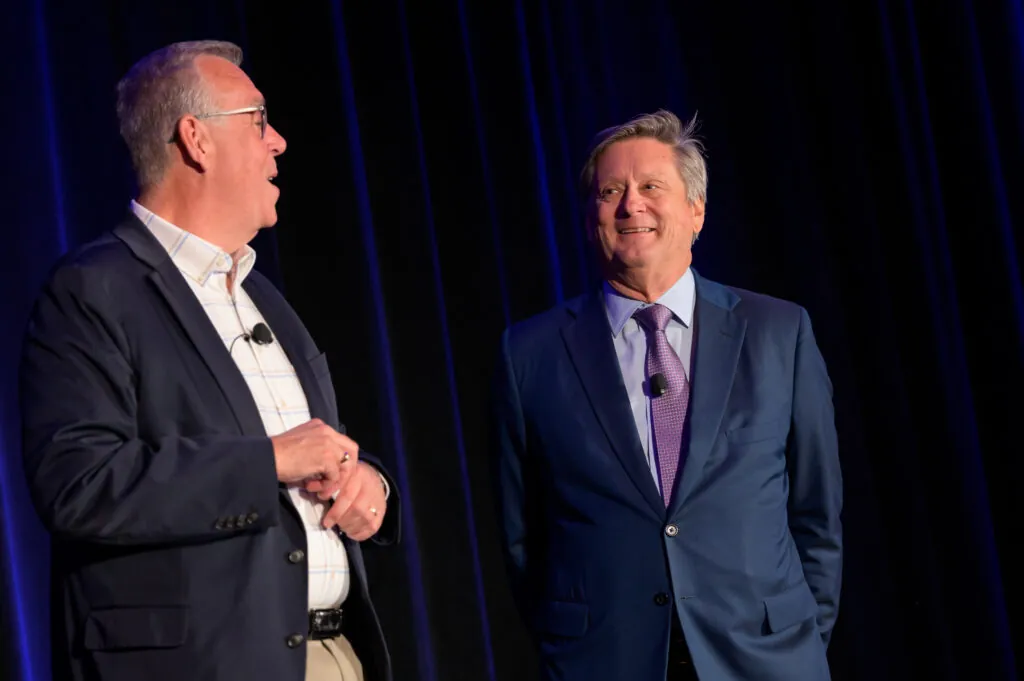
During the opening keynote address at the NAHC Financial Management Conference in July, Bill Dombi, President of NAHC and interim President of The Alliance, and Kenneth Albert, Chair of the Transition Board of Directors overseeing the merger, spoke about the progress they have made.

Albert spoke of the thoughtful consideration the board and members of both organizations have put into this change. They are focusing on the biggest concerns of home health and hospice providers both now and in the future. The unification will create one voice as they advocate for home health and hospice in Washington D.C.

New Leadership

Albert and Dombi shared the stage at the NAHC Financial Management Conference about the ongoing search for a CEO of the new organization. According to Albert, there were some candidates who were very excited about the role, but whom the board did not feel there was a great fit. Contrarily, there were candidates the board eagerly wanted to move forward with who declined to continue the process. According to Dombi, the search has gone outside care at home as they look for the right fit from qualified candidates from multiple industries. Both agreed that they felt the search was close to over and they should have an announcement about the new CEO, and possibly the new name, sometime in August of this year.

New Resources

The conjoined organization promises more than just new leadership. Currently under construction is a new logo and website to encompass both groups. Dombi alluded to new resources for providers, training for quality care, and other tools for the industry. While the organization’s name and leadership are forthcoming, the website is projected to launch sometime in the spring of 2025. 

Operating as One

Since the announcement of the merger last year, and even before the deal was inked, NAHC and NHPCO have already been integrating. Dombi told The Rowan Report in a previous interview that the two groups have already been lobbying together, working on policy together, and integrating the management of the two associations. 

The Last NHPCO Conference and the First Alliance Conference

September, 2024 marks the final standalone event for the NHPCO. The 2024 NHPCO Annual Leadership Conference runs September 16-18, with a pre-conference September 14-15 in Denver, CO. The conference will have on-demand access until December 31, 2024. NAHC members will receive member rates to the NHPCO conference. 

The “2024 Home Care and Hospice Conference and Expo” will be the last conference held solely by NAHC, but we are seeing quite a few hospice companies on the exhibitor list and expect this to be a sneak peek at future conferences. The national conference is scheduled for October 20-24, 2024 in Tampa, Florida. This will also mark the final conference for Bill Dombi as President. Dombi announced earlier this year that he will retire at the end of 2024.

NAHC NHPCO Alliance Town Hall

Town Hall

With quite a few remaining unanswered questions about the future of the two organizations, NAHC and NHPCO hosted a virtual Town Hall on July 31, 2024. With more than 250 association members from both groups in attendance, Bill Dombi and Ben Marcantonio, interim-CEO for NHPCO, along with Kenneth Albert and Melinda Gruber, Vice Chair of the Transition Board of Directors.

Naming "The Alliance"

Albert mentioned that there has been some success using the term Alliance, but it is not a long term solution. The finalization of the name is awaiting some trademark issues to be ironed out and that announcement, which they had hoped to be able to make in July, is coming soon.

CEO Search Update

Gruber thanked the search committee and recruiting firm for their work on the CEO search. Gruber reiterated that they are nearing the final selection phase and after board approval, an announcement will be made. 

Website

Ben Marcantonio, current interim CEO of NHPCO and future CIO of The Alliance confirmed that the new website will allow access to both legacy websites (the current NAHC and NHPCO websites). The new website will have a preliminary version this fall with a fully completed version next spring.

Members of either organization will have full access to the preliminary version of the website this fall. Currently, members can only access information from their own organization, but Marcantonio stressed that if there is information you need, they can help you access it.

Integration

There are eleven committees working together to integrate the two associations. advocacy, programs, education, and HR are a few of these workgroups that each have two to three high priority goals that will most effectively bring about the integration of the two groups. Work plans are now in place to create significant integration by the end of the calendar year. 

Policy and Advocacy

Bill Dombi presented an updated on the joint policy and advocacy issues The Alliance is undertaking. “What stands out for the immediate term has been how the resources have been employed of the two legacy organizations under the banner of The Alliance, focusing on hospice and palliative care,” Dombi said, “In a matter of weeks we saw significant regulatory and legislative action taking place.”

Hospice

The Hospice Final Rule 2025 has undergone an intense review and indepth analysis by members of both teams. The rule will have “tremendous impact” under the Medicare hospice program.

According to Dombi, the two organizations have come together to jointly fund a research project for the Special Focus Program to understand the impact and targeting. Dombi is hopeful that U.S. Representative Earl Blumenauer’s (D-OR) discussion draft will serve as a stepping stone for Hospice reform.

Home Health

The ongoing battle in Congress against CMS is gaining momentum. Dombi said there is a “tremendous amount of support” in Congress to role back the authority of CMS to institute rate changes and rate cuts under the Patient Driven Groupings Model (PDGM). “We have gained a seat at the table, which really helps,” Dombi said. We are continuing with litigation challenging Medicare’s validity of the regulation which has set all these rate cuts in motion.

Medicaid Home and Community-Based Services

The Final Rule modified in a positive way the 80/20 requirement. “We agree with the intentions of improving the status of direct care workers who positively impact so many lives. But in the absence of additional funding, it’s very very difficult to support this rule,” Dombi said. The modification stepped back from the more “draconian” interpretation, but The Alliance is not yet satisfied with the result. There is talk of a joint lawsuit challenging the validity of that rule.

Private Duty

The Private Duty Home Care world, one of the less regulated in the industry, is gaining a lot of attention from Fair Labor Standards as well as Non-Compete Laws. There is currently a joining of forces around solutions that will help Private Duty in the workforce arena, more specifically the Credit for Caring Act, which is gaining some traction, and would offer some financial support for family members who are paying for home care services directly.

The Alliance Needs You

Bill Dombi’s final statement in the Town Hall meeting centered on advocacy. He called for everyone who was in attendance and every member of both legacy organizations to join the fight. Everyone needs to part of that team of advocacy.

Final Thoughts

There is much more news to come out of these to associations as we near the end of 2024, and still more through the first quarter of 2025. The Rowan Report expects additional announcements to be made at both the NHPCO and NAHC annual conferences and we will be there to update everyone on the progress and statements coming out of those two meetings. 

# # #

Kristin Rowan, Editor

Kristin Rowan has been working at Healthcare at Home: The Rowan Report since 2008. She has a master’s degree in business administration and marketing and runs Girard Marketing Group, a multi-faceted boutique marketing firm specializing in event planning, sales, and marketing strategy. She has recently taken on the role of Editor of The Rowan Report and will add her voice to current Home Care topics as well as marketing tips for home care agencies. Connect with Kristin directly kristin@girardmarketinggroup.com or www.girardmarketinggroup.com

©2024 by The Rowan Report, Peoria, AZ. All rights reserved. This article originally appeared in Healthcare at Home: The Rowan Report. One copy may be printed for personal use: further reproduction by permission only. editor@therowanreport.com

Axxess to Offer Cybersecurity to Clients

FOR IMMEDIATE RELEASE

Contact:                Christine Shein

(214) 435-6731

cstein@axxess.com

Axxess Partners With Security Compliance Associates to Offer Comprehensive Cybersecurity Services to Clients

DALLAS, July 11, 2024 – Axxess, the leading global technology innovator for healthcare at home, and Security Compliance Associates (SCA), a leading provider of comprehensive cybersecurity solutions, have partnered to offer Axxess clients tailored, cost-effective cybersecurity services.

Through this collaboration, Axxess clients have access to a robust suite of cybersecurity services offered by SCA, including penetration testing, risk assessments and cyber regulatory compliance. These services are specifically designed to address the unique challenges faced by the home healthcare industry, ensuring sensitive patient data remains protected against the evolving landscape of cyberthreats.

“Our partnership with Security Compliance Associates complements our industry-leading secure software solutions, providing our clients with additional specialized cybersecurity services,” said Chris Taylor, senior vice president of channel partnerships at Axxess. “By leveraging SCA’s expertise in healthcare cybersecurity, we are enhancing our clients’ ability to safeguard sensitive data, ensuring they can deliver exceptional care with utmost confidence in their operational security.”

SCA’s services will help Axxess clients navigate the complexities of cybersecurity compliance, safeguard patient information and enhance their overall security posture. This partnership comes at a critical time when the importance of robust cybersecurity measures in the healthcare sector is increasingly paramount.

“Security Compliance Associates is very excited to partner with Axxess to provide a full range of cybersecurity and compliance services to the home healthcare industry,” said Jim Brahm, CEO of Security Compliance Associates. “With the alarming and detrimental cyberattacks specifically targeting the healthcare industry causing significant business interruption, the time is now to proactively protect your practice and stay in compliance with the state and federal security and privacy laws.”

  # # #

About Axxess

Axxess is the leading global technology innovator for healthcare at home, focused on solving the most complex industry challenges. Trusted by more than 9,000 organizations that serve more than 5 million patients worldwide, Axxess offers a complete suite of easy-to-use software solutions that empower home health, home care, hospice, and palliative providers to make healthcare in the home human again. Multiple independent certifications have confirmed that Axxess has the most secure and industry-compliant software available for providers. The company’s collaborative culture focused on innovation and excellence is recognized nationally as a “Best Place to Work.”

About Security Compliance Associates

Security Compliance Associates (SCA) specializes in providing tailored cybersecurity solutions that help healthcare organizations meet stringent regulatory requirements from HIPAA and HITRUST. Their services include penetration testing, risk assessments, cyber regulatory compliance and more, ensuring sensitive patient data remains secure.

©2024 Axxess. All rights reserved.

Axxess SimiTree Partnership

Axxess SimiTree Partnership

FOR IMMEDIATE RELEASE

Contact:

 Christine Stein
(214) 435-6731
cstein@axxess.com

Axxess and SimiTree Partner to Launch Platforms
to Empower Home Health and Hospice Growth

Key Market, Referral and Utilization Data Available for Streamlined Decision-Making

DALLAS, June 20, 2024 – Axxess, the leading global technology innovator for healthcare at home, and SimiTree, a revenue cycle, coding, professional services, and talent management resource for post-acute and behavioral health organizations, today announced the launch of two new products designed to provide Axxess’ home health and hospice clients with even more valuable insights to strategically plan and drive growth.

With SimiTree’s Market Analysis Platform (MAP) home health and hospice providers can easily quantify their market position, including market share and trends, referral partner strength and competitor analysis. The platform offers key insights into service areas, changes in revenue, referral patterns, quality scores, and more.

“This partnership between SimiTree and Axxess is an incredible opportunity to bring together two organizations that equally strive for excellence, innovation, and making a positive impact on home healthcare,” said William Simione III, CEO . “Pairing our tools together will create an even more powerful technology suite that improves operating efficiency and contributes to better outcomes. It will also allow organizations in this space to take advantage of real-time data that will help them identify the best opportunities for growth. Together, we will continue to empower providers and create the best value possible.”

Axxess clients can now also leverage the new SimiTree Compass tool to help optimize home health visit utilization and resource management. This visit utilization guidance tool provides crucial data to help agencies make informed decisions, ensure consistent care and maintain appropriate documentation. SimiTree Compass includes information on standard visit ranges, LUPA likelihood, and visit discipline mix that is all presented in a user-friendly format tailored to clinicians and managers. Accessible early in the patient’s care episode, the system allows for quick lookups and adjustments to fit specific clinical profiles and agency needs without requiring changes to existing processes.

“We’re excited to partner with SimiTree to bring both of these cutting-edge solutions to our clients to further enhance their capabilities with Axxess,” said Chris Taylor, Senior Vice President of Channel Partnerships at Axxess. “The Market Analysis Platform aligns perfectly with our mission to empower home health and hospice providers with the tools they need to succeed. And by leveraging data and analytics from the SimiTree Compass tool, our clients can make informed decisions to optimize their operations and drive growth.”

SimiTree’s Compass tool is available to Axxess Home Health clients. The MAP tool is available to Axxess Home Health and Axxess Hospice clients.

# # # 

About Axxess

Axxess is the leading technology innovator for healthcare at home, focused on solving the most complex industry challenges. Trusted by more than 9,000 organizations that serve more than 3 million patients worldwide, Axxess offers a complete suite of easy-to-use software solutions that empower home health, home care, hospice, and palliative providers to make healthcare in the home human again. The company’s collaborative culture focused on innovation and excellence is recognized nationally as a “Best Place to Work.”

About SimiTree

SimiTree, a company that provides industry-leading, tech-enabled specialty revenue cycle management (RCM), coding, professional services, and talent management resources for post-acute and behavioral health organizations, was created by the merger of Simione Healthcare Consultants and BlackTree Healthcare Consulting in 2021. In 2022, SimiTree further expanded its RCM capabilities with its Imark Billing acquisition, and its behavioral health footprint with a strategic alignment with Infinity, a SimiTree company.

In addition to clinical, financial, and operational consulting, SimiTree offers a robust suite of outsourced services, including billing, coding, OASIS, Review Choice Demonstration (RCD) and Quality Assessment and Performance Improvement (QAPI), and revenue cycle management; executive placement, interim management, retention consulting and other talent solutions; mergers and acquisitions support; compliance assessments and risk mitigation plans; sales and growth training; and benchmarking and data analytics. For more information, visit www.SimiTreeHC.com.

Curantis Solutions Partners with Amazon HealthLake

by Kristin Rowan, Editor

Having a lot of data can help grow your business, streamline processes, improve efficiencies, and make your agency more profitable. But, if you don’t know how to use the data, or simply don’t have the time and man-power to analyze the data, then those hidden treasures waiting in all that data remain hidden. Understanding the value of that data, Curantis Solutions partners with Amazon HealthLake to help you harness it.

Curantis Solutions is a Texas based company delivering value to hospice and palliative care agencies. Their cloud-based management solutions help you increase operational and financial efficiencies while still offering well-coordinated and high quality patient care. The platform works to address two common pain points in our industry: siloed data and software systems that operate separate from each other. Curantis Solutions re-imagines workflows to reduce hours spent on tasks outside of direct patient care.

The Impetus for Change

New CMS regulations and the HL7 Fast Healthcare Interoperability Resources (FHIR) create standards that providers and health care plans must meet. This could help home health and hospice agencies with clinical data issues. FHIR imagines a unified EMR system for greater interoperability. Facing FHIR compliance, Curantis Solutions turned to AWS to help centralize their data. Using Amazon HealthLake, a fully managed FHIR service, Curantis was able to make their client data interoperable.

The Solution for Curantis Solutions

Using Amazon’s Working Backwards process, Curantis found a customer-centric solution. AWS helped Curantis work through:

  • Business objectives
  • A free, introductory program, “Gain Insights”
  • Cloud set-up and solution design

Curantis also implemented Amazon Kinesis to help collect, process, and analyze real-time data. All of Curantis’s data is now easily accessible, opening the door for AI, analytics, and business intelligence.

Curantis Solutions and Amazon HealthLake Data Processing and Analytics

Curantis Solutions Amazon HealthLake

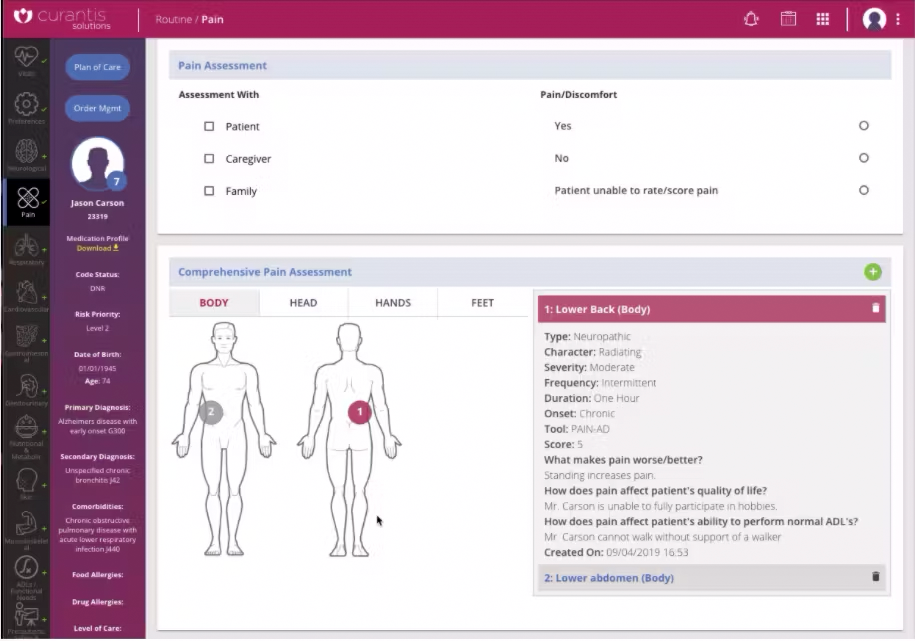
Using Amazon, Curantis Solutions can build visual dashboards and reports. The visual reports help agency administrators understand and apply the data at a glance without spending hours analyzing the data points. The integration allows data analysis in almost real time. The Amazon suite of services aids Curantis in growth and enhanced data processing for their clients. It also allows Curantis to highlight powerful industry and patient data trends. These key indicators will help with critical decision making for continued high quality patient care.

    This new platform adds expanded abilities to meet customer needs:

    • Enhanced partner integrations
    • Diverse way to prensent a patient-focused view
    • The power to make predictions about a patient’s decline based upon chart data
    • The ability for customers and internal stakeholders to easily explore data


    About Curantis Solutions

    Curantis Solutions was born from a desire to put hospice and palliative care first. With a genuine culture of caring, our team is dedicated to creating a refreshingly simple software experience that utilizes emerging technology, smart design and a cloud-native/serverless architecture to create an experience that is congruent with the technology you utilize in your everyday life. It’s time for hospice and palliative care software to make life easier vs creating arduous workarounds and added frustration. It’s time you experience Curantis Solutions!

    About Amazon HealthLake

    AWS HealthLake is a HIPAA-eligible service offering healthcare companies a complete view of individual and patient population health data using FHIR (Fast Healthcare Interoperable Resources) API based transactions to securely store and transform their data into a queryable format at petabyte scale, and further analyze this data using machine learning (ML) models. Using the HealthLake FHIR-based APIs, healthcare organizations can easily import large volumes of health data, including medical reports or patient notes, from on-premises systems to a secure, compliant, and pay-as-you-go service in the cloud. HealthLake offers built-in natural language processing (NLP) models to help customers understand and extract meaningful medical information from a single copy of raw health data, such as medications, procedures, and diagnoses.

    Curantis Solutions Amazon HealthLake

    # # #

    Kristin Rowan, Editor
    Kristin Rowan, Editor

    Kristin Rowan has been working at Healthcare at Home: The Rowan Report since 2008. She has a master’s degree in business administration and marketing and runs Girard Marketing Group, a multi-faceted boutique marketing firm specializing in event planning, sales, and marketing strategy. She has recently taken on the role of Editor of The Rowan Report and will add her voice to current Home Care topics as well as marketing tips for home care agencies. Connect with Kristin directly kristin@girardmarketinggroup.com or www.girardmarketinggroup.com

    ©2024 by The Rowan Report, Peoria, AZ. All rights reserved. This article originally appeared in Healthcare at Home: The Rowan Report. One copy may be printed for personal use: further reproduction by permission only. editor@therowanreport.com

    The Future of NAHC: An Interview with Bill Dombi

    by Kristin Rowan, Editor

    NAHC President Bill Dombi announced at last week’s CAHSAH annual meeting and expo that he would end his tenure at NAHC and retire at the end of 2024. We reached had an interview with Dombi on Thursday, May 23rd. He said he was not prepared to speak yet about his upcoming retirement, but we should hear more about that soon.

    In the meantime, he provided additional details from his session at CAHSAH. We also discussed updates on the lawsuit against CMS and the status of the merger between NAHC and NHPCO. Tim’s article from last week talks about Dombi’s progress with Senator Wyland.

    Ongoing Litigation

    When we last spoke with Bill, he told us about the lawsuits filed against CMS. The suit claims that the budget-neutral calculations were based on faulty data and outdated software. These calculations determined the reimbursement rate reductions. Dombi explained the process for those lawsuits.

    “The first round of the battle is around whether the court has the power to hear the case either at all or at that point in time. The courts are littered with litigation that have been dismissed on jurisdictional grounds,” Dombi offered. The court dismissed the lawsuit and the case is now closed. The Department of Justice (DoJ) attacked jurisdiction to get the case dismissed. Most concerning, according to Dombi, was the DoJ’s question of whether the statute passed by Congress precluded any litigation. If the courts had found in their favor, they would have dismissed the lawsuit no further suits could be filed. Luckily, that argument didn’t hold. The second attack was whether NAHC had expedited administrative review, which is the argument that caused the dismissal. Now, they have to establish that it would be futile to get CMS to agree to expedited judicial review.

    Next Steps

    In light of the dismissal, NAHC had to decide whether to appeal the ruling, exhaust the expedited review step with CMS, or both. Ultimately, they decided not to appeal and is pursing the review with CMS. This process could take up to 6 months, according to Dombi. Although they are pursuing the review, CMS has already stated that their final position is that the budget neutrality has been calculated within the law. Dombi feels the review is futile because CMS is not going to change their position. Now, they just have to prove the futility.

    Two-Step Approach

    Advocacy from NAHC, NHPCO, and other individuals and organizations was always intended to be a two-pronged effort: Litigation and Congress. The two do not interfere with each other. Even though the court dismissed the litigation suit in favor of judicial review, the approach in Congress continues. Of Senator Wyland, Dombi said, “A year ago at this time, his view was that home health agencies needed no relief. Now, he’s indicated a willingness to find a way to help home health agencies and recognizes that the cuts have been harmful to home health agencies and others that provide care.” According to Dombi, it was the personal stories and individual provider information that was crucial in swaying Wyland. The organizations continue to meet with other members of Congress to persuade them in the same way.

    Dombi Provides Merger Update

    Last year, NAHC and NHPCO announced they would join forces and merge into a new, as yet to be named, organization. That merger is still moving forward, but there are a lot of odds and ends to tie up. Dombi told us, “Nothing is final, final, but I don’t see anything but tailwinds moving forward.” The two organizations are still hoping for a July 1, 2024 launch of the organization. There is an active, open search for a new CEO to actively run both organizations as one. According to Dombi, no one has been slated for that position yet, so they may end up launching before there is a CEO in place.

    The two organizations have already started integrating. They have lobbied together and they have worked on policy together. Additionally, they are integrating the association management system and building a website. “We feel confident enough that it’s going to reach the finish line that we’re investing time and money in these elements,” Dombi said. The two organizations can continue to operate together without a CEO, but there are a lot of decisions that need to be made that won’t be made until after there is a CEO.

    After the Merger

    Once the merger is complete and the two organizations operate under a new name with a new CEO, Dombi and his counterpart Bill Marcantonio of NHPCO will stay on for some time. Dombi will take the title President Emeritus and Council to the organization and Marcantonio will become the Chief Integration Officer. The new name of the organization has not been announced. Dombi says a lot of things are tied together, from an action standpoint, and it’s better to announce all of those details together along with the new name.

    Reflections From Bill Dombi

    When asked what was next for him after the merger is completed and he moves to retirement, Dombi reflected on his career:


    “I’m proud of what I’ve accomplished in my life, but I’m more proud of what the people I work with I have accomplished. It’s not the first time we’ve tried to merge the two organizations, but this time, we had all the right ingredients and I’m proud of that. I live with the confidence that my constituency is up to the challenge. Every time they get kicked back, they’re right back at it.

    To see where we are today compared to the 70s, we are so many light years ahead of where we were then. I mean, we’re talking about a hospital level of care at home. That was part of the dream. The fore-runners of healthcare at home truly believed those things were possible. The problems that caused the workforce shortage are multi-faceted, so the solutions are multi-pronged.”

    Bill Dombi Spring Tour
    We will continue following the story of both the lawsuits and the merger and update you as soon as there is more information.
    Kristin Rowan, Editor
    Kristin Rowan, Editor
    Kristin Rowan has been working at Healthcare at Home: The Rowan Report since 2008. She has a master’s degree in business administration and marketing and runs Girard Marketing Group, a multi-faceted boutique marketing firm specializing in event planning, sales, and marketing strategy. She has recently taken on the role of Editor of The Rowan Report and will add her voice to current Home Care topics as well as marketing tips for home care agencies. Connect with Kristin directly kristin@girardmarketinggroup.com or www.girardmarketinggroup.com

    ©2024 by The Rowan Report, Peoria, AZ. All rights reserved. This article originally appeared in Healthcare at Home: The Rowan Report. One copy may be printed for personal use: further reproduction by permission only.
    editor@therowanreport.com

    Large Health System to Outsource Home Health and Hospice to Compassus

    Bon Secours Mercy Health to Outsource Home Health and Hospice to Compassus

    Bon Secours Mercy Health (BSMH), the fifth-largest Catholic health system in the U.S., and Compassus, a leading national provider of home-based health care services, announced on May 2 that they have signed an agreement to form a 50/50 joint venture partnership for BSMH home care and hospice. Under the agreement, Bon Secours will outsource to Compassus, who will manage operations for 10 home health agencies and 11 hospice operations spanning five states.

    Under the agreement, BSMH will maintain ownership of its existing hospice house real estate assets in specific locations while Compassus will manage the operations. BSMH will work closely with Compassus to support the home health and hospice associates transferring to employment with Compassus. Under the joint venture, the team will continue to provide spiritually grounded care and will operate in accordance with Ethical and Religious Directives.

    The agreement is subject to state and federal regulatory review and final diligence; however, the agreement formalizes the intent of both parties to move forward with the transition and integration.

    About Compassus

    Compassus provides home-based services including home health, infusion therapy, palliative and hospice care. The company’s more than 6,000 team members serve more than 100,000 patients annually across more than 250 locations in 29 states. This is not the company’s first joint venture. In 2020, Compassus became managing partner of Ascension at Home, a joint venture between Ascension and Compassus.

    About Bon Secours Mercy Health

    Bon Secours Mercy Health (BSMH) is one of the 20 largest health systems in the United States and the fifth-largest Catholic health system in the country. The ministry’s qualityBon Secours Compassus , compassionate care is provided by more than 60,000 associates serving communities in Florida, Kentucky, Maryland, New York, Ohio, South Carolina and Virginia, as well as throughout Ireland.

    Bon Secours Mercy Health provides care for patients more than 11 million times annually through its network of more than 1,200 care sites, which includes 48 hospitals. In 2022, BSMH provided more than $600 million dollars in community investments across five states, ensuring that cost is not a barrier to health care for patients in need.

    In addition to charity care, BSMH invests in programs that address chronic illness, affordable housing, access to healthy food, education and wellness programs, transportation, workforce development and other social determinants of health. The Mission of Bon Secours Mercy Health is to extend the compassionate ministry of Jesus by improving the health and well-being of its communities and bring good help to those in need, especially people who are poor, dying and underserved. https://bsmhealth.org/

    ©2024 by The Rowan Report, Peoria, AZ. All rights reserved. This article originally appeared in Healthcare at Home: The Rowan Report. One copy may be printed for personal use: further reproduction by permission only. editor@therowanreport.com

    BREAKING NEWS: Home Care Agency Faulted in Death of Joyce Grayson

    by Kristin Rowan, Editor

    Home health agency failed to protect Joyce Grayson

    History

    We’ve been following the story of Joyce Grayson since her death in October of 2023. The news was first published in The Rowan Report here on November 8th, 2023.On April 14th, we reported on the pending Senate Bill in Connecticut that would require home health agencies to provide additional information and safety precautions prior to a home visit. The safety  of solo workers is now even more important to home health and hospice agencies with the most recent update.

    Elara Caring at Fault Joyce Grayson

    Today

    May 1, 2024, the U.S. Department of Labor (DOL) posted a news release on their investigation into the death of Joyce Grayson, a home health nurse in Connecticut. According to the Department of Labor, OSHA has determined that Elara Caring exposed their employees to workplace violence from patients who were known to pose a risk to others. Jordan Health Care Inc. and New England Home Care Inc., both doing business as Elara Caring, have been cited for willful violation of the agency’s general duty clause. OSHA cited them for not developing and implementing safety measures to protect employees from workplace violence. They also cited the agency for failure to report work-related injury and illness records within four business hours.

    Repercussions

    OSHA has proposed more than $163,000 in penalties against Elara Caring. Elara Caring has 15 days from receipt of the citations to respond, request a hearing, or contest the findings. 

    “Elara Caring failed its legal duty to protect employees from workplace injury by not having effective measures in place to protect employees against a known hazard and it cost a worker her life,” said OSHA Area Director Charles D. McGrevy in Hartford, Connecticut. “For its employees’ well-being, Elara must develop, implement and maintain required safeguards such as a comprehensive workplace violence prevention program. Workplace safety is not a privilege; it is every worker’s right.”

    OSHA found that Elara Caring could have reduced the potential for workplace violence by looking at the root causes of violent incidents and “near misses.” They could also have provided clinicians with background information on patients prior to a home visit. Other recommendations from OSHA include providing emergency panic alert buttons and using safety escorts for visits with high-risk patients.

    Future Recommendations

    The DOL states that employers should have a comprehensive workplace violence program. This program should include both management and employee involvement. Further, the DOL says this plan should have a written program with a committee. Elements of a workplace violence program include:

    • Analysis of a home upon new patient admission
    • Hazard prevention and control
    • Training and Education
    • Resources for Impacted Employees
    • Recordkeeping
    • Employee Feedback
    Elara Caring at Fault Stop Workplace Violence

    Implications

    If Elara Caring is fined for failure to keep their clinicians safe as a result of the investigation into Joyce Grayson’s murder, state and national level regulations are sure to follow. However, even if the laws in your area don’t change, investing now in workplace safety for your clinicians could save you from similar allegations and fines. As we mentioned in last week’s article about the Senate Bill, we have been in touch with several emergency alert companies and will be providing product reviews in the next few weeks. Start a workforce safety committee, develop a written plan for mitigating dangerous situations, and issue emergency response systems to all of your clinicians before it is your agency under investigation. More importantly, take these steps before your team loses one of its own to workplace violence.

    # # #

    Kristin Rowan, Editor
    Kristin Rowan, Editor

    Kristin Rowan has been working at Healthcare at Home: The Rowan Report since 2008. She has a master’s degree in business administration and marketing and runs Girard Marketing Group, a multi-faceted boutique marketing firm specializing in event planning, sales, and marketing strategy. She has recently taken on the role of Editor of The Rowan Report and will add her voice to current Home Care topics as well as marketing tips for home care agencies. Connect with Kristin directly kristin@girardmarketinggroup.com or www.girardmarketinggroup.com

    ©2024 by The Rowan Report, Peoria, AZ. All rights reserved. This article originally appeared in Healthcare at Home: The Rowan Report. One copy may be printed for personal use: further reproduction by permission only. editor@therowanreport.com