“Planning for In-Home Care”

FOR IMMEDIATE RELEASE

Contact:                                                                       Elyssa Katz
571-281-0220
communications@allianceforcareathome.org

The Alliance’s CaringInfo Program Launches New “Planning for In-Home Care” Section

Rebrands to Align with Expansion to Serve Full Home-Based Care Continuum

ALEXANDRIA, VA and WASHINGTON, DC – CaringInfo.org, a program of the National Alliance for Care at Home (the Alliance), is expanding its resources with a new website section – “Planning for In-Home Care” – as well as a brand refresh to align with its growing audience. CaringInfo provides free resources to educate and empower patients and caregivers to make informed decisions about home, serious illness, and end-of-life care and services.

CaringInfo

While CaringInfo began with a focus on serious illness and end-of-life care and support, the program’s content is expanding to provide information and resources on the full spectrum of home-based care services. As a first step in this expansion, CaringInfo has launched “Planning for In-Home Care,” a new section on the website focused on the various types of care available at home.
The National Alliance for Care at Home CaringInfo

Planning for In-Home Care

The new section covers essential topics including when in-home care is needed, preparing for in-home caregivers, who provides in-home care services, how to find a caregiver, and how to pay for in-home care. 

“CaringInfo is a valuable resource used widely among hospice, palliative, and advance care planning experts and professionals as well as patients and families who need help and guidance.”

Dr. Steve Landers

CEO, The National Alliance for Care at Home

Landers, continued, “The launch of ‘Planning for In-Home Care’ marks an exciting step in the continued expansion of CaringInfo to provide resources and guidance on the full continuum of home-based care and to serve as a resource to all providers under the Alliance umbrella. Finding and navigating care at home can be difficult for patients and their loved ones, especially as it is often needed during life’s most vulnerable moments. These free, accessible resources help ensure everyone seeking home-based care can make informed decisions to get the support they need.”

Visual Update

The updated CaringInfo design is intended to remain familiar for return visitors who trust the site as their go-to source for making care decisions, while aligning with the Alliance’s core brand. This visual update indicates CaringInfo’s realignment to serve the full home-based care community, including home health, home care, Medicaid HCBS, palliative care, and hospice providers.

The National Alliance for Care at Home CaringInfo

CaringInfo’s goal is that all people are making informed decisions about their care. In addition to easy-to-understand information about caregiving, advance care planning, and the types of care available to those who need it, CaringInfo also offers a complete library of annotated advance directive forms for all 50 states, plus Washington, DC and Puerto Rico. The full site is available in both English and Spanish.    

Visit CaringInfo.org, which is free and available to all, to explore the full site as well as the new content.

# # #

About the National Alliance for Care at Home

The National Alliance for Care at Home (the Alliance) is the leading authority in transforming care in the home. As an inclusive thought leader, advocate, educator, and convener, we serve as the unifying voice for providers and recipients of home care, home health, hospice, palliative care, and Medicaid home and community-based services throughout all stages of life. Learn more at www.AllianceForCareAtHome.org.

©2025 The National Alliance for Care at Home. All rights reserved.
Impact of H.R. 1: The Homebound and Overlooked

Analysis by Tim Rowan, Editor Emeritus

The Impact of H.R. 1

Homebound and Overlooked

In early 2025, the Republican-led Congress introduced its proposed budget for FY2026 and beyond, a sweeping legislative effort aimed at curbing federal expenditures and restructuring entitlement programs. Medicaid, one of the largest healthcare safety nets in the United States, faces major revisions under this bill. Central to the proposed changes is the shift toward block grants or per-capita caps on federal funding. The legislation also rolls back incentives enacted into law by the Affordable Care act, including those that supported Medicaid expansion. The reconciliation bill, signed into law on July 4, also eliminates financial support for optional services such as home and community-based services (HCBS). A new set of work requirements in the new law will expand the paperwork burden for beneficiaries.

Risks for Home- and Community-Based Care

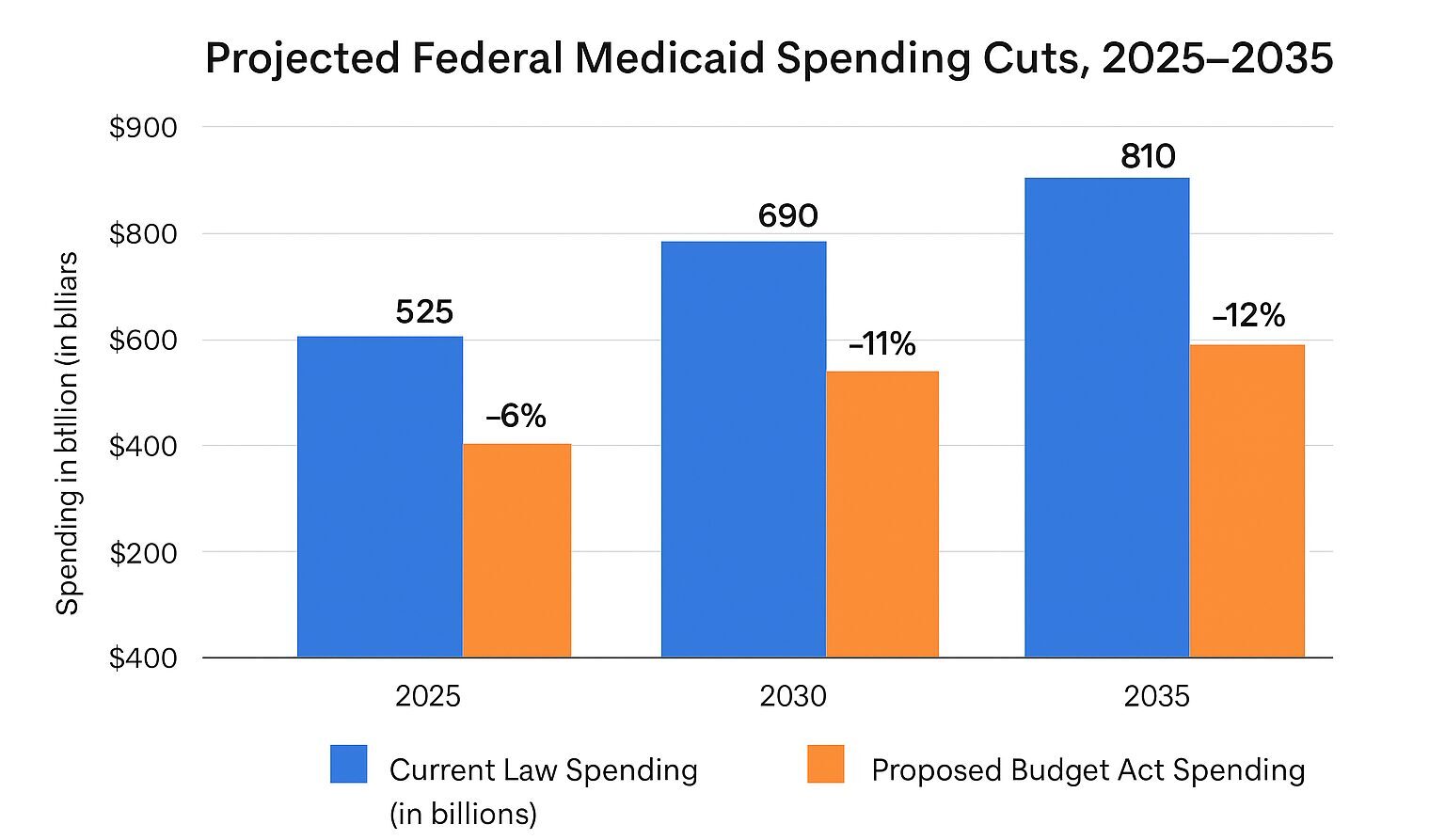
The figure below presents a visual from the Commonwealth Fund showing their projection of over $100 billion in cumulative federal Medicaid cuts by 2035. These reductions are expected to disproportionately affect non-mandated programs like HCBS, which are many times more economical than residential care. With diminished federal support, states will face pressure to reallocate limited resources, often at the expense of these optional, yet critical, programs. ¹

For nearly eight million elderly Americans, Medicaid-funded HCBS has helped reduce hospital admissions, extend independence, and relieve stress on long-term care facilities. However, the new budget cuts destabilize these programs. Barbara Merrill, CEO of ANCOR, expressed concern, stating, “When you cut federal Medicaid dollars, even for optional services, states have to make tough decisions about who gets care and when.”² Experts anticipate that approval delays, extended waitlists, and even termination of services could follow as states struggle to maintain existing infrastructure.

Bar chart of Medicaid spending.

Comparing the 2005 Budget Bill to the Affordable Care Act

Compared to the Affordable Care Act (ACA), the Republican budget bill marks a significant policy reversal. The ACA expanded Medicaid eligibility and incentivized states to develop non-institutional care models. It emphasized preventive care and home-based treatment options, helping shift care away from costly institutional settings. By contrast, the new bill eliminates such incentives and introduces fiscal and operational barriers. According to data from Medicaid.gov and the Kaiser Family Foundation, Medicaid enrollment, which rose steadily during the ACA years, is projected to drop by 10% nationwide once the budget bill is implemented³. This decline reflects both tightening eligibility and retreat from HCBS programs.

Healthcare providers will need to brace for substantial ripple effects. With fewer patients accessing home care, hospitals and emergency departments may see an uptick in acute episodes related to unmanaged chronic conditions. Providers may also encounter staffing shortages and reduced reimbursements, undermining service quality and sustainability. Richard Edwards, policy director at Amivie Home Health, warned, “If states cut home care services, many patients have no other choice but to enter a skilled nursing facility. That’s not just a shift in care—it’s often a worse outcome at a higher cost.” ⁴ These operational challenges could exacerbate pressure on an already strained healthcare workforce.

Scope and Severity of Coming Changes

Today, over eight million seniors rely on Medicaid-funded HCBS, with an average annual cost per recipient of $29,000. Thirty-three states use HCBS waivers to administer these services, yet the average state waitlist already exceeds 3,000 applicants. Institutional care costs remain 57% higher than home care, making HCBS not only more humane but more fiscally prudent. Despite that, projected federal cuts of $100 billion by 2035 threaten to replace HCBS with nursing home care. Meanwhile, a national enrollment drop of 10% would leave millions at risk of losing coverage and care.

Richard Edwards, policy director at Amivie Home Health, explains, “If states cut home care services, many patients have no other choice but to enter a skilled nursing facility. That’s not just a shift in care—it’s often a worse healthcare and social outcome at a higher cost.” ⁴

  • 8 million elderly rely on Medicaid HCBS
  • $29,000/year average cost per Medicaid home care recipient
  • 33 states use HCBS waivers
  • Average state waitlist for HCBS exceeds 3,000 applicants
  • Institutional care costs 57% more than home care
  • Estimated federal Medicaid cuts by 2035: $100 billion
  • Projected national enrollment drop: 10%

Implications for Care at Home: Next Steps

To mitigate these risks, policy experts are advocating for pragmatic alternatives, knowing that implementation depends entirely on the direction in which political winds blow. Federal stabilization grants could offer targeted relief to states with high HCBS enrollment, preserving continuity of care. Streamlining waiver approvals would reduce bureaucratic delays and ease access for both providers and patients. Retaining key ACA incentives could help maintain momentum in home-based care innovation. States would also benefit from flexible financing rules, including reformed provider tax policies, to better manage Medicaid funds under new constraints. 

Final Thoughts

Ultimately, the new budget, passed with no Democratic votes, may reshape eldercare delivery for years to come. With states facing hard choices, the healthcare community must prepare for transitions that could disrupt care and deepen inequities. Advocacy for vulnerable populations, investment in alternatives, and ongoing engagement in policy reform will be essential to ensure seniors receive the care they deserve in the setting they prefer.

# # #

____________________________________________

¹ Congressional Budget Office, Federal Healthcare Outlook 2025–2035
² Barbara Merrill, ANCOR Policy Brief, March 2025
³ Kaiser Family Foundation, Medicaid Enrollment Tracker, April 2025
⁴ Amivie Health, Testimony to House Budget Committee, June 2025

Tim Rowan The Rowan Report

Tim Rowan is a 30-year home care technology consultant who co-founded and served as Editor and principal writer of this publication for 25 years. He continues to occasionally contribute news and analysis articles under The Rowan Report’s new ownership. He also continues to work part-time as a Home Care recruiting and retention consultant. More information: RowanResources.com
Tim@RowanResources.com

©2025 by The Rowan Report, Peoria, AZ. All rights reserved. This article originally appeared in The Rowan Report. One copy may be printed for personal use: further reproduction by permission only. editor@therowanreport.com

Alora is CHAP Verified

FOR IMMEDIATE RELEASE

Contact:           Alora Healthcare Systems
Media@AloraHealth.com
800-954-8250

Alora Healthcare Systems Earns CHAP Verified Status for Home Health, Hospice, and Home Care Software

ATLANTAJuly 23, 2025 — Alora Healthcare Systems, a leading provider of cloud-based solutions for post-acute care, announced this week that its full suite of software solutions – Home Health, Hospice, and Home Care, has earned CHAP Verified status from CHAP, Inc. (Community Health Accreditation Partner).

This designation confirms that Alora’s solutions meet CHAP’s highest standards in operational excellence, compliance, and quality improvement. The verification process included a detailed review of Alora’s functionality and alignment with CHAP’s Standards of Excellence. CHAP verified that Alora’s software fully supports compliance and actively enhances care delivery.

Alora Home Health CHAP verified

“The Alora team consistently delivers impressive software across Home Health, Hospice, and Home Care, marked by its user-friendly interface, extensive customization options, and powerful tools for operations and compliance. Their dedication to listening to customer feedback is evident in continuous enhancements like the OASIS-E analyzer, real-time reporting, and integrated HR and billing platforms, all designed to meet individual care needs and regulatory requirements efficiently.”

Teresa Harbour

COO, CHAP, Inc.

CHAP Verified status highlights Alora’s ability to support agencies in achieving compliance while advancing post-acute care technology. The platform is designed for efficiency, enabling high-quality, patient-centered care amid a changing regulatory landscape.

Sathish John, CEO of Alora, remarked, “This achievement is a direct reflection of our mission to simplify workflows for clinicians, administrators, and caregivers, while focusing on compliance, quality, and feedback.”

Alora’s comprehensive platform includes tools for documentation, billing, scheduling, visit verification, compliance, HR, and more, providing a streamlined experience for both skilled and non-skilled care.

This recognition strengthens Alora’s commitment to empowering home-based care agencies with CHAP Verified solutions that drive excellence and regulatory confidence.

# # #

About Alora

Alora is a leading provider of cloud-based home care softwarehome health software, and hospice software, for agencies across the U.S. Known for its intuitive interface and award-winning support, Alora delivers robust, integrated tools that empower agencies to streamline operations, ensure compliance, and focus on patient care.

About CHAP

CHAP is the nation’s first accrediting body for home and community-based healthcare organizations. As an independent, nonprofit accrediting body, CHAP advances the highest standards of community-based care.

© 2025 Alora Healthcare Systems

OBBB Care at Home Adjustments

by Kristin Rowan, Editor

Care at Home Through Medicare and Medicaid

Adjustments from OBBB

Despite the passing and subsequent signing of the reconciliation bill, numerous lawsuits have paused its implementation in some areas. We will continue to report on those court decisions as they arise. In the meantime, the care at home industry can look at the few adjustments that will positively impact the industry.

Medicaid Waivers

Prior to this, the HHS Secretary could only approve Medicaid waivers to cover home and community-based services for beneficiaries who already met institutional level-of-care criteria. This bill provides additional flexibility to define waiver eligibility without the institutional level-of-care criteria.

For FY 2026, CMS has an additional $50 million to oversee the new waivers. There is an additional $100 million earmarked for FY 2027 to deliver HCBS under new and existing waivers. Although the expanded waivers and additional budget will not satisfy the more 700,000 on waiting lists for HCBS, it is a start.

Rural Health Transformation Program

For five years, beginning in 2026, states can apply for a portion of a $10 billion annual fund for rural health providers. To qualify, providers must submit a rural health care plan that includes technology adoption, local partnerships, using data-driven methods, and setting strategies for financial stability. This could provide an opportunity for care at home agencies to partner with rural hospitals to help provide care in rural settings.

Health Savings Accounts

Health Savings Accounts (HSAs) allow insurance beneficiaries to save money to pay for deductibles, copays, and other services not covered by insurance (such as non-medical supportive care and home health). Currently, people can only use HSAs if they have a high deductible health plan (HDHP). The bill allows for a plan to be considered an HDHP even if it covers telehealth and remote health services prior to meeting the deductible. Insurance companies can design new HDHPs that can be used with HSAs.

Telehealth Reconciliation Bill<br />

Another change to HSAs involves the type of plan that qualifies. Currently, bronze and catastrophic plans cannot be considered HDHPs because their out-of-pocket limits exceed IRS limits for HDHPs. The bill allows bronze and catastrophic plans to qualify as HDHPs and have access to HSAs.

Additionally, current regulations prohibit anyone with a Direct Primary Care (DPC) arrangement from contributing to our using HSAs. DPC is an arrangement with a flat monthly fee for services rather than using insurance for routine care. The bill removes the limitations, allowing people with DPC arrangements to contriute to HSAs and use them for DPC arrangements.

Adding telehealth/remote plans, bronze plans, and catastrophic plans to HSA eligibility could provide opportunities for care at home agencies to connect with beneficiaries of these plans who did not have expendable funds for non-covered services before, but can now use HSAs. Allowing patients with DPCs to use HSAs could provide yet another path to increasing patients by partnering with DPC offices.

Final Thoughts

As a whole, we are anticipating great disruption to Medicare and Medicaid stemming from the budget reconciliation bill. While we await the final word on legality from the U.S. Supreme Court on many of the provisions, we can look to the ones that may help brace the industry in the meantime.

 # # #

Kristin Rowan, Editor

Kristin Rowan has been working at The Rowan Report since 2008. She is the owner and Editor-in-chief of The Rowan Report, the industry’s most trusted source for care at home news, and speaker on Artificial Intelligence and Lone Worker Safety and state and national conferences.

She also runs Girard Marketing Group, a multi-faceted boutique marketing firm specializing in content creation, social media management, and event marketing.  Connect with Kristin directly kristin@girardmarketinggroup.com or www.girardmarketinggroup.com

©2025 by The Rowan Report, Peoria, AZ. All rights reserved. This article originally appeared in The Rowan Report. One copy may be printed for personal use: further reproduction by permission only. editor@therowanreport.com


Implementing QHINs Interoperability Part 4

by Ben Rosen, Sr. Client Success Manager, Netsmart

Interoperability

What You Need to Know About Interoperability and How it Affects You: Part 4

For over two decades, tech companies and government agencies have been moving toward the goal of interoperability in healthcare technology. At long last, standards and protocols are in place—and continually being improved—to support open data exchange networks. As a result, healthcare providers, including human services, post-acute providers and specialty practices, have more opportunities to participate in alternative payment models and adapt more readily to the evolving payment landscape.

This is part four of a four-part series covering the forces that are driving interoperability, as well as the future vision of open networks, and what it all could mean to your organization. Read Part One HereRead Part Two Here; Read Part Three Here.

Interoperability in Healthcare

QHIN Implementation, Use Cases, and Benefits

Qualified Health Information Networks (QHIN) can support a range of use cases, including treatment, payment, healthcare operations, public health reporting and patient access to their records. These are referred to as Exchange Purposes (XPs), and all QHINs must facilitate a request for this data. The difference lies with how QHINs facilitate those requests and provide that information to you as a participant. The data uses the same network that all QHINs have built too, but there is value in what your current technology vendor can do with the data.

Complete Information Supports Decision-Making and Compliance

By enabling data exchange, QHINs help ensure providers have access to complete, up-to-date information that has the potential to improve decision-making and reduce redundant tests. The Trusted Exchange Framework and Common Agreement™ (TEFCA) network also supports the exchange of more robust types of data than before, offering participants more holistic views of individuals to support a whole-person care approach.

A QHIN can help your organization stay compliant with interoperability mandates designed to align technology with regulatory requirements, such as the 21st Century Cures Act and TEFCA. As the data exchange landscape shifts toward a more regulatory-based landscape with TEFCA at the core, remaining in compliance with certification requirements becomes increasingly important.

Complete Information Interoperability QHIN

Preparing for TEFCA and QHIN Participation

As outlined in Part 3 of this blog series, getting the most out of joining a QHIN starts with assessing your current interoperability capabilities:

  • Identify gaps in your data exchange processes and data needs
  • Collaborate with your EHR vendor to ensure technical readiness and ensure they can accommodate the QHIN data to be used with your EHR
  • Explore QHIN options and compare their offerings for your current EHR features and functionality
  • Understand and create a plan for your organization to use or increase the use of FHIR-based integrations

Once you’ve determined which QHIN will work best for your organization, you can begin nailing down specifics and start planning implementation.

Costs, Implementation and Onboarding

Costs vary by QHIN vendor and may include membership fees, transaction fees and additional charges for optional services.

Onboarding typically includes:

  • Technical integration into your EHR
  • Staff training
  • Testing and validation of data exchange
  • Establishing compliance with TEFCA requirements/signing agreements to participate

Joining the TEFCA network is built into some existing integration processes and capabilities. There are legal agreements specific to TEFCA to sign, but all technical implementations are much easier to facilitate as an already existing EHR client, assimilating into already existing workflows.

Security and Privacy

QHINs are required to meet strict security and privacy standards under TEFCA, including compliance with HIPAA and other relevant regulations. All QHINs are HITRUST-certified and ensure robust security backing for all network transactions and therefore must have incident response and mitigation procedures in place in case of a security incident. It’s important to understand the full enterprise security plan for the QHIN you decide to use and how they protect all of their solutions/programs, not just QHIN.

It’s important to understand the full enterprise security plan for the QHIN you choose and how they protect all their solutions/programs, not just QHIN. Choose a partner with a robust history as an ONC-certified EHR vendor so your data is protected in all facets of exchange. Verify enterprise-wide security procedures and incident response plans.

Regulatory Benefits and Use Cases

By selecting a QHIN and participating in a nationwide interoperability framework, your organization can stay ahead of regulatory changes, improve patient outcomes and reduce the administrative burden of managing multiple data exchange partners. With the changing regulatory landscape, including the HTI-1 and HTI-2 rules, all ONC-certified vendors must abide by those parameters. TEFCA is taking a more central role in helping to prep organizations and users to be compliant with those regulatory standards. For this reason, QHINs with a rich history of ONC certification and who have regulatory staff will have an advantage.

Exchange Purposes

Under TEFCA, QHINs will facilitate the exchange of multiple types of data, referred to as Exchange Purposes (XPs). Initially, there were six core XPs that were revealed for TEFCA:

  • Treatment –To support the provision, coordination or management of healthcare among providers
  • Payment–For activities related to billing, claims and reimbursement under HIPAA
  • Healthcare Operations–For administrative, quality improvement and other operational functions
  • Public Health–To support public health authorities in disease surveillance, reporting and response
  • Government Benefits Determination – To help determine eligibility for government programs, such as Medicaid
  • Individual Access Services – To empower individuals to access their own health data securely and conveniently

These XPs have now been expanded to include subtypes that can be read about here, via the RCE approved resource and SOP. As mentioned previously, all QHINs will be required to support the exchange of these XP’s, and all participants of QHINs will be required to respond to Treatment and Individual Access Services. An important deciding factor when choosing a QHIN is to understand the workflows to receive this information into your EHR, as well as the capabilities to persist and action the information.

# # #

Interoperability Ben Rosen Netsmart

Ben Rosen is a senior client success manager and business unit owner for the interoperability solution suite at Netsmart. With more than a decade of healthcare experience, Ben has led numerous initiatives to integrate healthcare systems and enhance data sharing across the care continuum. His dedication to advancing healthcare interoperability drives his active involvement in industry initiatives and standards organizations, where he provides insight for frameworks such as HL7 FHIR, USCDI and others. Ben holds a Bachelor of Science in kinesiology from Kansas State University and a Bachelor of Science in nursing degree from the University of Nebraska Medical Center.

©2025 by The Rowan Report, Peoria, AZ. All rights reserved. This article originally appeared in the Netsmart blog and is reprinted here with permission. For more information or to request permission to print, please contact Netsmart.

Bill to Strengthen Hospice

From the office of Earl L. “Buddy” Carter (R-GA)

Carter, Bera introduce Bill to Strengthen Palliative and Hospice Care Workforce

Reps. Earl L. “Buddy” Carter (R-GA) and Ami Bera, M.D. (D-CA) today introduced the Palliative Care and Hospice Education and Training Act (PCHETA), bipartisan legislation to invest in training, education, and research for the palliative care and hospice workforce, allowing more practitioners to enter these in-demand fields. 

Palliative and hospice care focus on providing comfort and quality of life improvements for those seriously ill, extending quality of life and reducing the length of hospital stays for many patients.

Earl L. "Buddy" Carter

“Caring for someone living with serious illness or at the end of their life is one of the most compassionate, selfless things one can do, and we must ensure that these heroes have the assistance, training, education, and tools available to provide the highest quality care possible. As a pharmacist, I understand the toll burnout takes on the health care industry, and I am committed to bolstering the workforce so nurses, doctors, and all health care workers can continue to pursue their passion for helping others.”

Earl L. "Buddy" Carter

(R-GA), U.S. House of Representatives

Ami Bera, M.D.

“As a doctor, I know how important it is to provide patients with comfort, clarity, and support when they’re facing serious illness,” said Rep. Bera. “The Palliative Care and Hospice Education and Training Act is a smart, bipartisan step to ensure more health care professionals are trained to deliver this kind of care. By expanding training programs and strengthening our health care workforce, we will make sure that patients and families have access to the care they need to manage pain, make informed decisions, and live with dignity.”

Workforce Shortage

In 2001, just 7% of U.S. hospitals with more than 50 beds had a palliative care program, compared with 72% in 2019. Those working in the field, 40% of whom are 56 years of age or older, report high rates of burnout, in response to the increasing number of patients requiring treatment. 

Reps. Carter and Bera’s bill, which has a Senate companion led by Senators Baldwin and Capito, alleviates these strains through workforce training, education and awareness, and enhanced research.

Widespread Support

“As we face a critical shortage of health professionals with expert knowledge and skills in palliative care, AAHPM applauds Representatives Carter and Bera for their leadership in introducing the Palliative Care and Hospice Education and Training Act to ensure all patients facing serious illness or at the end of life can receive high-quality care. We urge Congress to recognize the importance of a well-trained, interprofessional healthcare team to providing coordinated, person-centered serious illness care and to act now to build a healthcare workforce more closely aligned with America’s evolving healthcare needs. Advancing PCHETA will go a long way towards improving quality of care and quality of life for our nation’s sickest and most vulnerable patients, along with their families and caregivers.”

Kristina Newport, MD FAAHPM, HMDC

Chief Medical Officer, American Academy of Hospice and Palliative Medicine

“Palliative care treats the whole person, not just the disease. Ensuring health care providers can be trained in this specialized, coordinated form of care and providing funding for robust public education through the Palliative Care Education and Training Act can help increase access to palliative care for cancer patients and make their cancer journey less difficult. We commend Reps. Carter and Bera for their leadership and steadfast commitment to palliative care and to improving quality of life for patients, including those impacted by cancer.”

Lisa A. Lacasse

President, American Cancer Society Cancer Action Network

“Every person living with serious illness or facing the end of life deserves compassionate, expert care that honors their choices and helps them live comfortably on their own terms. The Alliance celebrates Representatives Carter and Bera’s leadership in introducing the Palliative Care and Hospice Education and Training Act, which will ensure families have access to the trained professionals they need during life’s most difficult moments. As our population ages, this critical investment in education and training will help us meet the growing demand for quality palliative and hospice care

Dr. Steve Landers

CEO, National Alliance for Care at Home

Supporting Organizations

Alzheimer’s Association, Alzheimer’s Disease Resource Center, Alzheimer’s Impact Movement, American Academy of Hospice and Palliative Medicine, American Academy of Pediatrics, American Academy of Physician Associates, American Cancer Society Cancer Action Network, American College of Surgeons, American Geriatrics Society, American Heart Association, American Psychological Association, American Psychosocial Oncology Society, The American Society of Pediatric Hematology/Oncology, Association for Clinical Oncology, Association of Oncology Social Work, Association of Pediatric Hematology/ Oncology Nurses, Association of Professional Chaplains, The California State University Shiley Haynes Institute for Palliative Care, Cambia Health Solutions, Cancer Support Community, CaringKind, Catholic Health Association of the United States, Center to Advance Palliative Care, Children’s National Health System, Coalition for Compassionate Care of California, Colorectal Cancer Alliance, Courageous Parents Network, The George Washington Institute for Spirituality and Health, GO2 for Lung Cancer, The HAP Foundation, HealthCare Chaplaincy Network, Hospice and Palliative Nurses Association, LEAD Coalition, LeadingAge, The Leukemia & Lymphoma Society, Motion Picture & Television Fund, National Alliance for Care at Home, National Alliance for Caregiving, National Brain Tumor Society, National Coalition for Cancer Survivorship, National Coalition for Hospice and Palliative Care, National Comprehensive Cancer Network, National Marrow Donor Program, National Palliative Care Research Center, National Partnership for Healthcare and Hospice Innovation, National Patient Advocate Foundation, National POLST Paradigm, Oncology Nursing Society, Pediatric Palliative Care Coalition, PAs in Hospice and Palliative Medicine, Prevent Cancer Foundation, Second Wind Dreams, Social Work Hospice & Palliative Care Network, Society of Pain and Palliative Care Pharmacists, St. Baldrick’s Foundation, Supportive Care Matters, Susan G. Komen, Trinity Health, West Health Institute, The Alliance for the Advancement of End-of-Life Care, Alzheimer’s Los Angeles, Alzheimer’s Orange County, Arizona Association for Home Care, Arizona Hospice & Palliative Care Organization, Association for Home & Hospice Care of North Carolina, California Association for Health Services at Home, The Center for Optimal Aging at Marymount University, Children’s Hospice and Palliative Care Coalition, Delaware Association for Home & Community Care, Florida Hospice & Palliative Care Association, Georgia Association for Home Health Agencies, Georgia Hospice and Palliative Care Organization, Granite State Home Health & Hospice Association (NH), Healthcare Association of Hawaii, Home Care Association of Florida, Home Care Association of NYS, Home Care Association of Washington, Home Care and Hospice Association of Colorado, Homecare and Hospice Association of Utah, Hospice and Palliative Care Association of Iowa, Hospice and Palliative Care Association of New York, Hospice Care and Kentucky Home Care Association, Hospice Council of West Virginia, Hospice & Palliative Care Federation of Massachusetts, Idaho Health Care Association, Illinois Hospice and Palliative Care Organization, Indiana Association for Home, Kokua Mau, LeadingAge California, LeadingAge Georgia, LeadingAge New Jersey/Delaware, LeadingAge Ohio, LifeCircle-South Dakota’s Hospice and Palliative Care Network, Louisiana Mississippi Hospice and Palliative Care Organization, Maryland-National Capital Homecare Association, Michigan HomeCare and Hospice Association, Minnesota Network of Hospice and Palliative Care, Missouri Alliance for Home Care, Missouri Hospice & Palliative Care Association, Nebraska Association for Home Healthcare and Hospice, Nebraska Home Care Association, Ohio Council for Home Care & Hospice, Ohio Health Care Association, Oklahoma Association for Home Care and Hospice, South Carolina Home Care & Hospice Association, The Oregon Hospice & Palliative Care Association, Texas Association for Home Care & Hospice, Texas ~ New Mexico Hospice and Palliative Care Organization, Virginia Association for Home Care and Hospice, VNAs of Vermont, The Washington State Hospice and Palliative Care Organization, and West Virginia Council for Home Care and Hospice.

Read full bill text here.

# # #

Earl L. Earl L. “Buddy” Carter is an experienced businessman, health care professional and faithful public servant. For over 32 years Buddy owned Carter’s Pharmacy, Inc. where South Georgians trusted him with their most valuable assets: their health, lives and families. While running his business, he learned how to balance a budget and create jobs. He also saw firsthand the devastating impacts of government overregulation which drives his commitment to ensuring that the federal government creates policies to empower business instead of increasing burdens on America’s job creators.

A committed public servant, Buddy previously served as the Mayor of Pooler, Georgia and in the Georgia General Assembly where he used his business experience to make government more efficient and responsive to the people. Buddy is serving his fifth term in the United States House of Representatives and is a member of the House Energy and Commerce (E&C) Committee and the House Budget Committee. As a pharmacist serving in Congress, Buddy is dedicated to working towards a health care system that provides more choices, less costs and better services.

A lifelong resident of the First District, Buddy was born and raised in Port Wentworth, Georgia and is a proud graduate of Young Harris College and the University of Georgia where he earned his Bachelor of Science in Pharmacy. Buddy married his college sweetheart, Amy. Buddy and Amy have three sons, three daughters-in-law and eight grandchildren.

Ami Bera, M.D. (D-CA)Congressman Ami Bera, M.D. has represented Sacramento County in the U.S. House of Representatives since 2013. The 6th Congressional District is located just east and north of California’s capitol city, Sacramento, and lies entirely within


Sacramento County.

During Congressman Bera’s twenty-year medical career, he worked to improve the availability, quality, and affordability of healthcare. After graduating from medical school in 1991, he did his residency in internal medicine at California Pacific Medical Center, eventually becoming chief resident. He went on to practice medicine in the Sacramento area, serving in various leadership roles for MedClinic Medical Group. Chief among his contributions was improving the clinical efficiency of the practice. He then served as medical director of care management for Mercy Healthcare, where he developed and implemented a comprehensive care management strategy for the seven-hospital system.

In Congress, Bera uses the skills he learned as a doctor to listen to the people of Sacramento County and put people ahead of politics to move our country forward. His priority is to work alongside people in both parties to address our nation’s most pressing challenges and make government work. Bera believes Congress should be a place for service, not for politicians who only look out to protect their own careers, pay, and perks.

Employee or Independent Contractor

by Elizabeth E. Hogue, Esq.

Employee or Independent Contractor

DOL Won't Enforce Determination Standards

The U.S. Department of Labor (DOL) has announced that it will no longer enforce a rule published in 2024 that have been used to decide whether workers are employees or independent contractors. This means that while the DOL develops new standards it will no longer apply the analysis in the 2024 rule when investigating potential misclassification of workers as independent contractors instead of employees.

This decision is due, in part, to legal challenges to the rule. The classification of workers as either employees or independent contractors has been an important issue for providers of services in patients’/clients’ homes, especially for private duty or homecare providers.

Totality of Circumstances Rule

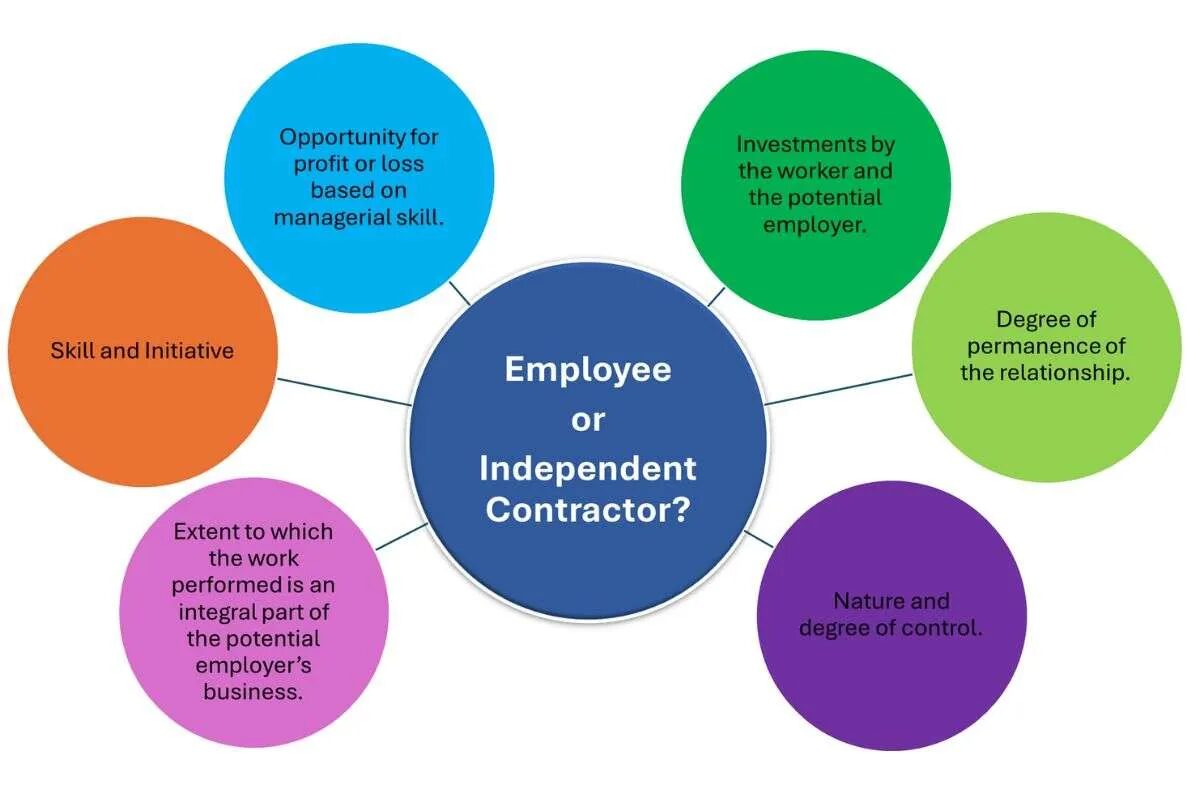
The rule that the DOL finalized in 2024 focused on the “totality of the circumstances” to determine whether workers were independent contractors or employees under the Fair Labor Standards Act. It considered factors like:

Opportunity for profit or loss based on skill level

Whether workers can:

  • Negotiate charges for services provided
  • Accept or decline work
  • Choose the order or time when services are performed
  • Engage in marketing or advertising activities
  • Make decisions about hiring others, purchasing materials and/or renting space

Investment by workers vs employers

  • Workers’ investments do not need to equal employer investments
  • Workers’ investments should support an independent business
Department of Labor Independent Contractor vs Employee
Employee or Independent Contractor

Degree of permanence

  • If work is temporary or project-based, worker is likely a contractor
  • If work is indefinite or continuous, worker is likely an employee

Nature and degree of control

  • If the employer has more control, workers are likely employees
  • Contractors have more control over scheduling
  • Contractors have less direct supervison
  • Contractors can work for multiple employers


Degree to which role is essential

  • Integral roles are filled by employees
  • These roles are critical, necessary, or central to employer’s principal business
  • Integral roles often manage other employees

Skill and Initiative

  • General skill and labor positions are usually filled by employees
  • The more specialized the skills, the more likely the worker can be an independent contractor
Independent Contractor or Employee

Trouble for Employers

This rule certainly made it harder to classify workers as independent contractors and was difficult to apply.

 Although the DOL says it will stop enforcement action, providers must be aware that the rule is still in effect. Providers should remain cautious about how workers are classified. Providers must also continue to comply with applicable state and local laws.

Final Thoughts

Classification of employees will continue to be a balancing process. Opinions, especially between business owners and regulators, will undoubtedly continue to differ. In any event, this classification of workers remains an important issue for providers of services in patients’ homes.

# # #

Elizabeth E. Hogue, Esq.

Elizabeth Hogue is an attorney in private practice with extensive experience in health care. She represents clients across the U.S., including professional associations, managed care providers, hospitals, long-term care facilities, home health agencies, durable medical equipment companies, and hospices.

©2025 Elizabeth E. Hogue, Esq. All rights reserved.

No portion of this material may be reproduced in any form without the advance written permission of the author.

©2025 by The Rowan Report, Peoria, AZ. All rights reserved. This article originally appeared in The Rowan Report. One copy may be printed for personal use: further reproduction by permission only. editor@therowanreport.com

Hospice Hope

by Peggy Rattarree, Principle Product Manager, Curantis Solutions

Hospice HOPE

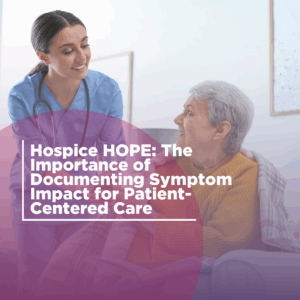
The importance of documenting symptom impact for patient-centered care

In hospice care, the focus isn’t just on treating symptoms; it’s on improving the quality of life for patients and their families. This is where Hospice HOPE takes center stage, emphasizing the importance of documenting symptom impact to deliver truly patient-centered care. By understanding how symptoms affect each patient’s physical, emotional, and psychosocial well-being, hospice teams can provide care that aligns with their unique needs and goals.

What is hospice HOPE?

Hospice HOPE stands for Hospice Outcomes and Patient Evaluation. It’s a philosophy that places the patient’s comfort, dignity, and goals at the forefront of care delivery. Documenting symptom impact is a critical part of this approach because it provides a detailed understanding of how symptoms affect the patient’s overall quality of life.

In hospice care, every patient’s journey is unique. By actively tracking and documenting symptom impact, care providers can move beyond generic treatments and embrace a truly individualized approach that prioritizes what matters most to the patient.

Why documenting symptom impact matters?

Moves us to patient-centered care

Documenting symptom impact allows hospice teams to focus on what truly matters to the patient. Instead of simply addressing symptoms like pain, nausea, or fatigue in isolation, it provides a holistic view of how these symptoms affect the patient’s daily life. For example:

  • Pain
    • How does it limit mobility or the ability to participate in meaningful activities?
  • Fatigue
    • Is it preventing patients from spending time with loved ones?
  • Nausea
    • Is it reducing their ability to eat or enjoy meals?
Curantis Solutions Hospice HOPE

By asking these questions and recording the answers, hospice providers can better tailor interventions to manage not just symptom management but the overall patient experience.

Improves communication across the care team

In hospice care, communication is everything. Documenting symptom impact ensures that every member of the interdisciplinary team (IDT), from nurses and physicians to social workers and chaplains, has access to the same comprehensive information.

This documentation:

  • Creates a shared understanding of the patient’s condition
  • Helps align the team’s goals with the patient’s priorities
  • Reduces duplication of efforts and enhances care coordination

When everyone is on the same page, patients and families receive more seamless, cohesive care.

Hospice HOPE Communication

Supports compliance and quality standards

Regulatory bodies like CMS (Centers for Medicare & Medicaid Services) require hospices to document and monitor patient symptoms to ensure care quality. But beyond compliance, tracking symptom impact demonstrates a commitment to continuous improvement.

Documenting symptom impact allows hospices to:

  • Identify trends and gaps in care
  • Measure the effectiveness of interventions
  • Use data to advocate for better resources or innovations in care delivery

Empowers families and caregivers

When symptom impact is documented, families and caregivers gain a clearer understanding of their loved one’s condition. This transparency fosters trust and collaboration between the hospice team and the family, ensuring everyone is working toward the same goals.

For example, a caregiver might better understand why a loved one sleeps more during the day or avoids certain foods. These insights can help families feel more prepared and supported during a challenging time.

Final Thoughts

With CMS rolling out Hospice HOPE, documenting symptom impact is no longer optional. It’s the standard for compassionate, high-quality care. This shift helps hospice organizations go beyond symptom control and into whole-person care that honors each patient’s life journey.

This is part one in a two-part series on Hospice HOPE. Check back next week for part two.

# # #

Peggy Rattarree Curantis Solutions Hospice HOPE

Peggy is an IT professional with over 30 years’ experience. She has defined and developed software products in industries such as grocery management, financial services, and reporting and analytics. In her 2.5 years with Curantis, Peggy has helped to shape the definition and delivery of the application. She brings a passion for agility and has been integral in transitioning Curantis to an environment of delivery on cadence, release on demand.

Peggy has a Bachelor of Music degree from University of North Texas.

©2025 by The Rowan Report, Peoria, AZ. All rights reserved. This article originally appeared in the Curantis Solutions blog and is reprinted here with permission. For more information or to request permission to print, please contact Curantis Solutions.

Injunctions Overturned

by Kristin Rowan, Editor

District Court Injunctions Overturned

Agencies to resume layoffs.

The now infamous “Memo” from the Office of Management and Budget and the Office of Personnel Management instructed agency leaders to cut their workforce as part of the President’s DOGE Workforce Optimization Initiative. The memo from late February started with divisions and employees whose work was not mandated by law and is not considered essential during government shutdowns.

District Court Block on Workforce Downsizing

In May, District Court Judge Susan Illston ruled that the administration lacked congressional approval to make sweeping cuts, and blocked the federal workforce reductions. The order came after lawsuits from labor unions and nonprofit groups argued that the cuts would have drastic negative effects on the American people. They also posed the argument that reorganizing government functions and laying off workers en masse without congressional approval is not allowed by the Constitution. A panel of the U.S. 9th Circuit Court of Appeals voted against overturning Illston’s order. 

Supreme Court Overrules

On July 8th, the Supreme Court ruled to allow federal agencies to resume the layoff directive. The 8-1 decision lifts one block on reduction in workforce, but there are smaller injunctions across different courts that have not made it to the Supreme Court yet. The decision overturns the injunction for 17 of the 19 agencies included in the initial memo. The Department of Veterans Affairs is among those cleared to resume layoffs. The departments of Defense, Education, Homeland Security and Justice were not included in the directive.

Restructuring Not Included

The Court was careful to convey there has been no decision on whether the reorganization plan for any specific agency is legal. Each agency’s restructuring plan may eventually reach the Supreme Court.

The order also only clears the way for the reduction in workforce. It is also not a blanket green light. The administration has to provide details on how it selects the staff being laid off. In some cases, they must notify Congress and the labor unions. 

Dissent, and Agreement

The Supreme Court decision was 8-1 in favor of overturning the injunction. Only Justice Ketanji Brown Jackson dissented.

“In my view, this decision is not only truly unfortunate but also hubristic and senseless. [The] statutory shortfalls likely to result from implementation of this executive order will be immensely painful to the general public, and the plaintiffs, in the interim, causing harm that includes ‘proliferat[ing] foodborne disease,’ perpetuating ‘hazardous environmental conditions,’ ‘eviscerat[ing] disaster loan services for local businesses,’ and ‘drastically reduc[ing] the provision of healthcare and other services to our nation’s veterans.’”

Kentanji Brown Jackson

Justice, United States Supreme Court

Justice Sotomayor, who voted to overturn the injunction, wrote a one-paragraph solo opinion saying she agrees with Jackson that the administration cannot “restructure federal agencies in a manner inconsistent with congressional mandates.”

“The plans themselves are not before this Court, at this stage, and we thus have no occasion to consider whether they can and will be carried out consistent with the constraints of law,” Sotomayor warned.

Blocks Still Standing

The Supreme Court ruling overturned the injunction put in place on May 22nd by the U.S. District Court for the Northern District of California. This is the only injunction impacted by the ruling. Other injunctions remain in place.

On July 1, U.S. District Judge Melissa DuBose granted an injunction to stop the downsizing and restructuring of HHS. This injunction was not explicitly mentioned in the latest ruling, but could still be impacted.

U.S. District Judge Matthew Maddox ordered the reinstatments of AmeriCorps employees who were laid off or put on leave and blocked any additional reductions that affect union employees. 

U.S. District Judge Myong Joun indefinitely blocked the reduction of workforce of school districts in Boston. An emergency bid with the Supreme Court to lift the block could be heard and decided at any time.

A federal appeals court blocked a 90 percent reduction of the staff at the Consumer Financial Protection Bureau; federal judges reversed similar reductions at DEI foundations, and all actions under Pete Marocco are voided.

Final Thoughts

Numerous cases remain undecided in lower courts and the Supreme Court. Whether any layoffs will be finalized and whether departmental restructing is legal remain to be seen. For now, expect a reduction in personnel at the VA, but not yet at HHS or CMS. We will continue to report on updates as they occur.

# # #

Kristin Rowan, Editor

Kristin Rowan has been working at The Rowan Report since 2008. She is the owner and Editor-in-chief of The Rowan Report, the industry’s most trusted source for care at home news, and speaker on Artificial Intelligence and Lone Worker Safety and state and national conferences.

She also runs Girard Marketing Group, a multi-faceted boutique marketing firm specializing in content creation, social media management, and event marketing.  Connect with Kristin directly kristin@girardmarketinggroup.com or www.girardmarketinggroup.com

©2025 by The Rowan Report, Peoria, AZ. All rights reserved. This article originally appeared in The Rowan Report. One copy may be printed for personal use: further reproduction by permission only. editor@therowanreport.com


Fraud, Waste, and Abuse

by Kristin Rowan, Editor

Fraud, Waste, and Abuse

DOJ, HHS False Claims Act

Fraud, Waste, and Abuse has become something of a mantra within the Department of Health and Human Services (HHS). Secretary Kennedy has committed to combatting fraud, waste, and abuse within the federal healthcare system. The Department of Justice (DOJ) and HHS have a long history of working together to combat healthcare frauding under the False Claims Act (FCA).

Working Group

In furtherance of their goal to combat healthcare fraud, HHS and DOJ have formed the DOJ-HHS False Claims Act Working Group. The Working Group will include leadership from the HHS Office of General Counsel, CMS Center for Program Integrity, the Office of Counsel for the OIG, and the DOJ Civil Division.

Working Group Priorities to Combat Fraud, Waste, and Abuse

1. HHS will refer potential False Claims Act violations to the DOJ that are in line with the Working Group priority enforcement areas:

  • Medicare Advantage
  • Drug, device, or biologics pricing
    • arrangements for discounts, rebates, service fees, and formulary placement and pricing reporting
  • Barriers to patient access to care
    • violations of network adequacy requirements
  • Kickbacks related to drugs, medical decives, DME, and other products paid for by federal healthcare programs
  • Materially defective medical devices that impact patient safety
  • Manipulation of Electronic Health Records systems to drive inappropriate utilization of Medicare covered products and services

2. The Working Group will maximize collaboration to expedite investigations and identify new leads. They will leverage HHS resources using data mining and assessment of findings.

3. The Working Group will discuss implementing payment suspension according to the CMS Medicare Program Code of Federal Regulations¹

4. The Working Group will discuss whether DOJ will dismiss a whistleblower case under the U.S. Code for Civil actions for False Claims, pursuant to the DOJ Manual for Civil Fraud Litigation²

Report Fraud, Waste, and Abuse

The Working Group encourages whistleblowers to report violations of the False Claims Act within the priority areas. Tips and complaints from all sources about potential fraud, waste, abuse, and mismanagement can be reported to HHS at 800-HHS-TIPS (800-447-8477). Similarly, the Working Group encourages healthcare companies to identify and report such violations.

Fraud, Waste, and Abuse

²DOJ Dismissal of a Civil Qui Tam Action. When evaluating a recommendation to decline intervention in a qui tam action, attorneys should also consider whether the government’s interests are served, in addition, by seeking dismissal pursuant to 31 U.S.C. § 3730(c)(2)(A).

¹Suspension of payment. The withholding of payment by a Medicare contractor from a provider or supplier of an approved Medicare payment amount before a determination of the amount of the overpayment exists, or until the resolution of an investigation of a credible allegation of fraud.

# # #

Kristin Rowan, Editor

Kristin Rowan has been working at The Rowan Report since 2008. She is the owner and Editor-in-chief of The Rowan Report, the industry’s most trusted source for care at home news, and speaker on Artificial Intelligence and Lone Worker Safety and state and national conferences.

She also runs Girard Marketing Group, a multi-faceted boutique marketing firm specializing in content creation, social media management, and event marketing.  Connect with Kristin directly kristin@girardmarketinggroup.com or www.girardmarketinggroup.com

©2025 by The Rowan Report, Peoria, AZ. All rights reserved. This article originally appeared in The Rowan Report. One copy may be printed for personal use: further reproduction by permission only. editor@therowanreport.com