by Rowan Report | May 10, 2024 | M&A
Bon Secours Mercy Health to Outsource Home Health and Hospice to Compassus
Bon Secours Mercy Health (BSMH), the fifth-largest Catholic health system in the U.S., and Compassus, a leading national provider of home-based health care services, announced on May 2 that they have signed an agreement to form a 50/50 joint venture partnership for BSMH home care and hospice. Under the agreement, Bon Secours will outsource to Compassus, who will manage operations for 10 home health agencies and 11 hospice operations spanning five states.
Under the agreement, BSMH will maintain ownership of its existing hospice house real estate assets in specific locations while Compassus will manage the operations. BSMH will work closely with Compassus to support the home health and hospice associates transferring to employment with Compassus. Under the joint venture, the team will continue to provide spiritually grounded care and will operate in accordance with Ethical and Religious Directives.
The agreement is subject to state and federal regulatory review and final diligence; however, the agreement formalizes the intent of both parties to move forward with the transition and integration.
About Compassus
 Compassus provides home-based services including home health, infusion therapy, palliative and hospice care. The company’s more than 6,000 team members serve more than 100,000 patients annually across more than 250 locations in 29 states. This is not the company’s first joint venture. In 2020, Compassus became managing partner of Ascension at Home, a joint venture between Ascension and Compassus.
About Bon Secours Mercy Health
Bon Secours Mercy Health (BSMH) is one of the 20 largest health systems in the United States and the fifth-largest Catholic health system in the country. The ministry’s quality , compassionate care is provided by more than 60,000 associates serving communities in Florida, Kentucky, Maryland, New York, Ohio, South Carolina and Virginia, as well as throughout Ireland.
Bon Secours Mercy Health provides care for patients more than 11 million times annually through its network of more than 1,200 care sites, which includes 48 hospitals. In 2022, BSMH provided more than $600 million dollars in community investments across five states, ensuring that cost is not a barrier to health care for patients in need.
In addition to charity care, BSMH invests in programs that address chronic illness, affordable housing, access to healthy food, education and wellness programs, transportation, workforce development and other social determinants of health. The Mission of Bon Secours Mercy Health is to extend the compassionate ministry of Jesus by improving the health and well-being of its communities and bring good help to those in need, especially people who are poor, dying and underserved. https://bsmhealth.org/
©2024 by The Rowan Report, Peoria, AZ. All rights reserved. This article originally appeared in Healthcare at Home: The Rowan Report. One copy may be printed for personal use: further reproduction by permission only. editor@therowanreport.com
by Elizabeth E. Hogue, Esq. | May 2, 2024 | Clinical
by Elizabeth E. Hogue, Esq.
Noora Health has developed a program of “health companions” in a variety of types of healthcare settings (“Teaching Patients How to Heal,” The New York Times, April 14, 2024) to help patient heal. The basis of these programs is that when medical information is properly communicated to patients and their families, complications of surgeries and illnesses are reduced. An added bonus is that acts of violence by frustrated family members against health care workers are reduced.
If patients are most comforted by their loved ones, why not involve them in the healthcare process? “We realized that caregivers get little to no guidance within the health care system,” said Shahed Alam, a co-founder of Noora Health. Many patients do not know why they are receiving care. Doctors and nurses tend repeat the same information to patient after patient.
In institutional settings, staff nurses literally take over the floors to teach patients and their family members. On cardiac floors, for example, staff nurses tell patients how to cough without stressing their hearts, how to scratch without adversely affecting their wounds, and how pacemakers work. Staff nurses also help patients sift through good and bad information. Classes frequently include how to manage side effects of medications and the importance of handwashing.
Many patients and their family members come to view the staff nurses as therapists, coaches, friends and philosophers all rolled into one. A family member who received help from a health companion described the companion as a “friend” without whom she would not have been able to care for her family member.
Although home care providers, including Medicare certified home health agencies, hospices, private duty home care agencies, and durable medical equipment (DME) companies do not necessarily have a “captive audience” like institutional providers, it is still possible to utilize health companions. Field staff can be trained to provide teaching that is similar to that provided by health companions. Teaching from health companions may also be provided to home care patients and their family members in group settings. Hospices may, for example, provide volunteers to be with patients while their caregivers attend. And, of course, virtual teachings with health companions may also prove valuable.
Providers often consider ways to differentiate their services in a competitive marketplace. Perhaps the use of health companions is one way to do so, Providers may also enhance loyalty from patients and their families, improve quality of care and prevent emergency room visits, hospitalizations and rehospitalizations. Think about it!
©2024 Elizabeth E. Hogue, Esq. All rights reserved.
No portion of this material may be reproduced in any form without the advance written permission of the author.
©2024 This article appeared in The Rowan Report. All rights reserved.
by Kristin Rowan | May 2, 2024 | Product Review
by Kristin Rowan, Editor
Revenue Cycle Management (RCM) addresses several pain points for care at home agencies: coding errors, timely reimbursement payments, and employee workload. Available as both full-service and SaaS products, RCM automation offers higher reimbursement rates, lower overhead costs, and overall better efficiency for your agency. Not having a RCM tool leaves your agency at higher risk for nonpayment, audits, and lengthy revenue cycles that impede your ability to manage your agency’s revenue.
Last week, I had the opportunity to talk with Michael Greenlee, Founder and CEO of HealthRev Partners. Hannah Vale, Chief Strategy Officer, joined him on the call. They told me about the HealthRev Partners’ launch of their new RCM tool, Velocity.
About HealthRev Partners
HealthRev Partners offers OASIS & POC Review and Coding assistance to home health, hospice, and palliative care agencies. The partnership program starts with an initial telephone conference, followed by a live review of documentation with an OASIS expert with recommendations for accuracy and compliance. Additionally, they have a precepting partnership program to enhance clinician performance and documentation practices. The RN guided program offers OASIS documentation review and correction sessions to ensure accurate and compliant documentation. Their solutions aim to maximize reimbursements with faster turnaround and higher accuracy.
HealthRev Partners Launches Velocity
On April 1, 2024, HealthRev Partners announced the launch of a new SaaS solution for Revenue Cycle Management, Velocity. HealthRev Partners designed Velocity to transform RCM for multi-site agencies. In addition to RCM, the tool offers operational insights for optimization and growth. Velocity focuses on real-time analytics and operational efficiency by centralizing data between locations. If you have an in-house RCM team, Velocity can be a stand-alone SaaS. However, if you need it, it can also be a full-service solution with outsourced coding and RCM experts on the Velocity team.
About Velocity
According to Michael Greenlee, many agencies lack tracking of their aging accounts receivable and the status of their claims. Without these, agencies can be leaving hundreds of thousands of dollars stuck in the revenue cycle without ever getting reimbursement from the claim. Velocity works with any existing EMR to pull data from coding and billing information. The built-in quality assurance (QA) solution is automated and customizable for charting and documentation. HealthRev Partners launched Velocity to help agencies overcome some of the pain points agencies have with RCM, billing, and coding.
Features
- Productivity and Accountability Reporting: Whether using Velocity as an outsourced solution or SaaS, instantly see time-stamped productivity reports, accuracy reports, and clinician QA scoring
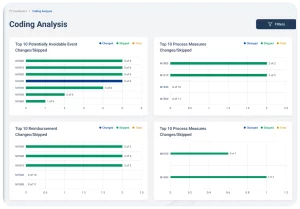
- Ai powered tracking: All claims in the 61-90 day and over 90 day segments are brought into the system for tracking with a follow-up reminder for each claim, payment information, and reasons for nonpayment.
- Claims forecasting: Velocity shows the current financial status of the agency, and with enough data in the system, can provide revenue forecasts simply by entering a future date into the reporting system.
- Pre-built database: All charting codes are built into the system and are searchable by keyword or phrase to reduce coding errors and increase reimbursement rates
- Platform agnostic: For many agencies, switching to a different EMR system costs more than the sticker price on the solution. With Velocity, there is no loss of data because it holds previous EMR data when you switch.
- Advanced Funding: Partners with Velocity have access to their AR funds before claims are processed, with an immediate credit line of up to $100,000, or 80% of the agencies AR.
Differentiation
Whether you need a software solution for your in-house RCM team or are looking to outsource your billing and coding to a partner, choosing the right RCM team is essential for your success. With so many RCM companies available in the market, it can be difficult to choose the right one. To choose the right RCM partner, there are a few factors to consider:
How does the solution or company match with the mission and vision I have for my agency?
HealthRev Partners has an “aspiration to develop innovative solutions that create boundless opportunities for our clients to advance their mission.”
Does the solution have the right tools for my success?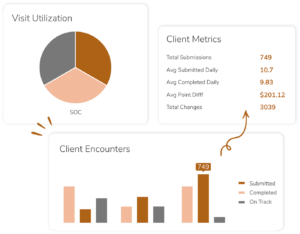
The analytics tools in Velocity can by customized to each agency’s KPIs. Velocity offers a fully supported software solution, a SaaS solution, and everything in-between to provide each agency with the level of support they need to succeed. Clinician productivity reports calculate clinician reimbursement by month. This shows which of your clinicians needs additional training and which should be recognized for their achievements, which can help to decrease your turnover rates. Velocity will custom build additional dashboards and measurements, included in the cost of the software.
Is the software solution safe for my agency and my clients?
Velocity is a HIPAA secure platform and is undergoing SOC-2 certification to protect your organization and the privacy of your patients.
Does the software partner have my best interests in mind?
Have you ever talked to someone who is so passionate about what they do that their energy is contagious? That was my experience in talking with Michael Greenlee, CEO and Founder of HealthRev Partners. Our one-hour scheduled software review meeting turned into a two hour conversation about what Velocity is designed to achieve. We also talked about how much potential it has to help home health, hospice, and palliative care agencies to survive.
Greenlee’s goal for Velocity is to have 0 claims go past 90 days for any agency they work with. They train each of their team members to meet the needs of an individual customer before they touch the account. HealthRev Partners offers “white glove service” to make good agencies great and to help partners dominate their marketplace. Michael partners with agencies he believes in as much as he believes in his own company. “We’re passionate about securing success for home health, hospice, and palliative care agencies across the nation.”
Future Considerations
Michael, Hannah, and I talked at length about what might be possible with Velocity. (So much so that Hannah asked if I was available to attend their next planning meeting.) AI capabilities are evolving and maturing at a rapid rate. Generative AI will become the standard for software solutions in care at home in short order. Michael’s passion for elevating the efficiency and prosperity of his home health, hospice, and palliative care agency partners will undoubtedly lead to even more innovation. Hannah Vale offered, “Our goal is to further enhance the sophistication of the AI. We consistently heed client feedback to creatively address their evolving requirements.”
To book a demo with HealthRev Partners, click here.
# # #
 Kristin Rowan has been working at Healthcare at Home: The Rowan Report since 2008. She has a master’s degree in business administration and marketing and runs Girard Marketing Group, a multi-faceted boutique marketing firm specializing in event planning, sales, and marketing strategy. Additionally, she has recently taken on the role of Editor of The Rowan Report and will add her voice to current Home Care topics as well as marketing tips for home care agencies. Connect with Kristin directly kristin@girardmarketinggroup.com or www.girardmarketinggroup.com
©2024 by The Rowan Report, Peoria, AZ. All rights reserved. This article originally appeared in Healthcare at Home: The Rowan Report. One copy may be printed for personal use: further reproduction by permission only. editor@therowanreport.com
by Kristin Rowan | May 2, 2024 | Clinical, Regulatory
Home health agency failed to protect Joyce Grayson
History
We’ve been following the story of Joyce Grayson since her death in October of 2023. The news was first published in The Rowan Report here on November 8th, 2023.On April 14th, we reported on the pending Senate Bill in Connecticut that would require home health agencies to provide additional information and safety precautions prior to a home visit. The safety of solo workers is now even more important to home health and hospice agencies with the most recent update.
Today
May 1, 2024, the U.S. Department of Labor (DOL) posted a news release on their investigation into the death of Joyce Grayson, a home health nurse in Connecticut. According to the Department of Labor, OSHA has determined that Elara Caring exposed their employees to workplace violence from patients who were known to pose a risk to others. Jordan Health Care Inc. and New England Home Care Inc., both doing business as Elara Caring, have been cited for willful violation of the agency’s general duty clause. OSHA cited them for not developing and implementing safety measures to protect employees from workplace violence. They also cited the agency for failure to report work-related injury and illness records within four business hours.
Repercussions
OSHA has proposed more than $163,000 in penalties against Elara Caring. Elara Caring has 15 days from receipt of the citations to respond, request a hearing, or contest the findings.
“Elara Caring failed its legal duty to protect employees from workplace injury by not having effective measures in place to protect employees against a known hazard and it cost a worker her life,” said OSHA Area Director Charles D. McGrevy in Hartford, Connecticut. “For its employees’ well-being, Elara must develop, implement and maintain required safeguards such as a comprehensive workplace violence prevention program. Workplace safety is not a privilege; it is every worker’s right.”
OSHA found that Elara Caring could have reduced the potential for workplace violence by looking at the root causes of violent incidents and “near misses.” They could also have provided clinicians with background information on patients prior to a home visit. Other recommendations from OSHA include providing emergency panic alert buttons and using safety escorts for visits with high-risk patients.
Future Recommendations
The DOL states that employers should have a comprehensive workplace violence program. This program should include both management and employee involvement. Further, the DOL says this plan should have a written program with a committee. Elements of a workplace violence program include:
- Analysis of a home upon new patient admission
- Hazard prevention and control
- Training and Education
- Resources for Impacted Employees
- Recordkeeping
- Employee Feedback
Implications
If Elara Caring is fined for failure to keep their clinicians safe as a result of the investigation into Joyce Grayson’s murder, state and national level regulations are sure to follow. However, even if the laws in your area don’t change, investing now in workplace safety for your clinicians could save you from similar allegations and fines. As we mentioned in last week’s article about the Senate Bill, we have been in touch with several emergency alert companies and will be providing product reviews in the next few weeks. Start a workforce safety committee, develop a written plan for mitigating dangerous situations, and issue emergency response systems to all of your clinicians before it is your agency under investigation. More importantly, take these steps before your team loses one of its own to workplace violence.
# # #
Kristin Rowan has been working at Healthcare at Home: The Rowan Report since 2008. She has a master’s degree in business administration and marketing and runs Girard Marketing Group, a multi-faceted boutique marketing firm specializing in event planning, sales, and marketing strategy. She has recently taken on the role of Editor of The Rowan Report and will add her voice to current Home Care topics as well as marketing tips for home care agencies. Connect with Kristin directly kristin@girardmarketinggroup.com or www.girardmarketinggroup.com
©2024 by The Rowan Report, Peoria, AZ. All rights reserved. This article originally appeared in Healthcare at Home: The Rowan Report. One copy may be printed for personal use: further reproduction by permission only. editor@therowanreport.com
by Kristin Rowan | Apr 26, 2024 | CMS, Recruitment & Retention, Regulatory
by Kristin Rowan, Editor
The Centers for Medicare and Medicaid Services (CMS) has finalized the “Ensuring Access to Medicaid Services” rule, more commonly known as the 80/20 rule. The 80/20 finalized rule requires at least 80% of Medicaid payments for home care services goes to caregiver wages. No more than 20% can be spent on administrative or other overhead costs. The White House, citing a study by The Commonwealth Fund, says that higher wages for caregivers will reduce turnover. Facing massive workforce shortages, home health, hospice, and supportive care at home agencies have been struggling to recruit and retain an adequate number of caregivers. The higher wage will also increase the quality of care, according to the study.
Prior to the 80/20 rule, there was no law or rule requiring home care agencies to report how they were spending money from federal medical payments. The rule includes requirements for states to create advisory groups to consult on rates and compensation. This changes the current Medical Care Advisory Committee regulations by increasing the percent of beneficiaries on the committee from 10% to 25% over the next two year. The Home Care Association of America (HCAOA) and the National Association for Home Care & Hospice (NAHC) argued that the rule adds administrative requirements to home care agencies while simultaneously reducing the resources available to fund them. NAHC President Bill Dombi said, “We all agree that more needs to be done to support the direct care workforce; however, this policy will make things worse, not better.” NAHC suggests the policy will force some agencies to close and others will leave the Medicaid program altogether, causing patients to have even more problems accessing care.
From the text of the final rule, CMS acknowledges additional comments that the minimum direct payment to caregivers in this rule will create hardships for some agencies. Across the country, there are substantial differences among waiver programs for HCBS that are not accounted for in the rule. There is some flexibility built into the rule to account for these factors, according to CMS. Some of the flexibilities include:
- Excluding some costs from the calculation
- Including clinical supervisors in the calculation
- Allowing states to set a different minimum for small providers
- Allowing states to develop their own criteria to qualify as a small provider
- Allowing states to develop criteria to exempt some providers from the rule
- Exemption from the minimum payment rule for all Indian Health Service and Tribal health programs
The final rule also changes the timeline for complying with the rule from four years after the date of publication to six.
Other comments included the need to address various reasons for the workforce shortage. In addition to low wages, commenters cited the social valuation of direct care work, lack of governmental support for some workforce pipelines, and immigration policies as deterrents to recruitment. One suggested that CMS start looking at creative strategies for developing an atypical workforce.
There were several submitted comments stating the either HHS or CMS or both does not have the authority under the Affordable Care Act to make specific requirements for minimum payments, but only to ensure that each State is assessing payment regulations and ensuring payments are economical, efficient, and ensure quality of care. A specific section of the Affordable Care Act, section 2402(a)(1) requires the Secretary of the Department of Health and Human Services (HHS) to ensure states implement service systems to allocate resources. The provision does not give HHS the authority to dictate the terms of those service systems, only to ensure the states develop those systems. Not surprisingly, CMS disagreed with those comments.
Many people questioned the 80% as being unrealistic, too high, and not based on quality data. CMS cited data from several states, who have pass-through requirements of 80-95% for all rate increases. This is not a minimum payment from all Medicaid payments, only a requirement for a minimum pass-through to direct care workers of increases in rates. Two states, Minnesota and Illinois, currently have minimum payment requirements set at 72% and 77%, respectively. CMS used these two states as justification for the 80% rule, acknowledging that it is higher than both states while also acknowledging that they did not perform a state-by-state study of the impact the 80% rule will have. CMS states the rate was set higher than those states to “encourage further steps towards improving compensation for workers.” CMS believes that requiring HCB agencies to pay their direct care workers a higher percentage of Medicaid rates than any state currently does will somehow make those agencies want to voluntarily pay even more.
The 80/20 Rule and Technology
Technological advances in telehealth, remote patient monitoring, revenue cycle management, scheduling, employee benefits, assistive technology, EVVs, EMRs, CRMs, and other software solutions can and will lower overhead costs and increase efficiency in your agency. Paperwork automation can reduce the time spent on documentation by a significant percentage. Revenue Cycle Management software can reduce claim denials and decrease reimbursement payment cycles so you can get your money faster. They can also reduce the number of unpaid claims. Employee benefit and training software can reduce responsibilities for HR teams, lessen the requirements for clinical supervisors, and cut training time in half, getting your newly recruited caregivers out in the field faster. Scheduling and onboarding software can increase your intake capabilities. The advances in generative AI allow you to create robust reports almost instantly so you can see your agency’s strengths and weaknesses and create plans for improvement.
Some of these costs will be excluded from the calculations for the 80% rule. Now is the time to invest in technology for your agency. Not only will your agency be more efficient and more effective, but you will be able to care for more patients with the same staff you have now, and the software solutions are as close to cost-neutral as they will ever be. We have a list of technology solutions that we’ve recently discovered and will be writing about in the next few weeks. If you are in immediate need of a software solution, contact us directly for a consultation.
Kristin Rowan has been working at Healthcare at Home: The Rowan Report since 2008. She has a master’s degree in business administration and marketing and runs Girard Marketing Group, a multi-faceted boutique marketing firm specializing in event planning, sales, and marketing strategy. She has recently taken on the role of Editor of The Rowan Report and will add her voice to current Home Care topics as well as marketing tips for home care agencies. Connect with Kristin directly kristin@girardmarketinggroup.com or www.girardmarketinggroup.com
©2024 by The Rowan Report, Peoria, AZ. All rights reserved. This article originally appeared in Healthcare at Home: The Rowan Report. One copy may be printed for personal use: further reproduction by permission only. editor@therowanreport.com
by Rowan Report | Apr 26, 2024 | CMS, Medicare Advantage, Regulatory
By Beth Noyce, RN, BSJMC, BCHH-C, COQS
CHAP-certified home health & hospice consultant
This is part 3 of the 3 in the series, outlining the discussions and implications in adopting new outcome and process measures for Hospice care. The final segment addresses future process and outcome measures that the board discussed, but did not yet implement. Read Part 1 on Outcome Measures and Part 2 on Process Measures.
The TEP discussed potential future process and outcome measure concepts that Abt Associates presented to the panel as well.
The process measures included:
- Education for Medication Management
- Wound Management Addressed in Plan of Care
- Transfer of Health Information to Subsequent Provider
- Transfer of Health Information to Patient/Family Caregiver
Hope-based outcome measures were:
- Patient Preferences Followed throughout Hospice Stay
- Hospitalization of Persons with Do-Not-Hospitalize Order
Developing education for medication management as a process measure was a popular concept, and the top priority of the recommended measures with the TEP as they “broadly agreed that CMS should develop this measure,” the report says, citing “a significant need for training in medication management for patients and their caregivers.” They recommended that the measure weigh more heavily when care is provided in a home setting than in a facility setting because hospices are unable to control facility training and hiring practices. One panelist commented that including the phrase “during today’s visit” in the measure is important.
Whether CMS should further develop the process measure addressing wound management in the plan of care was less straight-forward, as panelists provided varied feedback. They generally agreed that this measure is important, as having a record of wound management addressed in the plan of care can hold the staff accountable for treating the wounds. But some members recommended measuring wound management with outcome measures rather than process measures. One panelist cited potential problems from patients’ deterioration over time and another noted that the time frame of this measure is important, and encouraged recording the process of getting care in place once a wound is identified. The panel agreed CMS should carefully define the measure’s specifications.
Because standard practice for most agencies is, when a patient is discharged live, to transfer health information to the subsequent provider and to the patient and family or caregiver, TEP members expressed that the two measures were likely to “top out,” meaning they would almost always be marked “Yes,” making them of no value in differentiating between hospice providers. The group generally discouraged developing these process measures.
The group strongly rejected any merit in developing two outcome measures concerning Patient Preferences Followed Throughout Hospice Stay and Hospitalization of Persons with Do-Not-
Hospitalize Order. The report says “Multiple TEP members described situations in which patients who had preferred not to be hospitalized changed their minds when a crisis occurred. Patients’ preferences and unexpected crises are usually out of the hospice’s control. Although it is still important for hospices to ask patients about their preferences as part of patient-centered care, the TEP did not believe these two items would be practical measures of a hospice’s care quality.”
Dr. McNally expects that Abt. Associates will apply the HQEP TEP’s suggestions to the HOPE tool.
“Oh yeah, they did it,” he says. “Abt would come to a specific meeting with information, data, suggestions, and specific information about how these things would be measured. We’d give feedback. Then they’d come back to the next meeting having incorporated our suggestions,” he explains. “All of us felt very much heard and responded to. It didn’t feel in the least bit perfunctory.”
Whatever specific measures are eventually included in the HOPE tool, Lund Person sees value in its implementation. “Hospice providers have had a woeful lack of outcome measures for hospice patients, which has made the evaluation of quality hospice care based only on process measures and the family’s evaluation of hospice care in the CAHPS® Hospice Survey, she explains. “Implementing HOPE will begin to identify outcome measures that can be compared between providers.”
Lund Person warns of potential challenges as well. “The selection of risk adjustment and stratification must be carefully done to minimize bias and maximize effectiveness of measures,” she says. “In addition, hospice providers have been awaiting the release of the HOPE tool with significant anxiety about content and administrative burden.”
Dr. McNally is confident the HOPE tool will be a healthy change for hospices.
“A lot of my role as a medical director and hospice physician is supporting our nurses,” he says. “They do 95% of the work. I really would like to see this not be burdensome for our hospice nurses. I’m looking forward to seeing what the [HOPE tool] beta testing translates to in our own hospice world.” He added “What I would hope to see is that the tool feels user-friendly to the hospice team, the people who have to use it, and that it also provides useful information to patients and families.”
NAHC’s Wehri says that standardizing processes through the HOPE tool is the key foundational element for the hospice industry. “High quality care is driven by reducing variance through standardized processes, Wehri writes. “Also, CMS will have a better idea of how the type of population a hospice serves impacts some of the clinical care.” This small glimpse into hospice variances that CMS does not currently have could be very helpful in future policy and payment decisions, according to Wehri. “What CMS finds in terms of differences between hospices and their care for patients may be a bit of a surprise to CMS,” she says. “I hope they are pleasantly surprised with the overall quality of care that is revealed.”
# # #
 Beth Noyce provides education, consulting, mentoring, compliance assessments and auditing services to home health and hospice agencies and their clinicians in several states. She also now provides patient and family guidance concerning hospice and home health services. Beth loves teaching and helping others succeed. She also makes available recordings of much of her education for her clients’ convenience.
©2024 by The Rowan Report, Peoria, AZ. All rights reserved. This article originally appeared in Healthcare at Home: The Rowan Report. One copy may be printed for personal use: further reproduction by permission only. editor@therowanreport.com
by Rowan Report | Apr 26, 2024 | Partner News
 FOR IMMEDIATE RELEASE
Contact: Johnathan Eaves
(903) 445-6969
jeaves@axxess.com
Axxess’ AGILE 2024 Was a Massive Success
DALLAS, April 25, 2024 – Axxess’ AGILE 2024 conference was a resounding success, with an unprecedented number of industry leaders, innovators and professionals coming together to explore the latest trends, exchange ideas and foster collaboration.
More than 50 partners supported AGILE (Axxess Growth, Innovation and Leadership Experience) with sponsorships of the three-day event, which attracted several hundred industry leaders, including C-suite executives, clinical leaders, operational and financial managers, industry investors and strategic advisors.
“The AGILE conference exemplifies our commitment to fostering growth, driving innovation and empowering leaders as we revolutionize the healthcare industry and pave the way for a future where quality care thrives in the confines and comfort of our homes,” said John Olajide, founder and CEO of Axxess, the leader in technology supporting care at home providers. “The feedback we’ve received on this year’s conference is truly inspiring, and we are already hard at work to make next year’s event a transformative experience, introducing new dimensions of knowledge, collaboration and inspiration.”
The conference formally began with a keynote address from healthcare innovator and futurist Nick Webb, who spoke on megatrends impacting the care at home industry, from emerging technologies to patient experience and staffing.
“The experience always wins,” he told the audience. “Patients and their families want friction freedom, they want speed, they want transparency, they want genuine, authentic empathy, they want this to be painless.”
The event included a day-long Leadership Forum attended by industry leaders who participated in high-level conversations about business operations, advocacy and insights on the state of mergers and acquisitions with key leaders in care at home, finance and public policy.
The value of technology was emphasized in a later panel discussion on embracing risk to reimagine healthcare, featuring Kim King, CEO of Home Care Network.
“We’ve found arming our staff with technology that allows them to do a virtual visit allows an aide to work at the high end of what they’re able to do so that they can give real information back to a clinician,” King said. “If we need to take it to the next step and get a virtual visit with a physician [or] arrange transportation to get somewhere, that makes all the difference in the world.”
Annie Erstling, Chief Operating Officer at Forcura, urged attendees to rethink their relationship with technology companies.
“You should lean on your technology partners,” Erstling said. “They should be real partners and they should keep you abreast of what’s the latest and greatest.”
Along with keynote speakers, panels and industry-specific education sessions offering continuing education credits, AGILE also included an Innovation Showcase featuring the latest developments to improve operations from Axxess partners, a GUIDE to dementia, which enabled participants to experience what those living with dementia go through each day, and a CPR training course where participants learned how to properly perform life-saving, hands-only CPR.
# # #
About Axxess
Axxess is the leading global technology innovator for healthcare at home, focused on solving the most complex industry challenges. Trusted by more than 9,000 organizations that serve more than 5 million patients worldwide, Axxess offers a complete suite of easy-to-use software solutions that empower home health, home care, hospice, and palliative providers to make healthcare in the home human again. Multiple independent certifications have confirmed that Axxess has the most secure and industry-compliant software available for providers. The company’s collaborative culture focused on innovation and excellence is recognized nationally as a “Best Place to Work.”
by Elizabeth E. Hogue, Esq. | Apr 18, 2024 | Clinical, Regulatory, Waste Fraud and Abuse
by Elizabeth E. Hogue, Esq.
Some owners and managers of private duty home care agencies mistakenly think that fraud and abuse prohibitions apply only to services paid for by the Medicare Program. In fact, fraud and abuse prohibitions apply to providers if they accept any state or federal funds, including, but not limited to, Medicaid, Medicaid waiver, VA, and Tri-Care. Many private insurers have adopted the prohibitions on fraud implemented by state and federal programs.
Private duty home care agencies are increasingly in the crosshairs of fraud enforcers if they receive reimbursement from Medicaid and/or Medicaid Waiver Programs. The reason for enhanced scrutiny is that both the federal government, which partially funds state Medicaid and Medicaid Waiver Programs, and state governments that also fund these programs are alarmed about the high costs of them.
Conventional wisdom says that there are big bucks to be saved if fraud and abuse in the Programs are controlled and ultimately eliminated. Conventional wisdom also says that enforcement actions in Medicaid Programs have just scratched the surface. According to this “wisdom,” there are big bucks to be recouped from “low-hanging fruit!”
A recent report from the Office of Inspector General of the U.S. Department of Health and Human Services seems to support this perception regarding private duty home care agencies based on the following:
 Between 2014 and 2023, at least 34% of fraud convictions in some years were based on private duty home care services. In some years, this percentage was as high as 48%.
- In fiscal year 2023, there were 279 criminal convictions related to private duty home care services compared to 66 for registered nurses and 43 for home health agencies.
- Recoveries from private duty home care agencies in 2023 totaled $26.4 million.
- The amount of civil recoveries reached a 4-year high in 2023 and the combined criminal and civil recoveries were $1.2 billion, resulting in a return on investment of $3.35 for every $1 spent.
The return on investment of more than three times the amount spent is perhaps the most important figure of all. With a three to one return, regulators will not hesitate to “beef up” enforcement actions.
THE CONSEQUENCES OF FRAUD AND ABUSE ARE SEVERE WHEN SERVICES ARE PAID FOR BY THE MEDICAID AND OTHER STATE AND FEDERAL PROGRAMS!
Personal care private duty agencies, don’t believe the myth that only services paid for by the Medicare Program are subject to fraud and abuse enforcement. The consequences may be devastating, including the loss of businesses. Heads up!
©2024 Elizabeth E. Hogue, Esq. All rights reserved.
No portion of this material may be reproduced in any form without the advance written permission of the author.
©2024 This article appeared in The Rowan Report. All rights reserved.
by Kristin Rowan | Apr 18, 2024 | Vendor Watch
by Kristin Rowan, Editor
On February 21, 2024, HHAeXchange announced a change in leadership for the homecare management solutions company. Former Chief Revenue Officer Scott Schwartz was named Chief Operating Officer and new hire Lori Harrington came on board as the Senior Vice President of Product. You can read the press release from HHAeXchange here.
HHAeXchange provides management solutions for providers, MCOs, and state Medicaid agencies. The software was designed specifically for home and community-based services (HCBS) and connects state agences, MCOs, providers, and caregivers through its web-based platform. According to HHAeXchange, the personnel changes show the company’s “commitment to providing innovative solutions that some homecare industry challenges.
I had the opportunity to reach out to Scott and Lori to get, in their own words, their visions for the future of HHAeXchange and the industry.
The Rowan Report: Thank you, Scott and Lori for taking some time to talk with The Rowan Report. First, congratulations to you both on your new roles. Can you each share a little about your background and career?
Scott Schwartz: For over 20 years, I’ve focused on system of record, vertical SaaS software and technology, with experience leading sales, marketing, client success and operations. I started my career as a process engineer and have held leadership positions at several SaaS companies, including as the founder and general manager of CampSite. I joined HHAeXchange in 2017 as vice president and have also served as senior vice president and chief revenue officer before stepping into my current role. As chief operating officer, my aim is to galvanize the organization around a shared vision of operational efficiency, innovative service delivery, and customer satisfaction.
Lori Harrington: I have enjoyed a career of over 20 years in healthcare with a background in product strategy and informatics. In my most recent role as vice president of product management at Teledoc, I led product strategy for value-based care initiatives. My passion for digital transformation in B2B2C markets has driven successful healthcare initiatives from ideation to commercialization. I believe that success in healthcare is really understanding your users and building solutions to solve their everyday problems in a seamless, understandable way.
RR: Scott, as part of your new responsibilities at HHAeXchange, how will you ensure effective communication and collaboration between internal departments to better serve customers?
Scott: We’re focused on enhancing our platform, which connects state agencies, managed care organizations, providers and caregivers, so cross-departmental communication and collaboration are vital. With shared services such as implementation, revenue cycle operations, integrations, technical customer care, training, and customer education under my purview, I plan to streamline communication pathways and ensure all teams are aligned with and working toward our common goals.
We want to leverage our teams’ diverse talents to drive transformation. My approach includes fostering an integrated work environment where interdepartmental meetings, clear information channels, and shared objectives are the norm. Regular check-ins and transparent leadership are key to ensuring every department understands how their work directly benefits our clients, the members they serve, and the company’s broader goals.
RR: And how will you ensure HHAeXchange’s solutions and product enhancements meet the needs of all homecare stakeholders – caregivers, provider agencies, members, and payers?
Scott: Engaging with stakeholders is critical. We involve provider agencies, caregivers, payers and others in our development process to ensure that our platform addresses real-world needs effectively. Our comprehensive engagement strategies support this with initiatives like periodic customer summits, road shows, and information sessions to capture a wide array of insights and feedback.
We monitor industry trends, regulatory changes, and technological advancements, which are factored into planned enhancements and solution updates. And with a team of reputable industry experts, we’re working to ensure that our products exceed the evolving needs of all homecare stakeholders.
Lori: We understand that stakeholders in the homecare space have diverse and critical needs. We keep a pulse on industry trends and challenges such as issues with caregiver turnover, regulatory & compliance changes, increasing volume of live-in caregivers, and an increase in diversification in home care utilization. With these observations, we aim to provide products that support healthcare agencies and caregivers as these trends evolve. Our solutions must be built with a nimbleness that accounts for a continuous change in regulations, EVV compliance requirements, and stakeholder expectations. Frequently engaging with stakeholders, conducting thorough market research, and incorporating feedback loops are integral to our product development processes.
RR: Lori, you mentioned the diverse needs of your stakeholders. What are the greatest problems your clients and prospects say they are looking to solve with improved homecare management software solutions and EVV platforms?
Lori: Our clients are prioritizing caregiver retention and looking for comprehensive solutions to streamline operational processes like billing, HR, and payroll while ensuring regulatory compliance and providing high-quality member care. They need tools to manage the diverse locations of members’ and workers’ schedules, foster strong member-caregiver matches, and enable transparent communications among provider teams.
Taking those challenges into consideration, HHAeXchange aims to equip our solutions with time-saving, stress-reducing features. Operational worklists, for example, alert agencies to important dates and actions their teams need to take regarding caregiver compliance and client authorizations. Our appointment module and case broadcasting feature reduce hassles associated with scheduling visits and quickly filling unexpectedly open shifts.
RR: Two questions, Lori. What trends are you seeing that are transforming homecare delivery models and, in addition to technology, are there any other trends shaping the homecare industry in 2024?
Lori: The ongoing caregiver shortage remains a concern, driving a shift toward more strategic technology investments and training opportunities. Homecare delivery is becoming more person-centered, suggesting the industry has adjusted to EVV and is using the technology to incorporate collaboration with families as caregiver participants. Additionally, there’s a growing emphasis on self-direction, with clients seeking more choice, flexibility and control in their care. Compliance is gaining more attention, with increased scrutiny to ensure standards of care are met across the board. Data and analytics will continue to be a primary enabler for how healthcare is shaped. We account for all of this in our product strategy and development plans.
RR: Final questions for you, Scott. How does HHAeXchange envision the homecare industry evolving in 2024 and, more specifically, how do you see the company’s innovations playing a role in that transformation?
Scott: The homecare industry is at a critical juncture. As Lori said, we’ve noted significant shifts toward value-based care, self-directed care, and person-centered approaches. At the same time, the fundamentals of homecare are as important as ever. HHAeXchange’s role is to stay ahead of trends while improving product offerings and customer experiences. We strive to balance innovative thought leadership with steady progress, continually enhancing the functionality of our foundational platforms to meet clients’ needs.
We’re investing in scalable technology, service improvements, customer education, and strategic integrations to accommodate the industry’s evolution. Our leadership is committed to empowering providers and payers alike with tools to improve caregivers’ efficiency and address fraud, waste and abuse in the industry. Through these efforts and plans, we aim to facilitate a more sustainable, higher-quality, and accessible homecare ecosystem for all involved, ensuring members have the option to receive care and treatment in the comfort of their own homes.
RR: Thank you both, again, for your time. I wish you both great success in your new roles.
# # #
 Kristin Rowan has been working at Healthcare at Home: The Rowan Report since 2008. She has a master’s degree in business administration and marketing and runs Girard Marketing Group, a multi-faceted boutique marketing firm specializing in event planning, sales, and marketing strategy. She has recently taken on the role of Editor of The Rowan Report and will add her voice to current Home Care topics as well as marketing tips for home care agencies. Connect with Kristin directly kristin@girardmarketinggroup.com or www.girardmarketinggroup.com
©2024 by The Rowan Report, Peoria, AZ. All rights reserved. This article originally appeared in Healthcare at Home: The Rowan Report. One copy may be printed for personal use: further reproduction by permission only. editor@therowanreport.com
by Tim Rowan | Apr 11, 2024 | Clinical, Editorial, Telehealth
by Tim Rowan, Editor Emeritus
In 2020, doctors flooded telehealth companies with requests for help caring for patients reluctant to leave home to come to their appointments. Following suit, many Home Health agencies that had never considered investing in home telehealth before, opened up their wallets to acquire equipment, from simple wearables to high-end, HIPAA-compliant video systems.
In addition to the need to provide care at a safe distance, many HHA leaders knew the added service would attract the attention of hospitals desperate to discharge recovering Covid victims as well as non-Covid patients. Some HHAs established relationships with hospitals they had not had before, given the chance to demonstration Home Health’s unique advantages over extended hospital stays and discharges to institutions such as SNFs that had become virtual death sentences during the height of the pandemic.
All Things Must Pass
 With the introduction and widespread free availability of Covid mRNA vaccines, the death rate graph line began to tilt downward. Then came the discovery that the SARS-CoV-2 and its variants are transmitted through the air and not through unwashed surfaces. People stopped disinfecting their counter tops after unloading groceries. And they started in-person doctor visits again. Patients returned to allowing nurses into their homes.
In regions where vaccination and booster rates were high, hospitals found themselves with more and more empty beds. They took down tented treatment centers in their parking lots and sent refrigerated trailers back to trucking companies. Desperation referrals to Home Health tapered off, as did the need for virtual visits.
Isaac Newton said every action has an equal and opposite reaction. If that holds true in the healthcare business as it does in physics, the reaction to Covid easing is seen in Remote Patient Monitoring tech companies. According to Fierce Healthcare, the New York Stock Exchange told one RPM company, Amwell, formerly known as “American Well,” to raise its stock price or be delisted. Fierce added detail about the company’s woes:
“Despite decimating its workforce at the end of 2023 to cut expenses, the company still projects a 2024 loss between $160 million and $155 million amid incremental revenue growth. The company’s market cap was a stone’s throw from $6 billion at the height of its valuation, when shares were trading for more than $42 each. Amwell shares were trading at $0.72 as of market close on April 5, giving the company a current market cap of about $208.6 million.
Another market leader fared no better, Fierce Healthcare found. “Telehealth giant Teledoc, which has been in operation for 20 years, has struggled in the stock market and is facing headwinds as the virtual care market has become crowded with digital health players. Shares dropped 22 percent in February as the company missed fourth-quarter revenue estimates and offered a downbeat forecast for the rest of the year.”
Teledoc’s 15-year CEO, Jason Gorevic, resigned last week after the company reported a net loss of $220 million for 2023, following 2022’s historic loss of $13.7 billion, mostly from a write-off related to the plummeting value of its ill-advised Livongo acquisition. According to Fierce Healthcare, Teladoc shelled out $18.5 billion for the digital chronic condition management company, a record in digital health.
Gorevic’s rationale that the telehealth field has become too crowded may not be far off. Last July, Becker’s Hospital Review published an industry survey titled “280+ Telehealth Companies to Know.” The list included a half dozen names we recognized from past Home Health conferences, including Health Recovery Solutions, AMC, Vivify, and FoneMed.
Do Hospital Woes Translate Down to Home Health?
 Making comparisons between telemedicine companies that focus on hospitals and physicians and those who focus on post-acute providers is hampered by the fact that few in our sector are publicly traded and do not share their numbers. UnitedHealth, which acquired Vivify in 2019 and assigned it to its Optum division, does not separately report Vivify revenue.
Health Recovery Solutions, one of the best-known names in post-acute RPM, is privately held by its founding CEO and seven investors. Its most recent influx of $800,000 occurred in January, 2022, making it impossible to determine whether it was motivated by investor confidence or the need for cash as Covid began its decline.
Analysis
This publication has promoted the advantages of remote patient monitoring for its entire 25-year existence. We have covered startups and established tech companies offering every technology from PERS to Zo monitors to automated phone calls, in-home cameras and microphones. We have followed the evolution of two-way communications and vital sign detectors from tabletop devices to tablets and smartphones. We have even tested a few robots. We have seen HHAs experience great success, and we have seen devices collecting dust on shelves.
Throughout, we have maintained that, when selected, implemented, and deployed properly, monitoring patients 24/7 instead of once or twice a week can improve patient outcomes, boost agency reputation, and, more often than not, produce a healthy ROI. The end of the latest pandemic may mean the end of demand for Remote Patient Monitoring systems, but that would be unfortunate.
 Tim Rowan is a 30-year home care technology consultant who co-founded and served as Editor and principal writer of this publication for 25 years. He continues to occasionally contribute news and analysis articles under The Rowan Report’s new ownership. He also continues to work part-time as a Home Care recruiting and retention consultant. More information: RowanResources.com or Tim@RowanResources.com
©2024 by The Rowan Report, Peoria, AZ. All rights reserved. This article originally appeared in Healthcare at Home: The Rowan Report. One copy may be printed for personal use: further reproduction by permission only. editor@therowanreport.com