HIPAA Compliance Voice Activation

by Curantis Solutions

HIPAA Compliance for Voice Activated Technology

HIPAA (Health Insurance Portability and Accountability Act) compliance is critical in the healthcare field, particularly regarding any technology that handles patient information, including HIPAA-compliant voice technology. Understanding the implications of HIPAA is essential for ensuring that innovations in healthcare technology do not compromise patient data privacy regulations.

Patient Privacy Protection

HIPAA enforces strict privacy protections for all patient data, including voice recordings and summaries. Voice recognition technology in healthcare must ensure that data is only accessible to authorized personnel. Any voice-activated system must adhere to HIPAA security measures for handling Protected Health Information (PHI).

Data Security Requirements

Voice-activated systems must implement safeguards to protect patient information from unauthorized access and breaches. This includes both physical and electronic security measures, such as:
Voice Activation HIPAA
  • Encryption
    • Data should be encrypted both in transit and at rest to prevent unauthorized access.
  • Access Controls
    • Systems must restrict access to only those who need to know, using multi-factor authentication and role-based permissions.
  • Audit Trails
    • Voice-activated technologies should log all access activity, tracking who accessed data, when, and what specific information was retrieved.

HIPAA Training Requirements for Voice-Activated Systems

HIPAA emphasizes the need for staff training and awareness regarding handling PHI in voice-recognition software. Training programs should cover:

  • Best Practices
    • Staff should be instructed on correct voice command usage to minimize accidental PHI disclosures in public or unsecured environments.
  • Identifying PHI
    • Employees should learn to recognize and protect sensitive patient data when interacting with voice-activated systems.

Data Minimization Principles

Under HIPAA, organizations should limit data collection to only what is necessary for specific tasks. This includes:

  • Minimal Data Handling
    • Only essential PHI should be processed and stored.
  • Anonymization Processes
    • Voice-activated systems should anonymize data when full patient identification is unnecessary, reducing security risks.

Incident Response Protocol

In the event of a data breach involving voice-activated patient summaries, organizations must follow HIPAA-compliant response steps:

  • Incident Reporting
    • Immediate breach investigation and reporting per HIPAA timelines.
  • Notification Requirements
    • Patients must be notified if their PHI has been compromised, along with steps taken to mitigate risks.

Summary

HIPAA compliance directly impacts how voice-activated patient summaries are implemented in healthcare. Ensuring compliance requires:

  • Robust data security measures
  • Thorough staff training
  • Strict vendor agreements
  • Comprehensive privacy protections

By aligning voice-activated patient summaries with HIPAA regulations, healthcare organizations can enhance patient care, safeguard sensitive information, and build trust with patients and families.

# # #

About Curantis Solutions

Curantis Solutions was founded on a desire to put hospice and palliative care first. We are dedicated to radically transforming standard electronic health records into a refreshingly simple and intuitive experience so that providers can keep their focus where it matters most – on the patients and families they serve. 

With a genuine culture of caring, we have assembled a team of highly talented individuals who are passion-driven and feel connected to their role in supporting the bigger mission of enabling high-quality end-of-life care. From forward-thinking technologists to hospice and palliative care experts, and every role in between, our team works with great integrity, accountability and responsiveness to bridge the latest technology with smart design to keep patient care at the center of what we do.

©2025 This article was originally published by Curantis Solutions and is reprinted with permission. For additional information or to request permission, contact Curantis Solutions.


Medicaid Cuts Update: Meet the Senate Parliamentarian

by Tim Rowan, Editor Emeritus

Medicaid Cuts Update

Senate Parliamentarian Elizabeth MacDonough

The ongoing negotiations in Congress will impact Medicaid and Medicare. There has been little movement from the Senate since we reported on this last week, but here’s what we know now:

When H.R. 1 was passed by the House of Representatives and forwarded to the Senate, it was immediately subjected to scrutiny by the Senate Parliamentarian, Elizabeth MacDonough. The job of the parliamentarian is to ensure that every proposed bill complies with Senate rules. The story of Ms. MacDonough taking her scissors to the “One Big Beautiful Bill” requires more than a little unpacking, but it is a good story.

Problem with Medicaid Cuts: "One Bill"

It appears that the idea to put all of the President’s legislative agenda into a single bill is acceptable in the House, but the Senate has different rules. The Senate forces itself to live under the filibuster system. When the filibuster is evoked, a bill must receive 60 votes to pass, but there is an exception. “Budget Reconciliation” is a rule that allows expedited passage of certain specific budget-related bills with only a simple majority, 51 votes.

The problem of the week is that H.R. 1 includes dozens of provisions that have nothing to do with spending. The Senate parliamentarian took her scissors to parts of the bill that:

  • change environmental regulations to pave the way to sell public lands
  • reduce the ability of federal judges to block Presidential orders1
  • dissolve the Consumer Financial Protection Bureau
  • change the rules about who can be excluded from receiving Medicare benefits, even after contributing through FICA taxes
Medicaid Cuts

Cutting Medicaid Cuts

Parliamentarian MacDonough has also applied her scissors to the portion of the bill that would reduce Medicaid spending by nearly $800 billion over ten years. Writing for The Hill, Alexander Bolton reported on June 26:

“The Senate’s referee rejected a plan to cap states’ use of health care provider taxes to collect more federal Medicaid funding, a proposal that would have generated hundreds of billions of dollars in savings… The decision could force Senate Majority Leader John Thune (R-S.D.) to reconsider his plan to bring the Senate bill up for a vote this week.”

Alexander Bolton

Journalist, The Hill

The provision, which would have forced states to take over substantially more Medicaid costs, came under strong bipartisan opposition. Sen. Josh Hawley (R-Mo.), Susan Collins (R-Maine), Lisa Murkowski (R-Alaska) and Jerry Moran (R-Kan.) warned deep cuts to federal Medicaid spending could cause dozens of rural hospitals in their states to close. Senate Democrats, led by Jeff Merkley (D-Ore.), the ranking Democratic on the Senate Budget Committee, praised MacDonough’s exclusions.

The Hill reported, “Democrats are fighting back against Republicans’ plans to gut Medicaid, dismantle the Affordable Care Act, and kick kids, veterans, seniors, and folks with disabilities off of their health insurance – all to fund tax breaks for billionaires,” Merkley said in a statement.

The President pushed back against the parliamentarian’s rulings in a June 24 social media post:

“To my friends in the Senate, lock yourself in a room if you must, don’t go home, and GET THE DEAL DONE THIS WEEK. Work with the House so they can pick it up, and pass it, IMMEDIATELY. NO ONE GOES ON VACATION UNTIL IT’S DONE.”

Donald Trump

President of the United States

Sorting out the Complex Immigration Question

If the above seems complicated, it becomes rudimentary compared to the background that sets the stage for the parliamentarian’s next cut. Except for emergencies, most often crisis pregnancies, persons in the country illegally cannot, and do not, receive Medicaid-reimbursed healthcare. According to a study by Kaiser Family Foundation, however, fourteen states plus the District of Columbia use state taxpayer money, not federal funds, to cover children regardless of immigration status, Seven of those fourteen, and D.C., also cover some adults with state funds regardless of immigration status.

In the bill was a provision to punish these fourteen states and D.C. by reducing their federal Medicaid payments from 90 percent to 80 percent. Though there is no accusation in the bill that these states are guilty of improper use of federal funds, the states will lose some of those funds because of the way they have chosen to use their own funds. Parliamentarian MacDonough said that is not a budget line item but an attempt by the federal government to force states to change their own healthcare policies.

Medicare Restrictions also Scrapped

Almost as a postscript, a House restriction on Medicare eligibility also fell victim to the Senate Parliamentarian’s scissors. Non-citizens who work in W-2 wage jobs pay FICA taxes, many of them for 30 years or more. When these workers turn 65, they are eligible for Medicare benefits due to their contributions, regardless of their status. Though H.R. 1, the House version, would eliminate that eligibility, Ms. MacDonough said, “Nope, this is not a budget reconciliation issue.”

Although the White House is pressuring Senators to vote quickly — so that a joint House/Senate negotiating committee can hammer out differences and send their compromise version to the President’s desk by July 4 — that self-imposed deadline is up in the air at the moment. Both President Trump and House Speaker Johnson are adamant that every spending and every non-budgetary policy change they want must be enacted in one big bill. In spite of Ms. MacDonough’s cuts, the Senate it not exactly handcuffed either. Because it makes its own rules, Senators could simply decide, with a 51-49 party-line vote, to ignore the parliamentarian.

The power, as well as the future health of Medicaid, falls into the hands of the four dissenting Republican Senators. Home Health and Home Care folks in Missouri, Maine, Alaska and Kansas take note.

____________________________________

1  From White House correspondent Bart Jansen, writing for USA Today:

  • Currently, judges have discretion to set bonds on plaintiffs who file civil suits. Legal experts say judges often waive bonds in lawsuits against the government because the disputes are typically over policy rather than money.
  • A provision in the House-passed version of the bill would remove that discretion from federal judges and require litigants to post a bond when the issue under consideration is whether to block a Trump policy.
  • So far, judges have blocked Trump policies in 180 cases. All of them would have to be reviewed for bonds if the Senate approves the House provision and Trump signs it into law.
  • The law would effectively kill most of the limitations on Trump policies because bond amounts are determined by the dollar amount of the contested policy. In federal cases involving massive policy changes, those bonds can amount to hundreds of billions.

# # #

Tim Rowan The Rowan Report

Tim Rowan is a 30-year home care technology consultant who co-founded and served as Editor and principal writer of this publication for 25 years. He continues to occasionally contribute news and analysis articles under The Rowan Report’s new ownership. He also continues to work part-time as a Home Care recruiting and retention consultant. More information: RowanResources.com
Tim@RowanResources.com

©2025 by The Rowan Report, Peoria, AZ. All rights reserved. This article originally appeared in The Rowan Report. One copy may be printed for personal use: further reproduction by permission only. editor@therowanreport.com

Evaluating QHINs Interoperability 3

by Ben Rosen, Sr. Client Success Manager, Netsmart

Interoperability

What you need to know and how it affects you Part 3

For over two decades, tech companies and government agencies have been moving toward the goal of interoperability in healthcare technology. At long last, standards and protocols are in place—and continually being improved—to support open data exchange networks. As a result, healthcare providers, including human services, post-acute providers and specialty practices, have more opportunities to participate in alternative payment models and adapt more readily to the evolving payment landscape.

This is part three of a four-part series covering the forces that are driving interoperability, as well as the future vision of open networks, and what it all could mean to your organization. Read Part One Here; Read Part Two Here.

Interoperability in Healthcare

Evaluating QHINs for your Organization

As outlined in Part Two of this series, all Qualified Health Information Networks (QHINs) must apply and be accepted according to the baseline requirements outlined by the Trusted Exchange Framework and Common Agreement (TEFCA). While the rigorous testing and project tasks for each QHIN are the same, they may differ in services offered, geographic focus, technical capabilities, pricing and specific target markets. This blog will explore similarities and differences between QHINs, to provide insights that will arm organizations with the knowledge needed to make informed decisions about selecting a QHIN.

How to choose the right QHIN for your organization

As with any major business decision, consider what your organization is currently doing for data exchange and connectivity and how these factors are likely to change in the next 18 to 24 months:

  • The services you provide today and with whom you exchange data.
  • The communities you serve.

Prospective QHINs should have experience in serving the technology needs of the communities you serve and exhibit an understanding of how your service lines could impact the types of data transactions you use. If your strategic plan calls for expanding your services or community footprint – either organically or through partnerships with other providers – you’ll need to consider how your current needs will evolve and how that will affect your QHIN criteria.

QHIN candidates should have experience working with your electronic health record (EHR) vendor and be able to manage a smooth integration with your existing technology. Compatibility with your

EHR will help simplify implementation and further establish the network as a good fit for your organization. Integration capabilities of the QHIN should lend well to your current EHR build, such as being able to integrate the QHIN data directly to your EHR workflows.

Consider technical requirements

Each QHIN will have to build to and abide by the same standards for exchange via TEFCA. These requirements are outlined in the Common Agreement and the QHIN Technical Framework documents. Differentiation among QHINs will come from doing an analysis of your organization’s data exchange requirements and then determining how well they match up with the technical infrastructure and capabilities of the QHINs.

If your service lines require special consent practices or you do business in a state with strict data laws, it is paramount that your QHIN be technically capable of handling your most complicated information sharing needs from day one. Network 

Technology

size and geographic coverage should also factor into your decision as well as the QHIN business itself. QHINs today fall into categories such as developer platforms, data exchanges, and EHRs.

Questions to ask your QHIN short list candidates

Use the previously mentioned factors to focus on your top candidates, then it’s time to start asking about specifics:

  • Cost structure and pricing
  • QHINs may charge a per-transaction fee for their connectivity services. The specific services they can charge for are outlined by TEFCA, but the amount they can charge is not. Be sure to ask about ongoing costs and transaction fees so you can accurately project costs.

  • Additional services, such as analytics or public health reporting
  • All QHINs can provide you with connectivity for data exchange. But you should also explore each QHIN’s ability to provide reporting, analytics and other value-added services that will help you relate that data to your organizational goals.

  • Customer support and ease of onboarding
  • Ask about the onboarding process, how long it typically takes and the level of support you can expect from start to finish.

  • Plans to implement FHIR
  • QHINs will all be held to the same FHIR (Fast Healthcare Interoperability Resources) standards for exchange via TEFCA. When evaluating FHIR capabilities for QHINs, it’s important to understand what the QHIN’s strategy is around subscription services and bulk data access. This also ties into the consideration that even though a QHIN may support FHIR standards, you need to evaluate how well those pieces of information are actually integrated so you receive the information in a usable form.

  • Ongoing compliance with TEFCA and security standards
  • Technology companies must meet strict standards to become a QHIN. But you should also inquire about further monitoring and safety measures that guard against breeches of security and other concerns.

  • Total transactions and how different kinds of transactions are managed
  • Ask vendors for metrics around total transactions facilitated on their network and how they manage the different exchange types that are available via TEFCA. You also should find out ratio of errors to successes they have with their current network participants.

Final Thoughts

Due diligence is always essential whenever you choose technology. Scrutinizing all the factors outlined above for QHINs is particularly important because of the potential they will have for enhancing data sharing throughout your organization. In the final part of this blog series, we will explore actual QHIN use cases and the benefits they may offer.

Coming soon in Interoperability Part 4:QHIN implementation, use cases, and benefits.

# # #

Interoperability Ben Rosen Netsmart

Ben Rosen is a senior client success manager and business unit owner for the interoperability solution suite at Netsmart. With more than a decade of healthcare experience, Ben has led numerous initiatives to integrate healthcare systems and enhance data sharing across the care continuum. His dedication to advancing healthcare interoperability drives his active involvement in industry initiatives and standards organizations, where he provides insight for frameworks such as HL7 FHIR, USCDI and others. Ben holds a Bachelor of Science in kinesiology from Kansas State University and a Bachelor of Science in nursing degree from the University of Nebraska Medical Center.

©2025 by The Rowan Report, Peoria, AZ. All rights reserved. This article originally appeared in the Netsmart blog and is reprinted here with permission. For more information or to request permission to print, please contact Netsmart.

Groped by Patients

by Elizabeth E. Hogue, Esq.

Groped by Patients

Just a Slap on the Wrist

Many aides in a variety of healthcare settings have been the victims of unwanted touching or groping. What should they do? In Dorothy Bills v. WVNH Emp, LLC, and Lanette Kuhnash [No. 2:22-cv-00093 (S.D.W. Va., 2022)], the Court concluded that slapping the hands of groping patients is inappropriate conduct.

In this case, a Certified Nursing Assistant (CNA), Dorothy Bills, was responsible for the care of a patient who had limited mental capacity. He could not control his actions or understand their effect. He was sexually aggressive, and staff members had already been instructed to care for him in pairs.

Dorothy Strikes Back

Dorothy Bills was in the patient’s room alone while another nurse was on her break. She moved close to the patient’s bed to speak to him because he was hard of hearing. The CNA leaned closer to the patient to provide water and to help him stay in bed as he tried to sit up. As she did so, the patient reached out and touched Ms. Bills’ breast and vaginal area. He touched her inappropriately on multiple occasions when she cared for him, so she smacked his hands in response and told him that it wasn’t nice to touch her.

A coworker told Ms. Bills that slapping the patient’s hands was abuse and she must report the incident.

Groped by Patients

Agency Policy

The provider, WVNH, had a policy that prohibited physical abuse, including any form of corporal punishment defined as physical punishment used as a means to correct or control the patient’s behavior. The policy specifically prohibited slapping patients’ hands.

Rapid Escalation

The CNA filed an incident report that said she smacked the Patient’s hands three times. She said she didn’t slap him hard enough to hurt him, but just as one would a child who was misbehaving. As a result, a report was made to adult protective services and Ms. Bills was suspended. Adult protective services dropped the allegation of neglect. The CNA’s employment was terminated and her license later expired.

Groped by Patients, and the Court

Ms. Bills filed suit several years later on the basis that her termination was wrongful because it was in retaliation for resisting sexual harassment. She described slapping the patient’s hands and scolding him to “reprimand” him “like you would a child misbehaving” in both the incident report she filed and during her deposition.  Consequently, the Court said that the only issue is whether employers are prohibited from firing employees who physically punish a patient in response to sexual harassment.

The Court concluded that smacking patients’ hands and scolding them are inappropriate activities. Physically punishing patients, said the Court, is not a reasonable means of opposing sexual harassment by them. Filing complaints and asking for protective measures is appropriate. The CNA appealed the Court’s decision to the United States Court of Appeals for the Fourth Circuit.  On April 29, 2024, the appeals court issued a decision upholding the lower Court’s opinion.

Prevention as a Cure for Being Groped by Patients

Home Care Worker Safety

Here are some practical actions that may help prevent sexual harassment of staff members by patients:

  • Providers should require staff members to document and report every instance of sexual harassment by patients.
  • Staff members who violate the policy should be disciplined.
  • Patients should be evaluated by appropriate clinical staff to determine whether medication may be helpful to address inappropriate touching.
  • Staff members should receive education and training on a regular basis about the causes of inappropriate touching and how to address it.

Final Thoughts

The bottom line is that sexual harassment is not a part of the job description of staff members and providers must take appropriate steps to protect them.

# # #

Elizabeth E. Hogue, Esq.

Elizabeth Hogue is an attorney in private practice with extensive experience in health care. She represents clients across the U.S., including professional associations, managed care providers, hospitals, long-term care facilities, home health agencies, durable medical equipment companies, and hospices.

©2025 Elizabeth E. Hogue, Esq. All rights reserved.

No portion of this material may be reproduced in any form without the advance written permission of the author.

©2025 by The Rowan Report, Peoria, AZ. All rights reserved. This article originally appeared in The Rowan Report. One copy may be printed for personal use: further reproduction by permission only. editor@therowanreport.com

PocketRN SYNERGY HomeCare Partner

FOR IMMEDIATE RELEASE

Contacts:                                       Melissa Drake
Imagine Productions
Melissa@imagineprstrategy.com
(732) 236-1569

William Leiner
PocketRN
will.leiner@pocketrn.com

PocketRN, SYNERGY HomeCare Partner for Dementia Care

This partnership will operate under CMS’s Guiding an Improved Dementia Experience (GUIDE) Model

Tempe, AZ, June 16, 2025. PocketRN, a provider of virtual nursing care, and SYNERGY HomeCare, a homecare company, announced they will form a national partnership to test the Centers for Medicare & Medicaid Services (CMS) alternative payment model designed to support people living with dementia and their family caregivers. 

SYNERGY HomeCare Speaks

“This is an exciting collaboration that amplifies and elevates the services both PocketRN and SYNERGY HomeCare bring to their clients,” said Rich Paul, chief operating officer for SYNERGY HomeCare. “As the fastest growing homecare franchise in a relatively young industry, we have a tremendous opportunity to positively impact a large number of people affected by dementia. SYNERGY HomeCare has a long history of aligning with a wide array of national partners, health plans and third-party payers to create a highly diversified referral base and extend services to a greater pool of clients. Our partnership with PocketRN is another excellent example of our ability to survey the evolving homecare landscape and find meaningful ways to deliver even more value through strategic partnerships.”

GUIDE Model

Under CMS’s Guiding an Improved Dementia Experience (GUIDE) Model, PocketRN will be one of almost 400 participants building Dementia Care Programs (DCPs) across the country, working to increase care coordination and improve access to services and supports, including respite care, for people living with dementia and their family caregivers. This partnership allows for integration of medical and non-medical care in the home.

PocketRN SYNERGY HomeCare Partnership

According to the CMS, many people with dementia do not consistently receive high-quality, coordinated care, despite its prevalence. As a result, they experience poor outcomes, including high rates of hospitalization, emergency department visits and post-acute care utilization. They also experience high rates of depression, behavioral and psychological symptoms of dementia and poor management of other co-occurring conditions.

New Approach

The GUIDE Model, which launched July 2024, is testing a new payment approach for supportive services for people living with dementia, including comprehensive, person-centered assessments and care plans; care coordination; 24/7 access to an interdisciplinary care team member or help line; and certain respite services to support family caregivers. People living with dementia and their family caregivers will have the assistance and support of a care navigator to help them access clinical and non-clinical services such as meals and transportation through community-based organizations.  

“This is an exciting collaboration that amplifies and elevates the services both PocketRN and SYNERGY HomeCare bring to their clients. Our partnership with PocketRN is [an] excellent example of our ability to survey the evolving homecare landscape and find meaningful ways to deliver even more value through strategic partnerships.”

Rich Paul

COO, SYNERGY HomeCare

Partners

SYNERGY HomeCare’s partnership with PocketRN is rooted in the fact that a significant portion of its client base has a dementia diagnosis. The company’s locations nationwide provide in-home memory care support for people living with Alzheimer’s and other forms of dementia, as well as respite care for their family caregivers.

PocketRN Speaks

“We couldn’t be more thrilled to partner with SYNERGY HomeCare to bring our revolutionary Nurse for Life model to the millions of dementia patients and families who need it most,” said PocketRN CEO Jenna Morgenstern-Gaines. “With PocketRN, patients and families get unwavering support from a dedicated, trusted nurse as they navigate the complexities of managing dementia at NO cost to them. Nurses are a critical part of the care continuum across all health fields and even more so as they provide a cohesive ‘glue’ for patients and their families throughout their dementia journey.”

Access to Care by Referral

PocketRN’s partnership with SYNERGY HomeCare to deliver the GUIDE Model will help people living with dementia and their family caregivers have access to education and support, such as training programs on best practices for caring for a loved one living with dementia. The GUIDE Model also provides respite services for certain people, enabling family caregivers to take temporary breaks from their caregiving responsibilities. 

Under this partnership, PocketRN will refer families in need of respite care to local SYNERGY HomeCare agencies. Respite is being tested under the GUIDE Model to assess its effect on helping caregivers continue to care for their loved ones at home, preventing or delaying the need for facility care. Similarly, SYNERGY HomeCare can refer their clients to PocketRN in the event they would benefit from 24/7 access to virtual clinical support.

For more information on CMS’ GUIDE Model, visit: cms.gov/priorities/innovation/innovation-models/guide

# # #

About SYNERGY HomeCare

SYNERGY HomeCare is the fastest-growing national franchisor in the home care industry with over 240 franchises operating in more than 550 territories across the U.S. The company provides a broad range of non-medical in-home services including personal care, companion care, memory care and specialized care for individuals who are living with physical or developmental disabilities, chronic health conditions or recovering from illness or surgery. No matter what each person’s circumstances are, SYNERGY HomeCare steps in with effective, comforting, life-affirming care that moves people emotionally and physically forward. For more information visit SYNERGYHomeCare.com or find an in-home care location near you.

About PocketRN

PocketRN gives patients, families, and caregivers a Nurse for Life. Its mission is to close the gap between home and healthcare by: enabling nurses to care proactively and continuously at the top of their license, enabling caregivers with peace of mind and the confidence to support others, and enabling patients to access whole-person, trusted, empathetic care when and where they want it. PocketRN is the glue that holds together fragmented experiences in care so that partners, clinicians, patients, and families get back more of what they need: quality time. For more information, visit www.pocketrn.com or engage with PocketRN on LinkedIn, Facebook, and Instagram.

©2025. This press release was issued jointly by PocketRN and SYNERGY HomeCare and is reprinted with permission. For more information or to request permission to use, please see media contacts above.

Monthly Stipends Not Allowed

by Elizabeth E. Hogue, Esq.

Medical Directors:

Monthly Stipends Not Allowed

Monthly stipends to Medical Directors for referrals of patients could cost you. Earlier this month, a hospice provider in Georgia settled claims of violation of the federal Anti-Kickback statute (AKS) and the federal False Claims Act (FCA) by agreeing to pay $9.2 million. The allegations include payments of kickbacks, including monthly stipends, to Medical Directors in exchange for referrals of patients. These practices resulted in three whistleblower lawsuits against the hospice by former employees. They will receive $1.5 million.

Marketing, not Monthly Stipends

In the meanwhile, marketing strategies utilized by post-acute providers are generating fierce competition for referrals, especially Medicare beneficiaries who need home health services! As a result, providers are appropriately committing more and more resources to marketing activities. Providers are, for example, entering into agreements with referring physicians to provide consulting services to their organizations. These legitimate relationships may easily be misunderstood by enforcers.

Consulting Physicians

First, it is important to acknowledge that providers of services in patients’ residences need consulting physicians’ services. Examples of services that are genuinely needed, from a business perspective, may include the following:

  • Consultation regarding clinically complex cases
  • Assistance with the development and maintenance of specialty programs
  • Communication with physicians who provide inappropriate orders for care, do not return signed orders on time, or are unresponsive to staff members who are seeking modifications to treatment plans

As providers know, however, these types of arrangements raise important legal issues related to potential violations of the AKS, the federal so-called Stark laws, the FCA, and state statutes that are probably similar to these federal statutes. 

Monthly Stipend Physician Consultation

Avoid Trouble with Specific Contracts

Providers are likely to avoid violations if they meet the requirements of the personal services “safe harbor” under the AKS and the contractual exception under the Stark laws. The safe harbor and exception generally require providers to pay consulting physicians who also make referrals to them based upon written agreements that require payments at fair market value for services actually rendered without regard to the volume or value of referrals received.

Practically, Providers Should:

  • Pay physicians who also make referrals
    • on an hourly basis
    • not a set monthly amount of stipends
  • Develop standardized agreements and use them consistently with all referring physicians who receive consulting fees
    • Providers cannot afford to use a variety of different agreements that may not meet applicable requirements
    • Staff must understand that they can use only the standard approved agreement and cannot modify it without advance written approval from a designated, knowledgeable individual
  • Document services rendered and the amount of time spent on these activities.
    • Documentation is crucial
    • Providers should develop and implement policies and procedures that permit payments to physicians only after appropriate documentation to support payments has been received and reviewed

  • Avoid agreements for consulting services with physicians whose services they do not actually use
    • even if they make no payments to them
    • terminate these agreements if they do not need the services covered by them or it may appear that the only purpose for the agreements is to induce referrals as opposed to a documented need for services
  • Avoid having numerous consulting physicians/medical directors
    • Although there are usually no limits on the number of consulting physicians/medical directors that providers can have at any given time, a very large number is likely to invite scrutiny by regulators and should be avoided
    • How many is too many? The number should certainly bear some relationship to the size of the provider organization and the geographic area served.
    • Beyond this general guideline, common sense must prevail. The bottom line is: does the provider have legitimate work for every consulting physician?
  • Avoid asking consulting physicians to perform commercially reasonable services that are related to the volume and value of referrals made
    • Providers cannot, for example, ask referring physicians to assist with quality assurance activities that
      • Entail their review of charts of patients whom they referred to the provider
      • Ensure the more referrals made, the more money consulting physicians make

Final Thoughts

Providers are more likely to avoid enforcement activities when they follow these practical guidelines. Violations hurt providers and referral sources alike. In view of the possible adverse consequences, expenditures of financial and other resources are certainly justified to get it right.

# # #

Elizabeth E. Hogue, Esq.

Elizabeth Hogue is an attorney in private practice with extensive experience in health care. She represents clients across the U.S., including professional associations, managed care providers, hospitals, long-term care facilities, home health agencies, durable medical equipment companies, and hospices.

©2025 Elizabeth E. Hogue, Esq. All rights reserved.

No portion of this material may be reproduced in any form without the advance written permission of the author.

Medicaid Cuts Still Looming

by Tim Rowan, Editor Emeritus

Medicaid Cuts Looming

Terminal Prognosis

Let me tell you about my brother. In his early 30’s, Tom was diagnosed with a rare disorder, one of the 25 versions of Ataxia. A disorder that is sometimes genetic, sometimes of unknown cause. It damages the part of the brain stem that controls balance, eye-hand coordination, and speech. He was supposed to be confined to a wheelchair by age 45 and not make it to 60.

Medicaid to the Rescue

Tom will celebrate his 71st birthday next week. Some years back, an experimental drug appeared that happened to be effective with his variation of Ataxia. That medication, administered intravenously in his home, is ridiculously expensive. If not for Medicare and Medicaid, those early prognoses would have come true. With the treatments, the disorder does still progress, though much more slowly. During my visits to his home — yes, he still manages on his own for now — he and I talk about the Assisted Living or Skilled Nursing Facility that looms in his future. Always with his head low and a sigh, he says he knows that day will come.

One in 71 Million

The 20 percent of American citizens who qualify for Medicaid are as nervous as Tom is about a bill making its way through Congress. As of May 22, 2025, H.R. 1 passed the House of Representatives by one vote. Today, it is still under debate in the Senate, where several amendments are being considered.

Medicaid Pays More than Medicare

In a February report, the Kaiser Family Foundation explained it this way:

Medicaid road sign "cuts ahead"

Four in ten adults incorrectly believe that Medicare is the primary source of coverage for low-income people. For those who need nursing or home care, Medicaid is the primary payer. Medicaid covered two-thirds of all home care spending in the United States in 2022. With House Republicans considering $2.3 trillion in Medicaid cuts over 10 years, the availability of home care could be affected in future years. Home care cannot afford the loss of almost one-third of the entire Medicaid budget.

Medicaid Cuts Impact

The February report indicates that H.R 1 could fundamentally change how Medicaid financing works. This would consequently impact enrollees’ access to care. The authors assert that “cuts of this magnitude would put states at financial risk, forcing them to raise new revenues or reduce Medicaid spending by eliminating coverage for some people, covering fewer services, and/or cutting rates paid to home care workers and other providers.”

“Such difficult choices would have implications for home care because over half of Medicaid spending finances care for people ages 65 and older and those with disabilities, the enrollees most likely to use home care and related services.”

Mohamed, A.; Burns, A.; O'Malley Watts, M.

Authors, What is Medicaid Home Care (HCBS)?

Medicaid Cuts Proposals

The Center on Budget and Policy Priorities has been listening to Senate debates and reading proposed amendments. In a news release this week, CBPP offered a dismal assessment.

“The health provisions in the Senate Republican leaders’ plan are, alarmingly, even harsher and more damaging than the health provisions in [H.R. 1]. Under both plans, tens of millions of people would face substantially higher health care costs and millions would lose access to life-saving treatments, routine care, and medications they need.”

Medicaid Cuts

Higher Costs, Less Access

Home Care and the Work Requirement

There is much talk in Congress and in social media about able-bodied Medicaid beneficiaries who sit at home and play video games all day. Not only does this indicate a confusion between healthcare and welfare (you can’t eat or sleep in Medicaid), but it also tends to exaggerate the scope of this fraud/waste/abuse target. 

As KFF points out, most Medicaid adults under age 65 are already working but are paid low enough that they still qualify. Many who are not working (12%) serve as caregivers for a family members. If they are removed from the home to go to a job, someone else would have to take over caregiving duties, probably a home care agency. Thus, there would be a net loss to the system. 

Net Loss

The Congressional Budget Office found when examining the House version that work requirements would decrease federal spending by reducing the number of uninsured. However, in the same report, the CBO notes that there would be no increase in employment numbers.

On top of the uncertain benefit of the work requirement, the bill as it stands today would greatly increase reporting requirements. In place of “once qualified, always qualified,” Medicaid eligibility will require regular reporting to prove employment and annual re-qualification paperwork. The new red tape burdens will be especially difficult on seasonal workers or those who frequently change jobs.

Medicaid Cuts and Rural Hospitals

No one is quite sure what the impact on home care will be when Medicaid cuts force rural hospitals to close, as the CBO predicts. Longer journeys to receive hospital care and doctor visits may push more beneficiaries to home care while home care will be struggling to find caregiving staff.

Before the bill becomes law, rural hospitals are already in trouble. The American Hospital Association says that 48 percent of rural hospitals operated at a loss in 2023 and 92 closed their doors over the past 10 years. There are 16.1 million Medicaid beneficiaries living in rural communities, including 65 percent of nursing home residents. Can home care cover the losses if a portion of the estimated $800 billion in Medicaid cuts over 10 years hit home care just as hard?  

Medicaid Support in Congress

There are home care champions on the Republican side of the House and Senate. Some of them have already expressed their doubts about whether cutting home care would decrease or increase overall spending. In the “strange bedfellow” category, conservative icon Josh Hawley of Missouri swore he would “tank any bill that cuts Medicaid benefits.”

Senate Republicans can afford to lose only three votes to get this bill passed and sent back to the House. Today would be the time for all of them to hear from the care at home industry. Call your Senator. All phone numbers start with 202-224-

# # #

Tim Rowan The Rowan Report

Tim Rowan is a 30-year home care technology consultant who co-founded and served as Editor and principal writer of this publication for 25 years. He continues to occasionally contribute news and analysis articles under The Rowan Report’s new ownership. He also continues to work part-time as a Home Care recruiting and retention consultant. More information: RowanResources.com
Tim@RowanResources.com

©2025 by The Rowan Report, Peoria, AZ. All rights reserved. This article originally appeared in The Rowan Report. One copy may be printed for personal use: further reproduction by permission only. editor@therowanreport.com

Workplace Violence in Home Health

by Kristin Rowan, Editor

Workplace Violence and Policy Impact

Study of home health workers

A group of researchers from the University of Cincinnati, Ohio published a recent study¹ on the frequency and reporting procedures of workplace violence (WPV) in home healthcare. The study specifically addressed WPV in home healthcare, stating limited understanding of WPV in the home care setting. Most existing studies on WPV were hospital-based.

Frequency of Workplace Violence

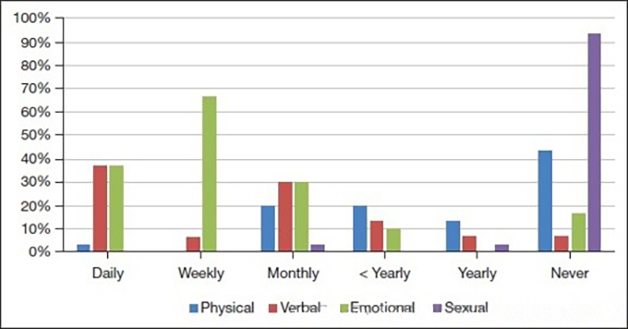
Of the home health care workers (HHCW) surveyed, almost 37% responded that they experience both verbal and emotional violence in the workplace daily. More than 80% reported experiencing verbal aggression at some point. Physical violence is less prominent. 20% of respondants said they experience physical violence monthly. However, 56.6% said they have experienced physical violence at some point in their current agency. 76.6% of the time, the perpetrators of the violence are the patients of the HHCW.

Workplace Violence

Fig. 1 Frequency of occurrence of physical, verbal, emotional, and sexual abuse as a function of time: daily, weekly, monthly, <yearly, yearly, and never.

Reporting Workplace Violence

All of the study participants indicated they had knowledge of workplace violence reporting procedures in their agencies, but 26.7% were unsure if the policies are contained in the employee handbook. 46.7% were uncertain as to whether the agency offered WPV or de-escalation training and 66% said prevention and de-escalation training was not mandatory. Unfortunately, 40% said their management did not encourage reporting and 33% said they were not comfortable approaching management about WPV. Despite the frequency of WPV among the respondents, none of the participants reported these incidents to management

Thoughts

According to this, and other research studies on workplace violence in home healthcare, the problem is prevalent and persistent. Most HHCWs have experienced some sort of aggression, violence, or abuse in the course of performing their jobs. Of those who have, most do not report the incidents to management. Most HHCWs have not been trained in prevention or de-escalation. Even with training, HHCWs need a way to get immediate help. Unfortunately, most do not have an emergency alert system on their person during home visits.

    Solution

    Care at Home agencies, including non-medical supportive care, home health, hospice, and any other lone workers who are visiting patients in their homes, need safety policies and procedures. Agencies must include the same in the employee handbook, explain during orientation, and make available to HHCWs digitally. 

      Policies and procedures should include:

      • A safety committee comprised of management, back office staff, and field workers
      • A clearly written policy regarding physical, emotional, verbal, and sexual abuse
        • Against a patient or their family/friends by a HHCW
        • Against a HHCW by a patient or their family/friends
        • Against a HHCW by a colleague or manager
        • Against a HHCW by the environment in which they work (i.e. aggressive pets, weapons, cigarette smoking indoors, etc.)
      • A digital reporting system that employees can use without having to approach management individually
      • A clearly written policy on the management response to violence reporting
      • A clearly written policy forbidding any retaliation or discrimination against a reporting employee
      • Required research about new patients including
        • Background/History of violence and/or mental instability
        • Neighborhood safety rating
        • Family members likely to be in the home and their history of violence and/or mental instability

      Additional Tools for HHCWs

      • Training in
        • Violence prevention
        • De-escalation
        • Situational Awareness
        • Self-defense
      • A mandatory, GPS-enabled, multi-function safety device and platform to proactively manage caregiver safety and respond to incidents
      • Optional escort service for new patients
      • Mandatory escort service for new patients with a history of violence, mental issues, or incarceration

      Workplace violence against HHCWs is not “if,” but “when.” It is the responsibility of the agencies to lower the risk, lower the percentage of “whens,” and encourage reporting. If you’re not sure how to begin, hire a consultant to help you build your safety committee and write your policies. It doesn’t matter how you start implementing safety protocols, as long as you follow through and protect your employees.

      # # #

      Kristin Rowan, Editor, The Rowan Report
      Kristin Rowan, Editor

      Kristin Rowan has been working at The Rowan Report since 2008. She is the owner and Editor-in-chief of The Rowan Report, the industry’s most trusted source for care at home news, and speaker on Artificial Intelligence and Lone Worker Safety and state and national conferences.

      She also runs Girard Marketing Group, a multi-faceted boutique marketing firm specializing in content creation, social media management, and event marketing.  Connect with Kristin directly kristin@girardmarketinggroup.com or www.girardmarketinggroup.com

      ©2025 by The Rowan Report, Peoria, AZ. All rights reserved. This article originally appeared in The Rowan Report. One copy may be printed for personal use: further reproduction by permission only. editor@therowanreport.com


      1. Obariase, E.; Bellacov, R.; Gillespie, G.; Davis, K. (2025). Assessing Workplace Violence and Policy Impact: A Cross-sectional Study of Home Healthcare Workers. Home Healthcare Now, 43(3), 150-156. doi: 10.1097/NHH.0000000000001345

      The Alliance Responds

      by Kristin Rowan, Editor

      The Alliance Responds to CMS Hospice Update

      The Alliance responds to CMS-1835-P, the FY 2026 Hospice Wage Index, Conditions of Participation, and Quality Reporting Program Requirements updates. On June 10, 2025, in a 25 page letter to Dr. Mehemet Oz, CEO for The National Alliance for Care at Home Steve Landers, MD, MPH lays out the constraints and financial burdens hospice agencies will face if these updates are enacted. 

      Payment Rate Update

      Increase Less than Inflation

      In the rule for FY 2026, CMS proposes a 3.2 percent market basket increase and a .8 percent productivity decrease, yielding a 2.4 percent increase overall. According to the letter, inflation has raised medical care prices by 3.1 percent, leaving a shortfall of .7 percent. Hospices are also plagued by the same workforce shortage the rest of the medical industry faces. Workforce shortages result in fewer qualified people than there are available positions, which drives wages up. BLS data indicates the wage increase for 2025 was 4.4%. The Alliance argues that the 2.4% net increase falls well short of the actual expense increase.

      Faulty Data

      In a recent article, we outlined the process that CMS uses to determine the market basket update. The Alliance echos our information, showing the market basket forecast is well below actual increases. The Alliance further argues that the shortfall compounds, leaving the base rate increasingly smaller with each forecast. The current estimate is a 4.9% pay rate gap. CMS contends there is no way to adjust for forecast errors. The Alliance has a simple solution: manually adjust the payment rate every year when the finalized number are above the forecasted numbers BEFORE adding the next year’s payment rate increase.

      Likewise, The Alliance concurs with The Rowan Report sentiment that productivity cannot increase in hospice like it does in less labor-intensive sectors. Landers also mentions the failure to consider travel costs, the wage differences in rural areas, and the lack of reclassification options in hospice care.

      Payment Rate Recommendations

      As any well-drafted response should, The Alliance provides actionable recommendations in each section. For payment rate updates, The Alliance recommends:

      • We recommend CMS examine closely more recent data and increase final payment rates for FY 2026.
      • We urge CMS to explore all available avenues to address the forecast error shortfall, such as through a one-time adjustment.
      • We encourage CMS to collaborate with stakeholders to address the shortcomings of relying upon hospital data to determine hospice payment rates, and ways to achieve parity across provider types with respect to geographic area wage adjustments.

      HIS to HOPE Transition

      Also addressed in the letter is opposition to the timeline of the HIS to HOPE transition. The Alliance restates much of what was in the joint letter to CMS urging the delay of the HOPE tool adoption. That letter was a joint venture between The National Alliance for Care at Home (The Alliance), LeadingAge, and the National Partnership for Healthcare and Hospice Innovation (NPHI).

      The consequence of adverse outcomes cannot be understated. The risk of negative financial consequences for hospice providers is
      largely dependent this year on the success of two transitions—iQIES and HOPE— neither of which are within their control.

      Steve Landers, MD, MPH

      CEO, National Alliance for Care at Home

      HOPE Transition Recommendations

      • Considering the volatility inherent in a reporting transition of this magnitude and the lack of clear information provided to date, we respectfully request CMS waive the HOPE timeliness submission requirement for two calendar quarters post implementation.
      • We further respectfully request that CMS delay the HOPE implementation date until at least six months after CMS education and training, beyond that which is introductory and that is scheduled for spring/summer 2025, the final validation utility tool specifications are available and the application for iQIES access has been opened for hospices.

      Digital and Future Hospice Measurements

      Among the digital hospice measurements is an interoperability measurement. The Alliance supports interoperability and data exchange across medical care entities, but stresses to CMS that many hospices do not have digital EHR systems, cannot afford to maintain such systems, and have not received the federal financial support necessary to meet this objective.

      The Alliance also objects, not in theory, but in practical application, to the nutrition measure noted in future hospice measures. Nutrition for a hospice patient is vastly different than for other patients and should be implemented as a process measure, rather than having specific goals for food intake and nutrition.

      Similarly, the well-being measure is not designed for hospice care. In other sectors of healthcare, well-being incorporates measures for mental, social and physical health and focuses on curative plans. Hospice care focuses on person-centered care, emphasizing the desires of the patient as they are balanced against religious, cultural, and personal beliefs. The well-being measure must be curated to fit hospice care.

      The Alliance - Conclusion

      The Alliance values CMS’s ongoing commitment to enhancing hospice care quality,
      ensuring program integrity, and improving patient outcomes. We appreciate your
      consideration of our comments and look forward to ongoing dialogue to achieve these
      shared objectives.

      The Rowan Report - Conclusion

      The Alliance has, as always, done an exemplary job at explaining the industry position on the CMS rule. Likewise, it has outlined each step CMS should take to view the updates through a hospice lens rather than a hospital lens. We commend and support The Alliance statement and position. As this is an ongoing topic until the final rule is implemented, we will continue to provide updates as they become available. 

      If you are a member of The Alliance, you can read the full 25 page letter here.

      # # #

      Kristin Rowan, Editor
      Kristin Rowan, Editor

      Kristin Rowan has been working at The Rowan Report since 2008. She is the owner and Editor-in-chief of The Rowan Report, the industry’s most trusted source for care at home news, and speaker on Artificial Intelligence and Lone Worker Safety and state and national conferences.

      She also runs Girard Marketing Group, a multi-faceted boutique marketing firm specializing in content creation, social media management, and event marketing.  Connect with Kristin directly kristin@girardmarketinggroup.com or www.girardmarketinggroup.com

      ©2025 by The Rowan Report, Peoria, AZ. All rights reserved. This article originally appeared in The Rowan Report. One copy may be printed for personal use: further reproduction by permission only. editor@therowanreport.com


      Painting Pictures

      by Elizabeth E. Hogue, Esq.

      "Painting Pictures" of Patients

      Painting Pictures in clinical documentation to achieve positive audit results. As the fight against “fraud, abuse and waste” continues, responding to audits has become an ongoing burden for many providers. Providers have repeatedly been urged to “paint a picture” of patients in clinical documentation in order to help achieve positive results. “Painting a picture” of the patient, however, may have become more difficult as the use of electronic health records (EHRs) has increased. That is, it’s difficult to adequately describe patients’ conditions when there are so many boxes to check and blanks to fill in.

      Copy, Paste, Repeat

      When it comes to narrative descriptions of patients’ conditions, it is extremely tempting to “copy and paste,” “cut and paste” and/or “copy forward” previous documentation in the EHR. The copy and paste feature allows users to use the content of another entry and to select information from an original or previous source to reproduce in another location. The copy forward capability replicates all or some information from a previous note to a current note, while the cut and paste feature removes documentation from the original location and places it in another location. In addition to the obvious potential problems for quality of care related to the use of these functions, auditors are understandably skeptical of documentation that repeats itself throughout patients’ medical records.

      Painting Pictures of Fraud

      Auditors are especially likely to deny claims that include documentation that was obviously copied using the above functions, when the information copied “sticks out like a sore thumb.” If hospice staff document, for example, that “the patient eats a lot of Mexican food” over and over in clinicians’ visit notes, auditors are understandably skeptical about whether services were necessary for a hospice patient who seems to have a continuous robust appetite or whether services were, in fact, rendered.

      How to Paint the Picture

      What does it mean to “paint a picture?” If a home health patient needs wound care or injections of medications, for example, the “picture” must account for why patients or their caregivers are not performing these activities themselves. Clinicians need to describe the following in a “picture” of the patient:

      • Does the patient live alone or have caregivers?
      • Why can’t patients do wound care or self-inject medications
      • Why can’t caregivers perform these activities?
      • What attempts did clinicians make to assist patients and caregivers to provide wound care and injections?
      • Why were these attempts unsuccessful?
      • What attempts were made to find other caregivers – either paid or voluntary – who might provide these types of care?
      • What were the results of these attempts to find other caregivers?
      • Despite the initial inability of patients and caregivers to render this care themselves, what efforts did clinicians make to help ensure that they became able to do so?
      Painting Pictures

      Get the Picture?

      It’s difficult, if not impossible, to paint the above picture using only the boxes and blanks of forms in EHRs. More is needed if providers are serious about positive audit results.

      # # #

      Elizabeth E. Hogue, Esq.
      Elizabeth E. Hogue, Esq.

      Elizabeth Hogue is an attorney in private practice with extensive experience in health care. She represents clients across the U.S., including professional associations, managed care providers, hospitals, long-term care facilities, home health agencies, durable medical equipment companies, and hospices.

      ©2025 Elizabeth E. Hogue, Esq. All rights reserved.

      No portion of this material may be reproduced in any form without the advance written permission of the author.

      ©2025 by The Rowan Report, Peoria, AZ. All rights reserved. This article originally appeared in The Rowan Report. One copy may be printed for personal use: further reproduction by permission only. editor@therowanreport.com