What Can Providers Give to Patients, Pt 3

by Elizabeth E. Hogue, Esq.

What Can Providers Give to Patients

Part 1 & 2 Recap

Providers, including marketers, are tempted to give patients and potential patients free items and services. While providers usually have good intentions, they must comply with applicable requirements. 

As Part 1 of this series indicates, there are two applicable federal statutes: the Anti-Kickback Statute (AKS) and the Civil Monetary Penalties Law (CMPL). Part 1 also makes it clear that there are a number of exceptions. If providers meet the requirements of applicable safe harbors or exceptions, they can give patients and potential patients free items and services that would otherwise violate applicable requirements.

Part 2 describes an exception for items and services of nominal value with a retail value of no more than $15 per item or $75 in the aggregate per patient on an annual basis that may be given by providers to beneficiaries. Providers may not, however, give cash or cash equivalents.

Exceptions to the Rule

The OIG also says that providers may give free items and services to patients with demonstrated financial need. The exception based on financial need does not include cash or cash equivalents. Cash equivalents include checks, gift certificates, and gift cards.
The CMPL says that the following requirements must be met to qualify for this exception:

      • The items or services are not offered as part of any advertisement or solicitation.
      • The offer to give items or services is not tied to the provision of other items or services reimbursed in whole or in part by the Medicare or Medicaid Programs.
      • There is a reasonable connection between the items or services and the medical care of the patient.
      • Providers give items or services after a determination has been made in good faith that patients are in financial need.
What Can Providers Give to Patients
The AKS does not include a similar safe harbor or exception, but the OIG has stated that the AKS does not prohibit discounts to uninsured patients who are unable to pay for items and services.
Good faith determinations that patients are in financial need are key. Determinations should be based on policies and procedures that providers consistently apply to make these decisions. Policies and procedures should include requirements to document financial need. Such policies and procedures are often referred to as policies on “charity care.”

Determining Need

Providers have discretion to take a variety of factors into account to determine financial need. Such factors may include:

        • Patients’ income, assets and expenses
        • Amounts due for services and items provided

Accuracy Matters

Needless to say, providers should avoid inflated income guidelines that result in free items or services given to beneficiaries who are not really in financial need.

Providers may ask patients to provide documentation of their financial status. Decisions about financial need may also be based on other reasonable methods, such as documented interviews with patients and questionnaires.

Policies and procedures that govern free items and services given to patients should also require periodic review of patients’ financial status, since it may change over time. Providers should recheck patients’ needs at reasonable intervals to help ensure that their financial status has not changed significantly.

Final Thoughts

The key to using this exception is undoubtedly consistent application of a policy and procedure to make determinations about financial need. Now is the time to review or develop and implement policies that cover free items and services given to patients.
This is part 3 of a 5-part series. Come back next week for part 4.

# # #

Elizabeth E. Hogue, Esq.
Elizabeth Hogue is an attorney in private practice with extensive experience in health care. She represents clients across the U.S., including professional associations, managed care providers, hospitals, long-term care facilities, home health agencies, durable medical equipment companies, and hospices.
©2025 Elizabeth E. Hogue, Esq. All rights reserved.

No portion of this material may be reproduced in any form without the advance written permission of the author.


©2025 by The Rowan Report, Peoria, AZ. All rights reserved. 

HHAeXchange Features Bradley Cooper Documentary

by Kristin Rowan, Editor

PBS/Cooper Documentary Featured

HHAExchange PA Customer Summit

HHAeXchange welcomed Pennsylvania users for a day of learning and connection this September. Led by CEO Paul Joiner, the team has grown recently with the acquisitions of Cashè, Generations Homecare, and Sandata. Joiner opened the day by sharing the company promise to put customers first and build around their core values.  He also highlighted the company’s work on AI features that are coming soon.

Caregiving, the Movie

Caregiving is a documentary from Executive Producer Bradley Cooper that explores systemic issues in the US care system. Cooper cared for his dad when he had cancer and is still caring for his mom. The film follows both paid and unpaid caregivers, who share their personal stories, along with the history of caregiving. Caregiving is streaming on PBS.

HHAeXchange and Caregiving

How does a PBS documentary and 18 short films become the subject of a software user group meeting? I suspect that promoting the film using Bradley Cooper played a small role in its popularity and viewership. But, in this case, it was HHAeXchange President Stephen Vaccaro who initiated the event. Stephen watched the film and recognized its importance. He sent it to the executive team and a lot of people inside the company watched it. As they started planning the user group meeting CEO Paul Joiner suggested reaching out to the show’s producers.

Closing on a High Note

Two of the film’s principals, director Chris Durrance and caregiver Matt Cauli joined HHAeXchange CEO Paul Joiner to close out the day. The panel was extremely well-received and Matt Cauli has been hailed as a near-perfect spokesperson for caregiving (the film and the industry).

Comments from HHAeXchange and the customer summit describe the film as “instrumental in bringing caregiving into the national conversation, shining a light on the critical role caregivers play every day and they challenges they navigate.”

Meet EP Tom Chiodo

Joined by HHAeXchange President Stephen Vaccaro, one of the film’s Executive Producers sat down with The Rowan Report to discuss Caregiving and Wellbeings.org. Tom Chiodo is the executive producer of special projects, national productions at WETA the PBS station in D.C. Tom develops documentaries, orginal digital content, and engagement campaigns for more than 330 PBS stations. Wellbeings is a campaign from public media to address critical health needs in America. Wellbeing currently has 18 short films that include additional history and information on caregiving in the U.S. that didn’t fit inside the 2-hour time constraint of the documentary. The channel has 2 million subscribers.

Not Done Yet

Speaking with Tom, it was immediately clear the passion and devotion he has for the caregiving industry. 

“Caregiving is struggling. It’s not just family members, but caregiving as an industry. They don’t get paid enough, even though they’re dealing with quality of life. The job is physically and emotionally demanding, and mentally draining.”

Tom Chiodo

Executive Producer, WETA/PBS

According to Tom, the caregiver shortage pushed Medicaid to promote self-directed care as an alternative. Now, there are an estimated 53 – 105 million unpaid adult family caregivers in the U.S. with $600 billion in lost income annually. Shining a light on the changes that need to be made, Caregiving has been viewed thousands of times, but more work needs to be done. Tom is currently working on a film on defeating dementia and another with filmmaker Ken Burns on adult mental health.

Understanding for All Ages

An estimated 5.4 million children and adolescents provide direct care for a family member. Wellbeing partnered with Fred Rogers Productions for Many Ways to Show You Care, coming to Wellbeings and PBS Kids on November 7. The series shows kids and teens engaged in caregiving with siblings, parents, and grandparents who suffer from various disabilities.

Watch the Film

If you haven’t already, I encourage you to take the time to watch Caregiving and the supporting short films from Wellbeing.

Caregiving Tom Chiodo Fred Rogers<br />

# # #

Kristin Rowan, Editor

Kristin Rowan has been working at The Rowan Report since 2008. She is the owner and Editor-in-chief of The Rowan Report, the industry’s most trusted source for care at home news, and speaker on Artificial Intelligence and Lone Worker Safety and state and national conferences.

She also runs Girard Marketing Group, a multi-faceted boutique marketing firm specializing in content creation, social media management, and event marketing.  Connect with Kristin directly kristin@girardmarketinggroup.com or www.girardmarketinggroup.com

©2025 by The Rowan Report, Peoria, AZ. All rights reserved. This article originally appeared in The Rowan Report. One copy may be printed for personal use: further reproduction by permission only. editor@therowanreport.com


Second Longest Shutdown Since 1980

by Kristin Rowan, Editor

Second Longest Shutdown Since 1980

–As of October 30, 2025–

Shutdown day 30

Subsidy Standoff

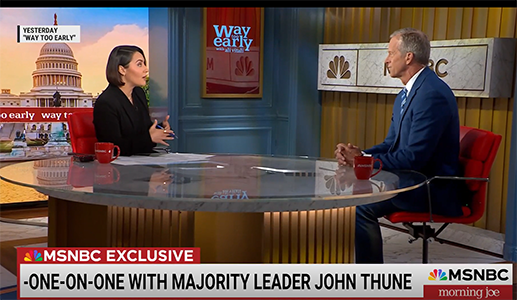
Senate Majority Leader John Thune spoke with MSNBC about the shutdown and the subsidy expiration. “Shouldn’t people who are signing up during open enrollment know what they’re signing up for?,” MSNBC asked. Thune said the first step has to be opening the government before that conversation happens, not in the context of the budget talks. According to Thune, the Republican party objects to the current operation of the subsidy program and the incentive structure needs reform.

Subsidy Standoff Not to Blame

Current estimates show insurance premiums rising by 18% – 22% in 2026. Leader Thune suggests that only a “tiny percentage” of that increase is due to the expiration of the enhanced subsidies and the rest is coming from the insurance companies. He says premiums should not being going up by this much and the extreme rate increase is because of waste, fraud, and abuse, and the lack of incentives for insurance companies to lower costs.

No Reform, No Subsidy

Throughout the interview, Leader Thune would not commit to 

Government Shutdown Senate Majority Leader John Thune

negotiating with Democrats, would not guarantee subsidies would be saved, and would not commit to voting for any extension without at least lowering income caps back to pre-COVID levels.

After the Senate session today, Thune spoke to reporters, indicating there was a “higher level of communication” happening. He went on to repeat his earlier statement to MSNBC.

“…there are a lot of rank-and-file members that continue, I think, to want to pursue solutions and to be able to address the issues they care about, including health care, which … we’re willing to do, but it obviously is contingent upon them opening up the government.”

John Thune

Senate Majority Leader

(Un)lucky Number 13

October 28th marked the 13th vote put to the Senate to reopen the government in 28 days. The Senate reconvened yesterday and plan to vote again today, October 30th. Senators have mixed opinions about the likelihood of an agreement now that deadlines for military pay, SNAP benefits, and other programs close in.

Senate Minority Leader Chuck Schumer (D) said negotiations were “occasional” and that Republicans haven’t offered anything different from the original House-passed budget.

Senator Lindsey Graham (R) said resolving the differences on health care would come after the government reopens. “I’m hoping next week, hopefully after the election, that we can get the government back open, talking about our differences on health care.”

Senator Thom Tillis (R) states there is no evidence that formal negotiations are happening, just discussions. 

When Will it End?

The Senate is expected to vote today, October 30th. The measure needs 60 affirmative votes to pass. The vote to automatically continue without discussion failed 37-61. The subsequent votes to temporarily fund the government through November 21st failed 55-45 on October 1 and 54-45 on October 28. Senator Jim Justice (R-WV) voted yes in the first vote, but did not vote yesterday.

If I Were a Gambler...

The rumors and accusations fly on both sides about who is to blame for the shutdown. There are betting sites placing odds on the date the standoff will end. I’m no political expert, but I think there’s something else going on. I believe both sides are playing risky games and that neither side knows the rules to the other’s game. I think both sides know the exact date they will each agree to end this standoff. And I’m sure there are underlying motives that have nothing to do with what they’re telling us.

We will continue to report on this ongoing story as more information becomes available.

# # #

Kristin Rowan, Editor

Kristin Rowan has been working at The Rowan Report since 2008. She is the owner and Editor-in-chief of The Rowan Report, the industry’s most trusted source for care at home news, and speaker on Artificial Intelligence and Lone Worker Safety and state and national conferences.

She also runs Girard Marketing Group, a multi-faceted boutique marketing firm specializing in content creation, social media management, and event marketing.  Connect with Kristin directly kristin@girardmarketinggroup.com or www.girardmarketinggroup.com

©2025 by The Rowan Report, Peoria, AZ. All rights reserved. This article originally appeared in The Rowan Report. One copy may be printed for personal use: further reproduction by permission only. editor@therowanreport.com


Alliance to Congress: STOP CUTS

by Kristin Rowan, Editor

9% Cut Proposed

CMS proposed home health rule for 2026 includes disastrous cuts. A 3.2% market basket increase, a 0.8% productivity cut, a 5% reduction to recoup prior overpayments, and a 4.1% permanent reduction to prevent further overpayments. CMS proposed an additional 0.5% cut to account for high-risk outliers. In other words, CMS wants to pay less for all patients to make up for the small percentage of patients who need more care.

Deadline Looming

The mandatory comment period ended on August 29. Next, CMS reviews the submitted comments, responds to those comments (generally explaining why they are not going to listen), and then finalizes the 2026 rule. The final rule is due November 1, 2025. Although, that falls on a Saturday, so the deadline may extend to Monday. A good many of us will be in New Orleans for the Alliance annual conference and expo by then.

Group Effort

The National Alliance for Care at Home (Alliance) joined 150+ provider, patient, community, and advocacy groups to write a letter to Congress urging them to prevent the CMS proposed cut.

“The proposed payment reductions for home health pose a serious threat to the health and safety of Medicare beneficiaries and to the broader integrity of our healthcare system. With the 2026 payment rule under review and due by November 1, we urge you to promptly intervene and press CMS to stop the cuts and realign payments.”

Pattern of Payment Reduction

The letter, addressed to Senate Majority Leader John Thune, Senate Minority Leader Chuck Schumer, Speaker Mike Johnson, and House Minority Leader Hakeem Jeffries, asks Congress to look at the consecutive years of pay reductions and how they have impacted home health. Because of the cuts, agencies have gone out of business or downsized, leaving rural areas without care.

Home Health Costs Less

The letter also explains that cutting medicare payments actually costs more. When more patients have access to home health, CMS spends less on unplanned hospital visits and ER trips. Patients have fewer falls and accidents. Risk factors are identified earlier and preventative treatments are used before a patient’s condition requires hospitalization. Home health patients stay home years longer than those not receiving home health before entering a skilled nursing or assisted living facility. 

What's at Risk

The Medicare Trust Fund, funded partially by payroll taxes, includes hospital insurance that pays for hospital (Medicare Part A) services. When these costs increase, the trust fund is at risk being insolvent and taxes are increased to put money back into the fund. Lowering home health payment rates and cutting off millions of people who depend on home health will impact tax payers as well.

CMS home health payment cuts
“The cuts currently proposed to Medicare’s home health benefit are unsustainable and would be deeply harmful to those who depend on care at home. The Alliance will continue to work with policymakers and our stakeholder allies to oppose these harmful cuts and protect access to home health services for millions of older adults, individuals with disabilities, and their families.”
Dr. Steve Landers

CEO, National Alliance for Care at Home

The Alliance issued a press release with the highlights from the letter. You can read the full letter here.

# # #

Kristin Rowan, Editor
Kristin Rowan has been working at The Rowan Report since 2008. She is the owner and Editor-in-chief of The Rowan Report, the industry’s most trusted source for care at home news, and speaker on Artificial Intelligence and Lone Worker Safety and state and national conferences.

She also runs Girard Marketing Group, a multi-faceted boutique marketing firm specializing in content creation, social media management, and event marketing.  Connect with Kristin directly kristin@girardmarketinggroup.com or www.girardmarketinggroup.com

©2025 by The Rowan Report, Peoria, AZ. All rights reserved. This article originally appeared in The Rowan Report. One copy may be printed for personal use: further reproduction by permission only. editor@therowanreport.com


Interoperability and Gen X

by Kristin Rowan, Editor

Interoperability and Gen X

Your Song

Part 1 of this series discussed the timeline and history of interoperability and the slow progress that has been made so far. Both in care at home and the broader health care system, interoperability seems to stall despite regulations and incentives for data sharing. Part 2 takes the discussion into the future when the next generation of care at home patients deals with data silos.

We Didn't Start the Fire

We (Gen Xers) have waited 15 years for HIEs to solve the free exchange of information between health systems. We have also watched and participated in the disparate system for our own healthcare and that of our parents and our children. We are in the unique predicament of needing care for three generations simultaneously. That in-between position gave us the nickname “The Sandwich Generation.” And we are ready to rock this boat!

For What It's Worth

  • More than 65% of us feel like there are barriers to accessing healthcare1
  • More than 70% are using or interested in using AI-assisted diagnosis
  • Almost 75% want Ai-powered care tools
  • 45% believe healthcare will improve in the next 10 years
  • 80% believe that improvement will come from AI-integration and better virtual access
Interoperability Gen X 80s technology

Teach Your Children

Home care patients are still primarily baby boomers who did not grow up with technology embedded in everything they do. Their children, however, did. These are the adult children making decisions for their parents. They are the ones watching their parents sit through hours of Q&A to relay medical history that countless other doctors already have. They are the ones asking “why?”. They know there’s a better way and they expect you to find it.

But, Gen Xers are also independent, resourceful, and adaptable. We are tech-savvy and have a no-nonsense attitude toward authority. We are the generation that doesn’t wait for technology to get better; we create our own. And since our young employees (and our children) eat, sleep, and breathe technology, you can bet the solution will be innovative and quick.

Interoperability and Gen X

It's Now or Never

The next generation of home health patients are approaching 60 and will be eligible for Medicare in 5 years. 2030 is your deadline for interoperability. When our doctors, insurance providers, and home health agencies tell them that information portability isn’t possible, they will not take that answer lying down. When the hospital asks them to drive across town to their imaging center, wait for the imaging center to transfer their results to a CD, and then deliver the physical copy to the hospital (yes, my hospital system made me do this), we will demand to know why.

I'm a Believer

The AI solutions that I’ve seen in the last few years have been innovative, creative, and fascinating. I believe in my fellow Gen Xers and the possibilities that lay before us. I believe that we all have the right to access our own health information, including visits, test results, imaging, notes, and recommendations. And I believe we have the building blocks to unify health records for every patient in real time. If I only I had the coding skills to build it. Maybe I should ask my kids. 

# # #

Kristin Rowan, Editor

Kristin Rowan has been working at The Rowan Report since 2008. She is the owner and Editor-in-chief of The Rowan Report, the industry’s most trusted source for care at home news, and speaker on Artificial Intelligence and Lone Worker Safety and state and national conferences.

She also runs Girard Marketing Group, a multi-faceted boutique marketing firm specializing in content creation, social media management, and event marketing.  Connect with Kristin directly kristin@girardmarketinggroup.com or www.girardmarketinggroup.com

©2025 by The Rowan Report, Peoria, AZ. All rights reserved. This article originally appeared in The Rowan Report. One copy may be printed for personal use: further reproduction by permission only. editor@therowanreport.com


Interoperability: The Unreachable Dream

by Kristin Rowan, Editor

Interoperability

The Unreachable Dream

Healthcare and care at home have been reaching for interoperability for decades. When I started working in the care at home industry, there was a learning curve for terminologies, abbreviations (oy! with the abbreviations already!), and the pain points experienced by agencies and vendors. Interoperability was at the top of that list. 2009, the first full year I worked in care at home, was the year Congress mandated EHRs and data exchange. The mandate did not accomplish much. Incompatible data structures limit post-acute care data to the most recent health event, not the patient’s full medical record.

Data Exchange

Interoperability

Following the EHR mandate, Congress continued to add regulations and rules to advance data exchange. Starting with HIPAA in 1996, interoperability advanced as follows:

Health Insurance Portability and Accountability Act ensures patient data stays private both within a healthcare system and during data exchange

Congress mandated the use of EHRs throughout healthcare

HITECH Act launched Health Information Exchanges (HIEs) that support secure exchange of information between health systems

Health Level 7 (HL7) designed a framework that establishes protocols for data exchange

Fast Healthcare Interoperability Resources (FHIR), an updated of HL7, enables processes in 84% of hospitals and 61% of clinician offices

21st Century Care Act allows patients to access their own medical information and requires developers to publish APIs and ensure all data in the patient health record is accessible through that API

Trusted Exchange Framework and Common Agreement (TEFCA) lists principles, terms, and conditions to standardize data

CMS Interoperability Framework pushes interoperability nationwide through improved data quality; advanced technology; data aggregation; and alignment of data, tools, and measures

Following the EHR mandate, Congress continued to add regulations and rules to advance data exchange. Starting with HIPAA in 1996, interoperability advanced as follows:Interoperability

  • Health Insurance Portability and Accountability Act ensures patient data stays private both within a healthcare system and during data exchange
  • Congress mandated the use of EHRs throughout healthcare
  • HITECH Act launched Health Information Exchanges (HIEs) that support secure exchange of information between health systems
  • Health Level 7 (HL7) designed a framework that establishes protocols for data exchange
  • Fast Healthcare Interoperability Resources (FHIR), an updated of HL7, enables processes in 84% of hospitals and 61% of clinician offices
  • 21st Century Care Act allows patients to access their own medical information and requires developers to publish APIs and ensure all data in the patient health record is accessible through that API
  • Trusted Exchange Framework and Common Agreement (TEFCA) lists principles, terms, and conditions to standardize data
  • CMS Interoperability Framework pushes interoperability nationwide through improved data quality; advanced technology; data aggregation; and alignment of data, tools, and measures

Thirty Years Later

Despite the laws, regulations, frameworks, and mandates, interoperability is not much better than it was in 1996. I had an experience this year that both enlightened and infuriated me. I switched health insurance plans for a variety of reasons. My new plan didn’t cover most of the doctors, hospitals, and health systems I had been using for many many years. So in February, I found a new PCP and had the standard start of care visit to establish my health history: current conditions, past conditions, past surgeries & procedures, current medications, etc. I requested referrals to new specialists and updates to prescriptions. My PCP performed a “complete physical” that was nothing more than a cursory overview. And then I waited.

Interoperability

The Waiting Game

And waited…and waited…. I thought all these organizations and standards were supposed to make this easier. Still, I waited.

  • I waited for an “invitation” to my PCPs portal to see my visit notes and test results
  • I waited for my PCP to send referrals to new specialists
  • I waited for my health insurance provider to inevitably tell me the specialist wasn’t covered under my plan
  • I waited for a new referral from my PCP
  • I waited for appointments, results, and recommendations
  • I waited for access to new patient portals
  • I waited for the portal to figure out how to give me access to three different providers in the same app
    • (spoiler alert: I have to log in to the same app three different ways to access three different providers; my providers can see all the information in one place, but I can’t)
  • I waited for test results to appear in each portal; some I had to call and request, some I’m still waiting for

Data Exchange "Advancements"

According to my research, 84% of hospitals and 61% of clinicians are currently using FHIR, designed to improve interoperability between different health systems using standard data formats and APIs.

Last month I had an appointment. Correction: I thought I had an appointment for an imaging scan. I thought this because the scheduling nurse called me to confirm the appointment day, time, and location. When I arrived, the check-in nurse couldn’t find me in their system.

It wasn’t just that she didn’t see my appointment. No, it was that she couldn’t find me at all. (We later discovered it was still pending because the imaging department never confirmed the appointment after the scheduling nurse added it.) 

She could see no current or future appointments. She could see no past appointments because they were booked a different way. She couldn’t find any record of me at all. You see, my record started in the next building over.

Error 404: Not Found

Every one of these facilities is in the same healthcare system. (Think ACME hospital, ACME imaging, ACME specialist doctor, and ACME lab) Every office is part of the same healthcare system and none of them can see each other’s information. ACME hospital can’t see the schedule for ACME imaging and can’t schedule imaging appointments outside the hospital. For that, I have to call ACME imaging.

  • But wait! The doctor wrote my referral for ACME hospital, not ACME imaging. I need a new referral.
  • But wait! Neither the healthcare system nor the specialist can write a new referral. My payer will only accept a referral from my PCP.
  • But wait! My PCP has no idea what the referral is for, how it was written, or where it’s supposed to go because my PCP can’t access my records from the healthcare system.

This is advanced data exchange using FHIR, HIE, TEFCA, and QHIN. My health system uses our local HIE and CommonWell Health Alliance, an interoperability network designated as a federal QHIN. Apparently, this ensures the health system can share data with participating providers, but not with themselves.

Home Health is Even Further Behind the Curve

After so many years, so many advancements, and so many regulations, interoperability is no more “solved” than it was in 2009. Even the health systems that are using all the tools aren’t even internally interoperable.

Home Health has an even harder time attaining interoperability. 

  • It is more difficult for HHAs to access patient information, which usually has to be manually imported into the home health EHR
  • Patient consent is required, but HHAs often deal with patients who don’t have the capacity to consent
  • Despite the requirement of APIs, most health information is spread out across multiple systems and the HHA only get information from the referring facility
  • Nearly 80% of HHAs use an EHR
  • Only 28% of HHAs are electronically exchanging information with outside facilities
  • Only 18% can integrate shared data into automated workflows
  • HHAs did not receive the financial incentives that larger healthcare systems got to push interoperability
  • TEFCA participation is not mandatory, slowing down the process of approving a data connection and exchange

Many legacy EHRs have met significant challenges moving into interoperability. Competitors in the space had no financial incentive to create standard languages and formatting designed to share information. HHAs are left with two choices: 

The costly, time-consuming task of reviewing, selecting, and onboarding an entirely new EHR –or–

Piece together workarounds with multiple 3rd party or internal solutions haphazardly strung together to resemble interoperability

Time is Up

The call for interoperability started in 1996. With little advancement and not much hope on the horizon, we (your patients) are looking for other ways to get what we need. Next week, I’ll talk about my predictions for how interoperability will progress for the next generation.

# # #

Kristin Rowan, Editor

Kristin Rowan has been working at The Rowan Report since 2008. She is the owner and Editor-in-chief of The Rowan Report, the industry’s most trusted source for care at home news, and speaker on Artificial Intelligence and Lone Worker Safety and state and national conferences.

She also runs Girard Marketing Group, a multi-faceted boutique marketing firm specializing in content creation, social media management, and event marketing.  Connect with Kristin directly kristin@girardmarketinggroup.com or www.girardmarketinggroup.com

©2025 by The Rowan Report, Peoria, AZ. All rights reserved. This article originally appeared in The Rowan Report. One copy may be printed for personal use: further reproduction by permission only. editor@therowanreport.com


What Can Providers Give to Patients, Pt 2

by Elizabeth E. Hogue, Esq.

Provider Kickbacks

Exceptions

Providers, including marketers, are tempted to give patients and potential patients free items and services. While providers usually have good intentions, they must comply with applicable requirements. As Part 1 of this series indicates, there are two applicable federal statutes: the anti-kickback statute and the civil monetary penalties law. Part 1 also makes it clear that there are a number of exceptions or “safe harbors. If providers can meet the requirements of an applicable safe harbor or exception, they can give patients and potential patients free items and services that would otherwise violate applicable requirements. 

Limit Increase

The Office of Inspector General (OIG) of the U.S. Department of Health and Human Services, the primary enforcer of fraud and abuse prohibitions, announced that; effective on December 7, 2016; the limits on free items and services given to beneficiaries increased. Specifically, according to the OIG, items and services of nominal value may be given to patients or potential patients that have a retail value of no more than $15 per item or $75 in the aggregate per patient on an annual basis. The previous limits were $10 per item or $50 in the aggregate per patient on an annual basis.

Undue Influence

Under section 1128A(a)(5) of the Social Security Act, persons who offer or transfer to Medicare and/or Medicaid beneficiaries any remuneration that they know or should know is likely to influence beneficiaries’ selection of particular providers or suppliers of items or services payable by the Medicare or Medicaid Programs may be liable for thousands of dollars in civil money penalties for each wrongful act. “Remuneration” includes waivers of copayments and deductibles, and transfers of items or services for free or for other than fair market value.

In the Conference Committee report that accompanied the enactment of these requirements, Congress expressed a clear intent to permit inexpensive gifts of nominal value given by providers to beneficiaries. In 2000, the OIG initially interpreted “inexpensive” or “nominal value” to mean a retail value of no more than $10 per item or $50 in the aggregate per patient an annual basis.

Kickbacks for Referrals

Needed Items, not Cash

Provider Kickbacks

The OIG also expressed a willingness to periodically review these limits and adjust them based on inflation. Consequently, effective on December 7, 2016, the OIG increased the limits of items and services of nominal value that may be given by providers and suppliers to beneficiaries to a retail value of no more than $15 per item or $75 in the aggregate per patient on an annual basis.

 Providers may not, however, give cash or cash equivalents.

 These amounts may still seem paltry to many providers. According to the OIG, providers who see that patients need items worth more than these limits should establish relationships with charitable organizations that can provide items and/or services that are not subject to these limits. In other words, work together to meet the needs of patients!

Final Thoughts

With time and the emotional context inherent in home health and hospice, clinicians may want to offer gifts to their clients. Low reimbursement rates and workforce shortage may cause HHAs to consider gifts and incentives as a way to keep clients and get referrals to new ones. If you find yourself in this situation, make sure you’re staying under the legal threshold, and engage 3rd parties to fill larger needs.

This is part 2 of a 4-part series. Come back next week for the third installment.

# # #

Elizabeth E. Hogue, Esq.

Elizabeth Hogue is an attorney in private practice with extensive experience in health care. She represents clients across the U.S., including professional associations, managed care providers, hospitals, long-term care facilities, home health agencies, durable medical equipment companies, and hospices.

©2025 Elizabeth E. Hogue, Esq. All rights reserved.

No portion of this material may be reproduced in any form without the advance written permission of the author.

©2025 by The Rowan Report, Peoria, AZ. All rights reserved. 

Government Shutdown

by Kristin Rowan, Editor

Government Shutdown Threatens Care at Home

Lawmakers on opposite sides of the aisle failed to come to a budget agreement by the deadline. This causes an immediate cease to all non-essential government functions and many government employees aren’t being paid. 

UPDATE: Shutdown, Day 16

–As of October 16, 2025–

What it Means for Care at Home

After 10 attempts, the government is no closer to an agreement than they were on September 30th. The Senate is expected to break at the end of the day, leaving the next opportunity to negotiate until at least Monday. 

Telehealth

The biggest impact on care at home during the government shut down is the ability to complete required face-to-face visits using telehealth appointments. Both home health and hospice have employed telehealth for face-to-face encounters since the COVID-era waiver, which has now been extended several times. The most recent extension, which we anticipated Congress to extend in this budget, expired on September 30th.

All face-to-face encounters occurring after October 1, 2025 must be in person.

According to home health expert Melinda A. Gaboury of Healthcare Provider Solutions says it is unlikely an extension would be retroactive even if Congress includes an extension in the finalized budget.

Payments

Conflicting information on Medicare payments leave us unsure of the actual impact. Some reports say there will be no delay while others mention 10-day holds. It is unclear whether this is in addition to the standard 14-day hold. Either way, we are anticipating (and hoping for) minimal payment disruptions.

Surveys

Initial Medicare certification for home health and hospice as well as recertifications will be delayed. If ACHA, CHAP, or another accrediting body is conducting your survey, however, there should be no delay. These accrediting bodies are continuing without interruption. State agency surbveys will be delayed until after the budget is finalized and the shutdown ends.

Look for continued updates from The Rowan Report as the shutdown and negotiations continue.

–As of October 9, 2025–

The Disagreement

Reporters and spokespoeople from both sides of the debate have suggested various reasons for the shutdown. Equally, both sides claim they are not the holdouts. What we do know for sure is that one of the primary points of contention is the continuation of subsidies for Affordable Care Act Marketplace Insurance plans. One group wants an extension written into the current budget while the other says it’s not necessary since the subsidies currently run through the end of the calendar year.

Push to Extend

The lawmakers who are pushing to get the subsidy issue resolved believe that marketplace users are not going to sign up for insurance in November and do it again in January when the subsidies are fixed. Instead, insurance commissioners warn that without the subsidies, many people will opt not to have insurance at all and others will select substandard plans based on affordability. They will be priced out of the plans they want without the subsidies in place.

Priced Out

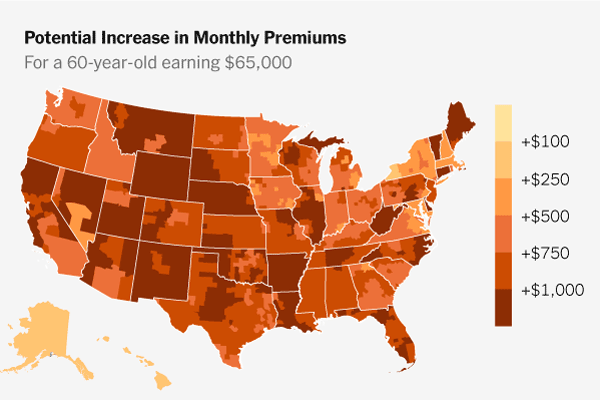
In 2025, even with the subsidies, the average family was paying $800 per month on health insurance through the marketplace. When the subsidies expire, those same families will see their existing plan rates jump to $3,000 per month. KFF, the nonpartisan health research organization, estimates that most users will have a 114% rate increase. 

Government Shutdown

Photo Credit – The New York Times

Counter

According to ND insurance commissioner Jon Godfread, lawmakers who oppose the subsidies are actually opposing the cost of health care and insurance across the board. They insist the subsidies aren’t necessary if healthcare and insurance costs drop instead. Proponents of the subsidies agree, but say that is a longer discussion that will take a lot of time to resolve and the subsidies provide an immediate solution to a bigger problem. They are urging the holdouts to include the subsidies in the budget and tackle the rising cost of healthcare later.

Open Enrollment

The clock is ticking. Open enrollment for 2026 begins November first in every state except Idaho, where open enrollment starts next week. Insurers have already locked in their 2026 premium rates, which will likely cause sticker shock for most marketplace users. Most insurers have prepared subsidy and non-subsidy rates, but without the extension, we will only see the much higher non-subsidy rates. These rates are unlikely to change before enrollment starts and the only hope for marketplace buyers is for Congress to extend the subsidies.

Home Health & Hospice

Care at Home Impact

There are several ways in which the shutdown and the loss of the subsidy may impact care at home.

Payment delays are the most pressing risk. Government officials have promised no delay for some essential services like SNAP and WIC. It is likely Medicare and Medicaid payments will be delayed. While those payments will come through eventually, care at home agencies have to operate without payment or hope the

payers will process payments locally while waiting on the government to reopen. The longer the shutdown lasts, the more likely it is that payments will be delayed. The 6th Senate budget vote failed today, sending the shutdown to day 8.

The longer term impact for care at home will come if the subsidies are not renewed. If insurance rates increase by more than 100% on November 1, users will opt for lower priced coverage, which may no longer include care at home benefits. Fewer patients seeking care at home means less money for agencies. Long-term, it also means higher hospital and ER usage and costs, which increases government spending and usually leads to additional care at home cuts to offset the costs.

National Alliance for Care at Home has identifed current and potential implications of the shutdown. Read their analysis here.

This is an ongoing story and we will continue to provide additional information as it happens. 

# # #

Kristin Rowan, Editor

Kristin Rowan has been working at The Rowan Report since 2008. She is the owner and Editor-in-chief of The Rowan Report, the industry’s most trusted source for care at home news, and speaker on Artificial Intelligence and Lone Worker Safety and state and national conferences.

She also runs Girard Marketing Group, a multi-faceted boutique marketing firm specializing in content creation, social media management, and event marketing.  Connect with Kristin directly kristin@girardmarketinggroup.com or www.girardmarketinggroup.com

©2025 by The Rowan Report, Peoria, AZ. All rights reserved. This article originally appeared in The Rowan Report. One copy may be printed for personal use: further reproduction by permission only. editor@therowanreport.com


Can This New Software Eliminate Fraud and Billing Errors?

by Tim Rowan, Editor Emeritus

Software Eliminates Fraud and Errors

Like so many Home Care providers, Aspen Home Care in Kansas City, Missouri was drowning in paper. Two hundred caregivers turned in weekly timesheets every Friday. A large office staff had to go through them, looking for errors, omissions, and unauthorized visits and shifts. Submitting erroneous claims, of course, leads to payment denials, even fines. When an agency submits too many bad claims every week over a long period, a surveyor will soon be knocking at their door.

The Hurdles

On a good week, Aspen completed all necessary payroll and billing tasks and had bills ready to submit by end of business on the following Thursday. Slowing down the process were the usual errors — forgotten check-outs, more hours worked than authorized, and late timesheet submission. Caregivers grew weary of the weekly phone calls asking for clarification, even when the error was their fault. Aspen did have a basic billing system, but paper timesheets fed it too. Electronic Visit Verification was possible, but only via a patient’s landline, using punched-in identification codes.

Then... the call came

“After years of software design, we have completed our replacement for your billing and EVV system. We would like you to switch from the basic system we sold you a few years ago and beta test our better one.”

– Henry (Hank) Schwab, Owner, Compliance Plus

Beta testing is a risky venture, but both owner Ahmed Jara and Office Manager Mohammed Mohammed* trusted Hank and agreed to give it a try. After all, the agency was drowning in paper, they reminded each other.

Dramatic Process Improvements

We took part in a demo of the Compliance Plus system before speaking with Mohammed and hearing Aspen’s experience. We saw a comprehensive, user-friendly system, with a color-coded user interface, that includes scheduling, EVV, and billing for Medicaid, Managed Care, and all other payers an agency contracts with.

Time Tracking

Caregivers clock in and out with an app that is GPS-enabled down to exact longitude and latitude coordinates. Should a patient live in an internet dead zone, caregivers can use their landline. If there is no landline, Aspen will install a “smart fob” in the home. Aspen does not require specific visit start times, but once a check-in is recorded, the app knows the patient’s authorized hours and automatically alerts the caregiver when it is time to clock out.

Verification

Mistakes do happen, of course, but fixing them is not difficult. When the Compliance Plus back end sees a 14-hour visit, it assumes the caregiver forgot to check out. The visit flashes red on the screen, indicating it is not ready to bill, and displays the difference between authorized and recorded hours. The office employee managing exceptions simply calls the caregiver for verification and then manually edits the end time, and compliance is maintained.

Caregiver Feedback

Mohammed told us his caregiving staff is thrilled with the app, though he did say the transition was hard at first. “They learn to use it in about 30 minutes,” he said. “Check-in and check-in take a few seconds and now they are happy to be done with paper forever, not to mention no longer having to deliver paper timesheets to the office.” He added that fake check-ins from the car on the way to a patient’s home have been completely eliminated.

Most importantly, the three-person office staff now completes payroll and billing for 200 caregivers by midday on Tuesday instead of late on Thursday.

The "Plus" of Compliance Plus

Certainly, procedural efficiencies are important, and many scheduling and EVV systems force caregivers to check in and check out in the presence of the patient and alert office staff when a caregiver arrives late or is a no-show. What we saw during our demo, however, we have not seen elsewhere. Compliance Plus automates the tedious task of rooting out EVV, billing, and payroll errors so efficiently, payment denials, aggregator rejections, and incorrect paychecks are virtually eliminated.

Denials are Rare

Mohammed confirmed what we saw in the demo. The file that includes hours, authorizations, patient demographics, and pre-arranged pay rates is prepared and perfected in advance. Then, the system uploads the same corrected file to the aggregator and to state and other payers. “If we need to fix hours or a bill, we do it before uploading to all entities,” he said. “We rarely get rejections from the aggregator or denials from payers.”

Aggregated Data

One of the requirements of payers and EVV aggregators is that all patient and caregiver names and other information must be in their respective databases in advance. Compliance Plus finds missing data and removes a bill from the file before it is uploaded, notifying the user with a red flag. Mohammed added, “We have to make sure all patient data is in system, but that is easy to do.”

Implementation and Training

In every home care agency, there is always a measure of trepidation among the staff when switching from familiar paper to automation. Aspen Home Care was no different when owner Ahmed Jara announced that he had accepted Hank’s invitation to join a beta test. Mohammed told us that his staff’s time from implementation to software expertise took a little less than three months. Compliance Plus customer relationship manager Sara Moore conducted online training of key office staff, a service that is included in Aspen’s monthly fee. Mohammed and a couple others trained the rest of the staff on the full system and then caregivers on the use of the app.

“After a short while, the new system became our normal workflow,” Mohammed commented. “The only speed bump is when they upload new features. We need to spend a little time learning them, but ultimately, the new features improve our workflow. Our caregivers pick up the app in about 30 minutes, including new hires.”

Favorite Features

He added that his 200 caregivers like checking in and out on the app better than the legacy ANI system, which used the patient’s landline for automatic number identification. “English is a second language for some of our caregivers, and they sometimes had trouble with the ANI prompts spoken by the computerized voice,” he explained. “GPS verification is the best feature. If a caregiver checks in from too far away, we see their distance from the patient’s home on a map, and we gently ‘re-educated’ them and it does not happen again. In the past, they would sometimes get away with asking a family member to check in for them from the patient’s landline. Those days are gone.”

He also told us that Aspen does not insist on specific start times. What matters is that visit length matches authorized hours over a billing period. This is especially helpful for waiver and HCBS plans when the caregiver lives in the home. In those arrangements, checking in or out used to be easily forgotten. “I take care of her all day, how do I know when I start and stop?” The Compliance Plus app rings its cell phone loudly to remind visiting and live-in caregivers to check in and then to check out after the authorized number of hours have been reached.

Simplifying Complex Billing

Presently, Aspen exclusively serves Medicaid beneficiaries, though that can mean several managed care payers. With varying reimbursement rates from payers, combined with different caregiver hourly rates, getting a bill to match an authorization used to be a challenge for Office Manager Mohammed and his team.

It's Complicated

In the case of an agency employed family caregiver, there are often days when the family member will spend one hour toileting and feeding, the next hour doing reimbursable homemaking chores, and the third hour running care-related errands. Not only might those tasks be paid at different rates, but they can, and often are, reimbursed by different payers.

Patient Profiles

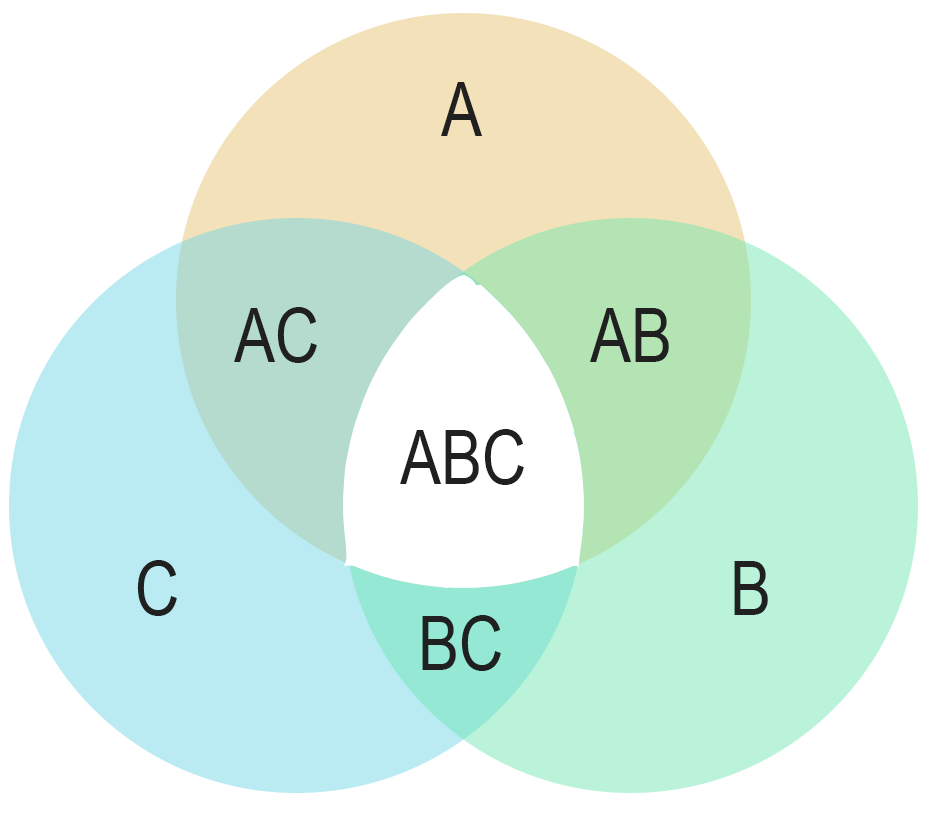
Mohammed emphasized that the way Compliance Plus handles these situations saves considerable time and reduces payer and aggregator rejections. Like in a Venn diagram, every combination of patient, payer, task type, and caregiver creates a “patient profile.” The user created most profiles in advance, based on known payer rates, etc. Occasionally, a patient’s profile is unique, but a user can easily enter the specifics into the system manually. Once a profile is built, the system calculates all of the billing accurately without additional user supervision.

Compliance Plus

Task Rates

If a payer’s rate for a task changes, Mohammed or another office staffer makes the change one time for all affected patients. In that scenario where the live-in caregiver performs three different tasks in one day, he or she checks in and out only once, before the first task and after the last, and designates each task performed. Compliance Plus does the rest.

Company Prospects

Hank Schwab told us that he is confident, after 100 successful beta customers, that Compliance Plus is ready for general release. At $10 to $12 per patient per month, he believes that supplementing word-of-mouth with a modest marketing effort will help him replace paper and strengthen the bottom line for many Medicaid and Personal Care agencies. Hank’s plan is to begin that effort as soon as he identifies an investor or two and hires a marketing director. “I already manage a team of coders and personally pay all the bills,” he laughed. “I’m ready for someone else to take on a few of my jobs.”
https://complianceplus.com/

*No, that is not a typo. We also enjoyed Mohammed Mohammed’s sense of humor. He tells people his parents were too cheap to give him a first name, so they just copied his last name.

# # #

Tim Rowan The Rowan Report
Tim Rowan is a 30-year home care technology consultant who co-founded and served as Editor and principal writer of this publication for 25 years. He continues to occasionally contribute news and analysis articles under The Rowan Report’s new ownership. He also continues to work part-time as a Home Care recruiting and retention consultant. More information: RowanResources.com
Tim@RowanResources.com

©2025 by The Rowan Report, Peoria, AZ. All rights reserved. This article originally appeared in The Rowan Report. One copy may be printed for personal use: further reproduction by permission only. editor@therowanreport.com

What Can Providers Give to Patients, Pt 1

by Elizabeth E. Hogue, Esq.

Providers Kickbacks

Keeping it Clean

Providers, including marketers, are tempted to give patients free items and services. But be careful! These activities may violate laws prohibiting providers that participate in state and federal health programs from giving free items and services to patients. Private insurers often impose the same prohibitions. This means that private duty agencies are not exempt from these fraud and abuse prohibitions if they participate in any state healthcare programs, such as Medicaid or Medicaid waiver programs, or accept payments from private insurers.

Provider Prohibitions

The government generally prohibits providers from giving free items and services to patients because it is concerned that such activities may:

  • Result in overutilization of services
  • Produce decisions concerning care that are not objective
  • Increase costs to the Medicare and Medicaid Programs and other state and federal healthcare programs

Consequences of Provider Kickbacks

Provider Kickbacks
Providers who violate prohibitions on what may be given to patients face criminal fines, civil money penalties, suspension or exclusion from the Medicare and Medicaid Programs and other state and federal healthcare programs, and jail time.

There are two applicable federal statutes:

  • The anti-kickback statute (AKS)
  • The civil monetary penalties law (CMPL)

Exceptions

The federal government says that providers have violated the federal False Claims Statute if referrals are obtained in a way that violates the AKS and providers submit claims for services provided to patients who were referred in violation of the AKS. Providers generally violate the False Claims Statute if they submit claims or cost reports to the government that include untrue information. When providers submit claims, they, according to enforcers, also promise that referrals were not received in ways that are prohibited. If referrals are received inappropriately by violating the anti-kickback statute, for example, then the claims are “false.” Giving free items or services to patients may also violate a federal statute: the civil money penalties law.

Promotions and Marketing

The CMPL prohibits providers from offering to give or actually giving items or services to patients or potential patients that are likely to influence receipt of services from particular providers. This prohibition is especially relevant to marketing activities. It applies to both direct and indirect promotional activities.

State-Specific Laws

Providers must also comply with applicable laws in all of the states in which they do business. State laws vary, of course, from state to state. Many states have anti-kickback statutes that are similar to the federal statute described above. State licensure statutes for physicians, nurses, therapists, social workers, and other types of providers may also include prohibitions on giving free or discounted items or services to patients, especially when they may induce patients to receive potentially unnecessary services.

Final Thoughts

Although providers may have good intentions when they give free items or services to patients and potential patients, before they are acted upon such intentions must be subjected to consideration of the prohibitions described above.

This is part 1 of a two-part series. Look for part 2 next week.

# # #

Elizabeth E. Hogue, Esq.

Elizabeth Hogue is an attorney in private practice with extensive experience in health care. She represents clients across the U.S., including professional associations, managed care providers, hospitals, long-term care facilities, home health agencies, durable medical equipment companies, and hospices.

©2025 Elizabeth E. Hogue, Esq. All rights reserved.

No portion of this material may be reproduced in any form without the advance written permission of the author.
©2025 by The Rowan Report, Peoria, AZ. All rights reserved.