HOPE is on the Way: Part 2 – Process Measures

Clinical

by Beth Noyce, RN, BSJMC, HCS-C, BCHH-C, COQS
CHAP-certified home health & hospice consultant

Process Measures

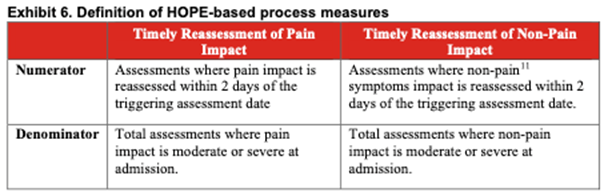
The outcome measures being considered look at effectiveness of hospice clinical efforts to decrease pain and other symptoms. The process measures paired with them focus on the hospice’s follow up with the patient after moderate or severe symptoms are found during assessment.

Exhibit 6 (below) shows the numerator and denominator for these.

HOPE-based Process Measures

TEP members determined that these two process measures have high face validity. This means the measure items clearly state, or “look like” they will measure what CMS intends them to measure. This allows consumers to see what hospices are assessing and treating. It can also help hospices track how well they are reducing or treating patients’ symptoms.

Katie Wehri, Director of Home Health & Hospice Regulatory Affairs for the National Association for Home Care & Hospice says the face validity of process items is the most important information the HQRP TEP provided to CMS. “Having HOPE items and subsequent measures that actually measure what is intended is key to success,” she says.

Exclusions from Process Measures Success

Exclusions from calculating a hospice’s process measures’ success need careful consideration. Here is the list of options of which patients to exclude:

  • Patient desired tolerance level for symptoms
  • Patient preferences for symptom management
  • Beth Noyce ConsultingNeuropathic pain
  • Actively Dying (death is imminent)
  • Other conditions

The report says that reassessing a symptom within two days of identifying that symptom as moderate or severe is fundamental. This is true regardless of the beneficiary’s stated tolerance-level for symptoms. It also said that process measure calculations should include patients with no symptom-management preference. Further, exclusion criteria should be the same for pain and non-pain symptoms.

Neuropathic Pain

The TEP’s recommends including neuropathic pain in the HOPE tool’s pain-reassessment process measure. Including rather than excluding patients suffering neuropathic pain prompts nurses to reassess these patients for changes. The report references research that suggests 40% of hospice patients may experience neuropathic pain. Patients who experience neuropathic pain have more severe and more distressing pain symptoms. [Tofthagen, C., Visovsky, C., Dominic, S., & McMillan, S. (2019). Neuropathic symptoms, physical and emotional well-being, and quality of life at the end of life. Supportive Care in Cancer, 27(9), 3357-3364. doi:10.1007/s00520-018-4627-x]

The TEP agrees that patients with neuropathic pain should be part of the process measure. However, they recommend excluding the same patients from the outcome measure addressing the patient’s pain impact. The report cited TEP discussion that such pain is chronic and not likely to be resolved or decreased within two days when the reassessment captures outcome data.

The TEP broadly agreed that a nurse who assesses a patient who is actively dying (life expectancy of 3 days or fewer based on clinicians’ assessment) as suffering moderate or severe pain should attempt to reassess the patient. Such patientsshould not be excluded.

The panelists agreed that process measures should include patients of all ages. Several TEP members noted that all patients experience pain and non-pain symptoms, and therefore the measures should apply to adults and children alike.

Exclusion Due to Inability to Reassess

When a hospice is unable to reassess a patient for a valid reason process measures should exclude those patients.

Identified exclusion reason were:

  • discharge, alive or dead
  • visit refusal
  • inability to access the patient due to an emergency department or hospitalization event
  • the patient traveling outside of the hospice’s service area
  • inability of the hospice to contact the patient or caregiver.

However, the report says, “…hospices should be penalized if reassessment is missing or delayed due to hospice staffing or scheduling issues.”

This article is the second in a series about implementation of HOPE. Next week, Beth Noyce shares details from the panel as it discussed potential future process and outcome measure concepts.

# # #

©2024 by The Rowan Report, Peoria, AZ. All rights reserved. This article originally appeared in Healthcare at Home: The Rowan Report. One copy may be printed for personal use: further reproduction by permission only. editor@therowanreport.com

Adding Insult to Injury: Change Healthcare Attacked Again

Admin

by Kristin Rowan, Editor

For a few weeks now, we have been covering the Change Healthcare cyberattack by ALPHV/BlackCat and the subsequent updates from CMS. Pharmacy and medical orders have been delayed, providers and patients are suffering, and CMS has issued “guidance” with no real solution. Underground reports indicate that Change Healthcare paid $22 million to BlackCat following the first cyberattack and that BlackCat stole 6TB of data from the system. Change Healthcare has refused to respond to questions about the alleged payment. Three weeks after the attack, Change Healthcare started to come back online, starting with the pharmacy services, which returned on March 7th. Parent company UnitedHealth Group indicated that other services would return in the coming weeks.

Legal Action

More than 87% of physicians are see more than a 20% drop in daily claim submissions. As of April 9th, physicians are still reporting issues with cash flow and anticipate higher than expected losses due to financing and loans that may be needed to cover them as the effects of the attack continue. Rivals of Change Healthcare are reportedly onboarding hundreds of customers who have left the organization. One of these, Availity, has processed more than $5 billion in claims that were left unprocessed by Change Healthcare’s system and has onboarded 300,000 providers with a backlog of more than 50 health systems waiting to start using the platform.

The attack has caused long-term disruptions, delays, cash flow problems, patient care disruptions, prescription delays, and billing issues. Some physician practices have started using personal money to cover payroll and other expenses. The US Department of Health and Human Services (HHS) has launched a formal inquiry into Change Healthcare’s data protection standards. This inquiry follows six class action lawsuits filed against the organizations. Physicians were still reporting significant impacts on their claims.

Adding Insult to Injury

Change Healthcare has barely gotten their systems up and running were still putting out fires when they were hit again. CyberAttackOn April 8, RansomHub contacted Change Healthcare and alleged to have 4TB of data stolen from the system and are demanding an extortion payment to keep the data private . RansomHub has threatened to sell the data, which includes US military personnel and patient data, medical records, and financial data, to the highest bidder in 12 days if the ransom isn’t paid.

Among the prevailing theories as to why Change Healthcare has been hit again is that the first ransom was supposed to have been split between ALPHV/BlackCat and an associate known as “notchy”, but ALPHV absconded with the ransom, leaving the other with nothing. Looking for a payout equal to what they lost, notchy partnered with RansomHub to try to recoup their losses. A second theory is that ALPHV and RansomHub are one in the same and that ALPHV went to ground after the ransom payout and have resurfaced as RansomHub. RansomHub, however, claims that after ALPHV went to ground, some of their affiliates joined the RansomHub operation and this is how they came by the data. Either way, it seems that the data stolen in the first attack was not returned after the ransom was paid and Change Healthcare is still susceptible to further extortion. This also means that the Change Healthcare system was not hacked a second time, but rather this is just an extension of the first data breach.

No word yet on whether Change Healthcare and UnitedHealth Group will pay the second ransom demand.

We will continue to follow this story and provide updates as it impacts payment and claims processing.

# # #

Kristin RowanKristin Rowan has been working at Healthcare at Home: The Rowan Report since 2008. She has a master’s degree in business administration and marketing and runs Girard Marketing Group, a multi-faceted boutique marketing firm specializing in event planning, sales, and marketing strategy. She has recently taken on the role of Editor of The Rowan Report and will add her voice to current Home Care topics as well as marketing tips for home care agencies. Connect with Kristin directly kristin@girardmarketinggroup.com or www.girardmarketinggroup.com

©2024 by The Rowan Report, Peoria, AZ. All rights reserved. This article originally appeared in Healthcare at Home: The Rowan Report. www.therowanreport.com One copy may be printed for personal use: further reproduction by permission only. editor@therowanreport.com

HOPE is on the Way: Part 1 – Outcome Measures

Clinical

By Beth Noyce, RN, BSJMC, HCS-C, BCHH-C, COQS
Home health & hospice consultant

The Hospice Outcome Patient Evaluation is a step closer to implementation.

After four years of considering options, the Technical Expert Panel (TEP) has finished its work that will inform future Hospice Quality Reporting Program results. The TEP considered quality measures to include in hospice’s future assessment tool and best choices for risk adjustment and exclusion.

The panel convened in 2019 “[we are] committed to improving the quality of care given to hospice patients,” says the 2022-2023 TEP Summary Report: Hospice Quality Reporting Program. The panel aimed to ensure that hospice quality measures are meaningful for hospice beneficiaries, transparent to hospice providers, and useful to consumers. They considered quality measures from both HOPE and claims data.

“From day one it was very clear Medicare wanted to make this a very different experience for hospice teams and make it a more valuable thing for consumers,” says Dr. Jeff McNally, Hospice Medical Director at Utah’s Intermountain Hospice,” describing his participation on the HQRP TEP. “I was actually encouraged and inspired by it,” he says. “It was the first time I had first-hand experience working with any kind of CMS entity.

“The reality is some clinicians in the field and leaders don’t have the best things to say about CMS,” he explains, but “whatever we were considering we always circled back to whether it would be burdensome to the clinical team and would it be valuable to consumers.”

The panel initially planned to meet multiple times in person, with two meetings per year and potential virtual meetings as needed. “Then COVID hit,” Dr. McNally says. “It slowed the process considerably. We never did meet again in person.”

The HQRP TEP met eight times over four years, virtually after the initial meeting. McNally described participants as coming to each meeting prepared with data and proposals for HOPE measures for which they would request input from panelists.”

From TEP recommendations early in their work, Abt Associates developed two outcome measures and two process measures in harmony with hospice’s central tenet to manage symptoms:

  • Process measures:
    • Timely Reassessment of Pain Impact
    • Timely Reassessment of Non-Pain Symptom Impact
  • Outcome measures:
    • Timely Reduction of Pain Symptom Impact
    • Timely Reduction of Non-Pain Symptom Impact

“The most important [recommendations] were some of the outcome measures about symptom management,” McNally explains. “What should we be helping agencies show that they’re doing well? And how do we do that? Deciding which ones, and how many symptom management measures to use and the most valuable way to show it in a fair way.”

During the past two years, TEP members prioritized which of the risk-adjustment factors suggested by Abt. Associates should apply to outcome measures and which exclusions should apply to both outcome and process measures.

The report describes risk adjustment as using statistics to exclude “confounding factors,” or elements that are outside of a hospice’s control, from calculations that could make a hospice’s performance appear either better or worse than it is. In essence, risk adjustment increases the fairness in outcome-measure calculations while exclusions do the same for both outcome and process measures.

For the outcome measures being considered, the report says that the “TEP broadly agreed that risk adjustment is very important because it accounts for external factors outside hospices’ control and more accurately reflects the quality of care provided.”

Judi Lund Person, Principal of LundPerson & Associates, LLC, agrees. “The discussion of risk-adjustment factors is vitally important to the success of upcoming process measure implementation,” says Lund Person.

Determining which risk-adjustment factors to bring to the table was not easy. “There were some nuance things that we hashed out to try and decide how to weigh some factors in risk adjustment” for outcome measures, McNally explains.

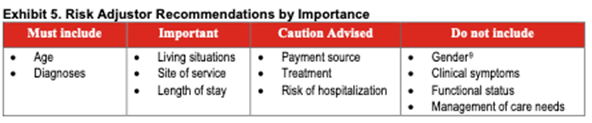
Exhibit 5 (below) summarizes the TEP’s rankings of risk adjustors suggested.

While the TEP’s priorities seem clear, the discussion concerning each risk adjustor was more complex. The TEP broadly agreed that the most important risk-adjustment factors are age and diagnosis. Some diseases are more difficult to manage than others, and patient condition tends to decline with age regardless of provider activity. Therefore, the TEP recommended that CMS adjust for these factors to ensure that common external factors do not adversely affect reported hospice care quality.

Here’s part of the nuance – the TEP also raised concerns that how well other patients with certain diseases or of certain age groups are treated might be valuable to some patients and their families seeking care for someone of the same age group or condition. Panelists fretted over possibly obscuring that information for consumers seeking hospice care by adjusting for those risk factors.

Living situation as a risk adjustor ranked as important to TEP members because hospices have no control over what level of assistance is available to patients. Similarly, site of service ranked high as a risk adjustor because, said some panelists, care is delivered very differently across settings, and patients and/or caregivers tend to provide higher hospice satisfaction ratings for hospices in home settings than for those in facilities,” according to the report.

Lund Person, who is also former Vice President of Regulatory and Compliance at the National Hospice and Palliative Care Organization (NHPCO), notes that the TEP recognized living situation and site of service as “important” risk adjustment recommendations.

“Identifying site of service will help to distinguish between care at home and care in a facility,” she says. Also vital, she continues, “is the recommendation from the TEP to consider length-of-stay as a risk-adjustment factor, including the differences between a 4-day length of stay and a 6-month length of stay.”

One TEP member cautioned that using payment sources, IV therapy, and risk of hospitalization as risk adjustors might tempt some hospices to use them to distort a hospices’ apparent care quality.

TEP members did not recommend using as risk adjustors gender, clinical symptoms, functional status and management of care needs. They did not discuss why they rejected gender, but several agreed that using clinical symptoms would not be of value because of their high correlation with diagnoses. Because hospice providers typically see hospice patients decline in ADL and IADL abilities, and hospice goals are focused on comfort rather than functional improvement, functional status was on the TEP’s “Do Not Include” as a risk adjustor list. And finally, one TEP member strongly opposed adjusting for patients’ medication management, supervision or safety assistance needs (management of care needs), explaining that “the public and CMS should hold hospices accountable for planning around oral medication, injectable medication management, and supervision and safety assistance,” the report says.

The TEP did suggest that using some risk adjustment factors as part of the HQRP could assist hospices internally with quality improvement while others would be more valuable to patients and families. For example, Patients and families would benefit from more straightforward risk adjustment that helps them select a hospice,” the report says, “including factors such as diagnosis. For publicly reported data used to select a hospice, the TEP suggested using demographic factors (including age but excluding gender), socioeconomic factors, living situation, and diagnoses.”

Dr. McNally hopes eventually to use HPRP data to promote Intermountain Hospice’s care. Intermountain Hospice is part of Intermountain Health, a health care provider with presence in multiple states. “You can’t take the current metrics to doctors’ offices and families to show anything meaningful,” he says. “It’d be great to have metrics we could take to our neurology docs and other docs,” he says. “I really think we provide better care and more options when patients stay within our system.

This article is the first in a series about implementation of HOPE. Next week, Beth Noyce shares details from the panel as it evaluated process measures.

# # #

©2024 by The Rowan Report, Peoria, AZ. All rights reserved. This article originally appeared in Healthcare at Home: The Rowan Report. One copy may be printed for personal use: further reproduction by permission only. editor@therowanreport.com

 

CMS Hospice Payment Rate FY 2025 Proposal

CMS

By Kristin Rowan, Editor

On March 28, CMS issued a new proposed rule to update Medicare hospice payments. Here’s what we know.

The new proposed rule:

  • Would change the existing hospice wage index
  • Clarifies current policy related to the hospice “eletion statement” and the “ntoice of election”
  • Adds clarifying language around hospice certification
  • Includes a request for information to get comments on implementing a separate payment mechanism for high-intensity palliative care services
  • Proposes that Hospice Quality Reporting Program (HQRP) measures be collected through the Hospice Outcomes and Patient Evaluation (HOPE), adding two new measures
  • Also proposes changes to the Consumer Assessment of Healthcare Providers and Systems (CAHPS) Hospice Survey

The new proposed rule includes a net 2.6% increase in payments over FY 2024. This includes a 3% market-based update, and a 0.4% cut for productivity. Submitting quality data is a requirement of the net pay. Hospices that do not submit quality data will be penalized 4%, netting a 1.4% decrease in payments. The propsed rule for 2025 is .5% lower than the 2024 hospice payment increase.

The National Hospice and Palliative Care Organization (NHPCO) says the rate increase is good, but not high enough. NHPCO COO and Interim CEO, Ben Marcantonio said, “To continue providing the high level of care our patients and their families deserve, hospices require a payment rate that accurately reflects the current economic challenges. We know that hospice care has demonstrated $3.5 billion in annual savings for Medicare, which underscores the critical importance of investing in hospice to ensure continued beneficiary access to quality end-of-life care.”

Palliative Care

CMS is interested in feedback and proposals from hospice agencies for providing complex palliative treatments and high-intensity hospice care when that care negatively impacts hospices financially. CMS aims to care for high-cost patients through palliative care rather than acute care. The NHPCO agrees with the CMS proposal to fund palliative care separately from standard hospice or acute care. CMS will take feedback and proposals through May 28, 2024. Comments can be submitted electronically at http://www.regulations.gov, by following the “Submit a Comment” instructions. Comments can also be sent by regular or express mail. Addresses can be found in the full proposed rule. Follow the search instructions at http://www.regulations.gov to see all submitted comments.

The proposed rule can be viewed starting April 4, 2024 at the Federal Register at https://www.federalregister.gov/public-inspection.

# # #

Kristin Rowan

Kristin Rowan has been working at Healthcare at Home: The Rowan Report since 2008. She has a master’s degree in business administration and marketing and runs Girard Marketing Group, a multi-faceted boutique marketing firm specializing in event planning, sales, and marketing strategy. She has recently taken on the role of Editor of The Rowan Report and will add her voice to current Home Care topics as well as marketing tips for home care agencies. Connect with Kristin directly kristin@girardmarketinggroup.com or www.girardmarketinggroup.com

©2024 by The Rowan Report, Peoria, AZ. All rights reserved. This article originally appeared in Healthcare at Home: The Rowan Report. One copy may be printed for personal use: further reproduction by permission only. editor@therowanreport.com

Cost of Home Health Care Services Increased Nationwide

CMS

By Kristin Rowan, Editor

Illumifin, an insurance administration and claims solution provider for long term care (LTC) insurance, has released its 2023 Cost of Care study. The longitudinal study is now in its tenth year and includes national, state, and regional costs of services across skilled nursing, adult day care, home health care, and assisted living facilities.

The study found that the average rate for a home health aide in 2023 was $30.62 per hour, a 5.2% increase over 2022. The average per-rate visit for a registered nurse was $147.72, a 1.6% decrease over the prior year. Assisted living facility rates are up .6 – 3.8% nationwide, while skilled nursing facility rates decreased .4 – 1.0%.

The full press release from Illumifin is here.

To access the full study, contact Jennifer Frost by email at jenniferfrost@illumifin.com.

As costs continue to rise, CMS will need to adjust its proposed per-episode base pay cut for FY 2025. We continue to report on the proposed cuts from CMS and MedPAC, who argue home health agencies are being overpaid, even as costs of supplies and hourly pay go up.

# # #

Kristin RowanKristin Rowan has been working at Healthcare at Home: The Rowan Report since 2008. She has a master’s degree in business administration and marketing and runs Girard Marketing Group, a multi-faceted boutique marketing firm specializing in event planning, sales, and marketing strategy. She has recently taken on the role of Editor of The Rowan Report and will add her voice to current Home Care topics as well as marketing tips for home care agencies. Connect with Kristin directly kristin@girardmarketinggroup.com or www.girardmarketinggroup.com

©2024 by The Rowan Report, Peoria, AZ. All rights reserved. This article originally appeared in Healthcare at Home: The Rowan Report. www.therowanreport.com One copy may be printed for personal use: further reproduction by permission only. editor@therowanreport.com

MedPAC Recommends More Pay Cuts

CMS

By Kristin Rowan, Editor

In December, 2023, The Medicare Payment Advisory Committee (MedPAC) recommended a 22% payment reduction for hospice providers. This week, they’ve recommended additional cuts once again. 

MedPAC has just released the March, 2024 Medicare Payment Policy Report, issued to Congress. The initial statement from MedPAC recognized the long-lasting impact of the COVID-19 pandemic on healthcare providers and the record inflation rates. The commission admits that the pandemic has caused burnout and personal risk to clinicians and other health care workers. The commission also admits that the effects of COVID-19, PHE-related policy changes, and emergency funding made it difficult to interpret the indicators of adequacy in Medicare’s payment rates. 

The commission openly states that the fundamental problem with FFS Medicare payments is that providers are paid more when they deliver more services, whether or not those services provide value. The call for additional payment reforms to force providers to coordinate care over time and across care settings and to eliminate what may be necessary services that MedPAC doesn’t deem valuable.

Home Health Agencies

The commission reports the Medicare margins for HHAs at 22.2 percent in 2022. The commission calculates these margins excluding some fixed costs. The margins, according to the commission, indicate that FFS Medicare payments exceed the costs of care. This should incentivize HHAs to take on additional beneficiaries, as the margins are calculating using only costs that diminish by volume. 

The commission notes a drop in HHA use in 2022 and lists possible causes including:

  • The number of FFS Medicare beneficiaries is lower due to the increased enrollment in Medicare Advantage
  • Lower use of inpatient hospital care among FFS beneficiaries
  • Hospitalized FFS beneficiaries were less likely to be discharged to home health care (no reason for this was given)
  • More FFA beneficiaries are using SNFs after hospitalization (no reason for this was given)
  • The staffing shortages reported by HHAs limit the volume of services they can provide

The commission implies that the staffing shortages are not a factor in the decline in HHA usage. The Department of Commerce’s employment data indicates staffing levels that are currently higher than pre-pandemic levels. Even though the data includes HHAs, hospice, private duty, pediatric agencies, and other home care providers, the commission still contends that Medicare HHAs comprise a significant enough share of this group to conclude there is no staffing shortage nationwide.

The commission also reports that the decrease in the number of HHAs nationwide is not a factor in the decline of HHA usage, because most beneficiaries still live in an area with at least on HHA. The commission recognizes that the number of employees and contract laborers is not used to calculate access to care, even though it is a factor. They also admit that an HHA does not need to serve an entire area to be counted as serving the area, and that the capacity to serve additional beneficiaries is not considered.

The report recognizes that preventable readmissions to hospitals is lower among for-profit and free-standing HHAs than for hospital-based care. However, the commission dismisses this data in favor of the all-cause measure of hospitalization, which is much higher for HHAs. This measure covers 60 days and includes all hospitalizations for any cause and includes community-admitted and home health admitted patients. Essentially, MedPAC is assigning a 14.2 percent hospitalization rate to all home health patients, regardless of the cause of hospitalization, whether or not it is deemed preventable, and whether or not it is in any way related to the initial 30-day-period of post acute care.

The average cost of a 30-day period increased by 4 percent in 2022, due to a higher cost per visit. The HHAs are combatting this by reducing the number of in-person visits per 30-day period. Since MedPAC did not track telehealth visits, there is no data on the overall cost per visit, regardless of whether it was in person or remote. HHAs are working within the PDGM model for reimbursement by lowering their overall costs per 30-day period through telehealth visits, remote patient monitoring, and other technologies implemented to increase efficiency in HHAs. MedPAC wants to penalize this by reducing payment rates. This will only serve to push HHAs to further decrease the number of visits, which will impact quality of care, satisfactions rates, and rehospitalization rates.

The commission concludes that because the payments exceed the costs, the benefits of home health care are devalued as a substitute for more costly care options. MedPAC argues that the overpayment since 2000 creates higher expenditures for beneficiaries, but fails to provide data to this effect.

As noted by NAHC, there are flaws in MedPACs calculations as well as in the foundation of their position:

  • Exclusions such as taxes, telehealth, and marketing in cost calculations incorrectly inflate the margins
  • MedPAC relies heavily on the CMS calculations for budget-neutrality, which NAHC has already refuted as incorrect, bordering illegal formulas
  • The data used in these calculations omitted all HHAs that are hospital-based.

NAHC, along with other agencies, will continue to advocate on behalf of HHAs, hospice providers, and other home-based care agencies in front of Congress to ensure these disastrous cuts will not become permanent inclusions in Medicare policy. We will continue to bring you updates as this issue continues to unfold.

# # #

Kristin Rowan

Kristin Rowan has been working at Healthcare at Home: The Rowan Report since 2008. She has a master’s degree in business administration and marketing and runs Girard Marketing Group, a multi-faceted boutique marketing firm specializing in event planning, sales, and marketing strategy. She has recently taken on the role of Editor of The Rowan Report and will add her voice to current Home Care topics as well as marketing tips for home care agencies. Connect with Kristin directly kristin@girardmarketinggroup.com or www.girardmarketinggroup.com

©2024 by The Rowan Report, Peoria, AZ. All rights reserved. This article originally appeared in Healthcare at Home: The Rowan Report.homecaretechreport.com One copy may be printed for personal use: further reproduction by permission only. 

editor@homecaretechreport.com


CMS Issues Medicaid Guidance on Change Healthcare Hack

CMS

From the NAHC News Desk,

March 19, 2024

On March 15th, the Centers for Medicare & Medicaid Services (CMS) issued a Center Informational Bulletin (CIB) that provides guidance and flexibilities to mitigate the impacts on providers resulting from the Change Healthcare Hack. In the guidance, CMS advises state Medicaid agencies that certain requirements will not be enforced, until June 30th, to enable ongoing funds to flow to providers and to prevent disruption of access to Medicaid services, prevent associated negative health outcomes, and avoid solvency issues for providers.

The most important component of the guidance is the ability for states to make interim payments to providers to avoid operational disruptions. Federal law and regulation does not allow for “advance payments” in Medicaid fee-for-service systems, despite their availability in Medicaid managed care environments; however, states can make interim payments to providers subject to reconciliation with actual services delivered.

CMS stresses that such interim payments are not advanced payments or prepayments prior to services furnished by providers, but rather are payments for services furnished that are subject to final reconciliation once the state has access to individual claims data currently inaccessible due to the cybersecurity incident.

The flexibilities CMS discusses in the guidance include:

  • Modifying required timelines for public notice, public process, and Tribal consultation and to obtain an earlier effective date for certain kinds of SPAs than would otherwise be possible;
  • Use interim payment methodologies to pay providers without current period claims data, as long they are determined via current approved payment rates, limiting the interim payments to the amount expected for each specific provider based on recent history, and reconciling the interim payments with final payments based on the actual services provided once they can be properly identified. These could be effective retroactively to the date when claims payment processing was disrupted due to the cybersecurity incident and could last until June 30, 2024;
  • Suspend beneficiary cost sharing requirements described in their state plans when necessary to avoid service disruptions for Medicaid beneficiaries for services affected by the hack;
medicaid

CMS also includes language urging Medicaid managed care plans to make prospective payments to impacted providers and reiterating that plans do not need prior CMS authority to make prospective payments to providers. CMS also indicates that plans can:

  • Suspend or modify prior authorization requirements;
  • Allow early prescription refills and/or extend the length of prescription refills;
  • Extend existing prior authorizations;
  • Suspend out-of-network requirements; and
  • Modify or update cost-sharing requirements to be consistent with any changes that are made in the Medicaid state plan.

The full guidance is available online at: https://www.medicaid.gov/sites/default/files/2024-03/cib031524.pdf.

MedPAC Exposes More Medicare Advantage Crimes

CMS

by Tim Rowan, Editor Emeritus

This week, we look at the state of the healthcare industry, vis a vis payers that do not pay.

While Home Health and Hospice leaders talk at every gathering about refusing to accept Medicare Advantage clients, some large Integrated Healthcare Systems are actually doing it. Other hospitals are responding to difficult payers by laying off staff, or even closing. The HHS Office of Inspector General repeatedly fines insurance companies for upcoding to gain inflated, unjustified monthly payments. Meanwhile, insurance companies report record profits, with their MA divisions leading the way. The fines go into the “cost of doing business” column.

March, 2024, Becker’s Hospital Review: Bristol (Conn.) Health will eliminate 60 positions, 21 of which are currently occupied and will result in layoffs at Bristol Hospital. The hospital’s CEO, Kurt Barwis, told a local newspaper a lack of reimbursement from insurers left the hospital without a choice but to cut staff.

October, 2023, NPR: Since 2010, 150 rural hospitals have closed. Under CMS’s “Critical Access” designation, Medicare pays extra to those hospitals to compensate for low patient volumes. MA plans do not. Instead, they offer negotiated rates that are lower than what traditional Medicare would pay.

December, 2023, Becker’s Financial Management: 13 additional hospital systems cut ties with Medicare Advantage plans since October.

What is going on?

The Medicare Payment Advisory Commission, MedPAC, believes it has learned the answer. In its March 15, 2024 report to Congress, the Commission called for a “major overhaul” of Medicare Advantage policies. It says it found that the program, designed to lower costs and extend the lifespan of the Medicare trust fund, does not save money but costs the fund more than if all beneficiaries were on traditional Medicare, $83 billion more in 2024.

Calling it, too politely, “coding intensity,” MedPAC concurs with the OIG that MA plans routinely exaggerate patient conditions. The report claims it will amount to MA clients appearing to need 20% more healthcare than fee-for-service beneficiaries, when they do not. Padded coding, MedPAC says, will increase Medicare premiums by $13 billion in 2024.

“A major overhaul of MA policies is urgently needed for several reasons,” the commission wrote in its report. MedPAC cited several problems that need to be addressed, including the disparity in costs between beneficiaries in fee-for-service Medicare and MA, a lack of information on the use and value of supplemental benefits, and challenges setting benchmark payment rates.

A proposal currently making its way through Congress would reduce supplemental payments to insurers, who threaten to raise premiums and cut benefits if their inflated benchmark payments are lowered.Celebrity Endorsements of Medicare Advantage

“If payments to MA plans were lowered, plans might reduce the supplemental benefits they offer,” MedPAC wrote in its report. “However, because plans use these benefits to attract enrollees, they might respond instead by modifying other aspects of their bids.” The barrage of TV ads, featuring aging celebrities, have been found to be deceptive and too often backed by shady front companies representing brokers, not insurance companies. The brokerage company behind the Joe Namath ads, for example, has reorganized and changed its name three times.

Pushback from AHIP, the insurance industry lobbying organization, has been as expected. “MedPAC’s estimates are based on ‘speculative assumptions’ and ‘overlook basic facts about who Medicare Advantage serves and the value the program provides.'”

MedPAC asserts that its estimates are based on history, not speculation.

Healthcare Providers Beg to Differ

A lack of payments from Medicare Advantage plans is one reason the Connecticut hospital is laying off staff, the Hartford Courant reported March 14. CEO Kurt Barwis told the newspaper Medicare Advantage plans have been denying claims more frequently while delaying payments for the claims they do approve. “Our primary care is to take care of patients, their single focus is shareholder value and profits,” Mr. Barwis told the Courant. “The Medicare Advantage abuse is outrageous.”

The strategy insurance companies deploy to avoid providing care, Barwis continued, is excessive prior authorizations, coupled with delayed payments. This obstacle to care is directly in opposition to CMS policy. MA divisions of large insurers respond that they are private insurance and allowed to impose their own treatment approval policies. MedPAC says this claim is incorrect.

Richard Kronick, a former federal health policy researcher and a professor at the University of California-San Diego, said his analysis of newly released Medicare Advantage billing data estimates that Medicare overpaid the private health plans by more than $106 billion from 2010 through 2019 because of the way the private plans charge for sicker patients. Kronick added that there is “little evidence” that MA enrollees are sicker than the average senior, though risk scores in 2019 were 19 percent higher in MA plans than in original Medicare. That gap continues to widen.

Where does this excess taxpayer money go?

2023 Medicare Advantage business division profits and 2022 CEO compensation reported by publicly traded companies:

UnitedHealth Group: $22.4 B (Andrew Witty $20,865,106)
Aetna (CVS): $8.3 B (Karen Lynch $21,317,055)
Elevance Health (Anthem): $6 B (Gail Boudreaux $20,931,081)
Cigna: $5.1 B (David Cordani $20,965,504)
Centene: $2.7 B (Sarah London $13,246,447)
Humana: $2.5 B (Bruce Broussard $17,198,844)

We found one curious outlier. Molina Health, with annual revenue 10 percent of UnitedHealth Group’s income and 2.16 percent of the market, paid its CEO $22,131,256 in 2022.

Download the entire MedPAC 2024 report here. Chapter 7 is the Home Health section. A summary of MedPACs recommendations begins the chapter thus, “For calendar year 2025, the Congress should reduce the 2024 Medicare base payment rates for home health agencies by 7 percent.”

# # #


Tim Rowan is a 30-year home care technology consultant who co-founded and served as Editor and principal writer of this publication for 25 years. He continues to occasionally contribute news and analysis articles under The Rowan Report’s new ownership. He also continues to work part-time as a Home Care recruiting and retention consultant. More information: RowanResources.com
Tim@RowanResources.com

©2024 by The Rowan Report, Peoria, AZ. All rights reserved. This article originally appeared in Healthcare at Home: The Rowan Report.homecaretechreport.com One copy may be printed for personal use: further reproduction by permission only. editor@homecaretechreport.com

Access to Care at Home in Underserved Communities

CMS

by Kristin Rowan, Editor

The U.S. House Ways and Means Committee held a hearing on March 12, 2024 to address the need for access to care-at-home services in rural and underserved communities. The advisory board heard from several witnesses including two care at home patients, a medical doctor, the founder and CEO of Cadence, and a professor of Health Care Policy and Medicine at Harvard Medical School.

Committee Chairman Jason Smith (MO) said, in his opening statement, “Where someone lives, works or raises a family should not be a barrier to getting top of the line health care. One of our priorities on this Committee is helping every American get health care in their community.”

With the Medicare telehealth and Hospital at Home programs scheduled to expire at the end of this year, Smith is urging the committee to see the profound impact that lack of access to healthcare would have on patients in rural and underserved communities. He want on to say that the “tired approaches…have not made a meaningful impact for enough patients.”

Cutting edge technology and new approaches to make Americans healthier and increase access to care in rural areas are needed. Smith recommends examining provider reimbursement and adding patient and taxpayer protections to “ensure access, demonstrate value, and prevent waste, fraud, and abuse.”

Read Chairman Smith’s opening statement here. Watch the witness statements at the hearing here.

The American Telemedicine Association and ATA Action expressed appreciation to the Committee in a press release issued just after the hearing. “We are grateful to the House Committee on Ways and Means for examining the opportunities in moving care into the home in order to benefit patients, particularly those in rural and underserved communities,” said Kyle Zebley, Senior Vice President, Public Policy, the ATA and Executive Director, ATA Action.

Read the full press release from the American Telemedicine Association and ATA Action here.

# # #

Kristin Rowan

Kristin Rowan has been working at Healthcare at Home: The Rowan Report since 2008. She has a master’s degree in business administration and marketing and runs Girard Marketing Group, a multi-faceted boutique marketing firm specializing in event planning, sales, and marketing strategy. She has recently taken on the role of Editor of The Rowan Report and will add her voice to current Home Care topics as well as marketing tips for home care agencies. Connect with Kristin directly kristin@girardmarketinggroup.com or www.girardmarketinggroup.com

©2024 by The Rowan Report, Peoria, AZ. All rights reserved. This article originally appeared in Healthcare at Home: The Rowan Report.One copy may be printed for personal use: further reproduction by permission only. editor@therowanreport.com

Onslaught of Audits Worries Hospice Providers

Clinical

By Kristin Rowan, Editor

March 12, 2024, the National Association for Home Care and Hospice (NAHC), Leading Age, the National Hospice and Palliative Care Organization (NHPCO), and the National Partnership for Healthcare and Hospice Innovation (NPHI), published their findings from a 2023 survey on regulation. These findings were presented to Congress and CMS earlier this year. The organizations surveyed 133 respondents, who noted regulatory issues as the top concern for providers. Of particular concern was the audits that have been increasing steadily for years.Audit

More than half of respondents said they have undergone simultaneous audits, usually the TPE and SMRC audits. 52.9% of respondents said they had multiple audits within six months of each other, conducted by different contractors, and more than half of those said they had to submit the same charts for each audit.

Hospice Auditor Issues

The findings indicate some issues with the training, knowledge, and integrity of auditors. Many respondents indicated having received denials of physician visits, documented separately from face-to-face visits, simply because they occurred on the same day. Some reported denials due to the absence of an IDG meeting even when no IDG meeting was required. Multiple respondents said the denial reasoning was copied and pasted from past denials and/or that the auditor did not seem to have read the documentation that was sent.

Auditing Inconsistencies

The report findings indicate that there are often delays in receiving audit results, sometimes up to 18 months. Some RAC audits had listed available dates for findings, but the findings were not actually available for several months after the listed date. Respondents also indicated that instructions from the auditors were presented using terminology that was not consistent with standard operating procedures in a hospice environment (read: auditors are using hospital lingo and expecting hospices to understand it).

Technical billing issues, when payments are denied not due ineligibility, but because of missing or incorrect information, can be corrected and then processed and paid. However, several respondents indicated that different MACs give different information on how process corrections for election statements and election addendums.

Gross Miscalculations

This was reported in the survey only once, but, as with any survey, extrapolating the data to the whole population, one must assume it has happened more than once: A hospice provider had a claim denied while under a CERT audit. The denial was due to the auditor decided that the patient was not terminally ill, even though the patient expired during the audit.

Recommendations for CMS

The organizations have some recommendations for changes:

    • CMS should re-focus its audit contractors on patterns and practices characteristic of providers that aim to minimize or avoid therapeutic care and supportive services that are required under the hospice benefit and fully reimbursed through the per diem payment.
    • CMS should require substantive education and training for all auditors that is consistent with the education given to providers to minimize inconsistencies.
    • CMS should increase transparency of audit contractor activity, including the number and types of audits being conducted, audit recovery amounts, results of audits by specific audit contractors, including reversal rates, top denial reasons and compliance with required timeframes for notification and review.
    • CMS should implement an informal mechanism to enable MACs and hospice providers to resolve technical claims denials prior to engaging in the formal appeal process.
    • CMS should require audit contractor medical reviewers to have an equivalent level of expertise and training in hospice care as the hospice medical director who certified a patient’s terminal illness.

According to a statement from NAHC, in 2023, the organizations have submitted 34 recommendations to CMS. To date, half of them have been implemented. They will continue to work with CMS toward enhanced transparency, equitable auditing, and targeting genuine fraud, waste, and abuse.

# # #

Kristin Rowan

Kristin Rowan has been working at Healthcare at Home: The Rowan Report since 2008. She has a master’s degree in business administration and marketing and runs Girard Marketing Group, a multi-faceted boutique marketing firm specializing in event planning, sales, and marketing strategy. She has recently taken on the role of Editor of The Rowan Report and will add her voice to current Home Care topics as well as marketing tips for home care agencies. Connect with Kristin directly kristin@girardmarketinggroup.com or www.girardmarketinggroup.com

©2024 by The Rowan Report, Peoria, AZ. All rights reserved. This article originally appeared in Healthcare at Home: The Rowan Report.homecaretechreport.com One copy may be printed for personal use: further reproduction by permission only. editor@homecaretechreport.com


CMS Announces Multi-Pronged Effort to Strengthen Direct Care Workforce

Admin

by Elizabeth E. Hogue, Esq.,

CMS recently issued guidance about how to build and maintain worker registries, i.e., management platforms, that make qualified health workers easy to find so that more individuals who receive Medicaid-covered home and community-based services (HCBS) can receive care in settings of their choice. Worker registries are designed to answer these questions: Who is qualified to provide HCBS in each state and how can Medicaid recipients find them?

On February 27, 2024, CMS announced several new initiatives and Resources from the Administration for Community Living’s (ACL) Direct Care Workforce (DCW) Strategies Center to address the shortage of workers who provide direct care to elderly and disabled clients. New initiatives include several types of assistance that are intended to help states strengthen their systems for recruiting, retaining, and developing direct care workers; and a national hub to connect states, stakeholders, and communities to best practices and other resources related to the direct care workforce.

Specifically, DCW Intensive Technical Assistance will facilitate collaboration among state agencies and with stakeholders to improve recruitment, retention, training, and professional development of direct care workers. The DCW Strategies Center will provide up to two hundred fifty hours of individualized technical assistance on a variety of issues for up to six teams involving multi-agency state teams.

A coach will be assigned to each team and have access to subject matter experts to support them in addressing states’ unique needs. Support provided through this initiative will be coordinated by a consortium led by ADvancing States in partnership with the National Association of State Directors of Developmental Disability Services and the National Association of State Medicaid Directors.

The DCW Peer-Learning Collaborative will bring representatives of four to six states into working groups focused on a particular topic. The DCW Strategies Center will host monthly virtual meetings focused on group learning to facilitate information sharing on best practices, innovative strategies, and demonstrated models for growing the direct care workforce. In addition, each participating state will receive up to seventy hours of individual technical assistance on a topic or issue important to each state. Each participating state is expected to accomplish at least one policy or program-related milestone as a result of participation in this initiative.

CMS also announced the official launch of the DCW Strategies Center website at https://acl.gov/dcwcenter. This website is intended to serve as the national hub for resources about best practices, promising strategies, upcoming events, webinars, and technical assistance opportunities to strengthen and expand local direct care workforces.

CMS acknowledges in the announcement that low wages, lack of benefits, limited opportunities for career growth, and other factors have resulted in a continuing shortage of critical workers. The shortage reached crisis levels, says CMS, during the COVID-19 pandemic and currently continues, with more than three-fourths of service providers that decline new clients and more than half of providers cutting services.

According to CMS, the problem described above must be addressed in order to help ensure that people who need assistance have options other than moving to a nursing home or other institutional setting.

Now is the time for providers of private duty or home care services and the associations that represent them to work intensively with state programs, especially Medicaid Programs, to maximize available assistance as described above.

©2024 Elizabeth E. Hogue, Esq. All rights reserved.

No portion of this material may be reproduced in any form without the advance written permission of the author.

Cyberattack Interrupts Pharmacy Operations

Admin

By Kristin Rowan, Editor

**March 6, 2024 Update** As the previously reported cyberattack on Change Healthcare continues, the US Department of Health and Human Services issued a statement on March 5, 2024 outlining immediate steps CMS is taking to assist providers. CMS is strongly encouraging Medicaid and CHIP plans to waive or relax prior authorization requirements. They’ve also urged providers to offer advance funding to providers.

According to feedback from NAHC members, the impact of this cyberattack on home health and hospice providers has remained minimal. However, for those experiencing delays in claims processing and payments, some providers are unable to meet payroll or pay for patient care items.

**February 29, 2024 UPDATE** We’ve just been contacted by a home care agency out of Charlotte, NC who told us, “For our home care agency we can’t submit claims for VA clients (ChangeHealthcare [sic] has been totally taken off line), and we aren’t having remittance records from Optum feed through ChangeHealthcare [sic] to Wellsky.”

February 28, 2024

The news broke last week that another cyberattack is impacting healthcare. This time, it is Change Healthcare, a division of UnitedHealth Group, that processes insurance claims and pharmacy requests for more than 340,000 physicians and 60,000 pharmacies. In response to this attack, UnitedHealth Group separated and isolated the effected systems, causing delays in claim payments and backlog pharmacy orders.

The attack was first reported on February 21, 2024 and the outage is still ongoing. Former FBI cyber official and current adviser for cybersecurity and risk at the American Hospital Association warns that the longer this outage persists, the worse it will get and it will start to impact patient care. UnitedHealth Group claims that fewer than 100 pharmacy orders and claims have been interrupted across its insurance and pharmacy plans. But, at least on health insurer is claiming a 40% drop in claims since the system went down.

Source of the Attack

Initially, UnitedHealth Group blamed an unknown “nation state” for the cyberattack. The FBI found no evidence of this and has since named Blackcat ransomware gang culpable in the attack. Blackcat ransomware gang has attacked numerous hospitals and the FBI seized their website and servers in December, 2023. Blackcat accessed the Change Healthcare system through vulnerabilities in the ConnectWise ScreenConnect remote desktop and access software.

Implications

The American Hospital Association has urged all healthcare organizations that work with Optum, Change Healthcare, and UnitedHealth Group to weigh the risk of the connection to Change Healthcare against the possible clinical and business disruptions cased by severing that connection.

Health-ISAC anticipates additional cyberattack victims in the coming days. ConnectWise has alerted its users to the remote code execution flaw and has urged all users to update immediately to prevent attacks.

Point of View

This is not the only story this week about UnitedHealth Group. Backlogged pharmacy orders, healthcare claims, and payments, add further credence to the Antitrust probe filed this week by the Justice Department, investigating UnitedHealth and Optum. Should one healthcare group have this much influence over insurance, physicians, pharmacies, and home care?

# # #

Kristin Rowan

Kristin Rowan has been working at Healthcare at Home: The Rowan Report since 2008. She has a master’s degree in business administration and marketing and runs Girard Marketing Group, a multi-faceted boutique marketing firm specializing in event planning, sales, and marketing strategy. She has recently taken on the role of Editor of The Rowan Report and will add her voice to current Home Care topics as well as marketing tips for home care agencies. Connect with Kristin directly kristin@girardmarketinggroup.com or www.girardmarketinggroup.com

©2024 by The Rowan Report, Peoria, AZ. All rights reserved. This article originally appeared in Healthcare at Home: The Rowan Report.homecaretechreport.com One copy may be printed for personal use: further reproduction by permission only.


editor@homecaretechreport.com


Sources:

Fox. February 22, 2024. Change Healthcare Experiencing a Cyberattack. Retrieved from: https://www.healthcareitnews.com/news/change-healthcare-experiencing-cyberattack

Fox. February 27, 2024. Change Healthcare Cyberattack Still Impacting Pharmacies, as H-ISAC Issues Alert. Retrieved from: https://www.healthcareitnews.com/news/change-healthcare-cyberattack-still-impacting-pharmacies-h-isac-issues-alert

Pashankar & Tozzi. February 28, 2024. Change Healthcare Cyberattack is Still Disrupting Pharmacies, Other Providers. Retrieved from: https://finance.yahoo.com/news/change-healthcare-cyberattack-still-disrupting-211913516.html

Satter & Bing. February 26, 2024. US Pharmacy Outage Triggered by ‘Blackcat’ Ransomware at UnitedHealth unit, Sources Say. Retrieved from: https://www.reuters.com/technology/cybersecurity/cyber-security-outage-change-healthcare-continues-sixth-straight-day-2024-02-26/


Family Caregiver Tax Credit Bill

CMS

By Kristin Rowan, Editor

Republican and Democratic leaders joined forces to introduce the Credit for Caring Act (S. 3702, H.R. 7165) in support of family caregivers across the country. Family caregivers are those who are caring for a family member but are not nurses or employees of any home care agency. They are not eligible for Medicare or Medicaid payments, nor is there an employer paying them for the endless hours of support they provide. Family caregivers are often under a lot of emotional and financial stress. Some have full-time jobs in addition to the care provide. Others are caring for more than one family member, sometimes in different homes.

The Credit for Caring Act, a bipartisan effort to recognize the personal cost to family caregivers with a $5,000 federal tax credit for eligible working family caregivers. As is generally the case with government intercession, the “eligible” part will exclude many family caregivers. From Congress.gov:

“This bill allows an eligible caregiver a tax credit of up to $5,000 for 30% of the cost of long-term care expenses that exceed $2,000 in a taxable year. The bill defines eligible caregiver as an individual who has earned income for the taxable year in excess of $7,500 and pays or incurs expenses for providing care to a spouse or other dependent relative with long-term care needs.”

The bill also includes the caveat that eligible caregivers must incur qualified expenses, limited to goods, services, and supports. The language excludes the time and energy a family caregiver expends, essentially limiting the tax credit to repayment of money paid out of pocket for care that should have been covered by Medicare, Medicaid, or private health insurance, but isn’t. The cost of a direct care giver is included in eligible expenses, but doesn’t consider the family caregiver to be one.

As I break down the math in my head, I come up with this:

A tax credit of $5,000 is received if the caregiver has spent $16,600 in the previous year (5,000/.3). This leaves a total out of pocket amount of $11,100. Supportive home care services average $30/hour. $16,660 is equivalent to 555 hours of non-medical home care. That’s roughly 10 hours per week or 1-1/2 hours per day. This doesn’t include the costs for DME, doctor visits, lost wages from time off work, medication, or any of the other eligible expenses included in the bill.

This is getting us one step closer to paying for supportive in-home care and palliative care services, but I don’t think it goes far enough. An under-served, under-paid population who makes $7,500 per year cannot afford $16,000 in out-of-pocket expenses in order to qualify for the maximum tax credit. Once this bill is (hopefully) passed, we should move on to including additional services in the Medicare/Medicaid reimbursement model. The Rowan Report joins NAHC in its support of the Credit for Caring Act and urges you to reach out to your representatives to urge them to support the passing of the bill.

# # #

Kristin Rowan

Kristin Rowan has been working at Healthcare at Home: The Rowan Report since 2008. She has a master’s degree in business administration and marketing and runs Girard Marketing Group, a multi-faceted boutique marketing firm specializing in event planning, sales, and marketing strategy. She has recently taken on the role of Editor of The Rowan Report and will add her voice to current Home Care topics as well as marketing tips for home care agencies. Connect with Kristin directly kristin@girardmarketinggroup.com or www.girardmarketinggroup.com

©2024 by The Rowan Report, Peoria, AZ. All rights reserved. This article originally appeared in Healthcare at Home: The Rowan Report.homecaretechreport.com One copy may be printed for personal use: further reproduction by permission only. editor@homecaretechreport.com

 Read the article and statement from NAHC here

Read the full text of the bills: H.R. 3321 and S. 3702

Find your Senator here

Find your Representative here

NAHC Fights for Home Health on Capitol Hill

Admin

By Kristin Rowan, Editor

The National Association for Home Care and Hospice joined other advocacy groups this month on Capitol Hill to fight against the looming pay cuts from CMS. Some members of Congress joined the fight for “common sense policies” to expand access to care in the home for Americans.

Rep. Adrian Smith (R-NE-3), who spoke at the event, decried moves against home health, saying “there are cuts looming that are not based on reality” and “we want to make sure reimbursement policies are reflective of the actual realities.” Smith is also the representative who introduce the “Homecare for Seniors Act,” H.R. 1795, which would allow the use of Health Savings Accounts (HSAs) to be used for home care.

Rep. Terri Sewell (D-AL-7) has a personal connection to home care and spoke about how her mother cared for her father through a series of strokes he suffered. She expressed strong opinions about payment reductions that could see home health lose as much as $20 billion dollars over the next ten years. Sewell called the idea “frightening” and said, “I am a big fan of making sure that my constituents have access to quality, affordable health care.”

The Medicare program has admitted that home health is not just a bringing of great care and not just a more cost effective way to provide care, but is a service that provides dynamic value. Care in the home has decreased overall costs by $3.2 billion dollars just in the small segment of value-based payment model test cases. Patients who receive care in the home are re-admitted to the hospital 37% less frequently than those who do not and are 43% less likely to die than patients who do not receive care at home. Still, CMS is looking at additional pay cuts which bring the total payment reduction down 13.72% since 2019. The costs of everything else have increased in that time. According to the U.S. Bureau of Labor and Statistics, the average cost of living has increased 22% since 2019. NAHC President Bill Dombi said, “Where we’re headed in 2024 is that half of all home health agencies will be operating in the red with the cuts facing them in the Medicare program. It’s not a recipe for continued access to care.”

Dombi, along with many others, is predicting that 50 percent of agencies will be operating in the red after the next round of payment reductions and that without a reversal of these pay cuts we could see the end of care at home altogether with a collapse of the home health payment system.

The advocacy event on Capitol Hill helped raise awareness of the plight of care at home among some policymakers, but more help and advocacy is needed. Please, take a few minutes to click the link below and tell your members of Congress to support the Preserving Access to Home Health Act of 2023.

# # #

Kristin Rowan

Kristin Rowan has been working at Healthcare at Home: The Rowan Report since 2008. She has a master’s degree in business administration and marketing and runs Girard Marketing Group, a multi-faceted boutique marketing firm specializing in event planning, sales, and marketing strategy. She has recently taken on the role of Editor of The Rowan Report and will add her voice to current Home Care topics as well as marketing tips for home care agencies. Connect with Kristin directly kristin@girardmarketinggroup.com or www.girardmarketinggroup.com

©2024 by The Rowan Report, Peoria, AZ. All rights reserved. This article originally appeared in Healthcare at Home: The Rowan Report.homecaretechreport.com One copy may be printed for personal use: further reproduction by permission only. editor@homecaretechreport.com

 Please GO HERE to tell your members of Congress to support the Preserving Access to Home Health Act of 2023

Call to Action: Advocacy Is Everyone’s Responsibility

CMS

by Tim Rowan, Editor Emeritus

T

he battle for stable Home Health reimbursement rates continues full speed ahead on Capitol Hill, but the advocacy organizations engaged on the front lines of that battle are losing ground. The Partnership for Quality Home Healthcare and the National Association for Home Care and Hospice have deployed weapons from educating Congressional staffers to suing CMS. Those traditional methods appear to be insufficient, as the specter of draconian rate cuts casts a larger and larger shadow.

 Missing from the conflict is the only effective weapon, flooding lawmakers with messages from their constituents.

According to Joanne Cunningham, CEO of the Partnership, the time is now to bring that weapon to the front. She told over 600 attendees at this week’s Home Care 100 event in Scottsdale that she and Bill Dombi have done everything they can up to now, adding that the only way to stop $3.5 to $5 billion in Medicare cuts is for every person of voting age whose livelihood depends on Home Health care to call or write their House Member and Senators.

CMS Payment rate cuts<br />
Joanne Cunningham

STEP ONE: A "Must-Pass" Bill

“Preserving Access to Home Health Act of 2023,” is a pair of bi-partisan bills introduced into the House and Senate in the summer of 2023. (S.2137/H.R. 5159) They would prevent CMS from making new cuts to the PDGM payment system, both now and in the future, by blocking annual “recalculations” that traditionally use flawed formulae.

The bills would require MedPAC to perform more comprehensive calculations before it makes recommendations to Congress. Currently, the Commission only considers revenue and profit margins from traditional Medicare. They determine that Home Health margins are too high without looking at the small-to-negative margins providers accrue from Medicare Advantage, Medicaid, the VA, and private insurance. Medicare profit margins make it possible for HHAs to care for patients with stingier payers. Reducing those margins too far, which MedPAC recommends every year, would remove access to care for millions of beneficiaries.

STEP TWO: Educating Congress

Ms. Cunningham emphasized that elected officials, as well as bureaucrats who write the regulations to implement the “will of Congress,” have yet to understand the impact in-home care has on overall healthcare spending and access to care. “We have to get bureaucrats to look at our data,” she said. “We know we save the trust fund more than we take from it, and we know that we are turning patients away because we cannot pay enough to attract clinicians in sufficient numbers. We have to educate them all.” She offered a few concrete suggestions.

What Works Best

    • Data, data, data. The most effective policy argument starts with independent analysis from outside the industry.
    • Tell stories. Elected officials and their staffers respond to real-life experiences of people within their districts and states. A group from Inhabit Health, for example, sat Congressional staffers down and told them about individual patients who had been kept out of hospitals and EDs, about great care they had received. They added summaries of their typical patients as well.
    • Listen. Staffers will challenge your assertions and ask hard questions. They will help you identify your ‘Achilles Heels.’ See this as helpful preparation for meeting the Member or Senator.
    • See them at home. Cunningham underscored the importance of making appointments and meeting with House members and Senators away from DC, for two reasons.
      • “A lot of people approach a Member on the way out of a church they both attend. What they don’t realize is that they are one of ten who will do the same thing between the church door and his car, from ten different industries. You just become ‘part of the clutter’ and are quickly forgotten.”
      • Back home advocacy is the most important thing you can do; it is even better than going to DC. Their main interest is re-election and they respond to messages from constituents. The purpose of advocacy is to cut through the noise. At home, you can say, “Hey, I know you; you’re my neighbor; listen to me!”
    • Repetition is key. When you write a letter, it goes on a list. Staffers count up how many constituents have written about each issue. The best strategy is to make them feel pressure from back home. Marshall all the political pressure you can, but fill it with data.
Case in Point

Ms. Cunningham told about leading a group of Home Health providers from Oregon to meet with Senator Ron Wyden in his home office. To make their case for Home Health reimbursement support, they showed him their books, which proved that MedPAC is wrong about Home Health profit margins. They changed his mind. She said that meeting was so powerful and successful, it has become a model for working with other states.

STEP THREE: Expose Medicare Advantage

The Partnership’s goal is to ensure alignment of the MA home health benefit with traditional Medicare – as all Medicare beneficiaries are all entitled to the same home health benefit, regardless of the payor.

“MedPAC met during the first week of January to discuss Medicare Advantage. The meeting, which included a focus on the methodology of payments, was contentious at times.” Cunningham said. “In its January 12 report to Congress, The Medicare Advantage Program: Status Report, MedPAC forecast that CMS will overpay MA plans as much as $88 billion in 2024, based on prior year behavior.”

Higher coding organizations have a competitive advantage because they receive larger payments for enrolling the same beneficiaries as other organizations, and they can offer more extra benefits and attract new enrollees simply because of their coding efforts

Andrew Johnson, PhD

Principal Policy Analyst, MedPAC

MA’s focus on extras such as Silver Sneakers, vision care, and basic dental care, along with low or zero premiums added to the Medicare Part B premium that all beneficiaries pay, are what MA plans emphasize in their annual barrage of TV commercials. Never mentioned on TV or in direct mail brochures are two practices that impact many times more dollars than gym memberships and low premiums. The undeserved $88 billion mentioned in the MedPAC report comes from exaggerating initial assessments of plan enrollees. Payments from Medicare to a plan hinge on patient acuity. When improperly padded, acuity robs the trust fund and pads insurance company profits.

The second downplayed practice is on the care side of the equation. The largest MA plans have often been found to deny procedures that traditional Medicare standards would have covered. When they do pay for care, especially Home Healthcare, they pay rates below traditional Medicare rates, often lower than provider costs. Cunningham concluded her comments with a description of the Partnership’s efforts to bring pressure from MedPAC and the HHS OIG to force MA plans to comply with regulatory requirements. “We are all of one mind regarding MA. I think we are going to see practices change.”

About PQHH

The Partnership for Quality Home Healthcare was established in 2010 to work in partnership with government officials to ensure access to quality home healthcare services for all Americans. Representing community- and hospital-based home healthcare agencies nationwide, the Partnership is dedicated to developing innovative reforms to improve the program integrity, quality, and efficiency of home healthcare for our nation’s seniors.
pqhh.org

# # #

Tim Rowan, Editor Emeritus

Tim Rowan is a 30-year home care technology consultant who co-founded and served as Editor and principal writer of this publication for 25 years. He continues to occasionally contribute news and analysis articles under The Rowan Report’s new ownership. He also continues to work part-time as a Home Care recruiting and retention consultant. More information: RowanResources.com

Tim@RowanResources.com

©2024 by The Rowan Report, Peoria, AZ. All rights reserved. This article originally appeared in Healthcare at Home: The Rowan Report.homecaretechreport.com One copy may be printed for personal use: further reproduction by permission only. editor@homecaretechreport.com