Cost of Home Health Care Services Increased Nationwide

CMS

By Kristin Rowan, Editor

Illumifin, an insurance administration and claims solution provider for long term care (LTC) insurance, has released its 2023 Cost of Care study. The longitudinal study is now in its tenth year and includes national, state, and regional costs of services across skilled nursing, adult day care, home health care, and assisted living facilities.

The study found that the average rate for a home health aide in 2023 was $30.62 per hour, a 5.2% increase over 2022. The average per-rate visit for a registered nurse was $147.72, a 1.6% decrease over the prior year. Assisted living facility rates are up .6 – 3.8% nationwide, while skilled nursing facility rates decreased .4 – 1.0%.

The full press release from Illumifin is here.

To access the full study, contact Jennifer Frost by email at jenniferfrost@illumifin.com.

As costs continue to rise, CMS will need to adjust its proposed per-episode base pay cut for FY 2025. We continue to report on the proposed cuts from CMS and MedPAC, who argue home health agencies are being overpaid, even as costs of supplies and hourly pay go up.

# # #

Kristin RowanKristin Rowan has been working at Healthcare at Home: The Rowan Report since 2008. She has a master’s degree in business administration and marketing and runs Girard Marketing Group, a multi-faceted boutique marketing firm specializing in event planning, sales, and marketing strategy. She has recently taken on the role of Editor of The Rowan Report and will add her voice to current Home Care topics as well as marketing tips for home care agencies. Connect with Kristin directly kristin@girardmarketinggroup.com or www.girardmarketinggroup.com

©2024 by The Rowan Report, Peoria, AZ. All rights reserved. This article originally appeared in Healthcare at Home: The Rowan Report. www.therowanreport.com One copy may be printed for personal use: further reproduction by permission only. editor@therowanreport.com

MedPAC Recommends More Pay Cuts

CMS

By Kristin Rowan, Editor

In December, 2023, The Medicare Payment Advisory Committee (MedPAC) recommended a 22% payment reduction for hospice providers. This week, they’ve recommended additional cuts once again. 

MedPAC has just released the March, 2024 Medicare Payment Policy Report, issued to Congress. The initial statement from MedPAC recognized the long-lasting impact of the COVID-19 pandemic on healthcare providers and the record inflation rates. The commission admits that the pandemic has caused burnout and personal risk to clinicians and other health care workers. The commission also admits that the effects of COVID-19, PHE-related policy changes, and emergency funding made it difficult to interpret the indicators of adequacy in Medicare’s payment rates. 

The commission openly states that the fundamental problem with FFS Medicare payments is that providers are paid more when they deliver more services, whether or not those services provide value. The call for additional payment reforms to force providers to coordinate care over time and across care settings and to eliminate what may be necessary services that MedPAC doesn’t deem valuable.

Home Health Agencies

The commission reports the Medicare margins for HHAs at 22.2 percent in 2022. The commission calculates these margins excluding some fixed costs. The margins, according to the commission, indicate that FFS Medicare payments exceed the costs of care. This should incentivize HHAs to take on additional beneficiaries, as the margins are calculating using only costs that diminish by volume. 

The commission notes a drop in HHA use in 2022 and lists possible causes including:

  • The number of FFS Medicare beneficiaries is lower due to the increased enrollment in Medicare Advantage
  • Lower use of inpatient hospital care among FFS beneficiaries
  • Hospitalized FFS beneficiaries were less likely to be discharged to home health care (no reason for this was given)
  • More FFA beneficiaries are using SNFs after hospitalization (no reason for this was given)
  • The staffing shortages reported by HHAs limit the volume of services they can provide

The commission implies that the staffing shortages are not a factor in the decline in HHA usage. The Department of Commerce’s employment data indicates staffing levels that are currently higher than pre-pandemic levels. Even though the data includes HHAs, hospice, private duty, pediatric agencies, and other home care providers, the commission still contends that Medicare HHAs comprise a significant enough share of this group to conclude there is no staffing shortage nationwide.

The commission also reports that the decrease in the number of HHAs nationwide is not a factor in the decline of HHA usage, because most beneficiaries still live in an area with at least on HHA. The commission recognizes that the number of employees and contract laborers is not used to calculate access to care, even though it is a factor. They also admit that an HHA does not need to serve an entire area to be counted as serving the area, and that the capacity to serve additional beneficiaries is not considered.

The report recognizes that preventable readmissions to hospitals is lower among for-profit and free-standing HHAs than for hospital-based care. However, the commission dismisses this data in favor of the all-cause measure of hospitalization, which is much higher for HHAs. This measure covers 60 days and includes all hospitalizations for any cause and includes community-admitted and home health admitted patients. Essentially, MedPAC is assigning a 14.2 percent hospitalization rate to all home health patients, regardless of the cause of hospitalization, whether or not it is deemed preventable, and whether or not it is in any way related to the initial 30-day-period of post acute care.

The average cost of a 30-day period increased by 4 percent in 2022, due to a higher cost per visit. The HHAs are combatting this by reducing the number of in-person visits per 30-day period. Since MedPAC did not track telehealth visits, there is no data on the overall cost per visit, regardless of whether it was in person or remote. HHAs are working within the PDGM model for reimbursement by lowering their overall costs per 30-day period through telehealth visits, remote patient monitoring, and other technologies implemented to increase efficiency in HHAs. MedPAC wants to penalize this by reducing payment rates. This will only serve to push HHAs to further decrease the number of visits, which will impact quality of care, satisfactions rates, and rehospitalization rates.

The commission concludes that because the payments exceed the costs, the benefits of home health care are devalued as a substitute for more costly care options. MedPAC argues that the overpayment since 2000 creates higher expenditures for beneficiaries, but fails to provide data to this effect.

As noted by NAHC, there are flaws in MedPACs calculations as well as in the foundation of their position:

  • Exclusions such as taxes, telehealth, and marketing in cost calculations incorrectly inflate the margins
  • MedPAC relies heavily on the CMS calculations for budget-neutrality, which NAHC has already refuted as incorrect, bordering illegal formulas
  • The data used in these calculations omitted all HHAs that are hospital-based.

NAHC, along with other agencies, will continue to advocate on behalf of HHAs, hospice providers, and other home-based care agencies in front of Congress to ensure these disastrous cuts will not become permanent inclusions in Medicare policy. We will continue to bring you updates as this issue continues to unfold.

# # #

Kristin Rowan

Kristin Rowan has been working at Healthcare at Home: The Rowan Report since 2008. She has a master’s degree in business administration and marketing and runs Girard Marketing Group, a multi-faceted boutique marketing firm specializing in event planning, sales, and marketing strategy. She has recently taken on the role of Editor of The Rowan Report and will add her voice to current Home Care topics as well as marketing tips for home care agencies. Connect with Kristin directly kristin@girardmarketinggroup.com or www.girardmarketinggroup.com

©2024 by The Rowan Report, Peoria, AZ. All rights reserved. This article originally appeared in Healthcare at Home: The Rowan Report.homecaretechreport.com One copy may be printed for personal use: further reproduction by permission only. 

editor@homecaretechreport.com


President Biden’s Proposed Budget has Indications for Medicare and Medicaid

Regulatory

From the NAHC Newsdesk,

March 12, 2024

On Monday, March 11th, President Biden released a $7.26 trillion proposed budget for fiscal year (FY) 2025, which begins October 1st, 2024. While the White House budget is simply a request and Congress has final say on government spending, it does provide a window into the president’s priorities and where his administration wants to direct its efforts going forward. Lawmakers have not yet finalized spending for the current fiscal year — which runs through Sept. 30 — and will need to begin negotiating funding legislation for FY2025 simultaneously with ongoing debates over current fiscal year appropriations.

The FY2025 budget requests more than $130.7 billion to fund the Department of Health and Human Services (HHS). In addition to this $130.7 billion of requested appropriations, HHS also projects spending over $1.7 trillion on mandatory programs, such as Medicare and Medicaid, that are not subject to the annual appropriations process. Notably, the budget also would extend the Medicare sequester cuts by one year until 2032 (they were previously extended through 2031 by The Infrastructure Investment and Jobs Act of 2021), which would provide savings of around $7.6 billion. The budget also proposes to increase contributions to the Medicare trust fund and extend its projected solvency by increasing taxes on earned and unearned income for those individuals with annual income over $400,000 from 3.8% to 5%.

Over the coming weeks members of the Executive Branch will be testifying before key committees in the House and Senate to provide additional detail around the recommendations put forth in the budget documents. As additional relevant detail is made available, it will be covered in “NAHC Report.”

Provisions of interest in the Budget include:

Medicare

Multiple provider types:

HOME HEALTH

  • Create a Permanent Medicare Home Health Value-Based Purchasing Program:
    The Home Health Value-Based Purchasing Model
    , which the CMS Innovation Center launched in 2016 and expanded nationwide in 2022, successfully improved the quality of home healthcare at lower cost without evidence of adverse risks. This proposal converts the expanded model into a permanent Medicare program, similar to value-based purchasing programs already in place for other Medicare providers. [Budget Neutral]

HOSPICE

  • The Budget proposes to implement a new “value-based purchasing” (VBP) program for hospices (and many other provider sectors that do not already have a VBP program) starting in CY2027. No further details are provided about this VBP-for-hospice program, or the other sectors’ VBP programs, other than that they would be budget-neutral, and that CMS would consider granting “hardship exemptions” to certain providers. NAHC reminds members that just last week, CMMI decided to terminate the Value-Based Insurance Design (VBID) hospice “carve-in” demonstration at the end of CY2024 (the demo had been set to run through CY2030). Over the years, various policy stakeholders have floated different Medicare hospice benefit (MHB) payment reforms, and 2010’s Affordable Care Act legislation called on CMS to pilot test a VBP program for hospices, which it has not done to-date.

Medicaid

Mirroring previous year proposals, the budget includes $150 billion over 10 years to improve and expand Medicaid home and community-based services (HCBS).
  • The budget also proposes to require that states report on the national Medicaid Adult and HCBS Quality Reporting measures. Notably, this budget proposal seeks legislative authority to mandate this reporting while CMS included a mandate for states to submit HCBS Quality Reporting in their 2023 proposed Medicaid Access rule.
  • The Budget proposes to require a Medical Loss Ratio (MLR) for Medicaid and CHIP managed care organizations, with required remittances if plans do not meet the minimum standard. Current law allows, but does not require, states to impose a MLR on their health plans.
  • Proposes to authorize CMS to negotiate supplemental drug rebates on behalf of interested States in order to leverage savings from pooled purchasing power. (5.18 billion savings) As discussed in the State of the Union address, President Biden’s budget includes a proposal to create a Federal option that provides health care coverage to low-income individuals in States that have not expanded Medicaid. As a corollary to this proposal, the budget includes incentives for states to retain existing Medicaid expansions not default to the Federal Option. The budget contains several proposals to strengthen and streamline services for dual eligible individuals including:
    • Aligning Medicare Savings Programs and Part D Low income Subsidy Eligibility Methodologies to make it easier for states and individuals to determine eligibility and enroll in both.
    • Extending the Qualified Medicare Beneficiary (QMB) certification period. Currently states can limit QMB eligibility to periods less than one year, whereas this proposal would establish a 12-month eligibility certification. Provide CMS with the authority to unify appeals processes for Medicare and Medicaid review for individuals enrolled in integrated managed care plans by waiving amount-in-controversy minimums and allowing benefits to continue while an appeal is pending.
    • Allow retroactive coverage of Medicare Part B premiums for QMB applicants.
    •  
  • A proposal to allow CMS to issue partial deferrals and disallowances that target issues of noncompliance in managed care environments and to provide CMS with additional managed care enforcement options.

DEPARTMENT OF LABOR (DOL)/HEALTH CARE WORKFORCE

  • The President’s Budget proposes to establish a national, comprehensive paid family and medical leave program administered by the Social Security Administration to ensure all workers can take up to 12 weeks of leave to care for a seriously ill loved one. Further, the President continues to call on Congress to require employers to provide at least seven paid sick days per year to all workers, and to ensure that employers cannot penalize workers for taking time off to address the health needs of a family member.
  • The Budget expands workforce training along with creating career pathways to in-demand jobs through an $8 billion mandatory Career Training Fund.
  • Broadens Access to Registered Apprenticeships: The Budget increases support for Registered Apprenticeships, a training tool for future workforces in a number of in-demand industries, including health care.
    • The proposal seeks to invest $70 million in the Strengthening Community college training program, which builds community colleges’ capacity to design and deliver high-quality, evidence-based training programs.
    • Invests in Caregivers Support Programs through the VA. Recognizing the critical role family caregivers play in supporting the health and wellness of veterans, the Budget provides critical funding for the Program of General Caregivers Support Services. The Budget also specifically provides $2.9 billion for the Program of Comprehensive Assistance for Family Caregivers, which includes stipend payments and support services to help empower family caregivers of eligible veterans.
    • Nursing Workforce Development — The FY 2025 budget includes $320 million for Nursing Workforce Programs, an increase of $20 million above FY 2023. The budget includes an additional $10 million to address national nursing needs, train more nurses, and strengthen workforce capacity in education, practice, and retention. HRSA will support an increase in the number of nurses trained to provide prenatal care through investments in perinatal maternal healthcare in rural and underserved community settings to increase access and improve the quality of patient care. The investment also increases the number of nurse faculty and clinical preceptors which are critical to expanding nurse training and producing more new nurses.
    • The budget also includes an increase of $10 million for Advanced Nursing Education to bolster the maternal and perinatal workforce by supporting maternal health nurses available to provide specialized care. The program will continue to increase the number of qualified nurses in the primary care workforce, including nurse practitioners, clinical nurse specialists, and Sexual Assault Nurse Examiners.
    • Health Care Workforce Innovation Program — The FY 2025 budget invests $10 million for a new program to jumpstart strategies to grow the healthcare workforce and address healthcare workforce shortages across disciplines such as physicians, nursing, and behavioral health. This new program would invest in innovative approaches to accelerate the transformation of healthcare workforce training to support a modern, robust, and diverse workforce training pipeline.
  • HRSA supports the health workforce through health professions scholarships and loan repayments in return for service in underserved and rural communities. The FY 2025 budget requests $16.3 billion for HRSA, which is $2.0 billion above FY 2023. This total includes $8.3 billion in discretionary budget authority and $8.0 billion in mandatory funding and other sources.

PROGRAM INTEGRITY AND OVERSIGHT EFFORTS

    • The Budget includes a proposal to “Increase Private Equity and Real Estate Investment Trust Ownership Transparency in Long-Term Care Facilities.” This proposal continues the Administration’s aggressive oversight of Wall Street activity in health care and would require skilled nursing facilities with either of these ownership types, whether direct or indirect, to provide additional financial disclosures above and beyond other provider types.
    • The budget also includes a proposal that would modify the requirement that owners with a five percent or greater direct or indirect ownership must be reported on the provider/supplier’s enrollment application, to require owners with any percentage-level of interest be reported.
    • HHS states that “top priorities that would require additional funding for CMS include:
      • Increasing Medicare fee-for-service medical review, including the possible adoption of artificial intelligence (AI) and natural language processing technologies;
      • Addressing vulnerabilities identified by the Vulnerability Collaboration Council, report recommendations from the Government Accountability Office (GAO) and HHS-OIG, and emerging issues;
      • Increasing nursing home enforcement (e.g., ownership reporting validation, reviewing Part D data of beneficiaries who reside in nursing facilities, and supporting DOJ in cases brought under the False Claims Act related to quality of care) and enforcement of home and community-based services (HCBS); and
      • Quickly addressing fraud scams, as needed, above current levels.”
  • HHS states that OIG’s “key focus areas” will include managed care, nursing homes, and home and community-based services.

Health Equity

SURVEYS AND CERTIFICATIONS (MEDICARE & MEDICAID)

  • Generally and across provider types, CMS indicates in many places in the budget documents that they are struggling with survey backlogs, primarily amongst state survey agencies (SSAs), and mostly as a result of both lingering COVID impacts and multi-year stagnant funding from Congress for Survey & Certification activities. CMS states that “With years of flat funding, the Survey and Certification program can no longer meet statutory frequency requirements or adequately guarantee the safety and quality of care for patients receiving care in CMS certified facilities.”
  • They also write that “CMS forecasts an increased number of complaint surveys pending and overdue for investigation across all provider types, including some immediate jeopardy complaints. The concern with the backlog is further confounded by the aforementioned increasing number of complaints being reported as well as surveyors finding more serious quality of care issues when conducting onsite surveys. These findings result in longer surveys and possible onsite revisit surveys. They also indicate a general worsening in the quality of services being provided to patients and residents.”
  • Specifically for the hospice program, CMS states that “CMS did not meet the FY 2020 – FY 2022 target of 98% [of hospices surveyed within the last 36-months, as required by law] due to the COVID-19 Public Health Emergency (PHE) and reprioritization of survey activities based on guidance published throughout the PHE.”
  • “While Accrediting Organizations have eliminated backlogs resultant from the PHE, SAs still face challenges. As SAs reduce the backlog, we anticipate meeting the target goal of hospice facilities surveyed within the required 36 months in the upcoming years.” CMS indicates that for FY2022, the most recent year with complete data, 87.1 percent of hospices were surveyed in the last 36 months.

NAHC POSITION: “This is important data for NAHC’s advocacy around CMS’ flawed Special Focus Program (SFP) design and the CMS’ plan to launch the program at the end of 2024. Given that hospice surveys are such a critical component of the SFP algorithm, it is important that CMS use accurate and up-to-date survey data; however, the budget language here seems to indicate that CMS is not caught up on the hospice survey backlog and may not be able to ensure that all hospices have indeed been surveyed in the last 36 months for at the near future.”

  • The budget requests $492 million for Survey and Certification, an increase of $85 million or 21 percent above FY 2023, to fund Medicare and Medicaid provider survey and certification activities. If funded at this level, CMS claims it would have sufficient resources to ensure states:
      • Complete approximately 85% of the recertification surveys for statutory facilities (up from the current 65% via FY2024 levels), survey projected complaints in all facility types at an Actual Harm, Immediate Jeopardy (IJ), and Non-IJ High levels, address a portion of the current complaint backlog, and a proportional recertification survey frequency rate for non-statutory facilities with a focus on those facility types with higher beneficiary risks.
      • CMS also states that at this level, Hospice and ESRD facilities will have funding to perform initial surveys on new providers wanting to enter the program to gain Medicare and/or Medicaid certification
  •  
  • Additionally, the budget proposes, effective in FY 2026, to shift the funding mechanism for nursing home surveys from discretionary to mandatory appropriation and to increase the amounts to a level necessary to achieve a 100 percent nursing home survey frequency, adjusted annually for inflation.

ADMINISTRATION FOR COMMUNITY LIVING (FUNDING FOR AGING AND DISABILITY COMMUNITY-BASED ORGANIZATIONS)

    • The proposal includes $2.7 billion for ACL, which is an increase of $70 million on paper above FY 2023 amounts, but it effectively represents an approximately $112 million increase due to eliminating $42 million of earmarks in the accounting tables.
    • ACL requests an additional $10 million to expand their Direct Care Workforce Strategies Center and fund capacity-building grants to states to support building partnerships among state Medicaid, aging, disability, and workforce agencies; coordinating and leveraging programs and funding streams; and developing and testing strategies to attract, train and retain direct care professionals.
  • ACL also requests $1.1 billion for nutrition services, which is the largest part of the Older Americans Act and would be an increase of $83 million above FY 2023.

HEALTH RESOURCES AND SERVICES ADMINISTRATION

    • HRSA — $320M line item for Nursing Workforce Development (pg. 25):
      • Nursing Workforce Development &mndash; The FY 2025 budget includes $320 million for Nursing Workforce Programs, an increase of $20 million above FY 2023. The budget includes an additional $10 million to address national nursing needs, train more nurses, and strengthen workforce capacity in education, practice, and retention. HRSA will support an increase in the number of nurses trained to provide prenatal care through investments in perinatal maternal healthcare in rural and underserved community settings to increase access and improve the quality of patient care. The investment also increases the number of nurse faculty and clinical preceptors which are critical to expanding nurse training and producing more new nurses.
      • The budget also includes an increase of $10 million for Advanced Nursing Education to bolster the maternal and perinatal workforce by supporting maternal health nurses available to provide specialized care. The program will continue to increase the number of qualified nurses in the primary care workforce, including nurse practitioners, clinical nurse specialists, and Sexual Assault Nurse Examiners. (pg. 30)
    • HRSA — $10m line item for a Health Care Workforce Innovation Program (pg. 25)
      • Health Care Workforce Innovation Program – The FY 2025 budget invests $10 million for a new program to jumpstart strategies to grow the healthcare workforce and address healthcare workforce shortages across disciplines such as physicians, nursing, and behavioral health. This new program would invest in innovative approaches to accelerate the transformation of healthcare workforce training to support a modern, robust, and diverse workforce training pipeline.(pg. 30)
  • HRSA — $51m line item for Medical Student Education (pg. 25)
    • HRSA — “HRSA supports the health workforce through health professions scholarships and loan repayments in return for service in underserved and rural communities. The FY 2025 budget requests $16.3 billion for HRSA, which is $2.0 billion above FY 2023. This total includes $8.3 billion in discretionary budget authority and $8.0 billion in mandatory funding and other sources. (pg. 27)


© 2024 NAHC All rights reserved.

DOJ Announces Financial Incentives for Whistleblowers

Regulatory

by Elizabeth E. Hogue, Esq.,

DOJ Says “Knock on Our Door Before We Knock on Yours”

On March 7, 2024, the U.S. Department of Justice (DOJ) announced a new pilot program that includes financial incentives for whistleblowers to report violations. The new pilot program will be launched later this year following a process to develop and implement the pilot, which is expected to take ninety days.

The DOJ likens this new program to “the days of ‘Wanted’ posters across the Old West” in the sense that law enforcement has historically benefited by offering rewards for tips and information. When whistleblowers help the DOJ discover significant misconduct, they may benefit financially from monies recovered.

The goals of the pilot program are to:

  • Produce more evidence for successful white-collar criminal prosecutions
  • Impose more significant penalties on wrongdoers
  • Aid in prosecution of large-scale misconduct

Here are some details:

  • The core principle is that when individuals help DOJ identify significant misconduct that is otherwise unknown to DOJ, they may qualify to receive a portion of any resulting recoupments.
  • Payments to whistleblowers will be available only when:
    • All victims are properly compensated before whistleblowers
    • Whistleblowers provide truthful information
    • Information provided by whistleblowers is not already known to the DOJ
    • Whistleblowers are not involved in criminal activity
    • No other relevant financial disclosure incentive exists

The DOJ says that it expects the pilot program to increase the likelihood that employees will decide to report misconduct to the DOJ without first notifying companies that employ them. This result will significantly decrease benefits to companies that decide to self-report because the benefits of self-reporting are available only when the government does not already know about the misconduct. This incentive may produce a race to the DOJ by employers and their employees reminiscent of races to the courthouse.

These incentives also underscore the importance of making it clear in Compliance Programs that employees and contractors are required to report alleged misconduct to their employers/partners first before they tell outside third-parties. Certain woe will come to companies that ignore these allegations or, God forbid, retaliate against potential whistleblowers!

The DOJ and other fraud enforcers are generally enamored with whistleblowers and the information they provide. They are perhaps even more enamored with encouraging companies to self-report.

©2024 Elizabeth E. Hogue, Esq. All rights reserved.

No portion of this material may be reproduced in any form without the advance written permission of the author.


CMMI Terminates Hospice Carve-In Demonstration

Regulatory

From the NAHC News Desk,

Late on Monday, March 4, the Center for Medicare and Medicaid Innovation (CMMI) announced it plans to formally end the Value-Based Insurance Design (VBID) Medicare Advantage hospice “carve-in” demonstration on December 31, 2024, and that it will not accept applications to the previously released CY 2025 Request for Applications (RFA) for the hospice component of the Model. In its announcement, CMMI stated that it made the decision to terminate the demo “after carefully considering recent feedback about the increasing operational challenges of the Hospice Benefit Component and limited and decreasing participation among MAOs that may impact a thorough evaluation”. CMMI recently solicited input on the carve-in via a public request for information (RFI).

NAHC was pleased to be able to provide detailed comments to the RFI highlighting our members’ ongoing concerns and frustrations with the demonstration and registering our deep skepticism that the model was necessary or appropriate for hospice patients and families. We are pleased to see CMMI has decided to end this particular demo, and we look forward to continuing to work with them to advance innovation in care delivery and payment models for people with serious illness.

Since the carve-in was first announced, NAHC has maintained our strong opposition to the premise that incorporating hospice into the Medicare Advantage was necessary or would lead to positive outcomes. In 2019, NAHC emphasized our “unqualified opposition” to the program when it was first unveiled, and after more details were released in the model’s first request for applications (RFA); We have continued to stress our concerns since model implementation began, working with our hospice members to solicit feedback and translate those experiences into direct advocacy with CMS, CMMI, and members of Congress. As early evaluation data and inputs highlight, the model has been extremely burdensome for both hospices and participating plans, and has had no measurable positive impact on beneficiary or family outcomes, care experiences, or Medicare spending.

In the announcement about the model’s termination at the end of 2024, CMMI stated that the decision is not a result of the demo “not meeting its goals”, and that the agency will continue its evaluations of the hospice component to assess its overall impact. Over the course of the three years of the model, it was clear to NAHC that the demo was not meeting CMMI’s stated goals to drive greater care continuity and higher quality hospice care for beneficiaries and families. We also questioned the premise that a carve-in would save the Medicare program money in the long run. Contrary to what the VBID evaluators found, the seminal 2023 NORC research demonstrated that hospice utilization in the traditional Medicare program saves billions of dollars a year while delivering high-quality care.

CMS also indicated in their notification that later this year, they will issue additional guidance to ensure that “all obligations of any impacted organization may be met in a timely and reasonable manner so that hospice beneficiaries in the Hospice Benefit Component maintain a coordinated, seamless care experience.” NAHC will be following up directly with CMMI to better understand what may be included in this guidance and when it may be released.

Increasing access to hospice care remains NAHC’s primary policy goal. We are committed to working to improve more timely connection to hospice, reducing the percentage of very short stays that make it difficult to benefit fully from the hospice model, and ensuring every provider is capable of delivering high-quality, person-and-family-centered services. We appreciate our engagement with CMMI on the carve-in over the years, and we welcome the opportunity to collaborate with them on new ways to support seriously and terminally-ill people and their families.

© 2024 NAHC This article was originally published on the NAHC website. All rights reserved.

CMS Announces Multi-Pronged Effort to Strengthen Direct Care Workforce

Admin

by Elizabeth E. Hogue, Esq.,

CMS recently issued guidance about how to build and maintain worker registries, i.e., management platforms, that make qualified health workers easy to find so that more individuals who receive Medicaid-covered home and community-based services (HCBS) can receive care in settings of their choice. Worker registries are designed to answer these questions: Who is qualified to provide HCBS in each state and how can Medicaid recipients find them?

On February 27, 2024, CMS announced several new initiatives and Resources from the Administration for Community Living’s (ACL) Direct Care Workforce (DCW) Strategies Center to address the shortage of workers who provide direct care to elderly and disabled clients. New initiatives include several types of assistance that are intended to help states strengthen their systems for recruiting, retaining, and developing direct care workers; and a national hub to connect states, stakeholders, and communities to best practices and other resources related to the direct care workforce.

Specifically, DCW Intensive Technical Assistance will facilitate collaboration among state agencies and with stakeholders to improve recruitment, retention, training, and professional development of direct care workers. The DCW Strategies Center will provide up to two hundred fifty hours of individualized technical assistance on a variety of issues for up to six teams involving multi-agency state teams.

A coach will be assigned to each team and have access to subject matter experts to support them in addressing states’ unique needs. Support provided through this initiative will be coordinated by a consortium led by ADvancing States in partnership with the National Association of State Directors of Developmental Disability Services and the National Association of State Medicaid Directors.

The DCW Peer-Learning Collaborative will bring representatives of four to six states into working groups focused on a particular topic. The DCW Strategies Center will host monthly virtual meetings focused on group learning to facilitate information sharing on best practices, innovative strategies, and demonstrated models for growing the direct care workforce. In addition, each participating state will receive up to seventy hours of individual technical assistance on a topic or issue important to each state. Each participating state is expected to accomplish at least one policy or program-related milestone as a result of participation in this initiative.

CMS also announced the official launch of the DCW Strategies Center website at https://acl.gov/dcwcenter. This website is intended to serve as the national hub for resources about best practices, promising strategies, upcoming events, webinars, and technical assistance opportunities to strengthen and expand local direct care workforces.

CMS acknowledges in the announcement that low wages, lack of benefits, limited opportunities for career growth, and other factors have resulted in a continuing shortage of critical workers. The shortage reached crisis levels, says CMS, during the COVID-19 pandemic and currently continues, with more than three-fourths of service providers that decline new clients and more than half of providers cutting services.

According to CMS, the problem described above must be addressed in order to help ensure that people who need assistance have options other than moving to a nursing home or other institutional setting.

Now is the time for providers of private duty or home care services and the associations that represent them to work intensively with state programs, especially Medicaid Programs, to maximize available assistance as described above.

©2024 Elizabeth E. Hogue, Esq. All rights reserved.

No portion of this material may be reproduced in any form without the advance written permission of the author.

Cyberattack Interrupts Pharmacy Operations

Admin

By Kristin Rowan, Editor

**March 6, 2024 Update** As the previously reported cyberattack on Change Healthcare continues, the US Department of Health and Human Services issued a statement on March 5, 2024 outlining immediate steps CMS is taking to assist providers. CMS is strongly encouraging Medicaid and CHIP plans to waive or relax prior authorization requirements. They’ve also urged providers to offer advance funding to providers.

According to feedback from NAHC members, the impact of this cyberattack on home health and hospice providers has remained minimal. However, for those experiencing delays in claims processing and payments, some providers are unable to meet payroll or pay for patient care items.

**February 29, 2024 UPDATE** We’ve just been contacted by a home care agency out of Charlotte, NC who told us, “For our home care agency we can’t submit claims for VA clients (ChangeHealthcare [sic] has been totally taken off line), and we aren’t having remittance records from Optum feed through ChangeHealthcare [sic] to Wellsky.”

February 28, 2024

The news broke last week that another cyberattack is impacting healthcare. This time, it is Change Healthcare, a division of UnitedHealth Group, that processes insurance claims and pharmacy requests for more than 340,000 physicians and 60,000 pharmacies. In response to this attack, UnitedHealth Group separated and isolated the effected systems, causing delays in claim payments and backlog pharmacy orders.

The attack was first reported on February 21, 2024 and the outage is still ongoing. Former FBI cyber official and current adviser for cybersecurity and risk at the American Hospital Association warns that the longer this outage persists, the worse it will get and it will start to impact patient care. UnitedHealth Group claims that fewer than 100 pharmacy orders and claims have been interrupted across its insurance and pharmacy plans. But, at least on health insurer is claiming a 40% drop in claims since the system went down.

Source of the Attack

Initially, UnitedHealth Group blamed an unknown “nation state” for the cyberattack. The FBI found no evidence of this and has since named Blackcat ransomware gang culpable in the attack. Blackcat ransomware gang has attacked numerous hospitals and the FBI seized their website and servers in December, 2023. Blackcat accessed the Change Healthcare system through vulnerabilities in the ConnectWise ScreenConnect remote desktop and access software.

Implications

The American Hospital Association has urged all healthcare organizations that work with Optum, Change Healthcare, and UnitedHealth Group to weigh the risk of the connection to Change Healthcare against the possible clinical and business disruptions cased by severing that connection.

Health-ISAC anticipates additional cyberattack victims in the coming days. ConnectWise has alerted its users to the remote code execution flaw and has urged all users to update immediately to prevent attacks.

Point of View

This is not the only story this week about UnitedHealth Group. Backlogged pharmacy orders, healthcare claims, and payments, add further credence to the Antitrust probe filed this week by the Justice Department, investigating UnitedHealth and Optum. Should one healthcare group have this much influence over insurance, physicians, pharmacies, and home care?

# # #

Kristin Rowan

Kristin Rowan has been working at Healthcare at Home: The Rowan Report since 2008. She has a master’s degree in business administration and marketing and runs Girard Marketing Group, a multi-faceted boutique marketing firm specializing in event planning, sales, and marketing strategy. She has recently taken on the role of Editor of The Rowan Report and will add her voice to current Home Care topics as well as marketing tips for home care agencies. Connect with Kristin directly kristin@girardmarketinggroup.com or www.girardmarketinggroup.com


©2024 by The Rowan Report, Peoria, AZ. All rights reserved. This article originally appeared in Healthcare at Home: The Rowan Report.homecaretechreport.com One copy may be printed for personal use: further reproduction by permission only.


editor@homecaretechreport.com


Sources:

Fox. February 22, 2024. Change Healthcare Experiencing a Cyberattack. Retrieved from: https://www.healthcareitnews.com/news/change-healthcare-experiencing-cyberattack

Fox. February 27, 2024. Change Healthcare Cyberattack Still Impacting Pharmacies, as H-ISAC Issues Alert. Retrieved from: https://www.healthcareitnews.com/news/change-healthcare-cyberattack-still-impacting-pharmacies-h-isac-issues-alert

Pashankar & Tozzi. February 28, 2024. Change Healthcare Cyberattack is Still Disrupting Pharmacies, Other Providers. Retrieved from: https://finance.yahoo.com/news/change-healthcare-cyberattack-still-disrupting-211913516.html

Satter & Bing. February 26, 2024. US Pharmacy Outage Triggered by ‘Blackcat’ Ransomware at UnitedHealth unit, Sources Say. Retrieved from: https://www.reuters.com/technology/cybersecurity/cyber-security-outage-change-healthcare-continues-sixth-straight-day-2024-02-26/


Justice Department Launches Antitrust Probe Against UnitedHealth Group

Admin

by Kristin Rowan, Editor

DOJ Blocks Acquisition

History

The Biden administration has recently increased its efforts at antitrust enforcement against some of the largest companies in the U.S. These include Apple, Amazon.com, Live Nation Entertainment, and Alphabet’s Google unit. The enforcement of antitrust laws would restrain monopolies in the U.S. Thus far, the Justice Department has had questionable success in stopping mergers, but continues its crusade on monopolies. The administration has stated the the healthcare industry is a priority in its antitrust efforts.

The Wall Street Journal reported on February 27, 2024, that a new Antitrust investigation has been launched into UnitedHealth. This is not the first antitrust action against UnitedHealth Group. In 2022, the Justice Department sued to block UnitedHealth’s plan to buy Change Healthcare. That lawsuit was unsuccessful.

Current Action

According to the WSJ, The Justice Department has spent the last few weeks interviewing industry representatives in markets where UnitedHealth operates.

Investigators asked about relationship between UnitedHealth and Optum, the health-services arm of the company, which owns physician groups, surgery centers, and pharmacy-benefit managers. They specifically asked about the effects on the doctor-group acquisitions on rivals and consumers.

UnitedHealth Group

UnitedHealth has been under scrutiny for some time by the Justice Department. They have twice asked for information about the planned merger with Amedisys, a home health company. UnitedHealth is also facing a private antitrust lawsuit by a hospital system in California, siting strong-arm tactics to exert control over its affiliated physician groups and primary-care doctors.

Additional Inquiries

The DOJ isn’t stopping at antitrust probes. A concurrent investigation is looking into UnitedHealth’s Medicare billing issues, including documentation of patients’ illnesses. The more health conditions a patient has, the higher the Medicare payments. The DOJ is looking into “aggressive documentation” practices by UnitedHealth doctors and other healthcare providers.

Additionally, the merger between UnitedHealthcare and Optum medical groups could violate federal rules that cap the amount a health-insurance company retains from premiums. Health insurance plans should keep 15-20 percent of premiums for administrative costs, with the balance spent on patient care or sent as a rebate back to customers. Because UnitedHealthcare keeps their percentage of premiums and collects additional money from Optum, they may be well above the federal cap.

Response

UnitedHealth has denied any antitrust claims, stating that United Health and Optum don’t favor one another, and routinely work with competitors. UnitedHealth Chief Executive Andrew Witty testified that Optum has an “arm’s length relationship” with United Healthcare.

In an ongoing investigative series about CareMount/Optum, The Examiner News reporter Adam Stone, spoke with an anonymous insider who said, “If they are stopped before they become a monopoly, than that’s great, but they are headed down that road.” That same source has reported massive layoffs, mostly among C-suite executives, in the wake of the antitrust “document preservation notice” from the DOJ.

We will continue following the antitrust lawsuit and the objection to the merger with Amedisys.

# # #

Kristin Rowan, Editor

Kristin Rowan has been working at The Rowan Report since 2008. She is the owner and Editor-in-chief of The Rowan Report, the industry’s most trusted source for care at home news, and speaker on Artificial Intelligence and Lone Worker Safety and state and national conferences.

She also runs Girard Marketing Group, a multi-faceted boutique marketing firm specializing in content creation, social media management, and event marketing.  Connect with Kristin directly kristin@girardmarketinggroup.com or www.girardmarketinggroup.com

©2024 by The Rowan Report, Peoria, AZ. All rights reserved. This article originally appeared in The Rowan Report. One copy may be printed for personal use: further reproduction by permission only. editor@therowanreport.com


Sources:

Mathews & Michaels. February 27, 2024. U.S. Opens United Health Antitrust Probe. Retrieved from: https://www.wsj.com/health/healthcare/u-s-launches-antitrust-investigation-of-healthcare-giant-unitedhealth-ff5a00d2?st=30zpi0dw9hktzlj&reflink=desktopwebshare_permalink

Stone. February 26, 2024. Justice Department Probing UnitedHealth/Optum Over Antittrust Concerns; Local Layoffs Enacted, More Forecast. Retrieved from: https://www.theexaminernews.com/justice-department-probing-unitedhealth-optum-over-antitrust-concerns-local-layoffs-enacted-more-forecast/

Acute Hospital Care at Home

Clinical

By Kristin Rowan, Editor

Federal Waiver Program

In 2020, CMS launched a hospital care at home program to help increase patient capacity during the height of the Covid-19 pandemic. The study included 300 hospitals and thousands of patients receiving care in their home using a hospital at home waiver. Outcomes of the study showed that patients had greater ability to stand up and move around at home than would have had in a hospital and that in-home caregivers were better able to educate patients on home to care for themselves once they were able to see the social determinants of care in the home. CMS also reports only 7.2% of patients were required to be transferred to a hospital.

Hospital Study

Mass General Brigham conducted its own study alongside CMS and analyzing outcomes of diverse patients, including socially vulnerable and medically complex patients. The findings of their national analysis showed that within 30 days of discharge, 2.6% of patients used a SNF, 3.2% died, and 15.6% were readmitted. Findings were consistent among all groups, including those who generally have worse outcomes: patients of Black and Latine race and ethnicity, dual-eligible patients, and patients with disabilities.

Health System Study

In April of 2020, Kaiser Permanente conducted an 18-month study on the scalability of “Advanced Care at Home” (ACAH). The patients all required hospital-level care and were first admitted to the program through the emergency department. Some were admitted to the hospital, and some were instead admitted to the Kaiser ACAH program, where a team of nurses, physicians, nurse practitioners, and a pharmacist developed a care plan.

This study increased its daily census from 7.2 per day to 12.7 per day at the end of study. The average episode of care decreased from 7.43 days to 5.46 days and readmission rates dropped from 11.52 percent to 9.24 percent. These patients were less likely to experience delirium than patients admitted to traditional hospital settings. The researchers noted the limitation of the study as being too small to develop precise comparisons.

Limitations of Acute Hospital Care at Home

Currently, the only patients eligible for AHCaH are those who have been evaluated in a hospital or emergency department. Kaiser has extended this to patients seen in their own urgent care offices in areas where they don’t own a hospital. Kaiser has served a few thousand patients through this program, but they estimate there are more than 1.1 million eligible patients. Rural patients who don’t live near a hospital or emergency department have the same trouble accessing AHCaH that they do accessing hospital and physician care now.

The CMS waiver for AHCaH has been extended through December 2024. Beyond that, it is unclear how hospital care at home will be reimbursed. Some providers have offered hospital care at home to risk-based patients in a VBC model. Not all eligible patients will qualify for the waiver or VBC reimbursement. Without specific provisions from CMS to reimburse hospital care at home for all Medicare and Medicaid patients and coverage from private insurance, the hospital at home program will remain limited.

The current model for AHCaH includes technology support for the patient using a tablet, smartphone, or other device. This requires that the patient have a broadband internet connection in the home, which eliminates eligibility for rural patients who are already underserved.

Final Thoughts

There is a lot of support for Hospital Care at Home among providers, health systems, and consumer insurance companies. Support for home health, hospice, palliative care, and supportive home care has not been as strong. As these larger players start to see the cost and outcome benefits of care in the home, a few things may happen.

First, hospitals, payers, and physician groups may start to recognize the value of care at home and be more open to creating referral partnerships with care at home agencies. Home care is a small percentage of total care reimbursed by Medicare and Medicaid and we could see that increase.

Conversely, these providers may realize that care at home is lucrative and will extend their own AHCaH models to include post-acute and hospice care, cutting out home care agencies altogether. Care teams are constructed around a Hospital Care at Home patient. Including a post-acute nurse who is familiar with the patient history would provide additional continuity of care.

Either way, I see the support for the Hospital Care at Home program as beneficial to home health. Branches of health care that were previously averse to extending patient care into the home are now supporting it. Increased adoption of telehealth and other technology platforms increase the possibilities for integrating with home health and hospice providers. Interoperability between Hospital Care at Home and Post-Acute Care at Home may finally become a reality.

We will continue to report on the AHCaH waiver as the deadline to renew comes closer.

# # #

Kristin Rowan

Kristin Rowan has been working at Healthcare at Home: The Rowan Report since 2008. She has a master’s degree in business administration and marketing and runs Girard Marketing Group, a multi-faceted boutique marketing firm specializing in event planning, sales, and marketing strategy. She has recently taken on the role of Editor of The Rowan Report and will add her voice to current Home Care topics as well as marketing tips for home care agencies. Connect with Kristin directly kristin@girardmarketinggroup.com or www.girardmarketinggroup.com

©2024 by The Rowan Report, Peoria, AZ. All rights reserved. This article originally appeared in Healthcare at Home: The Rowan Report.homecaretechreport.com One copy may be printed for personal use: further reproduction by permission only. editor@homecaretechreport.com

 Sources:

CMS (2024) Acute Hospital Care at Home Data Release Fact Sheet. Retrieved from: https://www.cms.gov/newsroom/fact-sheets/acute-hospital-care-home-data-release-fact-sheet#:~:text=In%20response%20to%20challenges%20faced,inpatient%2Dlevel%20care%20at%20home.

Mass General Brigham (2024) Study of National Data Demonstrates the Value of Acute Hospital Care at Home. Retrieved from: https://www.massgeneralbrigham.org/en/about/newsroom/press-releases/study-of-national-data-demonstrates-the-value-of-acute-hospital-care-at-home#:~:text=In%20addition%2C%20within%2030%20days,and%20have%20fewer%20adverse%20events.%E2%80%9D

mHealth Intelligence (2023) Kaiser Permanente Study Shows Scalability of Hospital-at-Home model

Family Caregiver Tax Credit Bill

CMS

By Kristin Rowan, Editor

Republican and Democratic leaders joined forces to introduce the Credit for Caring Act (S. 3702, H.R. 7165) in support of family caregivers across the country. Family caregivers are those who are caring for a family member but are not nurses or employees of any home care agency. They are not eligible for Medicare or Medicaid payments, nor is there an employer paying them for the endless hours of support they provide. Family caregivers are often under a lot of emotional and financial stress. Some have full-time jobs in addition to the care provide. Others are caring for more than one family member, sometimes in different homes.

The Credit for Caring Act, a bipartisan effort to recognize the personal cost to family caregivers with a $5,000 federal tax credit for eligible working family caregivers. As is generally the case with government intercession, the “eligible” part will exclude many family caregivers. From Congress.gov:

“This bill allows an eligible caregiver a tax credit of up to $5,000 for 30% of the cost of long-term care expenses that exceed $2,000 in a taxable year. The bill defines eligible caregiver as an individual who has earned income for the taxable year in excess of $7,500 and pays or incurs expenses for providing care to a spouse or other dependent relative with long-term care needs.”

The bill also includes the caveat that eligible caregivers must incur qualified expenses, limited to goods, services, and supports. The language excludes the time and energy a family caregiver expends, essentially limiting the tax credit to repayment of money paid out of pocket for care that should have been covered by Medicare, Medicaid, or private health insurance, but isn’t. The cost of a direct care giver is included in eligible expenses, but doesn’t consider the family caregiver to be one.

As I break down the math in my head, I come up with this:

A tax credit of $5,000 is received if the caregiver has spent $16,600 in the previous year (5,000/.3). This leaves a total out of pocket amount of $11,100. Supportive home care services average $30/hour. $16,660 is equivalent to 555 hours of non-medical home care. That’s roughly 10 hours per week or 1-1/2 hours per day. This doesn’t include the costs for DME, doctor visits, lost wages from time off work, medication, or any of the other eligible expenses included in the bill.

This is getting us one step closer to paying for supportive in-home care and palliative care services, but I don’t think it goes far enough. An under-served, under-paid population who makes $7,500 per year cannot afford $16,000 in out-of-pocket expenses in order to qualify for the maximum tax credit. Once this bill is (hopefully) passed, we should move on to including additional services in the Medicare/Medicaid reimbursement model. The Rowan Report joins NAHC in its support of the Credit for Caring Act and urges you to reach out to your representatives to urge them to support the passing of the bill.

# # #

Kristin Rowan

Kristin Rowan has been working at Healthcare at Home: The Rowan Report since 2008. She has a master’s degree in business administration and marketing and runs Girard Marketing Group, a multi-faceted boutique marketing firm specializing in event planning, sales, and marketing strategy. She has recently taken on the role of Editor of The Rowan Report and will add her voice to current Home Care topics as well as marketing tips for home care agencies. Connect with Kristin directly kristin@girardmarketinggroup.com or www.girardmarketinggroup.com
©2024 by The Rowan Report, Peoria, AZ. All rights reserved. This article originally appeared in Healthcare at Home: The Rowan Report.homecaretechreport.com One copy may be printed for personal use: further reproduction by permission only. editor@homecaretechreport.com

 Read the article and statement from NAHC here

Read the full text of the bills: H.R. 3321 and S. 3702

Find your Senator here

Find your Representative here

Get Closer to Bonus Pay with the Net Promoter Score

Admin

by Kristin Rowan, Editor

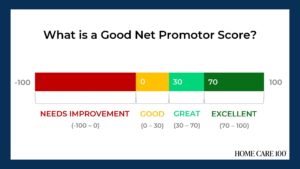
Medicare Advantage has multiple measures of success for payment bumps and bonuses. Rehospitalization rates has long been the most important measure of how well a care at home agency is performing, but there are additional measures that can help or hurt your agency. One that is gaining a lot of traction with MA and can impact your agency’s ability to survive is the overall patient experience. Measuring the patient experience can be subjective, but a great marketing tool to use is the Net Promoter Score (NPS). NPS is a calculation of patient responses regarding their likelihood to recommend you to others. A NPS score of “0” means that, overall, your clients are not going to speak positively or negatively about you; there just isn’t anything outstanding enough to bother saying anything. Anything above zero is better than nothing, but 30 and above is ideal.

During January’s HomeCare 100 Winter Conference, Tim Craig moderated the panel, “The MA Member Experience and Why it Matters” with a panel of experts. He posed this question to the audience:

“How well do home care providers perform when it comes to delivering on patient experience?”

Rating care provider performance on a scale of 1-5, the responses during the panel were somewhat surprising

  • 47% of those who responded rated the delivery on patient experience 3
  • 43% said 4
  • 6% responded 2
  • A mere 4% responded 5
  • There were no responses of 1

If we turn these answers into a Net Promoter Score, we get -6. If caregivers, administrators, and providers don’t believe we’re doing a good job, how can we expect our clients, patients, and families to be happy with the care they receive?

Statistics

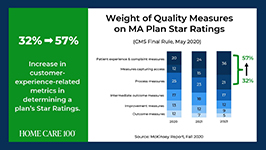
  • Patient experience and complaint measures count higher toward star rating than they have before
  • CAHPS Scores have changed weight from 1.5 to 4 since 2021
  • Star Ratings Determine Bonus Eligibility and Amount – starts at 4 stars and above
  • Number of plans that have a 4.0 or higher star rating dropped from 64% to 43%
  • Disenrollment is on the rise from 10% in 2017 to 17% in 2021

Net Promoter Score

Glen Moller, CEO of Upward Health, whose net promoter score is a whopping 86, said:
“The Member Experience has always been important. What has changed is the way we manage it, given the implication of the CAHPS rating, you can’t be a 4 star without high CAHPS scores.” Moller improved his patient experience with internal surveys to get actionable intel and asking open-ended questions. Look at change and innovation and how that could be disruptive to members. Member experience is at the center of all the other measures. No matter what benefits you’re offering, embed member experience measures at every step of the process.

Because your star rating directly impacts your ability to receive bonuses and because experience-related metrics are increasingly weighted in determining star ratings, you should be looking at the member experience more closely in all of your process. You should also be measuring the member experience and looking at ways to improve it.

Ways to measure ME

• HHCAHPS
• Quality of Patient Care Ratings
• Word of Mouth
• Net Promoter Score
• Glassdoor
• YelpCalculating a Net Promoter Score can be challenging, especially when trying to get older or infirmed patients to answer a survey. For the most accurate NPS, send a single question survey to all of your current and past customers asking them to rate, on a scale of 1 to 10, “How likely are you to recommend us to a friend or family member.” If you aren’t able to do this, you can still calculate a rough NPS using your other measures. You can use your Google and Yelp reviews with a simple formula: % of promoters – % of detractors = NPS. Three stars and below are detractors; four and five stars are promoters.The NPS score is more about comparative to the usual experience rather then the actual experience. A high score from a customer doesn’t necessarily meant it’s “great”, only that it’s much better than what they’re used to or what they expected.

The NPS is not the only measure of customer experience. To get the whole picture, use all the data you have to find out what interventions should be done and implement them. Whether the change is in training your staff, updating your scheduling process, using AI to help communicate directly with patients and families, or simply streamlining your website for a better user experience, you can improve your chances for higher ratings and bigger bonuses in a few easy steps.

I won’t often insert a shameless plug into an article, but if increasing patient satisfaction and member experience can help your agency survive the CMS pay cuts, and you need help with getting a NPS, understanding how to measure your patient experience, or getting online reviews, please contact me for more information. My marketing agency is happy to help get you started.

# # #

Kristin Rowan

Kristin Rowan has been working at Healthcare at Home: The Rowan Report since 2008. She has a master’s degree in business administration and marketing and runs Girard Marketing Group, a multi-faceted boutique marketing firm specializing in event planning, sales, and marketing strategy. She has recently taken on the role of Editor of The Rowan Report and will add her voice to current Home Care topics as well as marketing tips for home care agencies. Connect with Kristin directly kristin@girardmarketinggroup.com or www.girardmarketinggroup.com
©2024 by The Rowan Report, Peoria, AZ. All rights reserved. This article originally appeared in Healthcare at Home: The Rowan Report.homecaretechreport.com One copy may be printed for personal use: further reproduction by permission only. editor@homecaretechreport.com


Caregiver Charged with Death of a Patient

Admin

by Elizabeth E. Hogue, Esq.

A caregiver in Wyoming who is charged with causing the death of her mother has been jailed based on allegations that she committed aggravated assault and battery; deliberate abuse of a vulnerable adult; and intentionally and maliciously killing another human being, commonly known as 2nd degree murder. The defendant, Edwina Leman, cared for her mother, Mary Davis, beginning in June of 2022. At the time of the events described below, Davis was a hospice patient.

On December 28, 2023, Leman’s son heard her yelling at her mother. At some point, he heard an audible “thump” and Davis began to scream. The son then entered the bathroom and found Leman pulling roughly on her mother’s leg, even though Davis was screaming that it hurt. According to Leman’s son, Leman then told her mother “not to be dramatic” and called her “Marygina,” a derogatory name the caregiver had previously called Davis on multiple occasions.

Leman claimed that she was removing her mother’s clothing “more forcibly than necessary when she fell.” She also said that Davis became very frail and fragile during the time the patient lived with her. Leman admitted that she had a temper and had “thumped or swatted” her mother on the head at various times in the past.

Leman’s husband and son said that they saw the caregiver engage in a pattern of physical and verbal abuse toward Davis. The caregiver screamed at her mother and sometimes called her names. Leman’s husband said he saw his wife hit the patient on the head and push her while she was walking with her walker. Leman said that she also pushed Davis when she was not using her walker, which caused her to fall to the ground. The coroner’s report said that Davis died of complications of a displaced fracture of her femur.

A sad story indeed! We read it and weep!

This case is a reminder for all types of providers who render services to patients in their homes to be alert to any signs of abuse or neglect, and to take action to protect patients who are subject to abuse or neglect. Action by providers should include reports to adult protective services. Providers may respond to this recommendation by saying that adult protective services rarely takes action based on their reports. Providers must remember, however, that reports to adult protective services are required in many states. In addition, it is important to establish a record of abuse and neglect even if authorities do not take action. Better to err, if necessary, on the side of protecting patients.

# # #

©2024 Elizabeth E. Hogue, Esq. All rights reserved. No portion of this material may be reproduced in any form without the advance written permission of the author.

©2024 by The Rowan Report, Peoria, AZ. All rights reserved. This article originally appeared in Healthcare at Home: The Rowan Report.homecaretechreport.com Reprinted by permission. One copy may be printed for personal use: further reproduction by permission only. editor@homecaretechreport.com

Cigna Divests Medicare Business

Regulatory

by Kristin Rowan, Editor,

On Wednesday, January 31, Cigna and HCSC signed an agreement to sell all of Cigna’s Medicare business — including traditional Medicare, supplemental benefits, Medicare Part D offerings, and CareAllies, a value-based care management subsidiary.  — to HCSC, a Blue Cross / Blue Shield partner with operations in Illinois, Texas, New Mexico, Oklahoma and Montana. The $3.3 billion deal will quadruple the size of HCSC’s Medicare Advantage population, which numbered 217,623 as of this month.

Medicare Advantage had not been a significant business for Cigna. CEO David Cordani explained that it required resources disproportionate to its size in the company. With 19 million insurance customers, Cigna had a little over a half million in its MA business, a little under a half million Medicare supplement members, and 2.5 million in Part D.

It had previously been reported that Cigna believed divesting its Medicare business would make its merger with Humana more acceptable to regulators. The company completed its HCSC deal even though negotiations with Humana had already broken down. Though inked today, the deal is  not expected to close until the first quarter of 2025.

# # #

Kristin Rowan has been working at Healthcare at Home: The Rowan Report since 2008. She has a master’s degree in business administration and marketing and runs Girard Marketing Group, a multi-faceted boutique marketing firm specializing in event planning, sales, and marketing strategy. She has recently taken on the role of Editor of The Rowan Report and will add her voice to current Home Care topics as well as marketing tips for home care agencies. Connect with Kristin directly kristin@girardmarketinggroup.com or www.girardmarketinggroup.com

©2024 by The Rowan Report, Peoria, AZ. All rights reserved. This article originally appeared in Healthcare at Home: The Rowan Report.homecaretechreport.com One copy may be printed for personal use: further reproduction by permission only. editor@homecaretechreport.com


Why Every Provider Must Establish and Maintain a Fraud and Abuse Compliance Program

Admin

by Elizabeth E Hogue, Esq.

Providers may have heard or read about the importance of Fraud and Abuse Compliance Plans in their organizations. Despite the wealth of available information about Compliance Plans, many providers continue to express uncertainty about their value. Here are some of the questions providers commonly ask about Compliance Plans:

Why should we have a Fraud and Abuse Compliance Plan?

First, the Office of Inspector General (OIG) of the U.S. Department of Health and Human Services has clearly stated that, consistent with the Affordable Care Act (ACA) as described below, all providers are now expected to have current Compliance Plans that are fully implemented.

As a practical matter, when providers establish and maintain Compliance Plans, it clearly discourages regulators from pursuing allegations of fraud and abuse violations.

Technically speaking, the Federal Sentencing Guidelines make it clear that establishment and implementation of Compliance Plans is considered to be a mitigating factor. That is, if accusations of criminal conduct are made, the consequences may be substantially less severe because of a properly implemented Compliance Plan.

In addition, providers with Compliance Plans are more likely to avoid fraud and abuse. This is because Plans routinely establish an obligation on the part of every employee to report possible instances of fraud and abuse, and Plans include training for all employees.

Compliance Plans may help to prevent qui tam or so-called “whistleblower” lawsuits by private individuals, rather than by government enforcers, who believe that they have identified instances of fraud and abuse. There are significant incentives to bring these legal actions since whistleblowers receive a share of monies recovered because of their efforts. Some whistleblowers have received millions of dollars. Compliance Plans make it clear that employees have an obligation to bring any potential fraud and abuse issues to the attention of their employers first. Compliance Plans provide a clear path to resolve fraud and abuse issues internally.

In addition, the federal Affordable Care Act (ACA) requires providers to have Compliance Plans. In short, it’s the law!

Finally, the Deficit Reduction Act (DRA) requires providers who receive more than $5 million in monies from state Medicaid Programs per year to implement policies and procedures, provide education to employees, and put information in their employee handbooks about fraud and abuse compliance.  These requirements can be met through implementation of Fraud and Abuse Compliance Plans.

We don’t receive reimbursement from the Medicare or Medicaid Programs. Do we still need a Compliance Plan?

Statutes and regulations governing fraud and abuse also apply to providers who receive payments from any federal and state healthcare programs, including Medicaid, Medicaid waiver and other federal and state health care programs, such as TriCare and the VA. Many private insurers have followed the federal government’s lead in terms of fraud and abuse enforcement. Therefore, providers that don’t receive reimbursement from the Medicare Program must have compliance plans, too.

We hear that the OIG of the U.S. Department for Health and Human Services has provided guidance for various segments of the healthcare industry regarding Compliance Plans.

  • Specifically, the OIG has already published guidance for clinical laboratories, hospitals, home health agencies, hospices, physicians’ practices, third-party billing companies, and home medical equipment companies. Should we just use the model guidance that is applicable to us?

The answer is, “No!” Guidance from the OIG is not a model Compliance Plan.   Guidance from the OIG consists of general guidelines and does not constitute valid Compliance Plans. In addition, the OIG has made it clear that Plans must be customized for each organization.

We have read that, before implementing Compliance Plans, providers must conduct expensive internal audits that can take many months to complete. Is this true?

While beginning the compliance process with an extensive internal audit is certainly one way to proceed, it is not the only viable way to work toward compliance. It is equally valid to begin with Compliance Plans that are customized for the organization and include training for all employees about fraud and abuse, and Compliance Plans. Then all staff members can subsequently participate in internal compliance activities, including audits, with a process in place to handle any issues that arise as a result of the audits.

We have all sorts of policies and procedures in our organization. Why do we need something else called a Compliance Plan?

Compliance Plans are specific types of documents that routinely address fraud and abuse issues that providers do not usually cover in internal policies and procedures. In addition, providers may not gain benefits under the Federal Sentencing Guidelines described in paragraph one (1) above if there is no formal document called a Compliance Plan.

We just spent a lot of money to become accredited or reaccredited. Doesn’t certification mean that we are in compliance?

On the contrary, Compliance Plans appropriately address potential fraud and abuse issues. They also include mechanisms for helping to ensure compliance, such as processes for identification and correction of potential problems that are not addressed during the certification process. In other words, organizations may be accredited, but fail to meet applicable compliance standards for fraud and abuse.

Will the fact that our organization has a Compliance Plan make any difference regarding the outcome of fraud and abuse investigations and the imposition of Corporate Integrity Agreements (CIA’s)?

Yes, it may make a considerable difference, based on statements from the OIG. If providers have Compliance Plans in place during investigations that are current and fully implemented, the OIG may be less aggressive in pursuing potential violations. Enforcers are likely to ask for information about Compliance Plans and related policies and procedures. Enforcers are now also likely to ask providers to show them how much money they have spent on fraud and abuse compliance activities!

When the OIG discovers problems with fraud and abuse in organizations, providers are usually asked to develop and implement a Corporate Integrity Agreement (CIA). The OIG often requires CIA’s to include a process for stringent monitoring by the OIG on a continuous basis. These monitoring activities can be extremely burdensome to providers in terms of both time and money. Providers with valid Compliance Plans may not be asked to develop and implement CIA’s.

Now is the time for all providers to recognize and act upon the need to establish and maintain Compliance Plans. “Working on it” is no longer good enough.

©2024 Elizabeth E. Hogue, Esq. All rights reserved.

No portion of this material may be reproduced in any form without the advance written permission of the author.

NAHC Fights for Home Health on Capitol Hill

Admin

By Kristin Rowan, Editor

The National Association for Home Care and Hospice joined other advocacy groups this month on Capitol Hill to fight against the looming pay cuts from CMS. Some members of Congress joined the fight for “common sense policies” to expand access to care in the home for Americans.

Rep. Adrian Smith (R-NE-3), who spoke at the event, decried moves against home health, saying “there are cuts looming that are not based on reality” and “we want to make sure reimbursement policies are reflective of the actual realities.” Smith is also the representative who introduce the “Homecare for Seniors Act,” H.R. 1795, which would allow the use of Health Savings Accounts (HSAs) to be used for home care.

Rep. Terri Sewell (D-AL-7) has a personal connection to home care and spoke about how her mother cared for her father through a series of strokes he suffered. She expressed strong opinions about payment reductions that could see home health lose as much as $20 billion dollars over the next ten years. Sewell called the idea “frightening” and said, “I am a big fan of making sure that my constituents have access to quality, affordable health care.”

The Medicare program has admitted that home health is not just a bringing of great care and not just a more cost effective way to provide care, but is a service that provides dynamic value. Care in the home has decreased overall costs by $3.2 billion dollars just in the small segment of value-based payment model test cases. Patients who receive care in the home are re-admitted to the hospital 37% less frequently than those who do not and are 43% less likely to die than patients who do not receive care at home. Still, CMS is looking at additional pay cuts which bring the total payment reduction down 13.72% since 2019. The costs of everything else have increased in that time. According to the U.S. Bureau of Labor and Statistics, the average cost of living has increased 22% since 2019. NAHC President Bill Dombi said, “Where we’re headed in 2024 is that half of all home health agencies will be operating in the red with the cuts facing them in the Medicare program. It’s not a recipe for continued access to care.”

Dombi, along with many others, is predicting that 50 percent of agencies will be operating in the red after the next round of payment reductions and that without a reversal of these pay cuts we could see the end of care at home altogether with a collapse of the home health payment system.

The advocacy event on Capitol Hill helped raise awareness of the plight of care at home among some policymakers, but more help and advocacy is needed. Please, take a few minutes to click the link below and tell your members of Congress to support the Preserving Access to Home Health Act of 2023.

# # #

Kristin Rowan

Kristin Rowan has been working at Healthcare at Home: The Rowan Report since 2008. She has a master’s degree in business administration and marketing and runs Girard Marketing Group, a multi-faceted boutique marketing firm specializing in event planning, sales, and marketing strategy. She has recently taken on the role of Editor of The Rowan Report and will add her voice to current Home Care topics as well as marketing tips for home care agencies. Connect with Kristin directly kristin@girardmarketinggroup.com or www.girardmarketinggroup.com
©2024 by The Rowan Report, Peoria, AZ. All rights reserved. This article originally appeared in Healthcare at Home: The Rowan Report.homecaretechreport.com One copy may be printed for personal use: further reproduction by permission only. editor@homecaretechreport.com

 Please GO HERE to tell your members of Congress to support the Preserving Access to Home Health Act of 2023