Medicare Home Health Cuts: Survey Says

FOR IMMEDIATE RELEASE

Contact:                                                                       Elyssa Katz
571-281-0220
communications@allianceforcareathome.org  

70% of Americans Oppose Medicare Home Health Cuts, National Poll Finds

Alexandria VA, and Washington, DC, September 4, 2025– A new national poll by Fabrizio Ward, commissioned by the National Alliance for Care at Home (the Alliance), finds that seven in ten Americans oppose the Centers for Medicare & Medicaid Services’ (CMS) 2026 Medicare home health proposed rule, which would slash Medicare home health funding by an additional 9%, or $1.1 billion, next year. These cuts would put lifesaving home health care for millions of Americans at risk, particularly seniors and those with disabilities, while doing nothing to address fraud, waste, and abuse occurring in the home health payment system.

In one of the strongest bipartisan rebukes of Medicare home health cuts to date, the poll found overwhelming opposition across party lines. Large majorities of voters support targeting cost savings to eliminating waste and fraud rather than across-the-board cuts. Voters widely recognize that home health provides significant savings for taxpayers, that lack of access to home health due to recent cuts hurts Medicare patients, and that many more would be hurt if the proposed cuts go into effect.
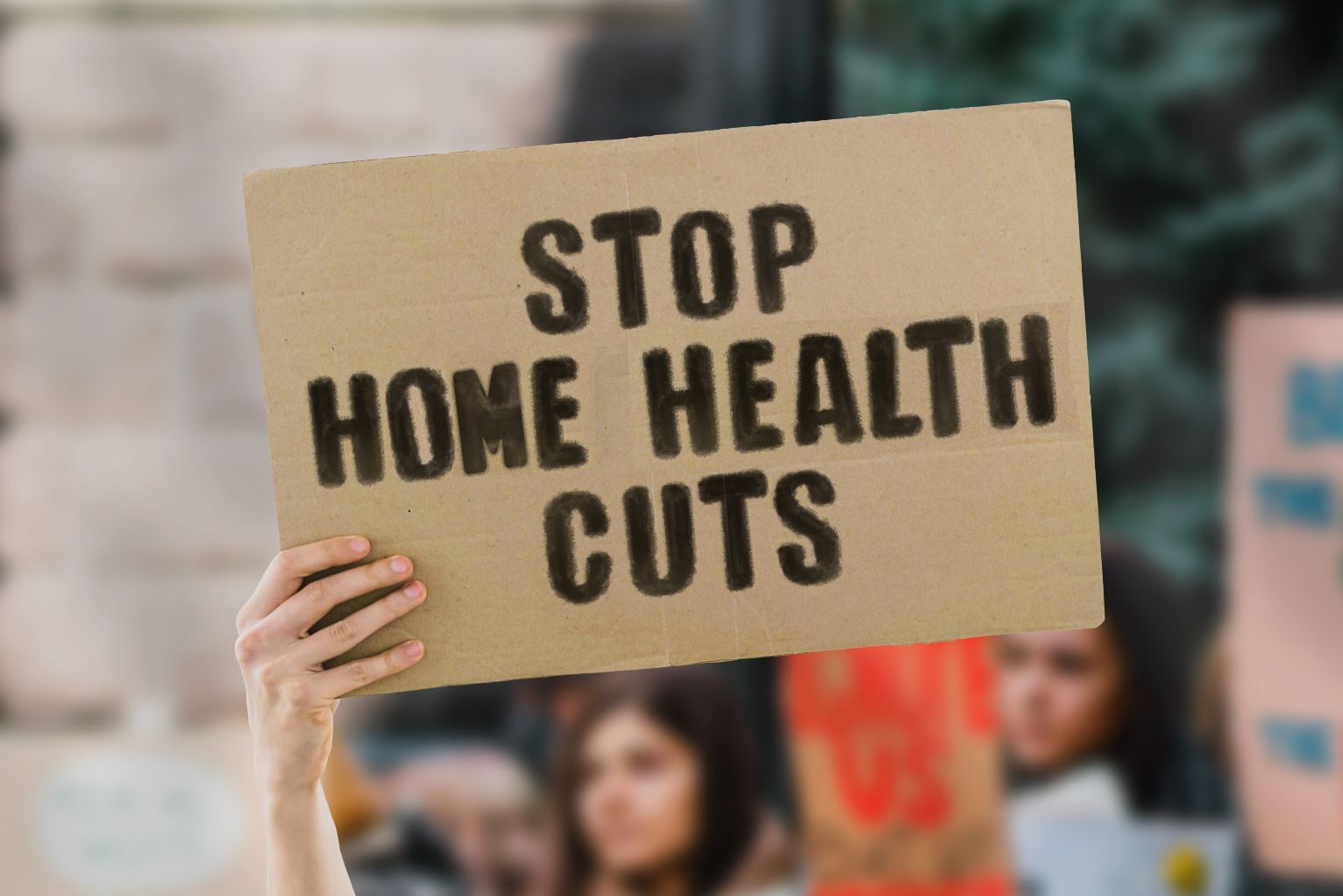
CMS home health proposed rule

“The results send a crystal-clear message: Americans want more home-based care, not less, and preserving access to care is critical. Cutting home health doesn’t save money – it hurts patients, worsens outcomes, and costs taxpayers more in the long run.” 

Dr. Steve Landers

CEO, National Alliance for Care at Home

The poll reveals Americans see home health as essential to keeping patients safe at home, lowering costs, and easing pressure on already overburdened hospitals and emergency rooms.

Key findings:

  • 70% of all voters oppose Medicare cutting home health services by an additional 9% next year.
  • 91% of all voters believe it’s important that home health services be available when Medicare patients require extra medical support.
  • 55% of all voters support President Trump taking steps to reverse the proposed Medicare home health cuts and ordering a crackdown on fraud in the system.
  • 71% of all voters believe home care is the most affordable care option, compared to just 17% who believe hospital care is more affordable.
  • 73% of all voters say that cutting Medicare home health harms patients and legitimate providers while failing to stop the fraudulent operators that scam hundreds of millions of dollars from the program each year is a good reason to oppose the cuts.

“With more than one out of every two voters either on Medicare, or with a parent on Medicare, voters are clear that people want treatment at home if it’s an option and that home medical care is less expensive than care provided at hospitals and nursing homes. Voters also see the folly in across-the-board cuts that harm everyone rather than focusing efforts to root out known fraud in the home health system. Across the political spectrum voters oppose cuts and support redoubling efforts to fight fraud.”

Tony Fabrizio

Partner, Fabrizio Ward

“These numbers should give every lawmaker pause,” Dr. Landers cautioned. “Patients want to recover where they’re safest – at home. It’s time for Congress to protect what’s working and stop the home-care bleeding. Lawmakers have an opportunity to protect a program that saves lives, lowers costs, enjoys overwhelming bipartisan support, and reflects the clear will of the American people.”

The Alliance is urging Congress and CMS not to finalize the proposed payment cuts and to work with providers to revise their approach and strengthen, not weaken, access to home-based care.

A memo of the poll findings can be found here.

###

About the National Alliance for Care at Home

The National Alliance for Care at Home (the Alliance) is the leading authority in transforming care in the home. As an inclusive thought leader, advocate, educator, and convener, we serve as the unifying voice for providers and recipients of home care, home health, hospice, palliative care, and Medicaid home and community-based services throughout all stages of life. Learn more at www.AllianceForCareAtHome.org.
Medicare Advantage Excess Payments

by Kristin Rowan, Editor

Medicare Advantage Excess Payments

Investigational Study

Researchers from the Department of Health Services, Policy and Practice at Brown Universchool of Public Health and the Department of Geriatrics and Palliative Medicine at Icahn School of Medicine published an original investigative study on spending versus payments in Medicare Advantage under the hospice carve-out model.

Carve-out to VBID to Carve-out

In 2021, CMS started a Value-Based Insurance Design (VBID) to test the impact of adding hospice services to Medicare Advantage benefits. By December of 2024, CMS ended the program due to widespread upset. CMS returned to the hospice carve-out model. Under this model, when an MA beneficiary chooses hospice, any health care expenses related to the terminal illness is paid on a fee-for-service (FFS) basis. MA no longer receives inpatient and outpatient payments, but continues to receive premiu, and rebate payments.

Carve-out Hospice Benefit

Once an MA enrollee enrolls in hospice, MA is no longer responsible for payments. Under the carve-out model, hospice services are paid by Medicare. MA plans are still responsible for paying for services that are not related to hospice care. These services can include inpatient, outpatient, physician, skilled nursing facility, home health care, and prescription drug expenses. 

Medicare Advantage Spending and Payments

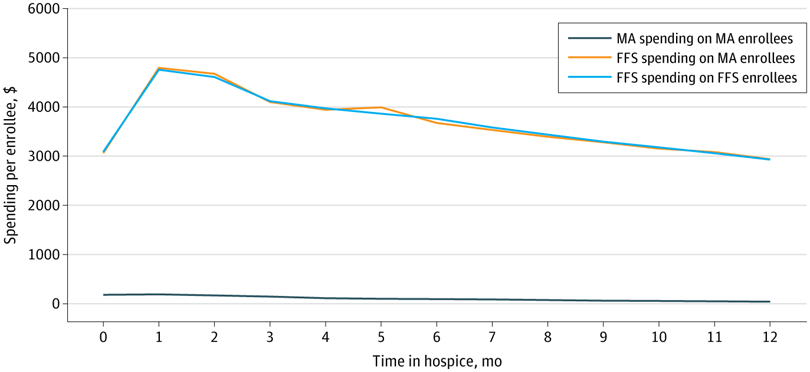
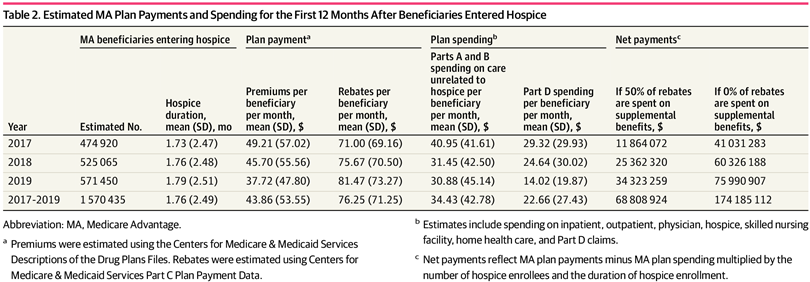
The study spanned 12 months and looked at 314,087 MA beneficiaries. In that period, 80.5% of enrollees had no spneding unrelated to their terminal illness. MA was not responsible for any healthcare related payments, but continued to receive $120 per enrollee per month. Estimated spending from MA on hospice enrollees was $57-70 per month. 

Medicare Advantage Excess Payments

In the 12 months following an enrollee electing hospice, MA plans netted $50-60 per month per enrollee. If half of the rebate payments received pay for supplemental benefits, MA receives excess payments to the tune of $68,808,924 over three years. If no rebate payments go toward supplemental benefits, MA receives $174,185,112 in excess payments over three years. The care a hospice enrollee receives uses the fee-for-service model. Medicare Advantage providers are seemingly paid on a fee-for-no-service model. 

Medicare Advantage plans do not currently report the actual amount of rebate payments used to pay supplemental benefits.

Study Conclusion

The researchers conclude that MA receives excess payments under the hospice carve-0ut model. They also note that there is no accountability for spending after hospice election from MA plans to CMS. The researchers suggest that CMS could require MA plans to report actual spending on supplemental services after hospice election and pay premiums and rebates only to cover the amount spent. 

I have a different recommendation….MA plans should not receive any additional premium payments or rebates following hospice election. MA plans should be required to report total payments and spending from enrollment date to election date. The balance, less the same 8% average margin of home and health and hospice agencies, should be used to pay for hospice services from election to passing. Any remaining balance after the patient’s passing should be returned to the beneficiary’s family.

# # #

Kristin Rowan, Editor

Kristin Rowan has been working at The Rowan Report since 2008. She is the owner and Editor-in-chief of The Rowan Report, the industry’s most trusted source for care at home news, and speaker on Artificial Intelligence and Lone Worker Safety and state and national conferences.

She also runs Girard Marketing Group, a multi-faceted boutique marketing firm specializing in content creation, social media management, and event marketing.  Connect with Kristin directly kristin@girardmarketinggroup.com or www.girardmarketinggroup.com

©2025 by The Rowan Report, Peoria, AZ. All rights reserved. This article originally appeared in The Rowan Report. One copy may be printed for personal use: further reproduction by permission only. editor@therowanreport.com


BREAKING NEWS: CMS Changes AHEAD

From cms.gov

CMS Changes AHEAD

CMS Announces Changes to Achieving Healthcare Efficiency through Accountable Design (AHEAD) Model to Improve Quality, Promote Transparency, and Decrease Costs

September 2, 2025

What's New

The CMS Innovation Center announced new policy and operational changes, as well as a new end date, to the Achieving Healthcare Efficiency through Accountable Design (AHEAD) Model to help states achieve their total cost of care (TCOC) targets, while advancing the Center’s commitment to promote choice and competition, increase prevention, empower patients, and protect taxpayer dollars.

Why it Matters

Participating states now have more tools to manage Medicare costs (designed to support sustainable growth) and improve quality of care and population health outcomes

What to Expect

Changes will be implemented across all cohorts beginning in January 2026. AHEAD’s end date for all cohorts is now December 31, 2035.

The Big Picture

Changes made to the model will help to advance the CMS Innovation Center’s strategic pillars of: 1) choice and competition, with states implementing at least two policies focused on promoting choice and competition in their health care markets and 2) prevention, with a new Population Health Accountability Plan focused on preventive care, including chronic disease prevention.

CMS Change AHEAD

Additional Details

CMS is also introducing payment reforms through AHEAD for patients with Original Medicare and establishing new transparency requirements around TCOC and primary care investment targets. For the first time ever, AHEAD will bring total cost of care accountability to all Original Medicare beneficiaries in AHEAD regions through geographic attribution of beneficiaries not attributed to other CMS accountable care organization programs. This novel framework will offer risk-bearing Geographic Entities additional tools and enhanced flexibilities to improve health outcomes and lower spending for their patients while receiving shared payments (or losses) through two-sided risk arrangements. In return, patients may receive additional beneficiary incentives while enjoying existing protections under the Original Medicare program.

Total Cost of Care Model

The AHEAD Model is a state total cost of care (TCOC) model that seeks to drive state and regional health care transformation and multi-payer alignment, with the goal of improving the total health of a state population and lowering costs. Under a TCOC approach, a participating state uses its authority to assume responsibility for managing health care quality and costs across all payers, including Medicare, Medicaid, and private coverage. States also assume responsibility for ensuring health providers in their state deliver high-quality care, improve population health, offer greater care coordination, and promote healthier living for all people participating in the model. The AHEAD Model provides participating states with funding and other tools to address rising health care costs and improve health outcomes.

More Information

# # #

©2025 Centers for Medicare & Medicaid Services. This announcement originally appeared on the CMS website here. For more information, please contact the CMS Innovation Center.

Medicare Prior Authorization

by Kristin Rowan, Editor

Medicare Prior Authorization

Wasteful and Inappropriate Service Reduction Model

The Centers for Medicare and Medicaid Services (CMS) is launching a pilot program in six states to combat what they deem to be unnecessary treatments. Dubbed the Wasteful and Inappropriate Service Reduction (WISeR) Model, the voluntary program will launch in New Jersey, Ohio, Oklahoma, Texas, Arizona, and Washington beginning January 1, 2026 and ending December 31, 2031. The program will use Artificial Intelligence (AI) and Machine Learning (ML) alongside human clinical review to “ensure timely and appropriate Medicare payment for select items and services.”

The Problem

According to CMS, health care waste harms patients and comprises 25% of healthcare spending. “Low-value” services provide little effectiveness, do not align with specific health conditions, and can lead to additional complications and more wasteful services.

Medicare Prior Authorization Solution

The new WISeR Model is designed to reduce unsupported care. Participating care providers will outsource authorization of a pre-selected list of services to reviewers using technology to “expedite and improve the review process.” These services are those that CMS designated as vulberable to fraud, waste, and abuse.

Reasoning

CMS suggests that the fee-for-service model used in traditional Medicare incentivizes unnecessary treatments, tests, and other care. According to CMS, these items provide little to no benefit for some patients. These include:

  • Skin and tissue substitutes
  • Electrical nerve stimulator implants for obstructive sleep apnea and incontinence
  • knee arthroscopy for knee osteoarthritis
  • Cervical fusion
  • Epidural steroid injections
  • Vertebral augmentation
  • Image-guided lumbar decompression
  • deep brain stimulation for Parkinson’s and essential tremor

Strategy and Outcomes

The WISeR Model is supposed to ensure patients get the most appropriate care for the best outcomes. It is also supposed to lower costs and administrative burden on providers. Patients are supposed to partner with their health care providers to decide on the most appropriate care plan. Eliminating “unnecessary” services and procedures is supposed to save taxpayer dollars and decrease fraud, waste, and abuse. Care providers are supposed to focus on providing care that has the most impact on the well-being of Medicare beneficiaries.

Editorial Comment

I am not a Medicare recipient, but I have many close friends and family who are. I am not a nurse or home health expert, but I am a patient and by my count, I have a PCP and 6 specialists that I see on a regular basis. However, I am now, or will be in the near future, in need of:

  • Electrical nerve stimulator
  • Cervical fusion
  • Steroid injections
  • Lumbar decompression

Personal Experiences

I am already at the mercy of my health insurance provider for pre-authorizations for everything that is not routine visits with my primary care provider. I know first-hand the hoops and red tape my provider(s) go through. Already this year, I have filed two requests to review denials, more than 10 rescheduled visits because my pre-authorization had not been received, and at least one interview that my PCP had to attend with an “expert” who had previously decided that my regularly scheduled follow-up cancer scan was unnecessary.

Predicted Results

Adding prior authorization approval requirements for care and treatment will delay beneficiaries from getting the care they need, prolong the pain they experience daily, and cost more in wasted time and money than it can possibly save in wasted procedures. I sincerely hope there are enough voluntary participants in this experiment to document the additional time, money, and resources required. I also hope these participants send regular surveys to their Medicare beneficiaries to ask whether they feel like getting pre-authorizations for routine procedures has made them feel like they are getting better care.

# # #

Kristin Rowan, Editor

Kristin Rowan has been working at The Rowan Report since 2008. She is the owner and Editor-in-chief of The Rowan Report, the industry’s most trusted source for care at home news, and speaker on Artificial Intelligence and Lone Worker Safety and state and national conferences.

She also runs Girard Marketing Group, a multi-faceted boutique marketing firm specializing in content creation, social media management, and event marketing.  Connect with Kristin directly kristin@girardmarketinggroup.com or www.girardmarketinggroup.com

©2025 by The Rowan Report, Peoria, AZ. All rights reserved. This article originally appeared in The Rowan Report. One copy may be printed for personal use: further reproduction by permission only. editor@therowanreport.com


Overtime Changes

by Kristin Rowan, Editor

Overtime Changes

FLSA exemption to resume

In 1938, the Fair Labor Standards Act (FLSA) established a federal minimum wage, guaranteed overtime, and kept children out of the workforce. Exemptions to FLSA include executive, administrative, professional, computer employee, and outside sales positions. Employers did not pay minimum wage for retail workers, service workers, agricultural workers, or construction workers.

Domestic workers included

An amendment to FLSA in 1974 added domestic workers to those who must receive minimum wage and overtime. The amendment did not include “companionship services” and live-in domestic service employees. A later amendment from 2013 narrowed the definition of “companionship services.” This eliminated the exemptions for workers who provided “care.” Companions could still be exempted from overtime. This stopped home care agencies from claiming exemptions and required overtime pay for home care workers.

Overtime Changes FLSA Exempt

Rolling back the rule

The Department of Labor is considering unraveling the 2013 amendment. There is a concern that they may have misinterpretated the rule. Additionally, requiring overtime for home care workers will increase the cost of care. Supporters of the rule change believe that allowing exemptions for overtime among home care workers would make live-in care more affordable. If the 2013 amendment is removed, employers would not have to guarantee minimum wage or overtime for home care aides.

Industry impact

The DOL argues that this change will make care more affordable and expand access to care at home. However, there is already a workforce shortage in the industry. Lowering pay rates and removing overtime could cause a mass exodus from the industry. As far as we know, DOL did not discuss requiring CMS to increase reimbursements rates or covering non-medical supportive care at home as an alternative.

“Removing basic labor protections from home care workers will only exacerbate the multiple issues buffeting the home care sector, its workers and consumers: serious threats from cuts to federal Medicaid contributions, changing immigration policies and the lack of realistic long-term services and supports (LTSS) options.”

Katie Smith Sloan

President and CEO, LeadingAge

Comments from the industry

The public comments period on this proposed rule change ended on September 2, 2025. The proposed rule received roughly 5,300 comments. Some examples of feedback include:

“…reversing the 2013 protections, the DOL would undermine the wages and economic security of home care workers…exacerbate turnover and workforce shortages…[and] harm older adults and people with disabilities….” – Hand in Hand: The Domestic Employers Network

“This proposed change is a crucial step toward restoring flexibility and affordability in home care services, particularly for families relying on live-in support.” – Owner, Home Helpers Home Care of Larimer County and member of HCAOA and IFA

“…strongly support workforce development and has historically and continues to support thoughtful solutions to our workforce crisis. We strongly support the restoration of the overtime exemption.” – The Virginia Association for Home Care and Hospice and the West Virginia Council for Home Care and Hospice

Home care workers are also strongly vital for companion care, personal care, home health, nursing, therapy, caring for the disabled and the elderly, and more. The proposed rule that was meant to strip home care workers of wage and overtime protections is absolutely cruel and harmful for home care workers…” – Derek Dinh, CA

“I am not a home care worker, but used a home care worker to take care of my mom when she was unable to do things around the home and then got progressively worse. They need to be paid a living wage and receive overtime. They are professional people who take care of those who need care.” – Wendy Peale, NY

Opposition

  • Among the people and organizations who have publicly expressed opposition to this change are:
  • LeadingAge
  • Autistic Self Advocacy Network
  • American Civil Liberties Union
  • Congresswoman Pramila Jayapal
  • The Commonwealth of Pennsylvania, California, Colorado, Connecticut, District of Columbia, Hawaii, Illinois, Massachusetts, Maryland, Maine, Michigan, Minnesota, Nevada, New Jersey, New York, Oregon, Rhode Island, Vermont, and Washington

Final Rule

The has not issued a final rule. However, neither has the DOL enforced the requirement since July 25, 2025. Home care agencies can currently claim overtime exemptions. There is no set timeline yet for a final decision. We will continue to follow updates on this topic.

# # #

Kristin Rowan, Editor

Kristin Rowan has been working at The Rowan Report since 2008. She is the owner and Editor-in-chief of The Rowan Report, the industry’s most trusted source for care at home news, and speaker on Artificial Intelligence and Lone Worker Safety and state and national conferences.

She also runs Girard Marketing Group, a multi-faceted boutique marketing firm specializing in content creation, social media management, and event marketing.  Connect with Kristin directly kristin@girardmarketinggroup.com or www.girardmarketinggroup.com

©2025 by The Rowan Report, Peoria, AZ. All rights reserved. This article originally appeared in The Rowan Report. One copy may be printed for personal use: further reproduction by permission only. editor@therowanreport.com


Imposter Clinicians

by Elizabeth E. Hogue, Esq.

Imposter Clinicians

Although it is relatively rare, there are individuals who impersonate clinicians! Imposters will inevitably slip through the cracks despite concerted efforts by providers.

The First Offense

For example, Thomasina Amponsah recently admitted to posing as a licensed registered nurse at more than forty facilities in Maryland. Beginning in about September 2019 through approximately August 2023 Amponsah used stolen nursing credentials and false educational and professional histories to secure employment at multiple facilities. She was employed primarily at rehab facilities and nursing homes. She earned at least $100,000 in wages with her false credentials.

Amponsah used a Maryland nursing license number issued to another individual, thus making this individual a victim of identity theft.  She then presented a copy of the victim’s license to potential employers.  Amponsah altered her name on applications to include the victim’s last name. She falsely claimed that she had been a supervisor and that she had a nursing degree from Florida State University.

Imposter Clinicians

Adding Injury to Insult

Amponsah also used a second stolen identify to obtain employment.  In July 2021 she submitted an online job application to a staffing agency.  She used a Florida nursing license that belonged to another victim. Amponsah provided a copy of this victim’s license to the staffing agency along with a fictitious resume. She then worked for at least twenty-one different skilled nursing facilities on behalf of the staffing agency.

Imposter Identity Uncovered

Although several employers learned her true identity and terminated her employment, Amponsah continued to gain employment as a nurse in other facilities. She faces a maximum sentence of five years in federal prison for false statements related to health care matters and a mandatory two-year sentence served consecutively to any other sentence for aggravated identify theft.

A Common Occurrence

Then there is the recent case of a Pennsylvania woman, Shannon Nicole Womack, who posed as a nurse in four different states.  She used various false names and paperwork while employed at twenty nursing homes and rehab facilities as a licensed practical nurse, registered nurse, and even nurse supervisor.  Womack was charged with endangering the welfare of care, unlawful use of a computer, identity theft, forgery, theft by unlawful taking, and several other crimes.

Inherent Risks of Imposter Clinicians

There are many implications for services provided by imposters. One is, of course, the possibility of injuries to patients.  Another is that providers may wonder if they are liable under the False Claims Act for services provided by unlicensed individuals. 

Southern Maryland Home Health Services, for example, hired Diane Cannon as a physical therapist (PT) who was unlicensed, even though she claimed to be a fully qualified PT. In order to gain employment, Cannon used the name of an actual licensed PT and provided false references from supposed former employers. In addition, the provider’s hiring agent who interviewed her said that Cannon was familiar with PT terminology and procedures. While Cannon was employed, the provider did not receive any complaints about her that would have put the provider on notice that she was an imposter.

Agency Liability

Consequently, the U.S. District Court for the District of Maryland concluded that providers are only liable for false claims for services provided by imposters if some degree of culpability is attributable to employers other than simply employing an imposter. In other words, providers will probably not have any liability for filing false claims for imposters’ services so long as providers comply with their internal policies and procedures and state and federal requirements, and nothing occurs that puts employers on notice that staff members are imposters.

Final Thoughts

It is quite scary to think about the provision of healthcare services by unlicensed personnel. The consequences could certainly be dire for both patients and providers. However, vigilance by providers usually, but not always, pays off.

# # #

Elizabeth E. Hogue, Esq.

Elizabeth Hogue is an attorney in private practice with extensive experience in health care. She represents clients across the U.S., including professional associations, managed care providers, hospitals, long-term care facilities, home health agencies, durable medical equipment companies, and hospices.

©2025 Elizabeth E. Hogue, Esq. All rights reserved.

No portion of this material may be reproduced in any form without the advance written permission of the author.

©2025 by The Rowan Report, Peoria, AZ. All rights reserved. 

Imposter Clinicians


Although it is relatively rare, there are individuals who impersonate clinicians! Imposters will inevitably slip through the cracks despite concerted efforts by providers.


For example, Thomasina Amponsah recently admitted to posing as a licensed registered nurse at more than forty facilities in Maryland. Beginning in about September 2019 through approximately August 2023 Amponsah used stolen nursing credentials and false educational and professional histories to secure employment at multiple facilities. She was employed primarily at rehab facilities and nursing homes. She earned at least $100,000 in wages with her false credentials.


Amponsah used a Maryland nursing license number issued to another individual, thus making this individual a victim of identity theft.  She then presented a copy of the victim’s license to potential employers.  Amponsah altered her name on applications to include the victim’s last name. She falsely claimed that she had been a supervisor and that she had a nursing degree from Florida State University.


Amponsah also used a second stolen identify to obtain employment.  In July 2021 she submitted an online job application to a staffing agency.  She used a Florida nursing license that belonged to another victim. Amponsah provided a copy of this victim’s license to the staffing agency along with a fictitious resume. She then worked for at least twenty-one different skilled nursing facilities on behalf of the staffing agency.


Although several employers learned her true identity and terminated her employment, Amponsah continued to gain employment as a nurse in other facilities. She faces a maximum sentence of five years in federal prison for false statements related to health care matters and a mandatory two-year sentence served consecutively to any other sentence for aggravated identify theft.


Then there is the recent case of a Pennsylvania woman, Shannon Nicole Womack, who posed as a nurse in four different states.  She used various false names and paperwork while employed at twenty nursing homes and rehab facilities as a licensed practical nurse, registered nurse, and even nurse supervisor.  Womack was charged with endangering the welfare of care, unlawful use of a computer, identity theft, forgery, theft by unlawful taking, and several other crimes.


There are many implications for services provided by imposters. One is, of course, the possibility of injuries to patients.  Another is that providers may wonder if they are liable under the False Claims Act for services provided by unlicensed individuals.


Southern Maryland Home Health Services, for example, hired Diane Cannon as a physical therapist (PT) who was unlicensed, even though she claimed to be a fully qualified PT. In order to gain employment, Cannon used the name of an actual licensed PT and provided false references from supposed former employers. In addition, the provider’s hiring agent who interviewed her said that Cannon was familiar with PT terminology and procedures. While Cannon was employed, the provider did not receive any complaints about her that would have put the provider on notice that she was an imposter.


Consequently, the U.S. District Court for the District of Maryland concluded that providers are only liable for false claims for services provided by imposters if some degree of culpability is attributable to employers other than simply employing an imposter. In other words, providers will probably not have any liability for filing false claims for imposters’ services so long as providers comply with their internal policies and procedures and state and federal requirements, and nothing occurs that puts employers on notice that staff members are imposters.


It is quite scary to think about the provision of healthcare services by unlicensed personnel. The consequences could certainly be dire for both patients and providers. However, vigilance by providers usually, but not always, pays off.

©2025 Elizabeth E. Hogue, Esq. All rights reserved.

No portion of this material may be reproduced in any form without the advance written permission of the author.

OASIS-E2

OASIS-E2

by Kristin Rowan, Editor

OASIS-E2 Instruments and Change Table draft are available from The Centers for Medicare & Medicaid Services (CMS). They are available for download here. The draft proposes an off-cycle implementation date of April 1, 2026

Change Table

Changes include:
  • Transportation listing changed from A1250 to A1255
  • Hearing (B0200) and Vision (B1000) added to ROC
  • Sex (A0810) replaces Gender (M0069)
  • COVID vaccination up to date removed
  • Language (A1110) added to ROC
  • Minor changes to replace outdated item numbers with updated ones (ex: all instances of A1250 changed to A1255)
OASIS E2 Change Table

Change Timeline

The Changes are effective April 1, 2026. However, the changes are not final pending approval from the Office of Management and Budget (OMB). Agencies are able to use the draft form for training purposes, but should look for the final form that includes the OMB control number and expiration date.

Implications

OASIS accuracy is linked to PDGM payments and quality outcomes. Prepare early for the off-cycle April 1, 2026 changes to ensure a smooth transition to E2 requirements and continued reporting accuracy. 

Resources

Draft versions of the instruments are on the CMS website in a ZIP file. You can download the file here.

The PRA package, which includes four separate documents, is available for download here.

Submit comments to CMS about OASIS-E2 or any other item in the Home Health Prospective Payment System Rate Update for CY 2026 here and here.

Quality Improvement Project

by Kristin Rowan, Editor

Quality Improvement Project

Joint two-year effort publishes results

The Quality improvement project, a joint two-year research initiative between BerryDunn, Strategic Healthcare Partners, and National Alliance for Care at Home, aimed to improve the care experience for patients and improve CAHPS scores. The study implemented best practices targeted toward the CHAPS survey to see what really was working in improving patient and family satisfaction.

“Very little research has been done in the area of home health and hospice CAHPS, and this project is helping to close that gap. By identifying and validating true best practices, we’re giving agencies actionable tools to improve patient and family experience. At the heart of care is the relationship between providers, patients, and families—and improving that experience is essential to achieving meaningful outcomes.”

Lindsay Doak

Director of Healthcare Research and Education, BerryDunn

The Quality Improvement Project

The study included 27 hospice and 36 home health agencies. It ran from October of 2023 through June of 2024. Participating agencies underwent supervisory training and support, customer service and PCC training and support, and patient-centered mentorship certification. They also participated in bimonthly review calls for performance metrics and best practices.

Data comparisons

CAHPS data collected between June 1 and December 31, 2023 served as a baseline to compare with data collected using best practices. New CAHPS data collected between June 1 and December 31, 2024 showed outcomes of the project.

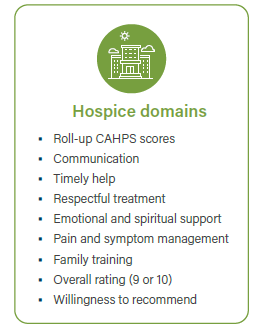
Quality Improvement Project Hospice Domains
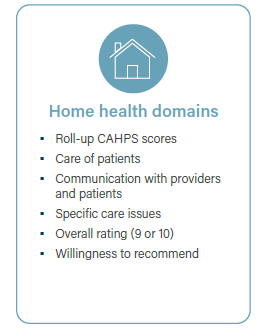
Quality Improvement Project Home Health Domains

Best Practice Findings

  • Before funding new or additional initiatives, ensure internal readiness and operational stability to ensure successful implementation
    • Customer service training improved CAHPS outcomes in communication and willingness to recommend
    • Supervisory training improved roll-up scores for hospice and both specific care issues and willingness to recommend for home health
    • Mentorship boosted overall scores in hospice, but had little impact in home health
  • Home Health agencies may benefit from mandated interdisciplinary team meetings for mentorship, peer connection, and ongoing staff education
  • Turnover rates had mixed results
    • Intentional staff changes due to performance issues increased scores
    • General high turnover disrupted continuity and long-term success

Key Takeaways/Conclusions

Implementing patient-centered care (PCC) yielded strong improvement in some areas for some organizations, but overall the project produced varied results. The project was more successful among hospices than home health agencies. PCC training will need changes to achieve measurable impact. The best results came from agencies with the highest participation rates. Further improvement efforts need to be tailored to agency types, cultures, dynamics, and internal barriers.

# # #

This report and the information contained therein is the property of BerryDunn. For more information, contact BerryDunn directly. Download the full report here.

Bayada CEO Succession Plan

Bayada CEO Succession Plan

FOR IMMEDIATE RELEASE

Contact:               Kristen Kirkpatrick
419-350-4963
394064@email4pr.com

David Baiada to transition out of the CEO role, join BAYADA Home Health Care Board of Directors

Board Succession Committee launches a thorough CEO search

Moorestown, N.J., August 19, 2025 – BAYADA Home Health Care (“BAYADA”), a nonprofit organization and one of the nation’s largest providers of home health, personal home care, private duty nursing, and hospice services, today announced the start of a leadership transition that will conclude with current Chief Executive Officer (CEO) David Baiada moving into a new role on the BAYADA Board of Directors (“Board”) upon the appointment of the company’s next CEO.

First CEO Outside the Family

The Board’s Succession Committee has initiated a comprehensive search for BAYADA’s next CEO—the first non-family member to lead the organization. As the search progresses, David will continue in his role as CEO and will serve as an advisor during the transition.  

David Baiada CEO Succession Plan Bayada

“Since joining the business more than 20 years ago, David has helped us grow in size and strength, while always putting The BAYADA Way® at the center of every decision. As we celebrate our 50th anniversary, this transition is about the next chapter—the thoughtful continuation of a promise to protect our mission, preserve our values, and pass on our legacy with care.” 

Mark Baiada

Founder and Chairman, Bayada

The announcement comes on the eight-year anniversary week of David’s appointment to CEO in 2017, which is also when BAYADA announced its transition to nonprofit status. 

In His Own Words

“Serving as CEO has been an incredible honor. Together, we’ve grown stronger, strengthened our values, and deepened our commitment to helping people live safely at home with comfort, independence, and dignity.”  

David Baiada

CEO , Bayada

Accomplishments

Under David’s leadership, BAYADA has more than doubled in size; restructured into specialized practices of care and invested in technology and clinical innovation. David also helped guide the organization through the global pandemic; expand its community-based services, and strengthen its nonprofit identity. Most importantly, David and his leadership teams have nurtured a culture deeply rooted in The BAYADA Way—the organization’s guiding values of compassion, excellence, and reliability. 

From the Board

“The Board is deeply grateful to David for his leadership and devotion to BAYADA’s mission,” said Teresa Carroll, Chair of the Board Succession Committee. “With David’s continued leadership during this transition, then as a Board member, and with our strong executive team in place, we are well positioned for continued success.” 

# # #

About Bayada Home Health Care

Celebrating 50 years of care that comes from the heart, BAYADA Home Health Care is the nation’s largest independent, nonprofit home health care provider with over 370 locations across the United States and in Germany, India, Ireland, New Zealand, and South Korea.

Since 1975, BAYADA has been earning the public trust by helping people stay safe at home and by caring for them with compassion, excellence, and reliability, the core values expressed in its statement of purpose,The BAYADA Way®.

BAYADA is proud to support clients of all ages and abilities with a full range of personalized nursing, rehabilitative, therapeutic, hospice, and personal care services. Always anticipating future trends, BAYADA is building a movement of stakeholders to transform home health care so millions can receive the essential services they need.

DOJ Settles with UnitedHealth and Amedisys

by Kristin Rowan, Editor

DOJ Settles with UnitedHealth and Amedisys

Judge to Weigh In

DOJ settles with UnitedHealth and Amedisys after almost nine months of negotiations. The Department of Justice (DOJ) initially blocked the proposed merger between UnitedHealth and Amedisys, citing concerns over eliminating competition in home health and hospice services in some areas of the U.S. After the most recent settlement hearing, the merger seems to be back on track.

Public Comment Period and Judicial Review

Now that the DOJ hurdle has been passed, there is a public comment period. Following the public comment period, the U.S. District Court for the District of Maryland will enter final judgement. From the Justice Department website:

As required by the Tunney Act, the proposed settlement, along with a competitive impact statement, will be published in the Federal Register. Any interested person should submit written comments concerning the proposed settlement within 60 days following the publication to Jill Maguire, Acting Chief, Healthcare and Consumer Products Section, Antitrust Division, U.S. Department of Justice, 450 Fifth Street NW, Suite 4100, Washington, DC 20530. 

Antitrust Division Statement

“In no sector of our economy is competition more important to Americans’ well-being than healthcare. This settlement protects quality and price competition for hundreds of thousands of vulnerable patients and wage competition for thousands of nurses. I commend the Antitrust Division’s Staff for doggedly investigating and prosecuting this case on behalf of seniors, hospice patients, nurses, and their families.”

Abigail Slater

Assistant Attorney General, Justice Department Antitrust Division

Divestiture Agreement

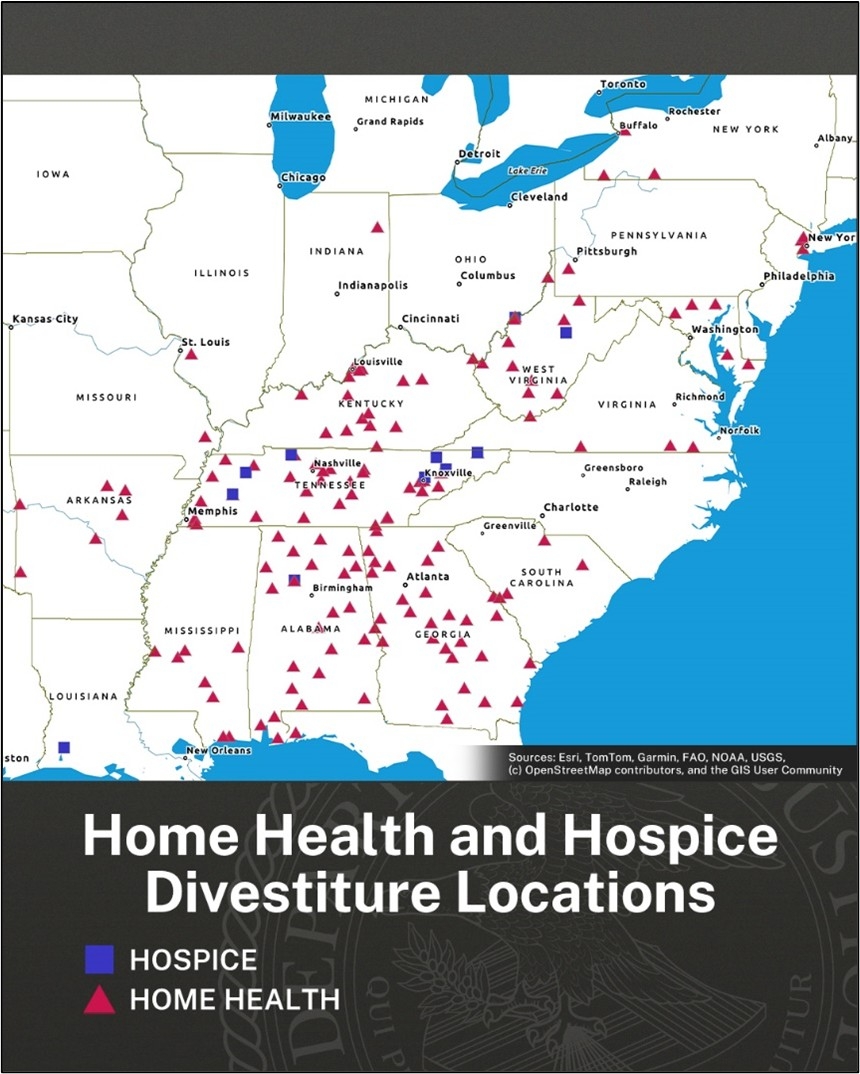
According to the new agreement, UnitedHealth will sell 164 home health and hospice locations across 19 states. In addition to the sale, the agreement provides the buyers of these locations with assets, personnel, and relationships to help them compete with remaining UnitedHealth locations. Also included are protections to deter UnitedHealth from interfering with the new owners’ ability to compete.

BrightSpring Health Services and Pennant Group will acquire the 164 locations. Slater said the settlement, which includes the largest ever divestiture of outpatient healthcare, protects quality and price competition patients as well as wage competition for nurses. However, antitrust specialist Robin Crauthers, a partner with McCarter & English, says it doesn’t go far enough. According to Crauthers, the settlement agreement does not address all of the markets that would have less competition and that the DOJ accepted less than they wanted in the agreement.

Additionally, critics argue the divestiture moves 164 home health and hospice agencies from one large player to two other large players in the space. Arguably, rather than preserve competition, this divestiture agreement will only serve to strengthen the largest players in the market, giving them a substantial advantage over smaller agencies in these areas.

UnitedHealth Amedisys divestiture locations

Not the Only Concern

Vertical Integration

Joe Widmar, Director of M&A at West Monroe consulting firm, says that the number of home health and hospice agencies is not the tipping factor in competition. Rather, it is UnitedHealth’s vertical integration. A health insurance company that also owns nearly 2,700 subsidiaries, including pharmacies, home health and hospice, behavioral health, consulting for healthcare organizations, surgery centers, hospitals, mental health, managed care for Medicaid and Medicare, and specialty care. Virtually any referral from a PCP to any other health professional puts more money into the health care giant’s pockets. The lack of competition is across all forms of healthcare, leaving patients no choice buy to support UnitedHealth Group in areas where all local healthcare providers are subsidiaries. I 2024, UnitedHealth insurance paid $150.9 million to its subsidiaries for care. These provider companies are not counted in the profit caps placed on insurance companies.

Upcoding

In addition to side-stepping profit caps, vertical integration aids in upcoding. Upcoding is the practice of digging into a patient’s life to find (or create) additional patient needs. Insurers add as many codes as possible for the greatest reimbursement rates. According to a recent study, UnitedHealthcare overbilled Medicare Advantage by $14 billion through upcoding. 

In-home health risk assessments and patient reviews, often offered to beneficiaries as a free service, result in an average risk score 7% higher than in patients seen in medical practices and hospitals. UnitedHealth generates more income from patient review diagnoses than any other MA insurer. The Department of Justice is currently investigating UnitedHealth’s Medicare billing practices.

Final Thoughts

If you own a home health, hospice, or palliative care agency in any of the states shown in the graphic above, write to Jill Maguire with comments and concerns. Our primary objective is providing quality care to patients in their homes. We know that home care is less expensive for the patient and government-funded insurance. But not when all the home care agencies in an area are owned by only a few of the largest home health agencies in the country. And not when the insurer is adding diagnostic codes to pad their bill. 

# # #

Kristin Rowan, Editor

Kristin Rowan has been working at The Rowan Report since 2008. She is the owner and Editor-in-chief of The Rowan Report, the industry’s most trusted source for care at home news, and speaker on Artificial Intelligence and Lone Worker Safety and state and national conferences.

She also runs Girard Marketing Group, a multi-faceted boutique marketing firm specializing in content creation, social media management, and event marketing.  Connect with Kristin directly kristin@girardmarketinggroup.com or www.girardmarketinggroup.com

©2025 by The Rowan Report, Peoria, AZ. All rights reserved. This article originally appeared in The Rowan Report. One copy may be printed for personal use: further reproduction by permission only. editor@therowanreport.com