Private Duty Fraud Enforcement

Admin

by Elizabeth E. Hogue, Esq.

The Future of Private Duty/Home Care

It Begins with Fraud Enforcement

Use of private duty/home care services continues to increase. It has become increasingly clear, however, that companies will not be permitted to care for patients who need these services without considerable additional oversight.

The proverbial “bottom line” is that private duty/home care companies will be under greater scrutiny and regulation. The instances of gross mistreatment of patients, some of which we have described in previous articles, are too shocking and lurid. And caregivers about whom lip service is given about their need for support have been mistreated by private duty companies.

And Then There's This:

The feds are convinced that there is rampant fraud in state Medicaid Programs to the tune of millions, if not billions, of dollars that has not been addressed. The number of fraud strike forces, task forces, etc. targeting companies that provide services to Medicaid recipients are now too numerous to count.

Fraud enforcement is definitely “in fashion” and enforcers are eager to put private duty/home care companies in the color orange! If this a fashion statement you want to make?

To Illustrate:

The National Fraud Enforcement Division of the U.S. Department of Justice (DOJ) recently announced that it has prosecuted 6200 defendants who collectively billed federal health care programs, including Medicaid, TriCare, the VA and others, $45 billion.

In a press release issued on August 4, 2026, the Division stated:

“Home care fraud is everywhere, and the victim is all of us taxpayers. Medicaid claims date and the experience of veteran prosecutors all point to the systematic exploitation of reimbursable home care programs….Today. we sound the alarm on the scale of this fraud by announcing some truly egregious cases, in which numerous people are charged with filing fraudulent claims for caregivers who were not actually providing home care services, but in fact were dead, in prison, or trafficking drugs. This racket ends today.”

And There's More!

“Let today’s announcement be a warning to those engaging in similar activity: if you seek to exploit our health care systems for personal profit, you should expect the FBI and our partners to uncover your scheme and bring it to an end. Every dollar stolen through fraud is a dollar diverted from patient care, and the FBI will continue its work to safeguard the public’s trust and hold accountable those who abuse these vital programs.”

Finally the press release promises that enforcers “…will pursue anybody who seeks to profit at the expenses of American taxpayers, regardless of whether the wrong doing is in the boardroom or in the sickroom.”

In other words, it’s not just the perpetrators who will be punished. The companies, owners and managers will also face punishment.

So, what are some of the offenses pursued so far?

Private Duty Fraud Enforcement

One of the defendants was captured on tape:

”This home health care is the best kept secret…I made a buck plus (each of) the last five years. That’s a half million dollars… ain’t checking on nobody.”

It may be tempting for owners and managers to say: “That’s on them.” Not so! Companies and management will be held accountable for the actions of their employers and contractors.

Private duty/home care companies will see a tsunami of regulation. Use of fraud and abuse prohibitions is just the beginning.

# # #

Elizabeth E. Hogue, Esq The Rowan Report

Elizabeth Hogue is an attorney in private practice with extensive experience in health care. She represents clients across the U.S., including professional associations, managed care providers, hospitals, long-term care facilities, home health agencies, durable medical equipment companies, and hospices.

©2026 Elizabeth E. Hogue, Esq. All rights reserved.
No portion of this material may be reproduced in any form without the advance written permission of the author.

©2026 by The Rowan Report, Peoria, AZ. All rights reserved. 

HHAeXchange Launches RCM Services

Admin

by Kristin Rowan, Editor

HHAeXchange Announces RCM Services

An Interview with Phil Feldman

In April of 2026, HHAeXchange unveiled their new end-to-end Revenue Cycle Management (RCM) service. HHAeXchange is a leading provider of homecare program management designed for Medicaid Home and Community-Based Services. (HCBS).

Addressing Top Concerns

HHAeXchange’s 2025 Provider Voice Survey asks homecare agencies about the pain points facing the industry. Administrative workload and cost are significant areas of concern for homecare agencies, cited by 41% of providers. RCM services address these concerns by removing administrative tasks from agencies, freeing up personnel to focus on growth, community outreach, referrals, and caregiver training. 

“Homecare providers are navigating diverse payers, rising costs, growing administrative demands, and an increasingly complex financial and regulatory environment. RCM Services relieves agencies of the operational burden of billing and collections while improving cash flow and business performance. By offloading revenue cycle management to experts who deeply understand homecare and the HHAeXchange platform, agencies gain clarity, efficiency, and more time to focus on care.”

Paul Joiner

CEO, HHAeXchange

From Submission to Resolution

End-to-end RCM services handle the full revenue cycle. The RCM Services team at HHAeXchange handles everything from the initial claim submission to handling discrepancies, resolving rejections, appealing denials, and shortening the cycle of aging receivables.

Improved Cash Flow

RCM services go beyond billing and collections. HHAeXchange uses operational intelligence to track denial trends, authorization issues, and payer challenges. With these issues addressed at the beginning, claims are cleaner, denials are reduced, and agencies stay in compliance. These are issues cited by 70% of homecare agencies. 

With improved cashflow, agencies have the resources to grow, to invest in their staff, to scale operations, and to create a more stable work environment.

HHAeXchange RCM Services

Phil Feldman, National Director of RCM

The Rowan Report sat down with Phil Feldman, the National Director of RCM for HHAeXchange. Feldman, and the RCM service platform, came from Sandata and joined HHAeXchange in the acquisition in 2024. We asked Feldman about RCM services: 

The Rowan Report:

What makes HHAeXchange’s RCM different?

Phil Feldman:

The RCM service platform is specific. It is specific to home care, specific to Medicaid, and specific to HHAeXchange. Agencies are connected to resources within the organization. We have existing relationships with payors that we can resolve directly. And the customer-facing team, the experts handling your revenue cycle, are employees of HHAeXchange, not a partner or a 3rd party.

RR:

What is the agency experience with HHAeXchange’s RCM service?

Feldman:

We are currently only offering the RCM services within the HHAeXchange platform. You have one vendor and one platform. When there’s a finger to point, it points right back at us. 

Every account has at least one RCM advisor who serves as the primary point of contact, working with the agency on their billing schedule, their time-keeping week, and the whole process from close to claim.

The intelligence in the platform goes beyond mechanically processing claims and takes a holistic approach. The system checks for demographic descrepancies from intake like member IDs, gender alignment, ID updates from new payors, overservicing on claims, providing services past the end date or outside allotted days. We look directly at the agency’s denial trends and go upstream in the revenue cycle to fix the whole process, not just one claim.

Results

With just under five months since the full launch, and nearly a year of data from beta test agencies, Feldman says their agency claims are in the 90% collection rate. Claim denials, clawbacks, and remit time are trending down. A full data set is forthcoming, but for now, Feldman is relying on anectodal evidence: Their customers are referring agencies that are looking for RCM solutions.

“You’re the best thing ever. I have a lot of friends that I consult with and help them run their business. I want to introduce them to you.”

– An Indiana Agency Owner

Final Thoughts

Hiring and retention issues, reimbursement rates, administrative workload, operational costs, denials, payor compliance, authorizations…these issues are universal across home care and aren’t going away any time soon. If you’re looking for ways to optimize your current workforce, reduce overhead costs and tasks, and create a steady cash flow for your agency, outsourcing RCM is one way to do it. If you’re already an HHAeXchange customer, well, it just makes good sense to work within the system you know, with advisors who take time to understand your agency, and the backing of decades of experience.

# # #

Kristin Rowan Editor The Rowan Report

Kristin Rowan is the owner and Editor-in-chief of The Rowan Report, the industry’s most trusted source for care at home news. She is also a sought-after speaker on Artificial Intelligence, Technology Adoption and Lone Worker Safety. She is available to speak at state and national conferences as well as software user-group meetings.

Kristin also runs Girard Marketing Group, a multi-faceted boutique marketing firm specializing in content creation, social media management, and event marketing. She works with care at home software providers to create dynamic content that increases conversions for direct e-mail, social media, and websites.  Connect with Kristin directly at kristin@girardmarketinggroup.com or www.girardmarketinggroup.com

©2026 by The Rowan Report, Peoria, AZ. All rights reserved. This article originally appeared in The Rowan Report. One copy may be printed for personal use: further reproduction by permission only. editor@therowanreport.com


The Alliance Responds to the Integrity and Protection Act

Advocacy

FOR IMMEDIATE RELEASE

Contact:                                                         Hannah Kristan
communications@allianceforcareathome.org
202-355-1647

The Alliance Celebrates the Introduction of the Medicare Home Health Payment Integrity and Protection Act of 2026

Alexandria, VA, August 7, 2026. Today, the Alliance applauds the introduction of the Medicare Home Health Payment Integrity and Protection Act of 2026 (S.B. 5250) by Senator Collins (R-ME) and Senator Blackburn (R-TN). This important piece of legislation will provide core payment integrity reforms by correcting the Centers for Medicare & Medicaid Services’ (CMS) flaws in calculating Medicare rate updates, while also streamlining program integrity measures to target fraud concerns early, stopping bad actors from entering the Medicare program. Critically, this legislation does not rely on sweeping enforcement strategies which risk further restricting access to care for Medicare beneficiaries and causing unintended harm to legitimate providers.  

The Medicare Home Health Payment Integrity and Protect Act seeks to restore the Medicare home health rate to what it would have been without consecutive years of compounding cuts. Those cuts were built on data entirely unrelated to the payment system adopted in 2020, along with data tainted by the inclusion of fraudulent providers in the rate analysis. This is an important step in modernizing the home health benefit, ensuring that beneficiary access is not disrupted by providing payment rates that better reflect the true cost of care. 

The program integrity reforms included in this legislation build on the industry supported bill from Representative Beth Van Duyne in the Protecting Seniors and Stopping Fraudsters Act (H.R. 8883), which gives CMS stronger tools to combat healthcare fraud without imposing unnecessary burdens on legitimate providers.

Medicare Advantage Stock Trump

“The National Alliance for Care at Home applauds the introduction of the Medicare Home Health Payment Integrity and Protection Act of 2026 by Senator Collins. This bill corrects longstanding flaws in home health reimbursement and takes a meaningful step toward a home health benefit that is stable and built for how care is delivered today. We strongly support the bill for its payment reforms, as well as measures to protect patients and preserve the integrity of the Medicare home health benefit.”

Jennifer Sheets

CEO, National Alliance for Care at Home

Sheets continues, “Consistent with our community’s commitment to provide the highest-quality, person-centered care in the home, we support the bill’s goal to strengthen access while focusing on targeted oversight, protecting the legitimate providers who serve patients every day. We look forward to working with Senator Collins, a long-time champion of care at home, to build support for this important and timely legislation.”

“When billions of dollars are improperly siphoned from the Medicare home health program, this can undermine the integrity of the payment system used to reimburse legitimate providers and threaten care for the seniors who depend on it. I have long been a strong supporter of home health care, which allows millions of Americans to remain in the comfort, security, and privacy of their own homes, while helping to avoid unnecessary hospitalizations and nursing home admissions,” said Senator Collins. “Fraudulent home health providers harm beneficiaries and diminish reimbursements for honest agencies that are already confronting workforce shortages and rising costs. My legislation would give CMS stronger tools to stop fraud before payments are made and prevent fraudulent spending from distorting the data used to reimburse honest agencies for medically necessary care.”

The Alliance will continue to serve as a key partner to lawmakers and regulators working to reform and protect the Medicare home health benefit, ensuring that payment rates better reflect the true cost of care.

# # #

About the National Alliance for Care at Home

The National Alliance for Care at Home (the Alliance) is the leading authority in advancing care in the home. We envision an America where everyone has access to the highest quality, person-centered healthcare wherever they call home. Through advocacy, education, and convening, we connect providers and stakeholders to strengthen care delivery across the home-based care continuum — spanning home care, home health, hospice, palliative care, and Medicaid home and community-based services. Learn more at www.AllianceForCareAtHome.org

© 2026 This press release was sent to The Rowan Report from the National Alliance for Care at Home and is reprinted with permission. For more information or to request permission to use this content, see contact information above.

LeadingAge Reacts to the Integrity and Protection Act

CMS

Leading Age React to Integrity and Protection Act

FOR IMMEDIATE RELEASE

Contact:                              Lisa Sanders
lsanders@leadingage.org
202-508-9407

PACE LeadingAge MA Reform

LeadingAge Statement on the Medicare Home Health Payment Integrity and Protection Act of 2026

August 7, 2026 Washington, DC—Statement from Katie Smith Sloan, president and CEO, LeadingAge, the association of nonprofit and mission-driven providers of aging services, including home health, on the Medicare Home Health Payment Integrity and Protection Act of 2026, recently introduced by Senator Susan Collins (R-ME):

“Access to health care and services is an important benefit today, as America grows older—by 2050, adults age 65 and older will increase from 17% to nearly 25% of the population. What’s more, care at home is what people prefer and it also delivers strong patient satisfaction and quality outcomes. Yet the valuable Medicare home health benefit is under threat. Senator Collins’ bill rightly seeks to rectify two contributors to that unfortunate situation: bad actors seeking to exploit the program, and…years of reductions due to a flawed methodology. “

Katie Smith Sloan

President and CEO, LeadingAge

Sloan continued, “A longtime champion of Medicare home health, Senator Collins appreciates the shortcomings of current payment approaches; we are particularly encouraged by the bill’s recognition that the standard prospective payment amount requires a recalibration. 

The Centers for Medicare and Medicaid Services’ (CMS) patient-driven groupings model (PDGM), in place since 2020, applies permanent and temporary payment adjustments, as required by Congress, premised on isolating “assumed versus actual” behavior change. The widely recognized problem is that in practice, neither CMS nor any other stakeholder, has managed to isolate the specific behavior due to PDGM from other factors that have also changed over the same time frame: patient acuity, referral patterns, staffing markets, the shift in post-acute utilization, potential fraud, and the lasting effects of the public health emergency.  

LeadingAge Reacts to Integrity and Protection Act

Rather than continue use of the problematic behavioral adjustments methodology, it makes sense to set a rate that reflects the patients agencies actually serve, and pause further assumption-driven adjustments. Home health providers need this relief, and the older adults and families who depend on care at home need the stability and access sensible rate-setting would deliver. 

We appreciate Senator Collins’ leadership in presenting a much-needed reset of the Medicare home health payment to promote its stability and ensure access. 

In addition, we also share the desire to address fraud in this setting. LeadingAge has long expressed concern about the increase of home health providers in Los Angeles County.  

This bill’s oversight provisions are reasonable, appropriately targeted policies that would help maintain the benefit’s integrity. Those, along with the important proposed payment changes, will help to ensure support for legitimate providers—including our nonprofit and mission-driven members. We look forward to working with Senator Collins to advance this legislation.”

About Leading Age

We represent more than 5,300 nonprofit and mission-driven aging services providers serving older adults and touching millions of lives every day. From our national headquarters in Washington, DC, and in collaboration with our state partners representing members active in 50 states, the District of Columbia, and Puerto Rico, we use advocacy, education, applied research, and community-building to make America a better place to grow old. Our membership encompasses the entire continuum of aging services, including skilled nursing, assisted living, memory care, affordable housing, retirement communities, adult day programs, hospice, Programs of All-Inclusive Care for the Elderly (PACE), and home-based care. We bring together the most inventive minds in the field to lead and innovate solutions that support older adults wherever they call home. For more information, visit leadingage.org.

© 2026 This press release was sent to The Rowan Report from LeadingAge and is reprinted with permission. For more information or to request permission to use this content, see contact information above.

Update: CMS Response to Arizona Hospice

Admin

by Tim Rowan, Editor Emeritus

Update: CMS Sides with NGS in Arizona Hospice Case

Letter Says "Typos Count"

We are sad to have to report that CMS has rejected the evidence that a hospice’s report of change of ownership was due to a typo. The consultant retained to help with their appeal received this letter.

The CMS Letter

Thank you for your email. Based on our review, we do not see any issues with the revocation decision. The provider did file a reconsideration, and on May 6, 2026, we issued a decision upholding the 42 C.F.R. § 424.535(a)(8)(ii) revocation. Their main argument is that there was no change in ownership and, as a result, they should not have been subject to PPEO. However, the applications submitted by the provider clearly reflected 100% changes in ownership. In addition, the provider had an 80% PPEO claim denial rate, and none of these denials were overturned on claim appeal. Please note that the provider filed an appeal with the ALJ on June 18th. Given that the case is pending, we should not take any other action until the appeal has concluded.

Best Regards,

Anaga Nmagu, JD.
Director, Division of Provider Enrollment Appeals
Provider Enrollment & Oversight Group
Center for Program Integrity
Centers for Medicare & Medicaid Services
Office: (410) 786-4690
Email: anaga.nmagu1@cms.hhs.gov

Hospice Arizona NGS

Home Health and Hospice Respond

The more stories we can collect about CMS contractors overstepping their authority, improperly denying claims, up to and including putting honest providers out of business, the more convincing we will be when we confront the perpetrators. We urge you to tell us your stories. We will never publish your name.

If you, a client, or someone you know has stories about CMS contractors, please reach out to editor@therowanreport.com or tim@rowanresources.com

# # #

Tim Rowan The Rowan Report

Tim Rowan is a 33-year home care technology consultant who co-founded and served as Editor and principal writer of this publication for 25 years. He continues to occasionally contribute news and analysis articles under The Rowan Report’s new ownership. He also continues to work part-time as a Home Care recruiting and retention consultant. More information: RowanResources.com
Tim@RowanResources.com

©2026 by The Rowan Report, Peoria, AZ. All rights reserved. This article originally appeared in The Rowan Report. One copy may be printed for personal use: further reproduction by permission only. editor@therowanreport.com

2027 Home Health Proposed Rule

CMS

by Kristin Rowan, Editor

2027 Home Health Proposed Rule

The Alliance Responds

On July 1, 2026, CMS released the 2027 Home Health Prospective Payment System proposed rule. The proposed rule includes updates to base pay, quality reporting system, value-based purchasing model, medicare provider enrollment, and DME policies. CMS is also considering ways to include palliative care. The comment period ends August 31, 2026.

The National Alliance for Care at Home issued a press release following the proposed rule publication.

“While the proposed rate update results in increased payments relative to last year – a reflection of our continued advocacy and a much-needed reprieve for providers under the stress of increasing costs – the Alliance remains focused on working to stop unwarranted temporary adjustments that are based on a flawed methodology with underlying data integrity issues. We will continue to partner with CMS on policies that strengthen the Medicare home health benefit. Ultimately, federal policy must preserve patient access to care at home, which remains the preferred choice of care for millions of families.”

Jennifer Sheets

CEO, the Alliance

Permanent and Temporary Rate Adjustments

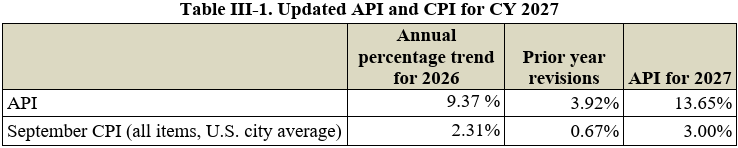
CMS uses data from 2020 through 2025, actual and expected behavior changes resulting from the implementation of PDGM, and calculated overpayments from prior years to determine rate adjustments.

  • The actual CY 2025 base rate was $2,057.35 and the recalculated rate is $1,953.60; a difference of 5.043%
  • Prior permanent adjustments of -1.975% in 2025 and -1.023% in 2026 are factored in, but not directly subtracted
  • The 2024 budget-neutral rate multiplied by case-mix weights, wage index, and payment update factors yield the 2025 budget-neutral rate of $2,036.29, a difference of 1.024%
  • Estimated retroactive overpayments from CY 2020 through CY 2025 of $4,9 billion to be partially collected with a -3.0% temporary adjustment to the base pay rate.
  • Recalibrating the  case-mix weight using reporting from CY 2025, CMS calculates a budget neutrality factor for CY 2027 of +1.0045
  • Applying the market basket (wages across the U.S.), CMS proposes a 3.0% increase to the home health market basket, offset by a -1.0% productivity adjustment, yielding a 2.1% increase.
With these calculations, CMS proposes a -3.0% temporary adjustment to be applied for CY 2027.

The Alliance acknowledges and appreciates the headway made with CMS in understanding the true cost of delivering home health care and the value it provides to the millions of Americans who depend on it. However, the Alliance emphasizes that Medicare payment rates – with the 3% temporary adjustment applied – still do not align with the actual cost of providing comprehensive, high-quality care. In a recent letter to CMS, the Alliance encouraged CMS to eliminate all permanent and temporary adjustments due to problems in the data and analyses used to calculate payment rates.

Alignment of HH QRP and HHVBP

CMS is considering changes that would better align measure sets, reporting perioeds and assessment process between HH QRP and HHVBP. The considered changes are:

  • Increasing alignment in expanded HHVBP Model and HH QRP Quality of Patient Care (QoPC) Star Ratings measure sets.
  • Aligning HH QRP and expanded HHVBP Model measure reporting periods.
  • Modifying HH QRP APU and expanded HHVBP Model annual payment reporting periods.
  • Altering expanded HHVBP Model Interim Performance and HH QRP QoPC Star Rating Reports.
  • Aligning timeframe of appeals/suppression review processes for the expanded HHVBP Model and HH QRP.
  • Updating scoring methodology to incorporate HH QRP APU penalties in expanded HHVBP Model payment adjustments and factoring HH QRP Quality Assessments Only (QAO) values into QoPC Star Ratings scoring.
CMS is NOT asking for comments at this time. The Technical Expert Panel meeting in 2025 discussed this alignment.

Read the TEP Summary Report.

LUPA Updates

CMS proposes updates to the functional points table and the table of functional impairment levels by clinical group. The proposed updates are:

2027 HH Proposed Rule Points Table
2027 HH Proposed Rule functional level thresholds

Requests for Comment

CMS is soliciting comments on the proposal of applying a -3.0% temporary rate adjustment instead of applying a permanent adjustment.

There are proposed changes to the criteria for selecting and prioritizing HH QRP measures, identifying measurement gaps, and measures for filling those gaps. CMS is requesting input on the measure concepts as the relate to advanced care planning. 

For CY 2027, CMS is using the hospital wage index as the basis for its calculations for the home health wage index. While they believe this is the best method, they are looking for information on alternative data sources such as occupation-level wage data or other publicly available wage data. They are exploring whether such data might better reflect geographic variations in labor costs for HHAs. CMS is concurrently exploring additional wage data for hospices, SNFs, and inpatient rehab facilities.

CMS is inviting public comments on the CY 2027 proposed case-mix weights and case-mix weights budget neutrality factor.

# # #

Kristin Rowan Editor The Rowan Report

Kristin Rowan is the owner and Editor-in-chief of The Rowan Report, the industry’s most trusted source for care at home news. She is also a sought-after speaker on Artificial Intelligence, Technology Adoption and Lone Worker Safety. She is available to speak at state and national conferences as well as software user-group meetings.

Kristin also runs Girard Marketing Group, a multi-faceted boutique marketing firm specializing in content creation, social media management, and event marketing. She works with care at home software providers to create dynamic content that increases conversions for direct e-mail, social media, and websites.  Connect with Kristin directly at kristin@girardmarketinggroup.com or www.girardmarketinggroup.com

©2026 by The Rowan Report, Peoria, AZ. All rights reserved. This article originally appeared in The Rowan Report. One copy may be printed for personal use: further reproduction by permission only. editor@therowanreport.com


Formal NGS Complaint Submitted to OIG

CMS

by Tim Rowan, Editor Emeritus

Formal NGS Complaint Submitted to OIG

Hospice Wrongly Subjected to PPEO Fights Back

Two weeks ago, we reported on an Arizona hospice that found itself in the middle of a revalidation survey when its Medicare Administration Contractor incorrectly classified it as a new provider. NGS placed the hospice under Provisional Period of Enhanced Oversight (PPEO) and promptly terminated its owners following a separate, 10-claim audit. (See “NGS Shutters Valid Hospice” – July 17)

According to this hospice’s PECOS file, no change of ownership — or any other triggering event that would justify reclassification — ever occurred. The error led to a clinical review of a handful of claims, a determination of fraudulent billing, and a 10-year ban against the owners.

On Monday, July 27, the hospice submitted a formal complaint to the Office of the Inspector General at HHS regarding NGS practices. According to the Medicare consultant retained by the hospice, the formal referral became necessary after a letter to CMS Administrator Dr. Mehmet Oz, describing multiple missteps by NGS, went unanswered. A subsequent video meeting with low-level CMS staff resulted only in a defense of the contractor. 

Executive Summary

The hospice allowed us to publish a general summary of the complaint, provided we do not share its name at this stage. The OIG referral documents specific instances that the complainant asserts are representative of a “systemic pattern of misconduct by Medicare contractors.”

The complaint says that such misconduct “enriches contractors at the expense of providers and the Medicare Trust Fund.” It further notes that offending contractors continue to operate with CMS trust while the Center’s leadership remains focused only on a limited number of fraudulent providers. 

Demand for Restitution and Reform

Dr. Mehmet Oz shifted uncomfortably in his chair, a look that signaled something between frustration and distress clouding his famous face. The new CMS Administrator removed his reading glasses, laid the Medicare consultant’s letter on his desk, thanked his aide for handing it to him, and asked her to close the door behind her as she left. Who he may have called next is anyone’s guess, but he did have a staffer tell the letter-writer, “We called the MAC; they said they didn’t do it.”

The complaint calls for meaningful reform that restores fairness to providers whose practices have been terminated. It demands restitution for owners who have been placed on the Preclusion List for ten years, often based on improper classifications.

The OIG referral specifically requests that:

  • CMS take immediate investigative action
  • All affected providers receive restitution with interest, and
  • CMS subject the entire contractor model to a thorough audit, similar in rigor to prior OIG reviews that uncovered widespread errors in contractor processes, some going back decades.

The complaint emphasizes that, while effective detection and elimination of actual fraud is essential, it must not come at the expense of compliant providers.

Oz Issues medicare moratoria

Strength in Numbers: Protect Your Agency

As we did in our first report of this series, we are opening our doors, well, our contact information anyway, to all Home Health and Hospice providers in the Medicare program. CMS may be able to ignore evidence from one or two providers, but a larger volume of consistent reports is harder to ignore. Write to us at editor@therowanreport.com, or Tim@RowanResources.com. If putting your story in writing makes you nervous, call me at 719-499-8902. You have seen how I protect the identity of the two providers outlined in this story. I will do the same for you.

We also have ways to help you find assistance to write your own OIG complaint. Once we get 100 or more complaints submitted, we will have status to demand Congressional hearings. You can be part of the solution.

# # #

Tim Rowan The Rowan Report

Tim Rowan is a 33-year home care technology consultant who co-founded and served as Editor and principal writer of this publication for 25 years. He continues to occasionally contribute news and analysis articles under The Rowan Report’s new ownership. He also continues to work part-time as a Home Care recruiting and retention consultant. More information: RowanResources.com
Tim@RowanResources.com

©2026 by The Rowan Report, Peoria, AZ. All rights reserved. This article originally appeared in The Rowan Report. One copy may be printed for personal use: further reproduction by permission only. editor@therowanreport.com

NGS Shutters Valid Hospice

Breaking News

Will a Typo Shut Down Your Agency?

by Tim Rowan, Editor Emeritus

This is the first of a multi-part, investigative report about fraud, waste, and abuse by federal contractors. A Medicare consultant’s in-depth research found that some MACs may be guilty of worse fraud than the providers Dr. Oz talks about.


July 24 Update

The story below is evolving almost on a daily basis. On Monday, the hospice described in last week’s story will submit a formal complaint against NGS to the Office of the Inspector General in the Department of Health and Human Services. This move is in response to the apparent choice by CMS not to pursue accusations of impropriety by the victim hospice. We will publish the full details as soon as the OIG receives the complaint. In the meantime, we are gathering similar stories from other providers who may have experienced the same abuse by their MAC. Our contact information is at the end of this story.

It Was Supposed to be Routine

Every year, hospices submit revalidation paperwork to keep their Medicare enrollment current. For one unlucky Hospice in Phoenix, however, a paperwork glitch during that process triggered something far more sinister: classification as a “new provider” under the Provisional Period of Enhanced Oversight (PPEO) rules.

No ownership change

There was just one problem. Ownership had not changed since June 2019, as the PECOS enrollment record proved. On November 24 and 25, 2025, the hospice’s authorized officials sent NGS (their Medicare Administrative Contractor) clearly stated emails with an organizational chart attached. It showed that, as of July 13, 2026, official ownership records established in 2019 remained unchanged.
Even more telling: A CMS representative personally instructed the agency to write “Not a new agency” with its established date on the cover sheets of every Additional Documentation Request (ADR) form returned to NGS. NGS’s own auditors received forms bearing that exact, handwritten notation.

NGS received the message…and ignored it.

What is PPEO Fraud Prevention?

The consultant working with the Arizona hospice explained, “PPEO exists for one narrow purpose: enhanced prepayment review of claims from genuinely new providers, or those with qualifying ownership changes. It is not a post-payment cudgel to be applied retroactively to an established hospice’s existing charts to manufacture a “pattern or practice of abusive billing” under 42 C.F.R. § 424.535(a)(8).”

Yet that is exactly what happened, he told us.

NGS abandoned what the record suggests was a far more robust 54-chart review and instead conducted a lightning-fast, 10-chart PPEO “snapshot” over a mere 30-day period. Next, they denied eight claims, on a Post-payment rather than the PPEO standard Pre-payment review, looking back four months to November 2025. The denied claims totaled $54,568.42.

Grounds for denial bordered on the frivolous:

  • “missing” addendum forms, which are not required
  • hyper-technical formatting nitpicks
  • outright misrepresentations of the hospice’s medical record.
The consultant did not fail to notice NGS’s deceptions. Still falsely claiming there was a change of ownership, the MAC selected claims from a previous month before the non-existent ownership change.

The Clinical Reality NGS Ignored

Each of the eight patients had valid election statements. Addenda were either timely furnished via DocuSign (with irrefutable certificates of completion) or expressly declined by the beneficiary on the election form itself. Physician Certifications of Terminal Illness contained detailed narratives tying primary diagnoses — end-stage heart failure (NYHA Class IV), sarcopenia, senile degeneration of brain, end-stage MDS, advanced COPD — to synergistic comorbidities.

Objective prognostic indicators far exceeded LCD L33393 thresholds: PPS scores of 40–50%, 5/6 to 6/6 ADL dependence, MUAC measurements of 22–27 cm confirming severe malnutrition, serial weight loss, FAST progression to stage 6e–7A, incontinence, recurrent infections, oxygen or transfusion dependence (hemoglobin as low as 5).

NGS Shutters Hospice

Deadly consequences

In at least two cases, the beneficiary died within days or weeks of the service period — one during the benefit period itself, another just 37 days later. This is not “abusive billing.” This is hospice care for patients whose prognoses were tragically accurate.

Yet NGS’s initial denials were bare codes (commonly 55H1L or similar) with zero explanation — violating the regulatory requirement that determinations be written so a beneficiary can understand the reasons. At redetermination, new and contradictory theories emerged: one claim denied after NGS invented a “151-pound weight loss” when the chart showed a radically different number of pounds; another claimed “good appetite” while records documented clear decline.

These shifting rationales, and the refusal to engage the provider’s detailed page-by-page roadmaps mapping every regulatory element to the actual medical record pages, directly violate MLN Matters SE1521 and 42 C.F.R. §§ 405.921, 405.956, and 405.976.

Widely Known, Ongoing Issue

This case is not unique but is representative of the dilemma Medicare providers have faced since the early years of this century. The OIG has already issued reports documenting NGS’s systemic failures. Inspectors reopen cost reports after finding “obvious errors” by NGS, They have uncovered hundreds of thousands in net overpayment accusations, as well as 100% error rates in some desk-reviewed cost reports.

It does not speak well of the entire Medicare program that a contractor this error-prone in its accounting work was somehow trusted to make life-or-death clinical judgments and ownership determinations. Worse, the Milwaukee-based insurance company with the MAC contract rarely admits errors but instead doubles down, aggressively pursuing termination when caught in the act.

When the consultant fighting for the hospice could not shake loose satisfactory responses from NGS, he escalated. He managed to arrange a video conference with member of Dr. Oz’s staff. The conversation centered around hundreds of pages of documented contractor misconduct, including the “Not a new agency” notations NGS itself had accepted. Their response?

“We called the MAC and they said they didn’t do that.”

The case has now moved beyond Maximus QIC reconsideration. A master supplemental submission was filed this week (July 13–14, 2026) demanding reversal of all eight denials and a declaration that the PPEO was unlawful from day one. Protective ALJ hearings have been filed. A DAB appeal on the related enrollment revocation is pending. Federal court is the next stop if necessary.

This entire 2025-26 incident does not signal new behavior, but has been going on nearly 20 years. It is the exact pattern the Medicare Appeals Council condemned in Quality Home Health Services, Inc. v. Trust Solutions, LLC (DAB, Sept. 14, 2009) — a case in which NGS itself was the intermediary whose “very brief and conclusory,” “stock phrase,” non-individualized denials were rejected wholesale.

Sound Familiar?

As this is written, the Arizona hospice’s saga progresses toward a federal trial or a pre-trial settlement. We will stay on top of developments for future reports.

Administrator Oz, and the HHS OIG, may respond to NGS behavior by initiating measures to curb contractor fraud, or he may continue to stand before TV cameras to keep his focus on bad actors on the provider side. Neither consultants nor the press hold the power to influence CMS one way or the other.

United front

That will be up to the provider community. It will be up to you, dear reader. If anything like the Arizona experience happened to your agency at the hands of your MAC, please tell us. We will share your stories, anonymously if requested. The more stories we can deliver about insurance companies with CMS contracts that engage in lawbreaking, the more difficult it will be for top officials to ignore it. The most powerful evidence is first-person stories about improper MAC determinations that result in harm to a patient. Send your stories to editor@therowanreport.com.

More to Come

We are still receiving additional information on this breaking news story. We are communicating with the consultant involved and will have more information next week. Some of what we have learned game changing. Stay tuned.

# # #

Tim Rowan The Rowan Report
Tim Rowan is a 30-year home care technology consultant who co-founded and served as Editor and principal writer of this publication for 25 years. He continues to occasionally contribute news and analysis articles under The Rowan Report’s new ownership. He is also the creator of the new Home Care Technology Buyer’s Guide,” which will be released in the 4th quarter this year. More information: RowanResources.com
Tim@RowanResources.com

©2026 by The Rowan Report, Peoria, AZ. All rights reserved. This article originally appeared in The Rowan Report. One copy may be printed for personal use: further reproduction by permission only. editor@therowanreport.com

Justice Department’s Next Target

Medicaid

By Kristin Rowan, Editor

Justice Department's Next Target

New York Sued for Fraud

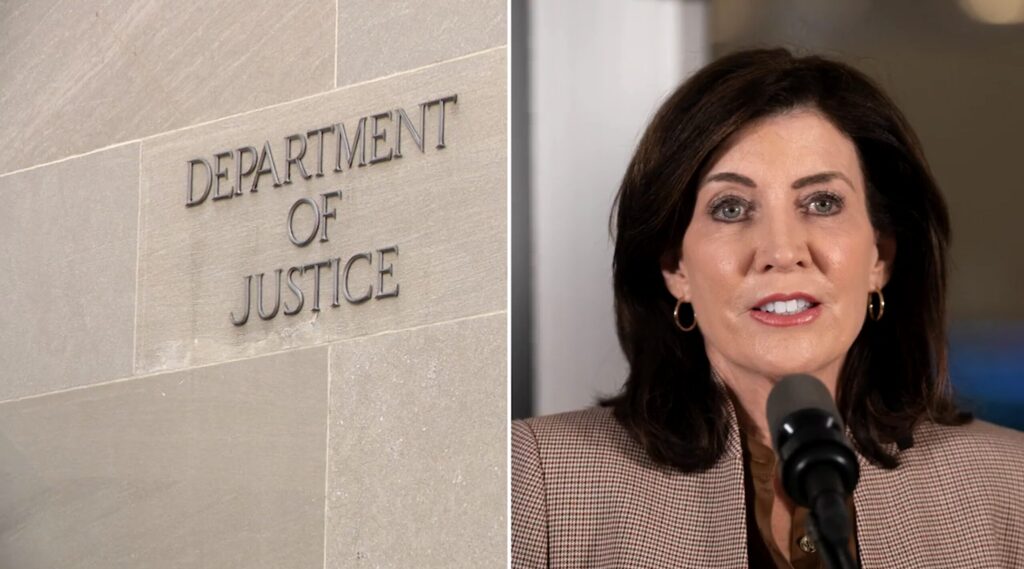
The past several months, Vice President JD Vance, Dr. Oz, and the anti-fraud task force have investigated home health and hospice agencies suspected of fraud. Much of the focus has been in Minnesota, Georgia, and California. Now, New York joins the list of targeted states, as the Justice Department suis the New York State Department of Health, the state’s Medicaid director, Public Partnerhsips, LLC (PPL), the company operating the $10 billion Consumer Directed Personal Assistance Program (CDPAP) for the state.

CDPAP Management

Prior to the fall of 2024, CDPAP was managed by hundreds of individual agencies. The state opted to consolidate management into one firm and selected PPL. At the time, CDPAP was one of the largest public health benefits programs in the state with more than 250,000 patients.

Justice Department Allegations

Skimming

In the lawsuit, the Justice Department alleges unauthorized profits going to PPL. These profits allegedly come from PPL skimming a percentage of each hour of care billed to Medicaid. The skimmed percentage, according to the suit, amounts to millions of dollars.

Favored Vendor

The Justice Department further alleges PPL was untruthful in its bid regarding its staffing plan, its financial readiness to handle the contract, and the quality of its software, among other aspects of the plan.

Department of Justice New York Fraud

The Department of Justice is blaming New York Governor Kathy Hochul and her administration for allowing the fraud. The DOJ alleges PPL was “preselected” as the winner of the contract in a fixed bid process.

Misrepresentation

The lawsuit further alleges that PPL won the contract after a “sham bid” process. The Justice Department claims PPL intended to stray from the representations made in their bid, that the New York Department of Health learned of the deceit, and failed to hold PPL accountable.

JD Vance Speaks

At a recent campaign event, Vice President JD Vance spoke about the lawsuit.

“You do not want your government facilitating fraud; you want your government fighting against fraud. You know what these fraudsters are doing? They’re taking advantage of American generosity to enrich themselves.”

JD Vance

Vice President of the United States

Response

New York State Department of Health spokesperson Cadence Acquaviva called the lawsuit a “baseless complaint” and an attempt by Republicans to “score political points at the expense of vulnerable New Yorkers.” Acquaviva called the lawsuit “inexcusable and completely lacking in merit.”

The Rowan Report reached out to PPL for comment, but did not hear back as of the publication of this article. We will provide updated information as it becomes available.

# # #

Kristin Rowan Editor The Rowan Report

Kristin Rowan is the owner and Editor-in-chief of The Rowan Report, the industry’s most trusted source for care at home news. She is also a sought-after speaker on Artificial Intelligence, Technology Adoption and Lone Worker Safety. She is available to speak at state and national conferences as well as software user-group meetings.

Kristin also runs Girard Marketing Group, a multi-faceted boutique marketing firm specializing in content creation, social media management, and event marketing. She works with care at home software providers to create dynamic content that increases conversions for direct e-mail, social media, and websites.  Connect with Kristin directly at kristin@girardmarketinggroup.com or www.girardmarketinggroup.com

©2026 by The Rowan Report, Peoria, AZ. All rights reserved. This article originally appeared in The Rowan Report. One copy may be printed for personal use: further reproduction by permission only. editor@therowanreport.com

Response to HHS Reports

Advocacy

FOR IMMEDIATE RELEASE

Contact:                       Colleen Knudsen
cknudsen@leadingage.org
202-508-1215

Post-Acute Care Medicare Advantage Coalition Statement on OIG Reports Confirming Barriers to Post-Acute Care in Medicare Advantage

Washington, D.C, June 16, 2026. The Post-Acute Care Medicare Advantage (PAC MA) Coalition issued the following statement in response to the U.S. Department of Health and Human Services (HHS) Office of Inspector General’s (OIG) two new reports, The Three Largest Medicare Advantage Organizations Denied Requests for Long-Term Acute Care and Inpatient Rehabilitation at Some of the Highest Rates and Medicare Advantage Organizations Overturned Nearly All Appealed Prior Authorization Denials for Skilled Nursing Facility Admission, Raising Concerns About Initial Denials:

Post-acute care MA Coalition

Coalition Statement

The PAC MA Coalition has long championed critical yet commonsense and necessary reforms to ensure Medicare beneficiaries’ access to medically necessary care across all post-acute settings. These June 2026 OIG reports provide important, independent confirmation of what providers and Medicare beneficiaries have experienced for years: Medicare Advantage (MA) plans are using prior authorization (PA) and similar tactics to restrict beneficiaries from receiving the services that Medicare Advantage Organizations (MAO) are legally required to provide. 

Across the post-acute care (PAC) continuum, OIG found concerning denial patterns, wide variation of the rate of denials among MA organizations, and high rates of successful appeals. Even when a denial is later overturned, the patient may still have faced unnecessary care delays, a prolonged hospital stay, an interruption in recovery, or placement in a less appropriate care setting. Given each PAC setting’s distinct role and value in the rehabilitation continuum, these outcomes can cause significant disruptions in patients’ recovery trajectory and place patients at higher risk for complications and readmissions – all of which produce poorer outcomes and increase costs for the Medicare program. 

For Medicare beneficiaries recovering from serious illness, injury, surgery, stroke, or other complex medical events, timely access to the right post-acute care setting is essential. These decisions are not simply administrative; care in the appropriate setting can affect whether a patient regains function, avoids complications, returns home safely, or receives the services needed to recover altogether. 

The Coalition is also concerned by OIG’s findings regarding third-party contractors and vendors involved in PA decisions. MAOs remain responsible for ensuring that their contractors, which may deploy algorithmic or artificial intelligence-supported tools in PA decision-making, comply with Medicare coverage rules. High denial overturn rates should prompt closer CMS oversight of whether these entities are applying Medicare standards accurately and enforcement with meaningful penalties when there are patterns of non-compliance. 

The OIG reports underscore the need for better data, transparency, and stronger accountability. The Coalition urges the Centers for Medicare and Medicaid Services (CMS) to implement OIG’s recommendations to collect detailed, request-level PA data–including standardized service type, contractor involvement, denial rationales, decision timelines, appeal outcomes, and information on continued-stay requests. CMS should make these data publicly available and also examine why denial and overturn rates vary so widely across plans and contractors and take corrective action, where appropriate. 

The Coalition further urges OIG and CMS to conduct a similar review of MA practices affecting home health services. Home health providers report that even when care is approved, MA plans frequently authorize fewer visits than clinically appropriate and reimburse at rates significantly below traditional fee-for-service (FFS) Medicare. As a result, patients may be left without the full scope of services they need to recover safely at home. 

MA plans are required to provide access to Medicare Part A and Part B services in a manner comparable to traditional FFS Medicare. The OIG reports make clear that stronger oversight, greater transparency, and more consistent enforcement are needed to ensure MA beneficiaries receive the post-acute care they are entitled to under Medicare, in the most clinically appropriate setting. Our groups collectively applaud the OIG’s observation that, “as enrollment in Medicare Advantage continues to grow, so does the urgency and importance of ensuring that MAOs are delivering on the value that the Federal Government pays them to provide.” 

The PAC MA Coalition therefore stands ready to work with CMS, Congress, OIG, MA organizations, and other stakeholders to address PA, reduce unnecessary administrative burden to providers, ensure adequate payment, and protect timely access to medically necessary post-acute care. 

The PAC MA Coalition renews its request for CMS to standardize post-acute care prior authorization procedures across MA plans. Greater consistency, compliance, and accountability are needed to ensure decisions reflect traditional Medicare FFS standards. Expedited PA is essential so beneficiaries receive timely, medically necessary services and avoid unnecessary delays in recovery.”

# # #

About the PAC MA Coalition

Post-Acute Care (PAC) is made up of approximately 15,000 skilled nursing facilities (SNFs), 11,500 home health agencies (HHAs), 1,200 inpatient rehabilitation facilities (IRFs), and 370 long-term acute care hospitals (LTCHs), among other provider types.

The Post Acute Care Medicare Advantage (PAC MA) Coalition is comprised of LeadingAge, the American Health Care Association and National Center for Assisted Living (AHCA/NCAL), the American Medical Rehabilitation Providers Association (AMRPA), the National Alliance for Care at Home (the Alliance), the National Association of Long Term Hospitals (NALTH), and the Center for Medicare Advocacy. Together, the Coalition represents the interests of PAC providers and the Medicare beneficiaries who require their services.

The Coalition’s objective is to ensure Medicare beneficiaries enrolled in MA and Special Needs Plans (SNPs) receive comparable and timely access to Medicare Part A and B services as their Traditional Medicare counterparts, while also ensuring the financial viability of providers who participate in MA networks through adequate payment and reduced administrative burden.

© 2026 PAC MA Coalition. This press release was issued by LeadingAge and is reprinted with permission. For more information or to request permission to print, see contact information above.

Alliance Responds to CMS

Advocacy

FOR IMMEDIATE RELEASE

Contact:                                                            Hannah Kristan
communications@allianceforcareathome.org
202-355-1647

The Alliance Responds to CMS’s Announcement of Nationwide Enrollment Moratoria on Hospice and Home Health Providers

Washington, D.C, May 13, 2026. On May 13, the Centers for Medicare & Medicaid Services (CMS) announced a six-month national moratorium on hospice and home health enrollment in response to program integrity concerns within the Medicare programs. While the National Alliance for Care at Home (the Alliance) strongly supports efforts to root out bad actors who exploit these essential programs, undermine confidence in care at home, and threaten the patients and families who depend on it, the Alliance has long advocated for targeted strategies that distinguish between high-fraud markets and communities where fraud is not an identified problem and patients already face shortages of providers.

Concerns

The Alliance welcomes the Administration’s focus on combatting fraud, waste, and abuse and appreciates that CMS has indicated providers will still be able to conduct face-to-face recertification visits via telehealth during the enrollment moratorium, which will help avoid unnecessary care disruptions for patients and families. However, an enrollment moratorium does not distinguish between bad actors and compliant providers and will ultimately reduce competition and slow innovation. More importantly, an enrollment moratorium raises serious access-to-care concerns in areas where patient demand is growing or existing capacity is already strained, leading to longer wait times, reduced service availability, and fewer choices for patients – particularly in rural or underserved communities.

Less Severe Recommendations

Public reports show that fraud is concentrated in specific geographies and among specific actors, signaling that targeted reforms and oversight strategies are needed to identify and remove fraudulent entities from the Medicare program. The Alliance and other national organizations have repeatedly provided CMS with recommendations that focus on preventing bad actors from entering the Medicare and Medicaid programs and better leveraging existing tools to fight fraud without creating unnecessary burden for good-faith providers who are already meeting program requirements.  

Alliance responds to CMS moratoria

From the Alliance CEO

“The majority of home health and hospice providers deliver compliant, patient-centered, and clinically appropriate care to individuals with complex needs, often in their most vulnerable moments. CMS must use data-driven, risk-based program integrity measures and focus resources on boots-on-the-ground surveys and enforcement of existing oversight mechanisms that root out the blatantly bad actors without potentially limiting patient access to care or punishing high quality providers operating in good faith.” 

Jennifer Sheets

CEO, National Alliance for Care at Home

Final Thoughts

This moratorium, effective May 13, applies only to new providers and certain changes of ownership, and may be extended if CMS deems it necessary.  

The Alliance has been and will remain a proactive, constructive partner to Congress and federal regulators on program integrity efforts. The Alliance will continue to engage with the Administration on a path forward that holds bad actors accountable while protecting patient access to the safe, high-quality care at home they need and deserve. 

# # #

About the National Alliance for Care at Home

The National Alliance for Care at Home (the Alliance) is the leading authority in transforming care in the home. As an inclusive thought leader, advocate, educator, and convener, we serve as the unifying voice for providers and recipients of home care, home health, hospice, palliative care, and Medicaid home and community-based services throughout all stages of life. Learn more at www.AllianceForCareAtHome.org. 

©2026 by the National Alliance for Care at Home. For more information or to request permission to reprint, please see contact information above.

Medicare Moratoria

Breaking News

by Kristin Rowan, Editor

Medicare Moratoria

CMS Halts All New Home Health & Hospice Agencies

As part of it’s ongoing efforts to curb Medicare waste, fraud, and abuse, the Centers for Medicare and Medicaid Services (CMS) is taking a bold step. On Wednesday, May 13, 2026, CMS announced a 6-month moratoria on home health and hospice agency enrollment. Aimed at protecting Medicare beneficiaries and taxpayer dollars, the moratoria will temporarily stop new enrollment of providers in home health and hospice, which CMS calls “high-risk” categories and key sources of fraudulent activity. CMS states this effort builds on additional fraud prevention initiatives, including enhanced screening, site visits, and expanded oversight activities across the hospice and home health sectors

Medicare Moratoria

More Investigations

Together with Vice President JD Vance’s Anti-Fraud Task Force, CMS will increase its targeted investigations of hospice and home health agencies that are suspected of fraud. CMS promises to use advanced data analytics and to accelerate the removal of fraudulent hospice and home health agencies. 

Skirting Authority

CMS investigations revealed that some agencies intent on committing fraud are closing their businesses and reopening under different names in different states to perpetrate additional fraud. The moratoria will prevent these agencies from skirting authority in this manner. Additionally, the moratoria applies to some changes in ownership, which is a common technique used to hide these “bad actors.”

What it Means for You

The moratoria do not apply to existing providers with current enrollments. You can continue to deliver services to Medicare beneficiaries as long as your enrollment is current and in good standing. 

Statement from CMS

“We’ve seen systemic and deeply troubling fraud in the hospice and home health space, with bad actors exploiting some of our most vulnerable Medicare patients and stealing money from the American taxpayer. Today we’re shutting the door on fraud—preventing new bad actors from entering Medicare while we aggressively identify, investigate, and remove those already exploiting them. This is about protecting patients, restoring integrity, and safeguarding taxpayer dollars.”

Dr. Mehmet Oz

Administrator, Centers for Medicare and Medicaid Services

More Information

The administration’s anti- fraud, waste, and abuse efforts are ongoing.

Read the CMS Press Release

Full text of the Home Health Moratorium

 Full text of the Hospice Moratorium

# # #

Kristin Rowan Editor The Rowan Report

Kristin Rowan is the owner and Editor-in-chief of The Rowan Report, the industry’s most trusted source for care at home news. She is also a sought-after speaker on Artificial Intelligence, Technology Adoption and Lone Worker Safety. She is available to speak at state and national conferences as well as software user-group meetings.

Kristin also runs Girard Marketing Group, a multi-faceted boutique marketing firm specializing in content creation, social media management, and event marketing. She works with care at home software providers to create dynamic content that increases conversions for direct e-mail, social media, and websites.  Connect with Kristin directly at kristin@girardmarketinggroup.com or www.girardmarketinggroup.com

©2026 by The Rowan Report, Peoria, AZ. All rights reserved. This article originally appeared in The Rowan Report. One copy may be printed for personal use: further reproduction by permission only. editor@therowanreport.com
 

Private Payors Against Fraud

Admin

by Elizabeth E. Hogue, Esq.

Private Payors Against Fraud

Join Enforcement Efforts

There seems to be a persistent myth among providers of private duty/homecare services that the federal anti-kickback statute applies to Medicare-certified providers only. On the contrary, the anti-kickback statute applies to providers who receive funds from any state or federal healthcare program; including the Medicaid Program, VA, TRICARE, etc. Private duty providers: This means many of you! Lately it has become clear that private payors have joined fraud enforcement efforts.

Guilty

In a recent case, a provider in Detroit pled guilty to conspiring to commit health care fraud. The conspiracy resulted in losses totaling $1.9 million to Medicare, Medicaid, and Blue Cross Blue Shield of Michigan. The investigation was conducted by the FBI and the Office of Inspector General of the U.S. Department of Health and Human Services, the primary enforcer of fraud and abuse prohibitions.

Ghost Services

At the plea hearing, the provider admitted to creating and operating a scheme to submit false and fraudulent claims that were medically unnecessary or not actually provided. In some instances, services billed were not ordered by physicians. The scheme continued for over five years. The provider used the proceeds of fraud for his personal use and to benefit others.

Consequences

After a presentence report is prepared, the provider faces a possible maximum sentence of ten years in prison, a fine of up to $250,000 and up to three years of supervised release following any term of imprisonment.

Private Payers Against Fraud

Federal and Private Prosecution

It is important to note that the provider was criminally prosecuted not only for fraud with regard to claims submitted to Medicare and Medicaid Programs, but also fraud committed against a private payor, Blue Cross Blue Shield.

Your Payor Could Report You

It now appears that providers who receive payments from third party payors must be concerned about fraud enforcement. Consequently, providers of private duty/home care services must develop, implement, and update Compliance Programs.

Compliance Programs

Compliance Programs are specific types of documents that routinely address issues that providers do not usually cover in internal policies and procedures. In addition, providers may not gain benefits related to fraud enforcement if there is no formal document called a Compliance Program.

More than Accreditation

Some providers think that accreditation means they are in compliance. On the contrary, providers may be accredited but fail to meet applicable compliance standards for fraud and abuse. Compliance Programs appropriately address potential fraud and abuse issues. They also include mechanisms for helping to ensure compliance, such as processes for identification and correction of potential problems that are not addressed during the certification process.

It Could Save You

Providers also need to know that developing, implementing, and updating Compliance Programs may make a considerable difference during fraud enforcement actions. If providers have Compliance Programs in place that are current and fully implemented, enforcers may be less aggressive in pursuing potential violations.

Corporate Integrity Agreement

When enforcers discover problems with fraud and abuse in organizations, providers are usually asked to develop and implement a Corporate Integrity Agreement (CIA). This type of agreement is likely to include processes for stringent monitoring on a continuous basis. These monitoring activities can be extremely burdensome to providers in terms of both time and money. Providers with valid Compliance Programs are not necessarily asked to develop and implement CIA’s.

Final Thoughts

Now is the time for all providers, including private duty/home care companies, to recognize and act upon the need to establish and maintain Compliance Programs. “Working on it” is no longer good enough.

# # #

Elizabeth E. Hogue, Esq The Rowan Report

Elizabeth Hogue is an attorney in private practice with extensive experience in health care. She represents clients across the U.S., including professional associations, managed care providers, hospitals, long-term care facilities, home health agencies, durable medical equipment companies, and hospices.

©2026 Elizabeth E. Hogue, Esq. All rights reserved.
No portion of this material may be reproduced in any form without the advance written permission of the author.

©2026 by The Rowan Report, Peoria, AZ. All rights reserved. 

Medicaid Reform

Home Health

by Kristin Rowan, Editor

Medicaid Reform

New Efforts to Stop Fraud Before it Happens

As auditors continue to investigate fraudulent activity, new initiatives through Medicare reform aim to stop fraud before it happens. The new initiative, the Combating Deceptive Practices in Assistance Programs Act adds oversight to the Medicaid program.

Preserve Medicaid through Reform

Chairman of the Joint Economic Committee and Chairman of the House Ways and Means Oversight Subcommittee, Rep. David Schweikert, announced the legislation that would tighten eligibility requirements for home health services through Medicaid. The bill requires Medicaid recipients to prove they are unable to perform three or more ADL’s without assistance.

If we seriously want to preserve Medicaid, and provide for the people most in need, we must crack down on fraud. Reaching people that need these services the most should be the top priority of these programs, not growing one of the largest jobs corps in the state. With the U.S. adding almost $87,000 per second to our national debt, making commonsense reforms can save tens of billions of dollars while protecting the truly vulnerable.”

Rep. David Schweikert

Chairman, Joint Economic Committee and House Ways and Means Oversight Subcommittee

Medicaid Waiver Programs

According to the statement from the Joint Economic Committee, the federal waiver programs that allow states to provide at home care for Medicaid beneficiaries are lacking guardrails and oversight. The state policies are “egregious” and lead to waste, fraud, and abuse.

For example, the New York State Medicaid program includes the Consumer Directed Personal Assistance Program (CDPAP) which allows beneficiaries to choose their caregiver. This broad eligibility program allows enrollees to choose friends or family members with no caregiving experience. New York’s Medicaid spending jumped from $2.5 billion in 2019 to more than $9 billion in 2023 with estimates of $12 billion in 2025.

More Information

Read H. R. 7713

Read the accompanying brief from the Joint Economic Committee: From Care to Cash: Correting Misaligned Incentives in Home Health

# # #

Kristin Rowan Editor The Rowan Report

Kristin Rowan is the owner and Editor-in-chief of The Rowan Report, the industry’s most trusted source for care at home news. She is also a sought-after speaker on Artificial Intelligence, Technology Adoption and Lone Worker Safety. She is available to speak at state and national conferences as well as software user-group meetings.

Kristin also runs Girard Marketing Group, a multi-faceted boutique marketing firm specializing in content creation, social media management, and event marketing. She works with care at home software providers to create dynamic content that increases conversions for direct e-mail, social media, and websites.  Connect with Kristin directly at kristin@girardmarketinggroup.com or www.girardmarketinggroup.com

©2026 by The Rowan Report, Peoria, AZ. All rights reserved. This article originally appeared in The Rowan Report. One copy may be printed for personal use: further reproduction by permission only. editor@therowanreport.com

 

Idaho Approves $22M Cut

Advocacy

by Kristin Rowan, Editor

Idaho Approves $22M Cut

Provider Reimbursement Rates Slashed

Idaho Governor Brad Little approved House Bill 863 in late March after the bill passed the House and Senate. Little directed the state to balance the budget and sent a recommended list of cuts. Among the recommendations was provider reimbursement rates for residential habilitation services, where lawmakers chose to cut nearly $22 million.

Cut Reverses Raises

The State approved pay raises for providers in 2022. This bill reduces those raises for next fiscal year. Combined with previous Medicaid rate cuts, this amounts to a 10% rate reduction for habilitation providers. Lawmakers say this rate is still 33% higher than four years ago.

An Impossible Decision

Lawmakers say balancing the budget required impossible decisions. For Medicaid, the decision was between cutting the Medicaid expansion, and cutting services for people with disabilities. As evidence of the difficulty of the decision, the proposal was delayed twice and was replaced once with a proposal to repeal Medicaid expansion.

Tighten Your Belt

Co-sponsor of the bill, Senator Julie VanOrden, said to follow the money. “The money [goes] from the state to the provider to the caregiver. Somewhere along there, maybe somebody needs to tighten the belt somewhere…. That might mean, as a provider, I don’t take as much money, but I still pay the people that are doing the work the amount that they need.”

HHAeXchange Responds

The Rowan Report reached out to HHAeXchange president Stephen Vaccaro for a comment.

“Idaho’s recent Medicaid disability-services cuts and Colorado’s proposed reductions point to a broader pattern. When states look for Medicaid savings, home and community-based services (HCBS) are often among the first areas affected. But for people who rely on care at home, these supports are essential. They make it possible for individuals to remain safely in the community, rather than shifting into disruptive, higher-acuity settings.

While cutting HCBS may lower spending in one line item, states can end up shifting costs to more intensive settings, like emergency departments and long-term care facilities. To build a more sustainable Medicaid program, states must look beyond immediate savings and consider the longer-term impact of weakening access to services that help prevent more costly outcomes.

States must continue to address fraud, waste, and abuse to protect the long-term health of Medicaid. However, jeopardizing the critical services that people rely on is not the answer. Oversight and accountability should go hand in hand with preserving access to care at home.”

Stephen Vaccaro

President, HHAeXchange

# # #

Kristin Rowan Editor The Rowan Report

Kristin Rowan is the owner and Editor-in-chief of The Rowan Report, the industry’s most trusted source for care at home news. She is also a sought-after speaker on Artificial Intelligence, Technology Adoption and Lone Worker Safety. She is available to speak at state and national conferences as well as software user-group meetings.

Kristin also runs Girard Marketing Group, a multi-faceted boutique marketing firm specializing in content creation, social media management, and event marketing. She works with care at home software providers to create dynamic content that increases conversions for direct e-mail, social media, and websites.  Connect with Kristin directly at kristin@girardmarketinggroup.com or www.girardmarketinggroup.com

©2026 by The Rowan Report, Peoria, AZ. All rights reserved. This article originally appeared in The Rowan Report. One copy may be printed for personal use: further reproduction by permission only. editor@therowanreport.com