BREAKING NEWS: CMS Changes AHEAD

From cms.gov

CMS Changes AHEAD

CMS Announces Changes to Achieving Healthcare Efficiency through Accountable Design (AHEAD) Model to Improve Quality, Promote Transparency, and Decrease Costs

September 2, 2025

What's New

The CMS Innovation Center announced new policy and operational changes, as well as a new end date, to the Achieving Healthcare Efficiency through Accountable Design (AHEAD) Model to help states achieve their total cost of care (TCOC) targets, while advancing the Center’s commitment to promote choice and competition, increase prevention, empower patients, and protect taxpayer dollars.

Why it Matters

Participating states now have more tools to manage Medicare costs (designed to support sustainable growth) and improve quality of care and population health outcomes

What to Expect

Changes will be implemented across all cohorts beginning in January 2026. AHEAD’s end date for all cohorts is now December 31, 2035.

The Big Picture

Changes made to the model will help to advance the CMS Innovation Center’s strategic pillars of: 1) choice and competition, with states implementing at least two policies focused on promoting choice and competition in their health care markets and 2) prevention, with a new Population Health Accountability Plan focused on preventive care, including chronic disease prevention.

CMS Change AHEAD

Additional Details

CMS is also introducing payment reforms through AHEAD for patients with Original Medicare and establishing new transparency requirements around TCOC and primary care investment targets. For the first time ever, AHEAD will bring total cost of care accountability to all Original Medicare beneficiaries in AHEAD regions through geographic attribution of beneficiaries not attributed to other CMS accountable care organization programs. This novel framework will offer risk-bearing Geographic Entities additional tools and enhanced flexibilities to improve health outcomes and lower spending for their patients while receiving shared payments (or losses) through two-sided risk arrangements. In return, patients may receive additional beneficiary incentives while enjoying existing protections under the Original Medicare program.

Total Cost of Care Model

The AHEAD Model is a state total cost of care (TCOC) model that seeks to drive state and regional health care transformation and multi-payer alignment, with the goal of improving the total health of a state population and lowering costs. Under a TCOC approach, a participating state uses its authority to assume responsibility for managing health care quality and costs across all payers, including Medicare, Medicaid, and private coverage. States also assume responsibility for ensuring health providers in their state deliver high-quality care, improve population health, offer greater care coordination, and promote healthier living for all people participating in the model. The AHEAD Model provides participating states with funding and other tools to address rising health care costs and improve health outcomes.

More Information

# # #

©2025 Centers for Medicare & Medicaid Services. This announcement originally appeared on the CMS website here. For more information, please contact the CMS Innovation Center.


Medicare Prior Authorization

by Kristin Rowan, Editor

Medicare Prior Authorization

Wasteful and Inappropriate Service Reduction Model

The Centers for Medicare and Medicaid Services (CMS) is launching a pilot program in six states to combat what they deem to be unnecessary treatments. Dubbed the Wasteful and Inappropriate Service Reduction (WISeR) Model, the voluntary program will launch in New Jersey, Ohio, Oklahoma, Texas, Arizona, and Washington beginning January 1, 2026 and ending December 31, 2031. The program will use Artificial Intelligence (AI) and Machine Learning (ML) alongside human clinical review to “ensure timely and appropriate Medicare payment for select items and services.”

The Problem

According to CMS, health care waste harms patients and comprises 25% of healthcare spending. “Low-value” services provide little effectiveness, do not align with specific health conditions, and can lead to additional complications and more wasteful services.

Medicare Prior Authorization Solution

The new WISeR Model is designed to reduce unsupported care. Participating care providers will outsource authorization of a pre-selected list of services to reviewers using technology to “expedite and improve the review process.” These services are those that CMS designated as vulberable to fraud, waste, and abuse.

Reasoning

CMS suggests that the fee-for-service model used in traditional Medicare incentivizes unnecessary treatments, tests, and other care. According to CMS, these items provide little to no benefit for some patients. These include:

  • Skin and tissue substitutes
  • Electrical nerve stimulator implants for obstructive sleep apnea and incontinence
  • knee arthroscopy for knee osteoarthritis
  • Cervical fusion
  • Epidural steroid injections
  • Vertebral augmentation
  • Image-guided lumbar decompression
  • deep brain stimulation for Parkinson’s and essential tremor

Strategy and Outcomes

The WISeR Model is supposed to ensure patients get the most appropriate care for the best outcomes. It is also supposed to lower costs and administrative burden on providers. Patients are supposed to partner with their health care providers to decide on the most appropriate care plan. Eliminating “unnecessary” services and procedures is supposed to save taxpayer dollars and decrease fraud, waste, and abuse. Care providers are supposed to focus on providing care that has the most impact on the well-being of Medicare beneficiaries.

Editorial Comment

I am not a Medicare recipient, but I have many close friends and family who are. I am not a nurse or home health expert, but I am a patient and by my count, I have a PCP and 6 specialists that I see on a regular basis. However, I am now, or will be in the near future, in need of:

  • Electrical nerve stimulator
  • Cervical fusion
  • Steroid injections
  • Lumbar decompression

Personal Experiences

I am already at the mercy of my health insurance provider for pre-authorizations for everything that is not routine visits with my primary care provider. I know first-hand the hoops and red tape my provider(s) go through. Already this year, I have filed two requests to review denials, more than 10 rescheduled visits because my pre-authorization had not been received, and at least one interview that my PCP had to attend with an “expert” who had previously decided that my regularly scheduled follow-up cancer scan was unnecessary.

Predicted Results

Adding prior authorization approval requirements for care and treatment will delay beneficiaries from getting the care they need, prolong the pain they experience daily, and cost more in wasted time and money than it can possibly save in wasted procedures. I sincerely hope there are enough voluntary participants in this experiment to document the additional time, money, and resources required. I also hope these participants send regular surveys to their Medicare beneficiaries to ask whether they feel like getting pre-authorizations for routine procedures has made them feel like they are getting better care.

# # #

Kristin Rowan, Editor

Kristin Rowan has been working at The Rowan Report since 2008. She is the owner and Editor-in-chief of The Rowan Report, the industry’s most trusted source for care at home news, and speaker on Artificial Intelligence and Lone Worker Safety and state and national conferences.

She also runs Girard Marketing Group, a multi-faceted boutique marketing firm specializing in content creation, social media management, and event marketing.  Connect with Kristin directly kristin@girardmarketinggroup.com or www.girardmarketinggroup.com

©2025 by The Rowan Report, Peoria, AZ. All rights reserved. This article originally appeared in The Rowan Report. One copy may be printed for personal use: further reproduction by permission only. editor@therowanreport.com


OASIS-E2

OASIS-E2

by Kristin Rowan, Editor

OASIS-E2 Instruments and Change Table draft are available from The Centers for Medicare & Medicaid Services (CMS). They are available for download here. The draft proposes an off-cycle implementation date of April 1, 2026

Change Table

Changes include:
  • Transportation listing changed from A1250 to A1255
  • Hearing (B0200) and Vision (B1000) added to ROC
  • Sex (A0810) replaces Gender (M0069)
  • COVID vaccination up to date removed
  • Language (A1110) added to ROC
  • Minor changes to replace outdated item numbers with updated ones (ex: all instances of A1250 changed to A1255)
OASIS E2 Change Table

Change Timeline

The Changes are effective April 1, 2026. However, the changes are not final pending approval from the Office of Management and Budget (OMB). Agencies are able to use the draft form for training purposes, but should look for the final form that includes the OMB control number and expiration date.

Implications

OASIS accuracy is linked to PDGM payments and quality outcomes. Prepare early for the off-cycle April 1, 2026 changes to ensure a smooth transition to E2 requirements and continued reporting accuracy. 

Resources

Draft versions of the instruments are on the CMS website in a ZIP file. You can download the file here.

The PRA package, which includes four separate documents, is available for download here.

Submit comments to CMS about OASIS-E2 or any other item in the Home Health Prospective Payment System Rate Update for CY 2026 here and here.

Alliance Responds to Hospice Final Rule

by Kristin Rowan, Editor

The Alliance Responds to CMS Hospice Final Rule

CMS Issues FY 2026 Hospice Final Rule

On August 1, 2026, CMS issues the FY 2026 Hospice Wage Index and Payment Rate Update and Hospice Quality Reporting Programs Requirements Final Rule. Here are the high-level changes in this year’s final rule:

  • Rate Setting Changes
    • A 3.3% inpatient hospital market basket percentage increase
    • A 0.7% productivity adjustment (read decrease)
    • Statutory cap increases from $34,465.34 to $35,361.44
  • Hospice Care Admission
    • The physician member of the interdisciplinary group (IDG) may recommend admission to hospice care
  • Face-to-Face Attestation
    • Signature and date requirements restored
    • Eliminated requirement for attestation to be a separate and distinct document
    • Attestation requirement can be a section or addendum to recert form, or part of a signed and dated clinical note
  • Hospice Quality Reporting Program
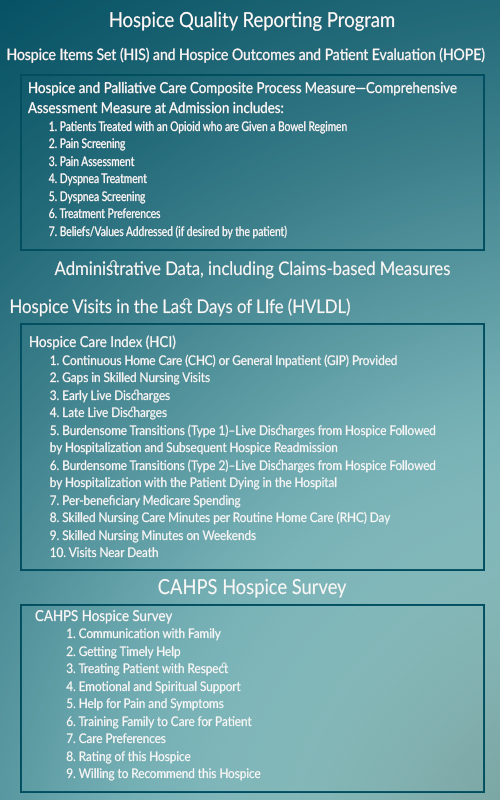
  • The HOPE tool will replace the HIS tool on October 1, 2025, despite comments to delay implementation
  • CMS published a HOPE Technical Information webpage ,an HQRP training library, and a Requirements and Best Practices webpage
  • CMS recognized the error in their HOPE burden calculations. The burden is 21.1% higher than initially reported. The difference will be “taken into consideration” in the next PRA package submission.
  • The separate reporting tool (QIES) and reports tool (CASPER) will sunset and iQIES will replace both tools.
FY 2026 Hospice Quality Reporting Program

National Alliance for Care at Home Statement

After CMS issued the final rule, the Alliance responds with a statement addressing the wage adjustment, HOPE tool implementation, and sttestation changes. Read the full press release here.

Wage Adjustment

The Alliance recognizes that the 2.6% wage update is higher than the proposed 2.4% adjustment issued earlier this year. However, The Alliance maintains its position that the update does not go far enough to offset the very high and very real operational costs that hospices across the country face.  

Regulatory Relief

Both the physician member of the IDG recommending hospice admission and the inclusion of a clinical note to serve as attestation of a face-to-face were welcome changes to hospice regulations. The Alliance thanked CMS for these changes.

HOPE Tool Implementation

The Alliance was among the many commenters to CMS about the October 1, 2025 implementation date for the HOPE tool. Alliance CEO Dr. Steve Landers had this to say:

Despite responsiveness in other areas, the Alliance is deeply disappointed that CMS did not heed recommendations and delay the October 1, 2025 implementation of the Hospice Outcomes and Patient Evaluation (HOPE) tool nor waive the timeliness completion requirement for HOPE record submission. We expect providers to face a burdensome transition and urge CMS to remain responsive to real-world challenges, offering flexibility as providers navigate the change.  

Dr. Steve Landers

CEO, National Alliance for Care at Home

The Alliance is committed to working with CMS to reduce spending and strengthen the Medicare hospice benefit. They also continue to support the CMS initiative to reduce fraud, waste, and abuse.

Final Thoughts

The Hospice Final Rule is not what we hoped for. The wage update was increase, but not by enough to make a real impact on the operational burden hospices face. CMS has provided technical training and education for the HOPE tool, but severely underestimated the financial burden connected to the transition. CMS continues to use outdated, incorrect, or faulty information in its calculations of wage rate updates and ignores the repeated comments from advocacy groups and hospice providers. 

# # #

Kristin Rowan, Editor

Kristin Rowan has been working at The Rowan Report since 2008. She is the owner and Editor-in-chief of The Rowan Report, the industry’s most trusted source for care at home news, and speaker on Artificial Intelligence and Lone Worker Safety and state and national conferences.

She also runs Girard Marketing Group, a multi-faceted boutique marketing firm specializing in content creation, social media management, and event marketing.  Connect with Kristin directly kristin@girardmarketinggroup.com or www.girardmarketinggroup.com

©2025 by The Rowan Report, Peoria, AZ. All rights reserved. This article originally appeared in The Rowan Report. One copy may be printed for personal use: further reproduction by permission only. editor@therowanreport.com


Tell CMS not to Kill Home Health

by Kristin Rowan, Editor

The Alliance to Care at Home:

CMS needs your comments

CMS needs your comments on the home health proposed rule for FY 2026. Advocacy is a cornerstone of the mission of The National Alliance for Care at Home. From The Hill to the home, The Alliance fights for the future of the industry. But, they can’t do it alone. 

Proposed Rule

The CMS proposed rule for FY 2026 has a net 6.4% decrease in payments to home health providers. Industry experts warn that this change will cause home health agencies to shutter their doors and it will leave many rural areas in a home health desert.

The Alliance Call to Action

At last week’s 2025 Financial Summit in Chicago, policy and industry experts provided ways to adjust how to write comments to CMS. According to Mary Carr, Vice President for Regulatory Affairs at National Alliance for Care at Home, it’s not enough for a few agencies and organizations to advocate for home health. Everyone has to submit comments about this. Carr says if done effectively, sending comments on proposed rules is one of the most powerful ways to stop these policy changes. The way you write your comment letters is important if you want them to have an impact.

Carr provided this guidance and tips on how to right an effective comment to CMS:

Remember that CMS is not looking for an agree/disagree statement

Provide good reasons for not keeping the proposed rule as is

Address very specific reasons why any part of the proposed rule is bad

Include the direct impact the proposal will have on your business, your staff, and your patients

Provide an alternative recommendation

Mention studies on how much less home health costs compared with SNFs and ALFs

Don’t let fear, anger, and anxiety detract from your message

Maintain professionalism and respect

Mention and thank CMS for any good aspects of the proposed rule

Include impact statements on reduction in services, delays to getting care, and areas that would be without any available home health care should the proposed rule stand

Mention the Other Side

No matter what side of the aisle you are usually on, we all must agree that care at home is an industry issue, not a Democrat or Republican issue. Hillary Loeffler, Vice President of policy and regulatory affairs at the Alliance, reluctantly mentions that the clawbacks, reductions, and methodology used to determine rates were put in place by the previous administration. 

“It’s a new administration. I hate to say it, but I’m going to say, ‘This methodology was created by the Biden administration, and the Trump administration needs to do something about this.’ So, hopefully they take a fresh look at it.”

Hillary Loeffler

Vice President of Policy and Regulatory Affairs, National Alliance for Care at Home

Loeffler also suggests going directly to Congress with comments and letters in addition to CMS. The recent trend of lowering reimbursement rates causing fewer visits, less coverage, and longer wait times is untenable and complete reform of the home health benefit at the federal level is needed to ensure its survival, added Loeffler.

Illogical Arguments

Whether you are publishing comments on the home health proposed rule or writing a letter to your senators and representatives, steer clear of logical fallacies. These errors in reasoning are easy to fall prey to when you have an emotional investment in the issue at hand.

Ad Hominem

The very common Ad Hominem fallicy happens when the argument moves from the problem to the person. Blaming your representative or accusing CMS of hating home health rather than focusing on the impact of the pay cut will weaken our standing.

Slippery Slope

This fallicy involves stretching the consequences of an action beyond reality. Cutting home health payment rates will decrease care and increase start-of-care delays. It will not cause homelessness, mass hysteria, or a small pox outbreak. 

Fallacy of Composition

If you’re familiar with standard contracts, you’ve read the clause that goes something like, “if any part of this contract is illegal, the rest is still intact.” The composition fallacy assumes that the whole of something matches its parts. The CMS proposed rule for FY 2026 has improvements, such as allowing physicians to do face-to-face appointments even if they are not the certifying physician. Don’t throw out the entire proposed rule. Rather focus on those parts that are clearly devastating to the industry.

Fallacy of Origin

Criticizing the rule based on its authors (CMS) as adversaries to care at home also negates the impact of our advocacy. CMS has been charged with maintaining government payments for health care in hospitals, physician groups, hospices, SNFs, and more. They have also been directed to cut costs, decrease spending, and maintain budget neutrality. The proposed rule is a death sentence for home health not because it came from CMS, but because of the flawed math. Address the calculations, the methodology, the assumption that care at home is more expensive than hospital or SNF care, and the number of people who will lose access to quality care.

CMS needs your comments now

Now that you know what issues to address and how to frame your argument, reach out. Contact CMS and your Congresspeople and submit your comments today. Comments are due by August 29th.

# # #

Kristin Rowan, Editor

Kristin Rowan has been working at The Rowan Report since 2008. She is the owner and Editor-in-chief of The Rowan Report, the industry’s most trusted source for care at home news, and speaker on Artificial Intelligence and Lone Worker Safety and state and national conferences.

She also runs Girard Marketing Group, a multi-faceted boutique marketing firm specializing in content creation, social media management, and event marketing.  Connect with Kristin directly kristin@girardmarketinggroup.com or www.girardmarketinggroup.com

©2025 by The Rowan Report, Peoria, AZ. All rights reserved. This article originally appeared in The Rowan Report. One copy may be printed for personal use: further reproduction by permission only. editor@therowanreport.com


CMS Home Health Proposed Rule 2026

by Kristin Rowan, Editor

CMS Home Health Proposed Rule 2026

June 30th, 2025, the Centers for Medicare & Medicaid Services issued its proposed rule with updates to Medicare payment policies and rates for home health agencies under the Home Health Prospective Payment System Proposed Rule for calendar year 2026.

Payment Adjustments

The Facts, as Listed by CMS

  1. A permanent prospective adjustment to home health payments of -4.059% (not applied to LUPAs)
    • Reasoning: the impact of implementing PDGM
  2. A temporary adjustment of -5.0% (not applied to LUPAs)
    • Reasoning: to recoupe retrospective overpayments
  3. Updates Fixed-Dollar Loss (FDL) adjustment of -0.5%
  4. Payment Update Percentage of 2.4%
  5. Quality data decrease of 2%, offset by the update percentage yields a 0.4% adjustment
  6. Net changes in payment rate from 2025 to 2026 with quality reporting data is -6.40%

Contradictory Facts, as Listed by CMS

  1. The finalized methodology used to calculate the impact of PDGM yielded the need for a -7.85% permanent adjustment
  2. In CY 2023, 2024, and 2025, CMS implemented permanent adjustments of -3.925%, -2.890%, and -1.975%, respectively
  3. The total permanent adjustment made in the last three years is -8.790% (0.940% more than the calculated adjustment need)
  4. CMS has now determined that Medicare is still paying more under PDGM than it did under the old system and is proposing an additional permanent adjustment of -4.059%
  5. This yields a combined -12.849% permanent adjustment over four years
  6. The CMS analysis of estimated aggregate expenditures lead them to propose an additional temporary adjustment of -5.0%

HHCAHPS Survey Changes

Added Questions

  • Whether the care provided helped the patient take care of their health.
  • Whether the patient’s family/friends were given sufficient information and
    instructions.
  • Whether the patient felt the staff cared about them “as a person.”

Removed Questions - Medication

  • Whether someone asked to see all the prescription and over-the-counter medicines
    the patient was taking.
  • Whether the patient is taking any new prescription medicines or whether the patient’s
    medicines have changed.
  • Whether home health providers talked to the patient about the purpose for taking new
    or changed prescription medicines.
  • Whether home health providers talked to the patient about when to take the
    medicines.

Removed Questions - Other

  • Which type of staff served the patient – nurse, PT/OT, or home care aide
  • Whether the patient got information about what care and services they would get when they first started home health care
  • Removal of the proposed changes to include questions on SDOH
  • Minor text changes to clarfiy some existing questions and response options

Other Changes

CMS recommends additional changes in various categories:

  1. Recalibration of the PDGM case-mix weights
    • Update low utilization payment adjustment (LUPA) thresholds
    • Update functional impairment levels
    • Update comorbidity adjustment subgroups
    • Update the fixed-dollar loss (FDL) for outlier payments
  2. Change the face-to-face encounter policy by adding physicians to the list of who can perform the face-to-face
  3. Removal of the “Up-to-date” on the COVID-19 vaccine percentage
  4. Changing the Final Data Submissions Deadline Period from 4.5 months to 45 days
  5. Adding a Termination Clause for DME, prosthetics, orthotics, and supplies competitive bidding program

Requests for Information and Feedback

CMS is seeking feedback on the proposed rule through

August 29th, 2025

  • Feedback on the digital quality measurement transition
  • Feedback on the final data submission deadline from 4.5 months to 45 days
  • Feedback on tools that promote healthy eating habits, exercise, nutrition, and physical activity
  • Feedback on the current state of health IT use, including EHRs
  • Feedback on the proposed changes to DMEPOS
CMS home health proposed rule

The Alliance Responds

“We are alarmed by the negligent proposed payment update, which deepens a heartless pattern of insufficient adjustments that have already led providers to close their doors and reduce services, and now threatens to further diminish care access by compelling more HHAs to take similar actions.”

Dr. Steve Landers

CEO, The National Alliance for Care at Home

You can read the entire Proposed Rule HERE. Read the Fact Sheet HERE.

# # #

Kristin Rowan, Editor

Kristin Rowan has been working at The Rowan Report since 2008. She is the owner and Editor-in-chief of The Rowan Report, the industry’s most trusted source for care at home news, and speaker on Artificial Intelligence and Lone Worker Safety and state and national conferences.

She also runs Girard Marketing Group, a multi-faceted boutique marketing firm specializing in content creation, social media management, and event marketing.  Connect with Kristin directly kristin@girardmarketinggroup.com or www.girardmarketinggroup.com

©2025 by The Rowan Report, Peoria, AZ. All rights reserved. This article originally appeared in The Rowan Report. One copy may be printed for personal use: further reproduction by permission only. editor@therowanreport.com


PocketRN SYNERGY HomeCare Partner

FOR IMMEDIATE RELEASE

Contacts:                                       Melissa Drake
Imagine Productions
Melissa@imagineprstrategy.com
(732) 236-1569

William Leiner
PocketRN
will.leiner@pocketrn.com

PocketRN, SYNERGY HomeCare Partner for Dementia Care

This partnership will operate under CMS’s Guiding an Improved Dementia Experience (GUIDE) Model

Tempe, AZ, June 16, 2025. PocketRN, a provider of virtual nursing care, and SYNERGY HomeCare, a homecare company, announced they will form a national partnership to test the Centers for Medicare & Medicaid Services (CMS) alternative payment model designed to support people living with dementia and their family caregivers. 

SYNERGY HomeCare Speaks

“This is an exciting collaboration that amplifies and elevates the services both PocketRN and SYNERGY HomeCare bring to their clients,” said Rich Paul, chief operating officer for SYNERGY HomeCare. “As the fastest growing homecare franchise in a relatively young industry, we have a tremendous opportunity to positively impact a large number of people affected by dementia. SYNERGY HomeCare has a long history of aligning with a wide array of national partners, health plans and third-party payers to create a highly diversified referral base and extend services to a greater pool of clients. Our partnership with PocketRN is another excellent example of our ability to survey the evolving homecare landscape and find meaningful ways to deliver even more value through strategic partnerships.”

GUIDE Model

Under CMS’s Guiding an Improved Dementia Experience (GUIDE) Model, PocketRN will be one of almost 400 participants building Dementia Care Programs (DCPs) across the country, working to increase care coordination and improve access to services and supports, including respite care, for people living with dementia and their family caregivers. This partnership allows for integration of medical and non-medical care in the home.

PocketRN SYNERGY HomeCare Partnership

According to the CMS, many people with dementia do not consistently receive high-quality, coordinated care, despite its prevalence. As a result, they experience poor outcomes, including high rates of hospitalization, emergency department visits and post-acute care utilization. They also experience high rates of depression, behavioral and psychological symptoms of dementia and poor management of other co-occurring conditions.

New Approach

The GUIDE Model, which launched July 2024, is testing a new payment approach for supportive services for people living with dementia, including comprehensive, person-centered assessments and care plans; care coordination; 24/7 access to an interdisciplinary care team member or help line; and certain respite services to support family caregivers. People living with dementia and their family caregivers will have the assistance and support of a care navigator to help them access clinical and non-clinical services such as meals and transportation through community-based organizations.  

“This is an exciting collaboration that amplifies and elevates the services both PocketRN and SYNERGY HomeCare bring to their clients. Our partnership with PocketRN is [an] excellent example of our ability to survey the evolving homecare landscape and find meaningful ways to deliver even more value through strategic partnerships.”

Rich Paul

COO, SYNERGY HomeCare

Partners

SYNERGY HomeCare’s partnership with PocketRN is rooted in the fact that a significant portion of its client base has a dementia diagnosis. The company’s locations nationwide provide in-home memory care support for people living with Alzheimer’s and other forms of dementia, as well as respite care for their family caregivers.

PocketRN Speaks

“We couldn’t be more thrilled to partner with SYNERGY HomeCare to bring our revolutionary Nurse for Life model to the millions of dementia patients and families who need it most,” said PocketRN CEO Jenna Morgenstern-Gaines. “With PocketRN, patients and families get unwavering support from a dedicated, trusted nurse as they navigate the complexities of managing dementia at NO cost to them. Nurses are a critical part of the care continuum across all health fields and even more so as they provide a cohesive ‘glue’ for patients and their families throughout their dementia journey.”

Access to Care by Referral

PocketRN’s partnership with SYNERGY HomeCare to deliver the GUIDE Model will help people living with dementia and their family caregivers have access to education and support, such as training programs on best practices for caring for a loved one living with dementia. The GUIDE Model also provides respite services for certain people, enabling family caregivers to take temporary breaks from their caregiving responsibilities. 

Under this partnership, PocketRN will refer families in need of respite care to local SYNERGY HomeCare agencies. Respite is being tested under the GUIDE Model to assess its effect on helping caregivers continue to care for their loved ones at home, preventing or delaying the need for facility care. Similarly, SYNERGY HomeCare can refer their clients to PocketRN in the event they would benefit from 24/7 access to virtual clinical support.

For more information on CMS’ GUIDE Model, visit: cms.gov/priorities/innovation/innovation-models/guide

# # #

About SYNERGY HomeCare

SYNERGY HomeCare is the fastest-growing national franchisor in the home care industry with over 240 franchises operating in more than 550 territories across the U.S. The company provides a broad range of non-medical in-home services including personal care, companion care, memory care and specialized care for individuals who are living with physical or developmental disabilities, chronic health conditions or recovering from illness or surgery. No matter what each person’s circumstances are, SYNERGY HomeCare steps in with effective, comforting, life-affirming care that moves people emotionally and physically forward. For more information visit SYNERGYHomeCare.com or find an in-home care location near you.

About PocketRN

PocketRN gives patients, families, and caregivers a Nurse for Life. Its mission is to close the gap between home and healthcare by: enabling nurses to care proactively and continuously at the top of their license, enabling caregivers with peace of mind and the confidence to support others, and enabling patients to access whole-person, trusted, empathetic care when and where they want it. PocketRN is the glue that holds together fragmented experiences in care so that partners, clinicians, patients, and families get back more of what they need: quality time. For more information, visit www.pocketrn.com or engage with PocketRN on LinkedIn, Facebook, and Instagram.

©2025. This press release was issued jointly by PocketRN and SYNERGY HomeCare and is reprinted with permission. For more information or to request permission to use, please see media contacts above.

Fraudsters Arrested, Oz Issues Warning

by Kristin Rowan, Editor

Fraudsters Arrested, Oz Issues Warning

Fraud in California

Fraudsters arrested in West Covina, CA this week were allegedly running a Medicare scheme. Authorities arrested hospice owner-operator Normita Sierra. They charged her with nine counts of health care fraud, one count of conspiracy, and four counts illegal remuneration (kick-backs) for health care referrals. The U.S. Attorney’s Office named co-conspirator Rowena Elegado. They also arrested her and charged her with one count of conspiracy and four counts of illegal remuneration for health care referrals.

Kickbacks

Sierra and Elegado worked together to pay marketers to recruit patients who did not have a hospice referral from their PCP and who were not terminally ill. Some of the kickbacks paid to marketers were as high as $1,300 per patient per month. After six months, the patients were referred out to Sierra’s home health company.

Medicare Claims

According to the U.S. Attorney’s Office, from 2018 to 2022, Sierra’s hospice agences submitted $4.8 million in fraudulent claims. Of those claims, Medicare paid approximately $3.8 million.

Dr. Oz Issues Warning

In a video statement, Dr. Oz explained how Medicare recipients are falling victim to scams. Sales people call, email, and even knock on your door, offering advice, free samples, and referrals. These marketers have one goal: get you sign a piece of paper. That paper signs you up for hospice care and agrees to allow a specific hospice agency to provide that care. The hospice agency then bills Medicare for services they never provide. Watch the video statement here.

HHS OIG Issues Consumer Alert

In a similar statement, HHS issued a consumer alert regarding DME companies. The alert warns that some DME companies are contacting Medicare beneficiaries. They claim to work for or on behalf of Medicare. Once they receive the patient’s Medicare number, they bill Medicare for unnecessary medical items. These items include urinary catheters, knee and back braces, orthotic braces, and prescription drugs, which may or may not ever be sent to the patient. HHS urges enrollees not to give their Medicare number to anyone. Further, they suggest regulary reviewing items charged to insurance, and refusing delivery of any medical supply not ordered by a physician.

Oz Issues Warning
Fraudsters Arrested

Combating Waste, Fraud, and Abuse

Dr. Oz and CMS have spoken numerous times about combatting the waste, fraud, and abuse withing the Medicare and Medicaid systems. Originally a strong proponent for Medicare Advantage, Oz has promised to audit MA after discovering the government pays more for MA than traditional Medicare. Oz also promised to reduce the amount of prior authorization requests needed before a patient gets services. Oz responded to the Republican-backed House bill requiring more oversight on Medicaid eligibility. Oz indicated that some Medicaid patients are enrolled in more than one state and that Medicaid is paying for able-bodied patients. The waste, fraud and abuse across Medicare and Medicaid is costing the government between $1 and $10 billion and Dr. Oz plans to find it and make significant changes to the management of the system.

A Cautionary Tale for Hospice Providers

You may be thinking, “What does this have to do with me?” Unfortunately, even the most scrupulous hospice agencies can fall prey to marketers running schemes. There are legitimate referral resources in the market who can help your agency get more referrals and more clients. There are also underhanded marketers who know how the system works. These predators will promise new referrals (for a fee) and then enroll uneligible patients without your knowledge. If you are working with or looking for a referral partner for your hospice agency, use one that is referred by someone you trust, and/or do a lot of research on the company history before working with anyone. Be especially wary of the ones who promise much more than what most referral companies offer.

# # #

Kristin Rowan, Editor

Kristin Rowan has been working at The Rowan Report since 2008. She is the owner and Editor-in-chief of The Rowan Report, the industry’s most trusted source for care at home news, and speaker on Artificial Intelligence and Lone Worker Safety and state and national conferences.

She also runs Girard Marketing Group, a multi-faceted boutique marketing firm specializing in content creation, social media management, and event marketing.  Connect with Kristin directly kristin@girardmarketinggroup.com or www.girardmarketinggroup.com

©2025 by The Rowan Report, Peoria, AZ. All rights reserved. This article originally appeared in The Rowan Report. One copy may be printed for personal use: further reproduction by permission only. editor@therowanreport.com


Medicare Advantage Audits

by Kristin Rowan, Editor

CMS Strategy for Medicare Advantage Audits

Last week, The Centers for Medicare and Medicaid Services (CMS) rolled out a new, aggressive strategy to enhance and accelerate Medicare Advantage Audits under RADV. CMS will audit all eligible MA contracts in all newly initiated audits. The strategy will also invest additional resources to complete the audits for each payment year (PY) 2018 to 2024.

Falling Behind

CMS is several years behind in completing audits. In fact, the last payment year with any significant recovery was from PY 2007. Completed audits from 2011 to 2013 recovered 5%-8% in overpayments. Federal estimates put current overpayments at $17 billion annually. MedPAC‘s estimate is significantly higher at $43 billion annually.

“We are committed to crushing fraud, waste and abuse across all federal healthcare programs. While the Administration values the work that Medicare Advantage plans do, it is time CMS faithfully executes its duty to audit these plans and ensure they are billing the government accurately for the coverage they provide to Medicare patients.”

Dr. Mehmet Oz

Administrator, CMS

The Plan to Manage Medicare Advantage Audits

According to a press release from CMS, the plan is to complete all outstanding audits from PY 2018 to 2024 by early 2026. Here are key elements from the plan:

  • Enhanced Technology: CMS will deploy advanced systems to efficiently review medical records and flag unsupported diagnoses.
  • Workforce Expansion: CMS will increase its team of medical coders from 40 to approximately 2,000 by September 1, 2025. These coders will manually verify flagged diagnoses to ensure accuracy.
  • Increased Audit Volume: By leveraging technology, CMS will be able to increase its audits from ~60 MA plans a year to all eligible MA plans each year in all newly initiated audits (approximately 550 MA plans).  CMS will also be able to increase from auditing 35 records per health plan per year to between 35 and 200 records per health plan per year in all newly initiated audits based on the size of the health plan.  This will help ensure CMS’s audit findings are more reliable and can be appropriately extrapolated as allowed under the RADV final rule

CMS will also reportedly work with the Department of Health and Human Services Office of Inspector General (HHS-OIG) to recover uncollected payments identified in past audits. 

Impact of Medicare Advantage Audits on Providers

If CMS is able to audit as many plans and records as they are anticipating, Medicare Advantage payers could be looking at significant overpayments. CMS will aggressively seek repayment. When MA payers lose money, they tend to pass that loss on to providers and patients. We could see MA plans cutting benefits, denying procedures, and other cost-saving measures.

Providers who are aware of the unsupported diagnoses or who profited from them may be on the hook for overpayments. Law firm Ropes and Gray suggests that “[MA] plans should…minimize historical risk by correcting or deleting unsupported diagnoses for any time periods for which they are still able to do so.”

I suggest not using this particular law firm. I also suggest checking your payer contracts for clawback and indemnification clauses. When applicable, negotiate new and renewal contracts very carefully.

Medicare Advantage payers will push back on these audits, file lawsuits, and challenge how CMS is conducting audits. MA payers have historically denied treatments and medications that would be covered under traditional Medicare plans. They go to great lengths to avoid paying for services patients did receive. I’m certain they won’t be happy paying back money for services they never received.

CMS indicates it will start the new audit plan immediately. We will continue watching for updates through the end of the year to see if CMS reaches their goal. Of course, we will continue to report on changes at CMS and with Medicare Advantage payers as they happen.

# # #

Kristin Rowan, Editor

Kristin Rowan has been working at The Rowan Report since 2008. She is the owner and Editor-in-chief of The Rowan Report, the industry’s most trusted source for care at home news, and speaker on Artificial Intelligence and Lone Worker Safety and state and national conferences.

She also runs Girard Marketing Group, a multi-faceted boutique marketing firm specializing in content creation, social media management, and event marketing.  Connect with Kristin directly kristin@girardmarketinggroup.com or www.girardmarketinggroup.com

©2025 by The Rowan Report, Peoria, AZ. All rights reserved. This article originally appeared in The Rowan Report. One copy may be printed for personal use: further reproduction by permission only. editor@therowanreport.com


Update is Not an Increase

by Kristin Rowan, Editor

Updates to Hospice Rule

On April 11, 2025, the Centers for Medicare and Medicaid Services (CMS) issued their proposed rule for hospice rates, Conditions of Participation (CoPs) and face-t0-face encounter requirements for FY 2026. The proposed rule also includes a change in regulatory text for the Hospice Quality Reporting Program.

Following Executive Order 14192, an attempt to reduce the expense attached to following Federal regulations, CMS is seeking feedback on streamlining regulations and reducing expenses. The RFI to submit responses can be found here.

Payment Updates

The proposed update to the hospice payment rate yields a net increase of 2.4 percent. This change includes a 3.2 percent market basket increase based on the estimate cost increase for inpatient hospitalization. The 0.8 percent productivity adjustment offsets the market basket increase. The quality data penalty of 4 percent remains in place.

Market Basket Objections

Not for the first time, commentors on CMS proposed rules objected to the use of the hospital wage index in determining hospice pay rates. According to a report from the Federal Register, a few commenters on the FY 2025 payment update opposed using the IPPS wage index to determine the hospice wage index. According to the commenters, the hospital wage index uses cost report wage data that excludes hospice wage costs. The exclusion of hospice costs skews the accuracy of wage adjustments for hospice providers.

In response to the same proposed rule, MedPAC recommended that wage index policies be repealed and replaced by new Medicare wage index systems that use all-employer, occupation-level wage data; account for wage differences across geographical areas, and match wages in adjacent local areas. 

CMS Ignores Objections

Despite years of comments, objections, and suggestions to update the hospice wage index calculations using more accurate data, CMS continues to insist that using the pre-floor and pre-reclassified hospital wage index is the more appropriate for determining hospice payment rates. CMS states that this position is “longstanding and consistent with other Medicare payment systems.”

Productivity Adjustment

The productivity adjustment started with the Affordable Care Act. It’s stated purpose is to “reduce Medicare spending by recognizing that hospitals can improve their efficiency and productivity.” Average efficiency and productivity gains in all private non-farming businesses form the productivity adjustment.

The most recent document from CMS about the productivity adjustment comes from 2022, using data from 2019. The report shows that hospital growth falls far below the average growth of private non-farming businesses. Using two different methods of calculations, hospital growth falls between 0.2 and 0.3 percent. Non-farming business growth is 0.8 percent. 

Labor Productivity

CMS uses labor productivity as its measure for the productivity adjustment for Medicare hospitals and hospices. The estimate for labor productivity across all private non-farming businesses is 2.0 percent. The calculation for hospital labor productivity is 0.8 percent. This is the number used in this year’s productivity adjustment. Actual labor productivity growth in hospitals from 1993 to 2018 was 0.4 percent.

Quality Reporting Reduction

Hospices that do not submit the required quality data incur a payment reduction of 4 percent. This yields a 1.6 percent decrease over last year’s rates after factoring in the 2.4 percent increase. Quality data reporting includes the HIS tool, administrative data, and CAHPS hospice survey. The threshold to avoid the 4 percent reduction includes submitting at least 90 percent of HIS records within 30 days of an event date and ongoing monthly participation in CAHPS surveys.  The HOPE reporting tool replaces the HIS system beginning October 1, 2025. These requirements are not changing with the FY 2026 proposed rule, with the exception of the change from the HIS tool to the HOPE tool.

Comment from The Alliance

In last week’s newsletter, we summarized Dr. Steven Landers’s keynote address from the New England Home Care & Hospice Conference and Expo. Always passionate about care at home, and particularly about hospice, which he describes as “a national treasure,” Dr. Landers strongly stated that an “update is not an increase” when it doesn’t keep up with inflation and pay increases. 

Final Thoughts

Every year, CMS, MedPAC, and HHS make changes to hospice and home health payment rates based on faulty information that doesn’t account for the nature of the work or the person-centered requirements of the industry. Non-farming industries can increase efficiency and productivity in myriad ways that cut staff. We see it in grocery stores with the increasing number of self-checkout lines. We see it in restaurants with QR code menus, ordering kiosks, and payment kiosks. There is no substitute for one-on-one contact in a home setting for care at home, particularly in hospice. Nurses can’t take on enough more patients in a day to make a meaningful impact on efficiency and productivity without sacrificing quality of care.

AI for Efficiency and Productivity

I’ve been speaking for some time now on the advantages of using augmented and generative intelligence in care at home. As long as CMS continues to lower reimbursement rates using the collective productivity rates of impertinent industries, care at home has to embrace the technology that increases productivity and efficiency in the office and in the field. Talk to text, documentation, scheduling, onboarding, and data analytics are readily available through AI platforms and drastically reduce costs across departments.

You can read about some of the AI tools here. For more information or to engage our consulting services for AI adoption, contact me directly.

# # #

Kristin Rowan, Editor

Kristin Rowan has been working at The Rowan Report since 2008. She is the owner and Editor-in-chief of The Rowan Report, the industry’s most trusted source for care at home news, and speaker on Artificial Intelligence and Lone Worker Safety and state and national conferences.

She also runs Girard Marketing Group, a multi-faceted boutique marketing firm specializing in content creation, social media management, and event marketing.  Connect with Kristin directly kristin@girardmarketinggroup.com or www.girardmarketinggroup.com

©2025 by The Rowan Report, Peoria, AZ. All rights reserved. This article originally appeared in The Rowan Report. One copy may be printed for personal use: further reproduction by permission only. editor@therowanreport.com